King Charles Opens Cambridge's New Whittle Laboratory
Objective, data-driven analysis detailing the Cambridge Whittle Laboratory expansion's influence on advanced propulsion system research.
 By Thomas Whitfield · 6 August 2026 · 10 min read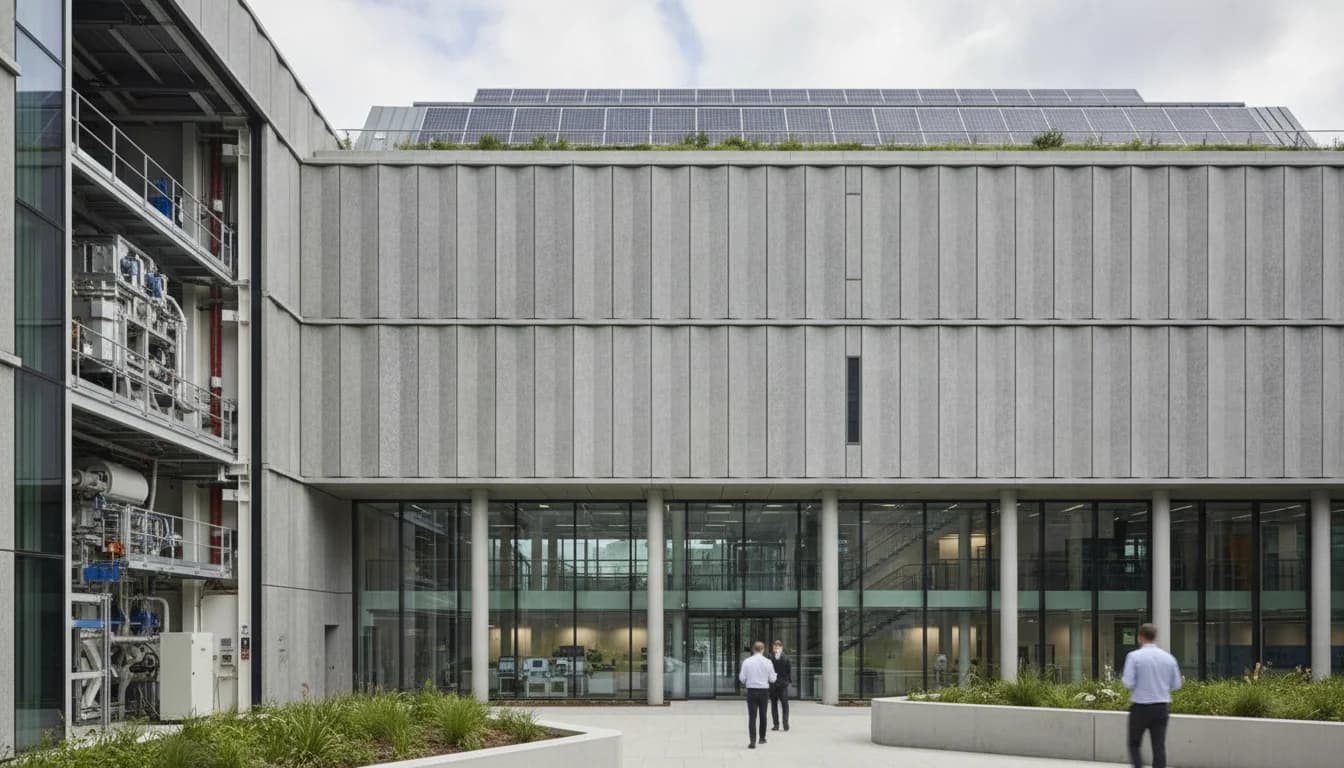
The Cambridge Whittle Laboratory expansion signals a new era for propulsion research in the United Kingdom. On July 20, 2026, Cambridge officially opened the New Whittle Laboratory, a landmark facility located in the Cambridge West Innovation District. The opening ceremony, known as the Frank Whittle Summit, featured His Majesty King Charles III and brought together researchers, industry leaders, and government representatives to spotlight a shared agenda: accelerating advancements in jet engines, power generation, and related propulsion technologies. This expansion is more than a building project; it is a strategic investment in a national capability designed to shorten the path from concept to tested solution for high-performance propulsion systems. The Whittle Laboratory expansion builds on decades of Cambridge’s aero‑propulsion work and positions the university as a hub where academia, industry, and government collaborate to tackle climate and energy challenges through rapid experimentation and scaled demonstrations. (cam.ac.uk)
The project brings together two interconnected elements within the New Whittle Laboratory: the Bennett Innovation Lab and the National Centre for Propulsion and Power (NCPP). The Bennett Innovation Lab is designed to launch multiple, time-compressed experiments intended to incubate new propulsion concepts and, in many cases, help form the basis of new industry ventures in the UK. The NCPP provides rapid testing capabilities, including facilities and equipment intended to dramatically reduce development timelines from years to weeks for certain propulsion technologies. The facility’s overall value is reported as a £58 million investment, reflecting a major commitment to UK aviation and energy supply chains. The site’s opening completes a broader vision for Cambridge West as a gravity point for future manufacturing and research collaboration. (cam.ac.uk)
The opening of the Whittle Laboratory expansion is also a milestone in the broader Cambridge West Innovation District development, which aims to knit together enterprise, academia, and public-sector partners to accelerate technology commercialization. The event underscored not only the physical expansion but also the strategic significance of housing advanced propulsion testing under a single umbrella, enabling more integrated efforts across disciplines—from aeroengine design and materials science to digital twin models and rapid prototyping. As Cambridge notes, the New Whittle Laboratory is designed to be a globally influential research centre for jet engines and power generation, reinforcing the university’s long-standing leadership in propulsion research while signaling a national scale-up in capability. (cam.ac.uk)
Opening Paragraphs: The Context for a National Propulsion Strategy The Cambridge opening comes amid a national push to refresh propulsion research infrastructure and accelerate the pathway from concept to tested technology. The New Whittle Laboratory’s two principal components — the Bennett Innovation Lab and the National Centre for Propulsion and Power — are intended to create a streamlined environment in which ideas can be rapidly prototyped, iterated, and evaluated in realistic settings. This approach aligns with recent statements from Cambridge and partner institutions about shrinking the time between ideas and testing, a fundamental objective of modern propulsion R&D in a climate-conscious era. The opening ceremony and associated communications framed the project as a catalyst for innovation that could help re-shape UK aerospace, energy, and defense supply chains over the next decade. (cam.ac.uk)
Section 1: What Happened
Opening ceremony and date
The Whittle Laboratory expansion officially opened on 20 July 2026, in a high-profile ceremony at the Frank Whittle Summit. The event was attended by His Majesty King Charles III and brought attention to Cambridge’s role in accelerating propulsion research and related fields. The ceremony marked the formal transition from planning and construction to full operational capability for the New Whittle Laboratory, signaling readiness to host advanced testing and collaboration activities at scale. The date and the royal participation are documented by Cambridge’s official channels and university communications, underscoring the significance of the moment for both the university and UK science policy. (cam.ac.uk)
Facilities and funding
The New Whittle Laboratory represents a £58 million investment designed to house two main facilities: the Bennett Innovation Lab and the National Centre for Propulsion and Power (NCPP). The Bennett Innovation Lab is positioned to support rapid mission-style testing and the formation of new industry collaborations within a decade-long horizon. The NCPP focuses on rapid testing, measurement, and validation of propulsion concepts, enabling faster transition from theoretical models to practical demonstrations. The facility’s design integrates advanced testing capabilities with spaces intended to foster collaboration between researchers, industry partners, and policymakers. The investment and the facility components have been highlighted in university communications, emphasizing the strategic intent behind relocating and expanding the existing Whittle Laboratory footprint at West Cambridge. (cam.ac.uk)
Timeline and construction updates
Public updates have outlined a clear timeline for the project, including construction progress and the goal of completing building work within 2026. Reports and university communications juxtapose the opening date with earlier milestones, such as ground-breaking activities conducted prior to the 2023–2024 period and subsequent development phases that culminated in the July 2026 opening. The timeline reflects a broad sequence: initial planning and approvals, site preparation and construction, installation of critical equipment (including the 60-tonne pressure vessel forming part of the National Centre for Propulsion and Power), and final commissioning ahead of the formal opening. The displacement of activities into the 2026 calendar year is consistently described in university materials and related engineering communications. (cam.ac.uk)
Section 2: Why It Matters
Impact on propulsion research and industry
The Whittle Laboratory expansion is designed to shorten development cycles for propulsion technologies, a goal that municipal and national policymakers have long prioritized. Cambridge communications describe the NCPP’s rapid testing capabilities as enabling a significant reduction in the time between idea and demonstration, a critical bottleneck in aeroengine and power-generation innovation. This acceleration is framed as a direct benefit to industry partners seeking faster iteration loops, more robust data for decision-makers, and earlier access to tested concepts for next-generation programs. The project thus contributes to strengthening the UK’s propulsion research ecosystem, with potential downstream effects on supplier networks, manufacturing readiness, and export competitiveness. (cam.ac.uk)
Regional and national implications
Locating the New Whittle Laboratory within the Cambridge West Innovation District amplifies the area’s role as a hub for advanced manufacturing, aerospace, and energy research. The district is being developed to attract talent, investment, and collaboration across university, industry, and government, reinforcing Cambridge’s position as a national accelerator for high-impact technologies. By consolidating the Bennett Innovation Lab and the NCPP in a single, purpose-built facility, the project also supports broader regional ambitions to diversify the UK’s science-and-technology economy beyond traditional centers and to bolster resilience in propulsion-related supply chains. The official communications emphasize how this expansion aligns with district-level goals and the country’s ongoing strategy to incentivize R&D investment and industry partnerships. (cam.ac.uk)
Academic and industry collaboration
A central theme of the Whittle Laboratory expansion is enhanced collaboration among universities, industry players, and government partners. The New Whittle Laboratory is described as structured to encourage cross-disciplinary teamwork—bridging aeroengine design, materials science, thermal science, and digital engineering—so that complex propulsion challenges can be tackled more coherently and efficiently. The event materials and subsequent coverage emphasize collaboration with industry stakeholders as a core purpose of the expansion, including mechanisms to translate research into deployable solutions that can meet national and regional strategic needs in aviation, energy, and defense domains. (cam.ac.uk)
What the expansion means for aviation and energy goals
In the broader energy and aviation context, the Whittle Laboratory expansion is positioned as a key enabler for net-zero propulsion pathways. The UK’s propulsion and power research ambitions—often framed around hydrogen, sustainable aviation, and advanced powertrains—benefit from a centralized capability that can deliver rapid testing, risk reduction, and more credible demonstrations of next-generation concepts. While the specific projects within the Bennett Innovation Lab and NCPP are not enumerated in public materials, the emphasis on rapid testing and integrated collaboration points to a more agile, evidence-based approach to evaluating propulsion technologies at scale. (cam.ac.uk)
Governance and accountability context
The expansion is presented within the formal governance framework of the University of Cambridge, with oversight aligned to the Engineering Department and related university bodies. Public communications stress accountability, transparent progress reporting, and alignment with broader strategic priorities for scientific infrastructure, education, and regional growth. While detailed governance documents are not included in the public-facing materials, the sequence of milestones and official openings reflects a standard institutional approach to large capital projects within a public university setting. (eng.cam.ac.uk)
Competitor and landscape awareness
In the context of the UK and European propulsion research landscape, Cambridge’s New Whittle Laboratory sits within a competitive but collaborative ecosystem of research centers, industry labs, and university programs. While specific competitors’ projects are not the focus of Cambridge communications, the expansion is framed as strengthening the nation’s capacity rather than signaling a binary superiority. The emphasis remains on unique capabilities—such as the NCPP’s rapid testing and the integration of the Bennett Innovation Lab—that differentiate the Cambridge site within a broader ecosystem of propulsion R&D. (cam.ac.uk)
The Whittle Laboratory expansion in historical context
The Whittle Laboratory has a multi-decade history at Cambridge, with its origins tracing back to the early 1970s and named in honor of Sir Frank Whittle. The expansion represents a continuation of a long trajectory toward accelerating propulsion technologies through experimental and collaborative practices. Historical materials and university narratives highlight the laboratory’s ongoing role in shaping propulsion science, training, and industry engagement. The 2026 opening thus stands not only as a new facility but also as a reaffirmation of a legacy of close ties between Cambridge researchers and the UK propulsion sector. (whittle.eng.cam.ac.uk)
Broader economic and policy considerations
From a policy perspective, the Whittle Laboratory expansion aligns with national and regional objectives to bolster high-value engineering research, create skilled jobs, and strengthen critical supply chains in aerospace and energy. While the public materials focus on facility features and milestones, the implicit context suggests benefits in terms of research capacity, industrial collaboration, and potential spillovers into related sectors such as hydrogen propulsion, power generation, and advanced manufacturing. As with many large university research infrastructure projects, the long-term economic impact will depend on sustained funding, industry partnerships, and ongoing leadership in research excellence. (cam.ac.uk)
What the expansion means for students and researchers
For students and early-career researchers, the Whittle Laboratory expansion signals expanded opportunities to engage in cutting-edge propulsion research, work directly with industry partners, and access state-of-the-art testing facilities. The Bennett Innovation Lab’s mission to support rapid mission-style testing could offer new pathways for capstone projects, internships, and collaborative research programs. In practice, this means more hands-on experiences, access to advanced instrumentation, and exposure to real-world propulsion development cycles—experiences that are essential for building a skilled, industry-ready workforce. While exact programmatic details are evolving, university communications emphasize the expansion’s potential to enrich academic pathways and industry training. (cam.ac.uk)
Section 3: What’s Next
Timeline, next steps, and upcoming milestones
With the formal opening completed in July 2026, the Whittle Laboratory expansion shifts into a phase focused on full operational readiness and programmatic activity. Key near-term milestones include onboarding the next generation of researchers and engineers, establishing formal collaborations with industry partners, and initiating project portfolios within the Bennett Innovation Lab and NCPP. The university’s communications indicate plans to recruit and appoint senior academic and technical leadership to drive propulsion research and testing programs at scale. Prospective candidates and partner organizations will be watching for announcements related to faculty appointments, collaboration frameworks, and potential joint projects tied to national propulsion priorities. (eng.cam.ac.uk)
What to watch for in 2026 and beyond
Over the coming months and years, observers should monitor several indicators of the expansion’s impact. First, the operational status and utilization of the NCPP and Bennett Innovation Lab—how quickly projects move from concept to tested demonstration—will be a telling signal of the facility’s efficacy. Second, the pace of industry partnerships and sponsored projects will reveal how effectively the expansion translates research capacity into real-world outcomes for aviation, energy, and defense sectors. Third, any announced academic appointments, research programs, or Industry-Academia collaboration initiatives will provide concrete evidence of the expansion’s role in shaping Cambridge’s and the UK’s propulsion landscape. Finally, progress updates on the Cambridge West Innovation District’s broader development will indicate how well the New Whittle Laboratory expansion fits into a larger regional strategy for science and technology infrastructure. (cam.ac.uk)
Closing: What the Cambridge Whittle Laboratory expansion Means for Readers and Stakeholders The Cambridge Whittle Laboratory expansion represents more than a single project milestone; it is a signal of the UK’s continued commitment to propulsions research as a cornerstone of both economic and environmental strategy. By integrating rapid testing, industry collaboration, and a university-driven innovation pipeline within the New Whittle Laboratory, Cambridge is positioning itself as a persistent leader in propulsion science and engineering. For readers of the Cambridge Review and the broader technology press, the expansion provides a data-driven case study in how large-scale research infrastructure can influence timelines, partnerships, and outcomes in high-stakes engineering fields. As this initiative unfolds, ongoing reporting will track project milestones, research outputs, and the real-world impact on aviation, power generation, and the broader manufacturing ecosystem. The result is a clearer understanding of how the Whittle Laboratory expansion is shaping the trajectory of propulsion research in Cambridge, the UK, and beyond. (cam.ac.uk)
In the weeks and months ahead, the university and its partners will likely publish additional details on specific research programs, industry collaborations, and opportunities for students and early-career researchers to participate in the New Whittle Laboratory’s activities. For those following technology and market trends, the expansion provides a concrete, high-profile data point about how national research infrastructure is evolving to support advanced propulsion technologies, decarbonization goals, and resilient manufacturing ecosystems. To stay updated, follow Cambridge News, the University of Cambridge’s official channels, and the Whittle Laboratory pages for ongoing announcements, program updates, and event schedules tied to the Whittle Laboratory expansion and its broader mission. (cam.ac.uk)