Cambridge Boosts Stability of Living Solar Panels
Researchers at the University of Cambridge have developed a chemical strategy to significantly slow the degradation of quinone mediators in living…
 By Dominic Carr · 2 November 2026 · 12 min read
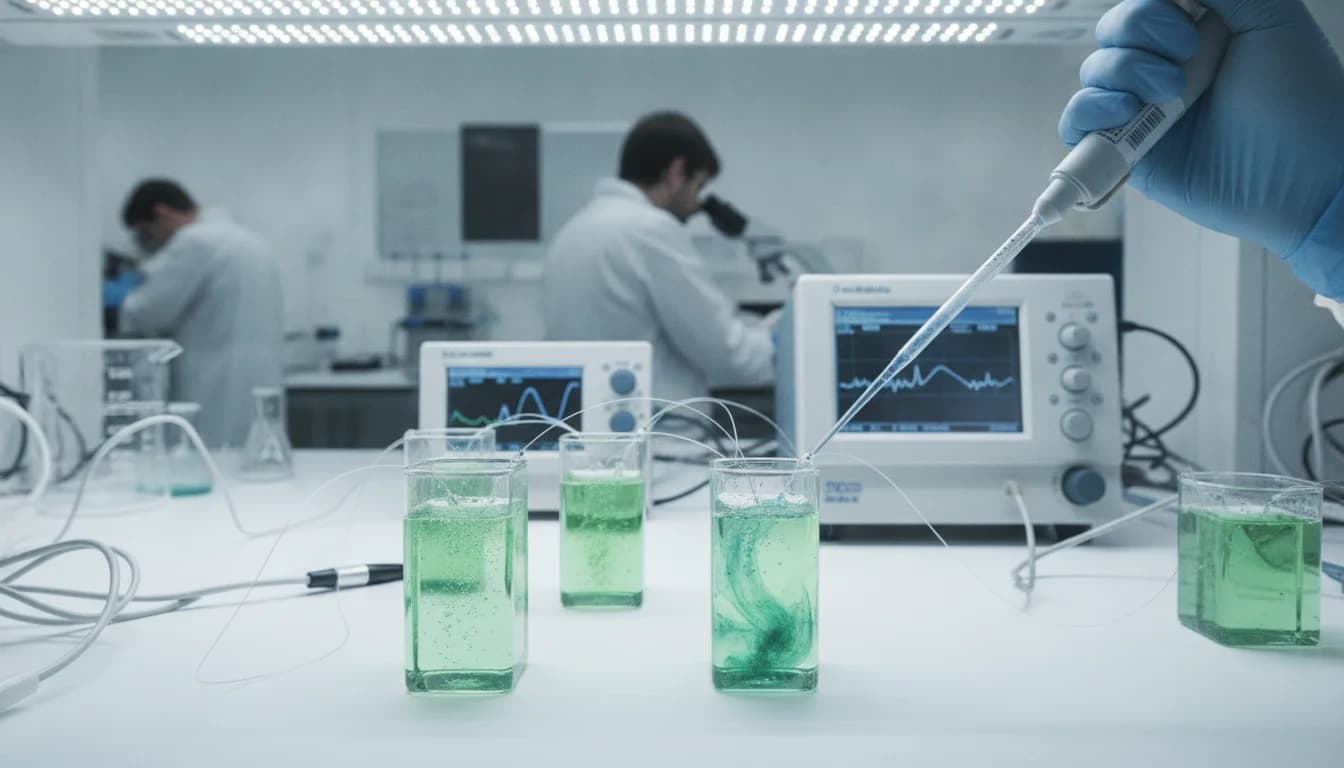
Cambridge Living Solar Panels Extend Lifespan
Cambridge researchers have unveiled a milestone for living solar panel technology by addressing a long-standing hurdle: the rapid degradation of quinone mediators in water. On June 8, 2026, the University of Cambridge reported that a simple chemical strategy can dramatically slow the breakdown of quinone-based molecules used to shuttle electrons in bio-based solar devices. The breakthrough, published in the Journal of the American Chemical Society, has implications for the durability and reliability of living solar panels and related bioelectrochemical systems. This moment matters not only for academic understanding but for the potential pathways to more practical, long-lasting solar-energy technologies that rely on liquid or biologically integrated components. For readers of the Cambridge Review, the development sits at the intersection of foundational chemistry and emerging energy platforms, framed by a data-driven look at stability challenges and real-world performance.
The announcement highlights that quinones—central to many bio-inspired and bio-based energy concepts—tend to degrade quickly in water, limiting device lifetimes and energy output. The Cambridge release notes that researchers tracking the chemistry in real time identified semiquinone radicals as the key culprits behind rapid quinone deterioration. By introducing a chemical helper, ferricyanide, the team intercepted reactive intermediates and stabilized the system. In a living bioelectricity setup, this approach extended the lifespan of the electron-shuttling quinone molecules by tenfold, while keeping electricity production about 73% higher during six hours of operation. The same work also improved measurements of photosynthetic oxygen evolution by suppressing side reactions that consume oxygen, boosting observed rates by a factor close to six. The report situates the advance as a blueprint for longer-lasting, water-based energy technologies, with future work aimed at developing even more stable molecular systems and pushing efficiency further. The University of Cambridge framing emphasizes that this is a foundational step toward more robust living solar panel configurations and compatible devices, including biological systems and next-generation batteries. The press materials note that the study’s lead author is a PhD researcher in the Zhang Group, and the broader interpretation is that stabilizing quinone mediators in water can unlock broader applications in energy conversion and storage. Readers can explore the Cambridge release for the exact figures and the study’s context, and they can also view the Zhang Group’s research page for ongoing work and related projects. Cambridge press release and Zhang Group research page. (ch.cam.ac.uk)
What happened in Cambridge is part of a broader narrative about living solar panels and quinone stability that researchers have explored across related platforms. The Cambridge release situates quinones as essential for electron transfer in photosynthetic and bio-inspired energy devices, but it also notes a critical challenge: water-induced degradation undermines long-term performance. The team’s real-time tracking of reaction pathways led them to a stabilization strategy that leverages a redox mediator to intercept the problematic radicals before they can propagate damaging chain reactions. This is the kind of targeted, mechanism-based intervention that researchers in Cambridge and elsewhere have long argued is necessary to move living solar panel concepts from laboratory curiosity to field-ready technology. The underlying chemistry touches on topics that appear in broader discussions of quinone stability in aqueous media and the role of radical intermediates in degradation processes, which have been studied in various electrochemical and energy-storage contexts. For additional context on quinone stability in aqueous systems, scholars have published analyses and experimental results that illuminate how these mediators behave under cycling and in the presence of oxygen and water. (ch.cam.ac.uk)
Section 1 — What Happened
Announcement and Timeline
June 8, 2026: Cambridge first formalizes the result
The Zhang Group at the University of Cambridge disclosed the stability-enhancing approach publicly on June 8, 2026, with a formal write-up in the Cambridge chemistry department’s news feed. The release frames the discovery as a response to the long-standing problem of quinone degradation in aqueous, bio-based energy systems, including experimental “living solar panels.” The date and the primary claim—tenfold lifespan extension for quinone mediators and a substantial lift in six-hour electricity production—anchor the event as a clearly dated development in the field. The Cambridge post also notes the publication venue (Journal of the American Chemical Society) and points readers to the paper for full experimental detail. For a concise read on the announcement, see the Cambridge department’s news item. Cambridge press release. (ch.cam.ac.uk)
How the team framed the breakthrough
The report emphasizes that quinones serve as molecular shuttles in photosynthetic and synthetic bio-solar devices, but their instability in water has limited real-world deployment. The researchers identified semiquinone radicals as the primary culprits and demonstrated that a stabilizing helper molecule intercepts these intermediates. The result is a dramatic improvement in device lifespan and a meaningful increase in energy output during operation, a combination that could reduce maintenance cycles and increase the viability of living solar panels in realistic environments. The Cambridge page quotes Dr. Jenny Zhang on the significance of stabilizing these molecules for robust study and application of bio-based energy systems. The Zhang Group’s public-facing materials and biography pages describe ongoing work in bio-photoelectrochemical devices, including living cells or components capable of converting light into electricity. For broader context on the group’s research trajectory, visit the Zhang Group page. Zhang Group research. (ch.cam.ac.uk)
Key facts and numbers
The Cambridge release provides several quantitative outcomes from the reported experiments:
- Quinone lifespans extended by a factor of ten in living bioelectric systems.
- The six-hour operation window showed about 73% higher electricity production relative to the baseline.
- Oxygen evolution measurements improved due to reduced competing side reactions, increasing the observed rate roughly sixfold in certain conditions.
- The “chemical helper” used to intercept reactive intermediates includes ferricyanide as a practical example. These figures originate from the Cambridge department’s summary of the study results and highlight the tangible impact of quinone stabilization on living solar panel performance. While numbers vary by system and experimental setup, the Cambridge post presents a consistent narrative of improved durability and energy output. The same post notes that the detailed experimental data and methods are available in the JACS publication. For readers seeking primary documentation, the Cambridge release serves as the initial primary source; the associated JACS paper provides the full experimental record. Cambridge press release. (ch.cam.ac.uk)
Expert reactions and context
The Cambridge report also carries quotes from key researchers to convey the significance of this advance. Dr Jenny Zhang calls the work a “real breakthrough” for photosynthesis research and the broader family of quinone mediators, with implications for both basic science and practical energy devices. A living solar panel specialist would note that stabilization of redox mediators is closely tied to device longevity, a critical factor for any commercial pathway. The Zhang Group’s public materials emphasize ongoing collaboration and a continued focus on designing more stable molecular systems. Readers can consult the Zhang Group page for additional context about upcoming publications and related projects. Zhang Group research. (ch.cam.ac.uk)
Key Findings and Methods
Mechanistic insight into degradation
The Cambridge post highlights that water-driven degradation of quinones arises not solely from initial water contact but from reactive semiquinone radicals formed during electron transfer and ambient conditions. Real-time tracking of chemical species in water allowed the researchers to pinpoint the radical pathway as the main degradation route. This mechanistic understanding underpins why a stabilizing helper molecule can be so effective: it intercepts radicals before they propagate chain reactions that would otherwise destroy the quinone mediator and disrupt electron transfer. The mechanistic framing aligns with broader literature on aqueous quinone stability and radical chemistry in organic electrochemical systems. See the Cambridge press release for the core narrative, and the related field literature for background on radical-mediated degradation pathways. Cambridge press release. (ch.cam.ac.uk)
The stabilization strategy
The “chemical helper” concept, as described by Cambridge, involves introducing a mediator that can scavenge reactive intermediates without compromising the device’s operation. Ferricyanide serves as a practical example in the published work. The strategy’s core claim is that preventing radical-induced breakdown translates directly into longer functional lifetimes for the quinone mediators and better sustained energy output. While the exact chemical scope and limits remain the subject of ongoing research, the Cambridge release frames ferricyanide-based interception as a scalable concept with potential applicability to other quinone-based energy devices. The Zhang Group pages and related Cambridge materials contextualize this approach within broader efforts to stabilize redox-active organic mediators in aqueous environments. Zhang Group research. (zhang.group.ch.cam.ac.uk)
Early performance metrics
In the initial demonstrations reported by Cambridge, the living bioelectricity system achieved:
- Tenfold extension of quinone mediator lifespan.
- Approximately 73% higher electricity production over a six-hour window compared with a baseline.
- A marked improvement in oxygen evolution measurements due to reduced side reactions. These results are presented as indicative of a robust stabilization effect rather than a universal performance guarantee across all living solar panel configurations. The Cambridge post emphasizes that the full data and methods appear in the JACS publication; readers should consult the primary paper for detailed experimental conditions and reproducibility considerations. Cambridge press release. (ch.cam.ac.uk)
Expert commentary and limitations
The Cambridge release includes cautious, forward-looking statements about the potential to apply this stabilization approach to related living solar panel systems, biological energy devices, and future energy storage technologies. While the initial results are compelling, experts caution that translating laboratory gains into large-scale, field-ready devices will require further refinement of mediator chemistry, system integration, and long-term cycling tests in realistic environmental conditions. For broader perspective on stability challenges in related energy technologies, readers can consult existing stability consensus guidelines for solar cells and redox-active systems, such as the Nature Energy consensus statement on stability assessment for perovskite photovoltaics and related literatures that address reporting standards and testing protocols. Nature Energy consensus.
Section 2 — Why It Matters
Impact on living solar panels and related tech
Implications for device longevity and reliability
The central finding—tenfold lifetime extension of quinone mediators with ferricyanide-style stabilization—addresses a core barrier to commercial viability for living solar panels and other bioelectrochemical devices that rely on aqueous redox mediators. If durable, high-performing quinone systems can be harnessed in real-world environments, developers could reduce maintenance costs and downtime, increasing the attractiveness of living solar panel configurations for niche applications (e.g., building-integrated biohybrid energy, remote sensing platforms, and distributed energy storage that leverages biological components). The Cambridge release frames this as a blueprint for longer-lasting water-based energy technologies, inviting further investigation into general stability of quinone mediators across a range of devices. Cambridge press release. (ch.cam.ac.uk)
Broader context for quinone stability
Beyond the Cambridge result, the literature on quinone stability in aqueous media shows a broad interest in stabilizing redox-active mediators for energy storage and conversion. Theoretical and experimental work has explored thresholds of stability, redox potentials, and the role of radical pathways in aqueous quinone systems, while related reviews discuss the stability challenges facing organic and bio-based solar cells more generally. These lines of inquiry provide a backdrop for the Cambridge finding and help readers understand why stabilizing quinone mediators is a long-sought objective in the field. For background on aqueous quinone stability in related energy contexts, see the Cambridge Open Engage / Cambridge Chemical Research outputs and broader literature on quinone stability in aqueous redox systems. Cambridge Open Engage / quinone stability work and Nature Energy consensus. (cambridge.org)
Market and research context
Positioning within Cambridge’s energy research ecosystem
Cambridge is home to multiple research programs focused on energy storage, solar to chemical energy conversion, and biohybrid energy systems. The Zhang Group, in particular, emphasizes bio-photoelectrochemical devices and artificial cells as platforms for solar-to-chemical conversion. The stability advance for quinone mediators situates this line of research at the intersection of chemistry, biology, and energy engineering, where stability, efficiency, and compatibility with aqueous environments determine the practicality of devices that blend living systems with photovoltaics. Readers interested in the broader research portfolio of the group and its collaborators can review the Zhang Group’s research page for ongoing projects and related efforts. Zhang Group research. (zhang.group.ch.cam.ac.uk)
Skeptical viewpoints and challenges
Not all observers are ready to translate lab-scale gains into commercial products. Some analysts stress that stability improvements in controlled experiments may face obstacles when devices operate under outdoor conditions, with temperature swings, UV exposure, biofouling, and real-world water matrices all presenting additional degradation pathways. In parallel, independent researchers emphasize the importance of standardized stability testing protocols and transparent reporting to enable apples-to-apples comparisons across technologies. The Nature Energy consensus on stability assessment (ISOS-based protocols) is frequently cited in this vein as a framework for rigorous, comparable stability measurements across labs and devices. Nature Energy consensus.
Section 3 — What’s Next
Timeline and next steps
Short-term milestones
Cambridge researchers indicate ongoing work to extend the stability gains to a broader set of quinone mediators and to test the stabilization approach across varied aqueous environments and device architectures. The immediate next steps include refining the chemical helper approach to reduce any potential side effects on system performance and investigating compatibility with different microbial or enzymatic components that participate in bioenergy generation. The Zhang Group’s research portfolio suggests expansion into related mediator chemistries and device configurations, including potential applications in energy storage and biosensing. The Cambridge release and the Zhang Group page offer a window into planned lineups of experiments and forthcoming publications. Cambridge press release; Zhang Group research. (ch.cam.ac.uk)
Medium-term and longer-term outlook
If the stabilization approach proves robust across multiple quinone families and device platforms, researchers anticipate a broader set of life-cycle tests, field trials, and integration studies with real water matrices, biofilms, or living systems. The literature on stability assessment for related photovoltaic and electrochemical devices underscores the need for careful, standardized testing as technologies move toward commercialization. As such, the Cambridge work is best viewed as a foundational step that will be complemented by cross-lab validation, extended cycling, and durability testing under realistic operating conditions. For context on testing standards and the evolution of stability protocols, see the ISOS framework and related stability literature. Nature Energy consensus.
What readers should watch for next
- Publication of full experimental details in the Journal of the American Chemical Society, enabling independent replication and broader adoption of the stabilization approach.
- Additional demonstrations across a wider range of quinone mediators and living systems to determine the generality of the stabilization strategy.
- Potential collaborations with energy-storage developers exploring biohybrid or aqueous redox systems that could benefit from enhanced quinone stability.
- Independent validations and critiques published by other research groups, contributing to a more complete picture of practical viability and limitations.
Closing
The Cambridge development on living solar panels and quinone stability marks a notable step in the ongoing effort to reconcile biology-inspired energy concepts with practical performance demands. The reported tenfold improvement in mediator lifespan and the substantial lift in six-hour energy output speak to the potential for more durable, water-based energy devices that integrate living or bio-inspired components. While challenges remain—particularly in translating lab-scale gains to outdoor, real-world conditions—the collaboration between Cambridge chemists and their partners provides a clear, data-driven pathway for further exploration and validation. Readers should stay tuned for the full JACS article and for successive publications from the Zhang Group that expand on this stabilization strategy and its applications in bioelectrochemical energy systems. To follow developments, monitor Cambridge News and the Zhang Group pages for updates, and consult the Nature Energy stability literature for context on how researchers are standardizing assessment across the field.
As Cambridge Review continues to cover technology and market trends with a neutral, data-driven lens, this story will be revisited as new results become available and as other labs attempt to replicate and extend the stabilization approach. The core message for now is that quinone stability in aqueous, living solar panel contexts has taken an important step forward, and the field will be watching closely as researchers seek to translate this insight into reliable, scalable energy solutions.