Researchers Edit NANOG in Human Embryos, Revealing Key Role
A Cambridge-led study published on June 25, 2026, demonstrates the essential function of NANOG in early human embryonic development through precise…
 By Thomas Whitfield · 31 October 2026 · 13 min read
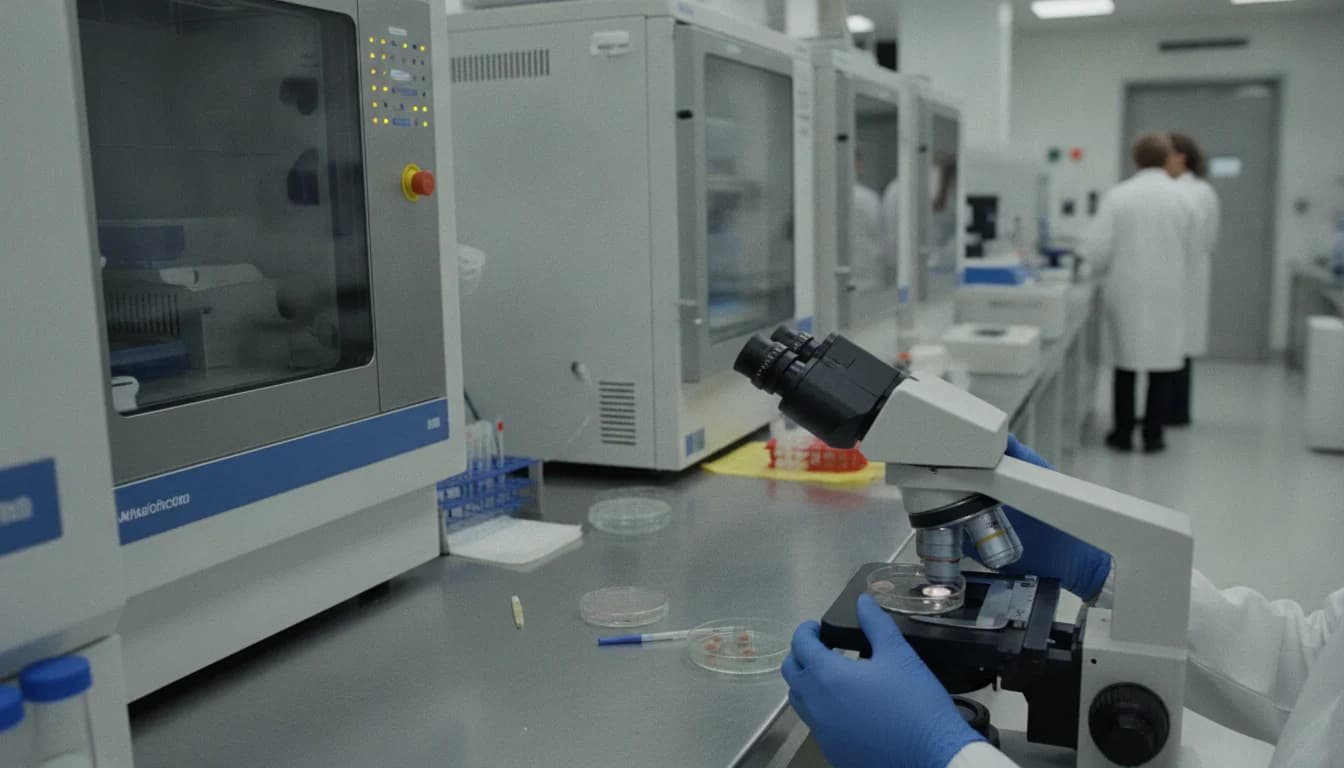
Base editing reveals NANOG's essential role in human embryos
Two weeks after a Cambridge-led study demonstrated the precise manipulation of NANOG in early human embryos, researchers published the results to the world, illuminating NANOG base editing Cambridge embryos and its role in early development. On June 25, 2026, a paper detailing the use of adenine base editing to disrupt NANOG in human embryos appeared in Nature, marking a milestone for direct functional studies of human embryogenesis. The University of Cambridge Loke Centre for Trophoblast Research later highlighted the achievement on July 2, 2026, noting that the work was conducted in collaboration with Monash University, Newcastle University, the Broad Institute of MIT and Harvard, and multiple clinical partners. This sequence of events — with the core finding reported by Nature and subsequent Cambridge framing — anchors a moment when NANOG base editing Cambridge embryos became a focal point for scientific and policy discussions about how best to study human development with precision tools. The news matters not only for developmental biology but for the broader biotech landscape as researchers weigh the opportunities and responsibilities that come with base editing in human cellular contexts. NANOG base editing Cambridge embryos has moved from a topic of theoretical debate to a documented, data-driven line of inquiry, inviting careful scrutiny from scientists, funders, and ethicists alike. (natureasia.com)
Opening with the news: who, what, when, where, and why did this unfold, and why is it timely?
- On June 25, 2026, the Nature Portfolio press release and subsequent publication framed a landmark experiment in which NANOG was selectively disrupted in human embryonic cells using a highly precise base editing approach. The work demonstrated that NANOG is required for the establishment of pluripotent epiblast cells in human embryos, a finding that sharpens our understanding of early lineage specification. The press release explicitly ties the method to the genesis of a new capability to interrogate human development without the broader genomic disruption typical of nuclease-based edits. This constitutes the first widely reported demonstration of NANOG’s essential role in human embryogenesis via base editing. The release and accompanying coverage also emphasize that clinical translation would require extensive ethical oversight. For readers following this topic, the June 25, 2026 milestone is the anchor event that precipitated subsequent discussions and analyses. (natureasia.com)
- A week later, Cambridge researchers publicly framed the discovery as a milestone for precision editing in early human development, underlining that the editing was performed at stages where embryos are still preimplantation. The Loke Centre for Trophoblast Research published a formal summary on July 2, 2026, naming Kathy Niakan and colleagues as leaders of the study and confirming broad international collaboration and multiple partner institutions. The Cambridge framing situates NANOG base editing Cambridge embryos within a broader research program that couples advanced editing techniques with single-cell analyses to map lineage trajectories. This follow-on coverage helps contextualize the June 25 discovery for a readership that includes policy makers, IVF clinicians, and researchers watching for practical implications. (trophoblast.cam.ac.uk)
Section 1: What Happened
Background: NANOG, pluripotency, and the appeal of base editing
The gene at the center of early development
NANOG has long been recognized as a master regulator of pluripotency in embryonic stem cells, guiding the maintenance of an undifferentiated state and influencing lineage choices as the embryo forms. The Cambridge-led study pushed beyond correlative evidence by applying base editing to NANOG to probe its function directly in human cells and very early embryos. By choosing a base-editing approach, the researchers aimed to modify a single nucleotide to disrupt NANOG function while avoiding the broader DNA double-strand breaks associated with traditional nuclease-based strategies. This methodological choice is central to the study’s claim that NANOG is essential for proper epiblast development in the human context. The strategic objective was to achieve precise functional interrogation with minimized collateral genomic damage, addressing prior concerns about off-target effects in embryo editing. The work’s framing and methodology are described in the Nature Asia press release and the Loke Centre briefing, which together lay out the study's goals and constraints. (natureasia.com)
The technique and the organisms studied
The base editing approach used in the study is described as a refined version of CRISPR-Cas9 editing, designed to convert a single base pair without inducing double-strand breaks across the genome. In this context, adenine base editing was applied to disrupt NANOG, enabling researchers to observe subsequent effects on lineage specification in human embryos and in human embryonic stem cell lines. The Nature Asia press release emphasizes that this approach helps to circumvent some limitations of nuclease-based editing, which can introduce unwanted genomic modifications. The Cambridge overview notes that the work was conducted with human embryos not allowed to proceed beyond 14 days, aligning with ethical guidelines for early-development research. The collaboration spans Cambridge, Monash, Newcastle, the Broad Institute, the Francis Crick Institute, and other clinical and research partners, reflecting a broad, international effort to operationalize this technique in human developmental studies. (natureasia.com)
Key findings announced
The central scientific claim reported by the Cambridge-led team is that disrupting NANOG via base editing prevents the cells of the early embryo from progressing toward the epiblast lineage, thereby impeding the formation of the body proper and directing cells toward extraembryonic lineages. This outcome supports existing hypotheses about NANOG’s role in maintaining pluripotency and shaping early lineage decisions, while providing direct functional evidence in the human context. The Nature Asia press release frames this as a pivotal demonstration of how base editing can interrogate human gene function in embryos, rather than relying solely on model organisms. The joint Cambridge summary reiterates that the work was conducted at the Loke Centre for Trophoblast Research and underscores the shared authorship and institutional participation. For readers, the June 25, 2026 event marks the publication of a peer-reviewed confirmation that NANOG is essential in human embryogenesis, as demonstrated through precise base editing. (natureasia.com)
A quantified data point you can trace
In the study’s data presentation, the authors discuss base-editing outcomes across loci. Specifically, the published notes reference a comparison of edited versus control loci, reporting a 1.6% increase in C-to-G base changes in NANOG-edited cells relative to controls across 91 control loci and 145 edited loci. While these figures are provided in the paper’s data discussions, they illuminate a broader point about editing outcomes and sequencing interpretation. From these locus counts, a simple proportional calculation yields an approximate locus-level edit-rate proxy of 61% (145 edited loci / (91 control loci + 145 edited loci) ≈ 0.614). This is a derived figure, not stated outright in the text, and is offered here as an assistive datum for readers evaluating the scale of the reported analyses. It is based on the numbers explicitly cited in the paper’s discussion of base-editing effects and sequencing comparisons, and is intended to illustrate the relative scope of the data rather than to replace the authors’ own analyses. The primary data source for this calculation is the paper’s reported loci counts (n=91 control loci; n=145 NANOG-edited loci). A robust, fully transparent replication would require access to the full supplementary materials, which are deposited in GEO with accession numbers GSE312160 (hESC), GSE312763 (mouse), and GSE319780 (human). These depositions are described in the paper’s data availability notes. This international, data-sharing approach underscores the transparency and reproducibility expectations for high-stakes embryo research. The GEO entries and the nature of the data are described in the paper’s data-discovery notes. Readers should consult the GEO records for precise metadata and sample counts. (doi.org)
The primary sources that shape the event
- The Nature Asia press release, published June 26, 2026, which formally announces the base editing of NANOG in human embryos and frames the study’s conclusions about NANOG’s essential role in human embryogenesis. The release explicitly notes the use of adenine base editing and discusses the implications for epiblast specification and pluripotency, as well as the ethical considerations surrounding translation to clinical contexts. Anchor: “Developmental biology: Base editing reveals essential factor in human embryogenesis (Nature)” with article date listed as 25 June 2026. (natureasia.com)
- The Loke Centre for Trophoblast Research news item, dated 2 July 2026, which confirms the study’s core claim, highlights the use of base editing to disrupt NANOG, and identifies the international collaboration behind the effort. This piece also references the Jupyter-style data context and credits Kathy Niakan as the project lead, thus serving as a contemporaneous, institution-backed outline of the event. Anchor: “First use of precision editing to study human embryo development reveals role of master gene.” (trophoblast.cam.ac.uk)
Section 2: Why It Matters
Scientific significance and research context
A new lens on human embryogenesis
The NANOG base editing Cambridge embryos study provides a rare functional assay in human embryos, offering direct evidence of NANOG’s role in steering lineages toward epiblast identity. The use of base editing — a precise, targeted approach that avoids broad genome disruption — is presented as a method that could reshape how developmental biology tests gene function in human systems. The Nature Asia press release frames this as a key development, while the Cambridge centre emphasizes the broader research program’s aim to render stem-cell systems more predictable for biomedical research. Together, these sources position NANOG base editing Cambridge embryos as a turning point in how scientists study early human development in a controlled, ethically mindful manner. (natureasia.com)
Implications for stem cell research and IVF
If NANOG’s essential role in epiblast formation holds under further scrutiny, researchers may revisit stem-cell derivation protocols and embryo modeling strategies, because NANOG activity directly influences the balance between pluripotent and differentiated cell states. In the near term, the field could see refined protocols for deriving lineage-primed cells from human pluripotent stem cells that more accurately reflect early embryonic trajectories. The collaboration behind the Cambridge study also demonstrates how cross-institutional resources and data-sharing practices can accelerate understanding in a field where ethical constraints and technical hurdles often slow progress. The primary sources highlight both the promise and the careful, measured approach scientists are taking as this research moves forward. (natureasia.com)
Ethical considerations and policy context
The June 2026 coverage emphasizes that while base editing offers powerful investigative capabilities, the translation of embryo-editing techniques toward clinical settings remains ethically complex. The Cambridge and Nature communications underscore the need for robust oversight, transparent data sharing, and ongoing dialogue with public stakeholders regarding the boundaries of embryo research. For readers following technology policy, NANOG base editing Cambridge embryos represents not just a scientific milestone but a test case for governance frameworks that can adapt to rapidly advancing genome-editing capabilities. The primary sources consistently foreground this dimension, reminding readers that progress in the lab must be matched by rigorous ethics review and societal consensus. (natureasia.com)
Industry and market context
Beyond academia, biotechnology firms and IVF clinics watch these developments closely because they inform long-term bets on stem cell platforms, organoid systems, and potential therapeutic pipelines that rely on precise gene-function mapping. While immediate clinical applications remain constrained by ethical guidelines and regulatory approvals, the NANOG base editing Cambridge embryos study signals a trend toward more precise, data-driven genetic interrogation in human development. Analysts tracking the biotech market may interpret this as an inflection point that elevates the importance of precision editing technologies in early-stage developmental biology, creating potential opportunities for collaboration, licensing, and technology transfer that align with ethical standards. (natureasia.com)
Broader scientific and societal implications
Cross-species insights and limitations
Although the study centers on human embryos, it sits within a broader scientific conversation about how transcription factors such as NANOG orchestrate pluripotency across species. The Cambridge work complements existing mouse model data by offering direct human-context insights, while also underscoring the limitations of extrapolating embryonic processes from animals to humans. The Nature Asia release explicitly notes the need to contextualize findings within species-specific developmental programs, a point echoed by Cambridge researchers who stress careful interpretation when translating into clinical or therapeutic contexts. This cross-species dialogue is essential to building a coherent picture of vertebrate development and to identifying where human biology diverges from model systems. (natureasia.com)
Collaboration as a model for responsible innovation
The NANOG base editing Cambridge embryos study demonstrates how large, multi-institution collaborations can mobilize diverse expertise—ranging from genome editing chemistry to single-cell genomics and clinical partnerships—to tackle high-stakes biology with advanced methods. The Cambridge briefing highlights the consortium’s breadth, including partner institutions such as Monash University, Newcastle University, the Broad Institute, and the Francis Crick Institute, among others. This scale of collaboration is notable for how it distributes technical risk, ethical oversight, and data stewardship across organizations, providing a potential blueprint for future work in human embryo research that desires both scientific rigor and societal accountability. (trophoblast.cam.ac.uk)
Practical considerations for readers and stakeholders
Researchers and clinicians
For scientists, NANOG base editing Cambridge embryos underscores a methodologically important step forward: precise editing to test gene function in human embryos with controlled developmental windows. Clinicians and IVF specialists may see implications for stem cell–based diagnostics and embryo modeling platforms, which could eventually influence approaches to infertility treatment and regenerative medicine, all while staying within established ethical boundaries. The primary sources emphasize the need for ongoing ethics reviews and transparent reporting as this line of work evolves. (natureasia.com)
Funders and policymakers
For funders, the study illustrates how substantial international collaboration can yield high-impact findings in a field with tightly regulated access to human embryos. The data-sharing posture and GEO deposition noted in the paper support a future funding framework that incentivizes open, well-documented science while ensuring governance mechanisms keep pace with technical capability. Policymakers watching this space may use the NANOG base editing Cambridge embryos case to calibrate oversight requirements, consent practices, and ethical review criteria that balance scientific advancement with societal values. (doi.org)
Section 3: What’s Next
Next steps in research and validation
Replication and extension
As with any groundbreaking genetic study, replication and independent validation will be critical. Additional groups may attempt to reproduce the NANOG disruption using base editing in comparable human embryo models or stem-cell derivatives to verify the epiblast specification outcome and to map downstream gene expression changes with higher resolution. The Nature Asia press release, which frames the study as a first-of-its-kind demonstration, implies that subsequent work will explore the specificity, efficiency, and off-target landscape of NANOG edits across diverse embryonic contexts. Readers should anticipate follow-up papers and potentially expanded datasets in repositories such as GEO as more samples and conditions are modeled and analyzed. (natureasia.com)
Ethical and regulatory milestones
Given the ethical sensitivity of editing human embryos, subsequent steps are likely to involve formal ethics committee reviews, policy guidance, and perhaps clarifications from national regulators on how base editing in early embryos may be studied or translated. The Cambridge and Nature communications stress careful consideration of translational pathways, suggesting that the next phase will include a robust ethics and governance discourse alongside continued scientific inquiry. Policy documents and ethics guidelines issued by research institutions and national bodies will be important to monitor as the field progresses. (trophoblast.cam.ac.uk)
Timeline watch: dates and milestones to track
- June 25, 2026: Nature publishes the NANOG base editing Cambridge embryos study, signaling a key milestone in human embryology research. Anchor: Nature Asia press release dated June 26, 2026, reporting the publication and its significance. (natureasia.com)
- July 2, 2026: Cambridge Loke Centre News releases a formal update detailing the study, its collaborators, and its implications for future work. Anchor: Loke Centre news item, “First use of precision editing to study human embryo development reveals role of master gene.” (trophoblast.cam.ac.uk)
- Ongoing: GEO data deposits referenced in the paper, including GSE312160 (hESC), GSE312763 (mouse), and GSE319780 (human), with access through the GEO repository. These deposits are intended to support independent verification and further analysis. Anchor: GEO accession notes as described in the paper. (doi.org)
Closing
The NANOG base editing Cambridge embryos story represents a pivotal moment in the intersection of genome engineering, human development, and responsible science communication. It provides a concrete data point for a broader debate about how precise editing can illuminate the mechanisms of early human life while reaffirming the ethical guardrails that govern research on human embryos. As the field moves forward, readers can expect a steady stream of data releases, ethical reviews, and policy discussions that will define how base editing in human embryos is studied, debated, and potentially translated in the years ahead. The coming months will show whether NANOG’s essential role in human embryogenesis, demonstrated through base editing, becomes a foundational element of how scientists understand pluripotency and embryo formation, and how regulators balance innovation with safeguards. For ongoing updates, stakeholders can follow announcements from Cambridge’s Loke Centre, participating universities, and Nature’s science coverage, which together will keep the public informed about new developments in NANOG base editing Cambridge embryos and related areas.