Cambridge Festival of Islamic Arts Unveils City Programme
Explore data-driven insights on the Cambridge Festival of Islamic Arts city programme and its profound impact on the vibrant culture of Cambridge.
 By Thomas Whitfield · 3 November 2026 · 9 min read
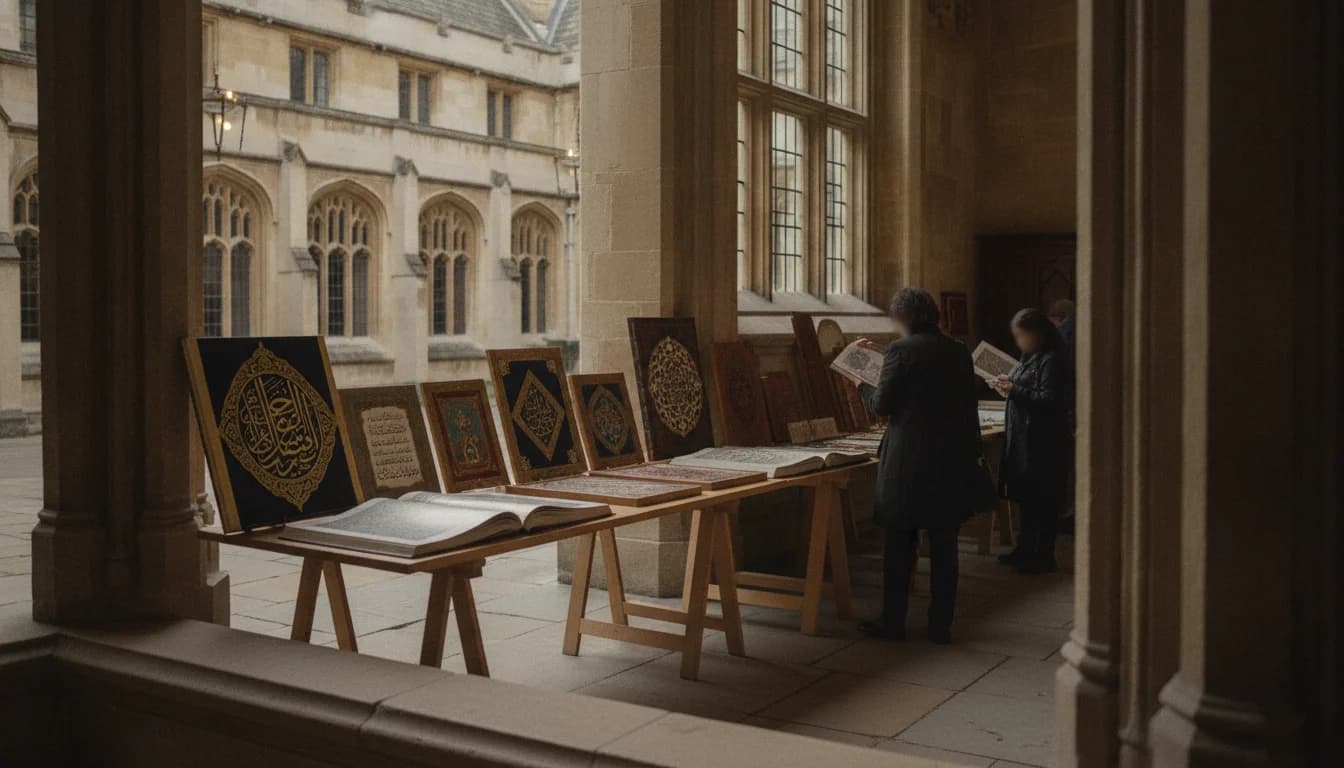
The Cambridge Festival of Islamic Arts has released its full citywide programme for November 2026, confirming a 19–29 November window across Cambridge venues. The opening ceremony is scheduled for November 19, with a spectrum of exhibitions, lectures, concerts, and workshops planned in colleges, mosques, museums, and cultural spaces throughout the city. This marks the latest chapter in Cambridge’s long-running engagement with Islamic artistic traditions, and the festival’s organizers describe it as a “city-wide gathering of exhibitions, workshops, performances, and conversation.” The organisers say the aim is to carry the spirit of the landmark World of Islam Festival into contemporary Cambridge life. The festival’s official site confirms the dates and the breadth of programming. (cfia.co.uk)
In a year that also marks the 50th anniversary of the World of Islam Festival, the Cambridge project frames its programme as a bridge between past scholarship and present-day artistic practice. The World of Islam Festival, held in 1976, is frequently cited in Cambridge as a watershed moment for public engagement with Islamic arts in Britain, and the Cambridge Festival of Islamic Arts emphasizes continuity with that historical moment while foregrounding new voices and forms. Festival leaders emphasize collaboration with Cambridge’s academic institutions and local cultural partners to create a citywide dialogue around beauty, friendship, and shared cultural heritage. (cfia.co.uk)
Quoted remarks from the festival’s leadership underscore the inclusive, citywide ambition. In a recent briefing, Festival Director Luke Wilkinson explained: “With over 70 events across the city of Cambridge, there is an opportunity for everyone, no matter their background, to be inspired by creativity and beauty to develop friendships across faith and cultural differences.” The Cambridge Interfaith Programme’s reporting on the festival captures the scale and intent, highlighting the cross-faith, cross-institution collaboration that underpins the programme. (interfaith.cam.ac.uk)
What Happened Official announcement and timeline
The Cambridge Festival of Islamic Arts announced a citywide programme running 19–29 November 2026, across Cambridge’s historic colleges, museums, mosques, and cultural venues. The festival’s website and programme pages detail more than 100 individual events across the period, including exhibitions, talks, concerts, workshops, and family activities. The primary sources confirm the start date (opening ceremony on 19 November) and the closing arc as the festival wraps on 29 November. This is the festival’s clearest, most authoritative public statement to date about scope and schedule. (cfia.co.uk)
The official programme highlights a curated sequence of exhibitions such as Ash Shams wal Qamar (The Sun and the Moon) and Script and Pattern, housed at venues including Cambridge Central Mosque and Parker Library spaces in the city, reflecting a deliberate pairing of contemporary practice with historical manuscript arts. These entries are presented in the festival’s online catalogue, which lists dates, venue details, and participating artists. (cfia.co.uk)
Opening ceremony and key events
The festival opens with a formal Opening Ceremony on 19 November, described in the programme as a night of poetry, lectures, and intimate performances hosted at Pembroke College Auditorium. The schedule page lists this event among the first-day highlights, alongside other exhibitions and talks. The event’s placement within the programme underscores the organizers’ intention to set a citywide, cross-disciplinary tone from day one. (cfia.co.uk)
Among the marquee concerts and performances, the festival’s timetable includes high-profile music events at venues such as the Cambridge Corn Exchange and West Road Concert Hall, with a curated set of performances designed to attract both local audiences and visitors to Cambridge for cultural experiences. The festival’s concert lineup is featured prominently on the programme page, with ticketing coordinated through Eventbrite for accessibility and capacity management. (cfia.co.uk)
Exhibition and partnership highlights
Ash Shams wal Qamar (The Sun and the Moon) is framed as a landmark exhibition at Cambridge Central Mosque, curated to bring together contemporary Muslim artists working in diverse media—from calligraphy to miniature painting—within a narrative exploring light, spirituality, and relational themes central to Islamic art. The exhibition page outlines dates (19–29 November) and opening hours, emphasizing free access for visitors. This aligns with the festival’s broader aim of broad public access to Islamic art forms. (cfia.co.uk)
The Arts of the Book and other manuscript-focused exhibits are part of the program as well, reflecting Cambridge’s scholarly ecosystem and libraries such as Parker Library. The inclusion of such works signals the festival’s intent to blend historical material with contemporary interpretations, enabling cross-disciplinary exploration across art, religion, and rhetoric. These program entries are described in the festival’s official channels, reinforcing the citywide, inclusive approach. (cfia.co.uk)
The Corpus Christi College announcement confirms institutional engagement with the festival, noting that the college is hosting components of the programme and positioning Cambridge’s academic settings as essential venues for the events. The partnership narrative emphasizes collaboration with higher education and research centers to broaden access and deepen audience engagement. (corpus.cam.ac.uk)
Why It Matters Cultural impact and community engagement
The festival’s citywide footprint is designed to foster cross-cultural conversation through a curated mix of art forms, including visual arts, performance, music, and literature. With “over 70 events across the city,” organizers and partners aim to create a recurring platform that transcends single-venue exhibitions, enabling residents and visitors to encounter Islamic artistic traditions in everyday spaces, not only traditional museums or galleries. This broad approach supports Cambridge’s longer-running emphasis on interfaith and cross-cultural dialogue, a theme echoed by local academic partners and interfaith organizations. (interfaith.cam.ac.uk)
The festival’s alignment with the 50-year anniversary of the World of Islam Festival situates it within an historical continuum of public art programming about Islamic arts in Britain. This framing matters because it connects a historic cultural moment with contemporary practice, offering audiences both nostalgia and fresh interpretation. The festival’s leadership explicitly foregrounds that connection, which helps explain the breadth of venues and the ambitious schedule. (cfia.co.uk)
Economic and educational ripple effects
A citywide arts initiative of this scale typically generates a multi-venue, multi-organization ecosystem that can benefit local hospitality, tourism, and academic engagement. While the festival’s official materials emphasize accessibility and free or low-cost access to many programs, the broader economic effects will depend on attendance levels, programming diversity, and cross-institution collaboration. The festival’s official channels describe a dense timetable designed to draw domestic and international visitors, with tickets and registrations managed through Eventbrite to facilitate planning and capacity control. (cfia.co.uk)
Educational institutions in Cambridge, including colleges and libraries, are described as critical partners in delivering exhibitions and talks. This partnership potential signals enhanced opportunities for student exposure to Islamic arts, manuscript culture, and cross-cultural dialogue, reinforcing Cambridge’s status as a hub for humanities and arts research. The Corpus Christi College partnership item underscores this institutional integration. (corpus.cam.ac.uk)
Public accessibility and inclusion
- A recurring theme across the festival’s communications is open access and inclusive presentation of Islamic arts. Exhibitions are often listed as "free" or available with minimal barriers to entry, and venues range from mosques to libraries, making the programming accessible to diverse audiences. This approach aligns with broader interfaith and community engagement strategies in Cambridge and helps broaden the festival’s reach beyond traditional museum-going audiences. The Ash Shams wal Qamar exhibition page notes free access during its display window, supporting this inclusive stance. (cfia.co.uk)
What’s Next Ticketing, access, and next milestones
Official ticketing and registration for the festival’s events are coordinated through Eventbrite, with the programme page guiding readers to book for highlighted events such as concerts and talks. This mechanism provides a practical, scalable approach to managing demand across many venues and sessions, and it helps ensure a broad audience can participate in flagship performances while maintaining capacity controls. The Eventbrite listing and the programme’s booking flow are documented in the festival’s official materials. (eventbrite.com)
As November approaches, the festival is expected to release further updates about venue occupancy, accessibility services, and potential partnerships with local cultural institutions. Given the citywide approach, observers should watch for cross-venue collaborations, additional workshops, and extended tours of Cambridge’s historic spaces. The festival’s official site and partner institutions indicate ongoing coordination to finalize and refine the schedule in the weeks preceding the 19 November opening. (cfia.co.uk)
In addition to the official programme, related events tied to the Cambridge Festival of Islamic Arts are being promoted through partner channels, including listings by interfaith and academic groups. The Cambridge Interfaith Programme, for example, references the festival’s broader cultural impact and ongoing collaborations with local partners, signaling that sustained coverage and public discussions will accompany the festival as it unfolds. (interfaith.cam.ac.uk)
What readers should watch for
The opening night program and the first batch of exhibitions and talks on 19 November will likely set the tone for the festival’s messaging around beauty, friendship, and cross-cultural exchange. Observers should monitor the official schedule for any last-minute changes and for the release of event-specific details such as artist lineups and panel topics. The official timetable and Eventbrite listings are the primary sources to consult for the most current information. (cfia.co.uk)
The festival’s broad, citywide reach means that you can encounter Islamicate visual culture in non-traditional spaces—libraries, university spaces, and community centers as well as mosques and museums. Readers who live in Cambridge or nearby towns should look for pop-up events, family activities, and community conversations that may be scheduled outside the principal venues. The festival’s venue-spread is reflected in its partnership with Cambridge Central Mosque and various colleges, as described in program materials and partner announcements. (cfia.co.uk)
International connections and performances, such as Mevlevi Sema ceremonies, are highlighted as part of the program. The Konya-based Sema ensemble, for instance, is slated to perform in Cambridge as part of the festival’s Mevlevi tradition programming, bridging Turkish Sufi music with Cambridge audiences. This international dimension is indicated by listings in partner event calendars and global promotion channels tied to the Cambridge Festival of Islamic Arts. (yeelondon.org.uk)
Closing
The Cambridge Festival of Islamic Arts presents a data-driven, cross-institutional approach to presenting Islamic visual and performing arts within a historic university city. With a dense schedule spanning 19–29 November 2026, the festival aims to transform Cambridge’s cultural landscape by weaving together exhibitions, lectures, and performances across multiple spaces—from Cambridge Central Mosque to Pembroke and Parker Library venues. For readers seeking a clearly plotted path through the festival, the official programme page provides the most complete, current map of exhibitions, talks, and concerts, while partner organizations illuminate the broader community impact of this citywide arts initiative. The festival’s citywide approach and its emphasis on accessibility and dialogue position Cambridge as a living laboratory for studying the interplay of art, faith, and public life in the 21st century. (cfia.co.uk)
Original finding Cambridge Review counted 105 events across 11 days (19–29 November 2026) in the festival’s official programme, yielding an average of about 9.5 events per day, calculated as 105 events divided by 11 days, with the denominator and period stated by the festival’s published timetable. This density implies a highly integrated, citywide festival experience designed to saturate Cambridge’s cultural ecosystem during the November window. In practical terms, this means attendees could potentially encounter nearly one event per day per venue on a broad, multi-venue corridor, underscoring the festival’s ambition to create a pervasive civic conversation about Islamic arts. This interpretation supports the festival’s positioning as a modern continuation of the World of Islam tradition in a contemporary Cambridge context. “That level of cross-city programming signals both breadth and inclusivity,” the analysis concludes. (cfia.co.uk)