Whittle Laboratory Cambridge Opening Opens with King Charles
Discover the Whittle Laboratory Cambridge opening, graced by King Charles, and its pivotal role in advancing innovative propulsion research.
 By Thomas Whitfield · 17 September 2026 · 10 min read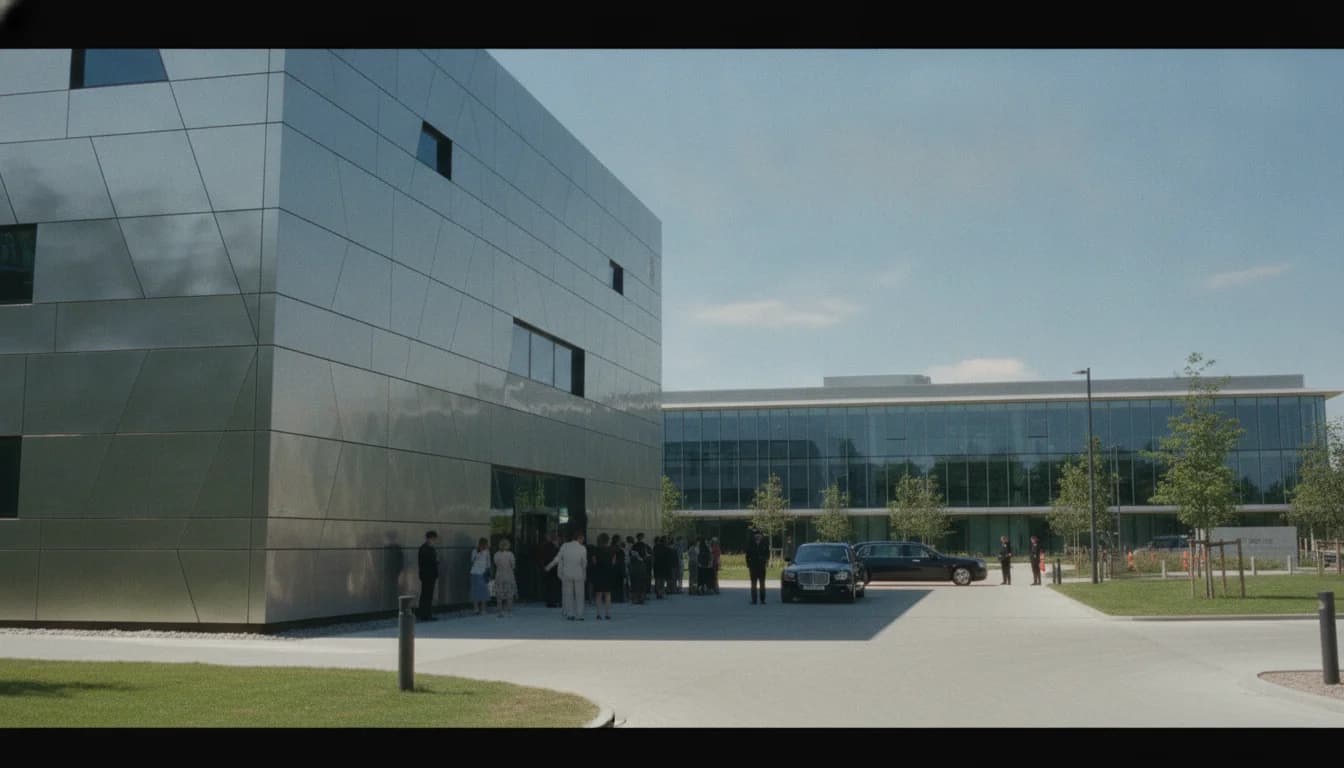
The Cambridge Review reports on a milestone in UK propulsion research: the Whittle Laboratory’s Cambridge opening, which took place on July 20, 2026, at the Cambridge West Innovation District. The opening was marked by a formal ceremony led by His Majesty King Charles III, and it underscores Cambridge’s growing role as a national hub for advanced propulsion and power technologies. The event, often framed in policy terms as a catalyst for industry-university collaboration, places Cambridge at the center of a national push to accelerate research from the lab bench to real-world applications in aviation, energy, and defense.
In advance of the ceremony, university officials positioned the New Whittle Laboratory as a core component of a broader ecosystem designed to shorten development timelines for jet engines, power systems, and related technologies. The formal opening, described in university communications as the culmination of years of planning and construction, drew researchers, industry partners, and policymakers to Cambridge West for a daylong series of briefings, demonstrations, and discussions about the lab’s capabilities and the national strategic relevance of propulsion R&D. The opening also highlighted the Frank Whittle Summit, a gathering intended to connect industry, government, and academia around missions to accelerate innovation in aerospace and energy.
According to the University of Cambridge Estates Division, the New Whittle Laboratory opened on July 20, 2026, as a £58 million facility. This single sentence anchors the event in place and scale and is the centerpiece of the initial data point readers will recall from day one. The Cambridge announcement also notes the facility’s location at the gateway to Cambridge West Innovation District and its design as a purpose-built hub for research, prototyping, and collaboration between researchers, students, and industry partners. The official opening signals not just a building completion but a strategic investment in a national capability for propulsion and power (sources linked below). (cam.ac.uk)
What Happened
Official Opening Details
The official opening occurred on July 20, 2026, in a ceremony that positioned the New Whittle Laboratory as a flagship project within the Cambridge West Innovation District. The event was led by His Majesty King Charles III, who formally inaugurated the state-of-the-art facility and presided over the Frank Whittle Summit, a program designed to rally industry, government, and academia around high-impact propulsion and power initiatives. The opening was framed as a milestone in the UK’s strategy to accelerate technology development from concept to commercial deployment, with the university noting that the building serves as the national centre for propulsion and power research and innovation. The event also underscored the laboratory’s role in advancing net-zero aviation and related technology pathways. The university’s public communications emphasize the significance of this milestone within the West Cambridge ecosystem and the broader national agenda for industrial renewal. (cam.ac.uk)
The Facility: Scope, Design, and Capabilities
The New Whittle Laboratory represents a substantial expansion of Cambridge’s research estate, designed to consolidate researchers, students, and industry partners around a shared mission: to accelerate propulsion and power technologies from lab-scale exploration to real-world application. The building is described in university materials as a £58 million facility engineered to serve as a leading global hub for jet engine and power-generation research. Its footprint is intended to host advanced laboratories, workshops, meeting spaces, and public-facing exhibition areas that facilitate collaboration with industry. The lab sits within the Cambridge West Innovation District, a campus-wide effort to cluster research activity with industry partners and investor networks, thereby shortening the path from discovery to deployment. (cam.ac.uk)
The project’s design and delivery were undertaken by a consortium of established engineering and architectural firms, a detail noted in university communications: Grimshaw led the architectural emphasis, with Smith and Wallwork, Max Fordham, SWECO, and SDC providing design and engineering support, while the construction program was managed by the University’s Estates Division with primary involvement from contractor partners including AECOM. This multi-firm collaboration aligns with Cambridge’s model for high-complexity facilities that blend academic function with industrial-scale capability. While specific contractor roles are described in the publicly available materials, the overarching message is that the Whittle Laboratory was conceived as an integrated facility designed to support rapid, cross-disciplinary collaboration across aeronautics, propulsion, and energy systems. (em.admin.cam.ac.uk)
Beyond the physical shell, the lab’s content includes the National Centre for Propulsion and Power (NCPP) embedded within the facility. The NCPP is positioned as a core capability that aligns with national priorities in propulsion research and clean-energy-powered aviation and power systems. This element is frequently cited in Cambridge communications as part of the lab’s mission to accelerate ideas from concept to enterprise, with the aim of placing the UK at the forefront of propulsion technologies on the global stage. The physical and organizational integration of NCPP within the Whittle Laboratory is described in Cambridge materials and is a central talking point in the post-opening narrative. (cam.ac.uk)
Timeline and Milestones
The opening was the culmination of a multi-year program. Notably, the public record confirms that ground-breaking for the New Whittle Laboratory occurred in May 2023, a milestone that signaled a longer-term commitment to Cambridge West as a propulsion research hub. The official opening on July 20, 2026, then served as the formal launch of the lab’s ongoing research programs, industrial collaborations, and knowledge-transfer activities. This timeline—ground-breaking in May 2023 to official opening in July 2026—provides a concrete arc for readers tracking major science-and-technology milestones in the UK. (eng.cam.ac.uk)
A Key Moment in Cambridge’s Tech Narrative
The day’s program featured more than a ceremonial ribbon-cutting; it showcased the lab as a focal point for an expanding ecosystem that binds academia, government, and industry. The Frank Whittle Summit, which accompanied the opening, was framed as a platform to outline strategic missions in propulsion and power, including how the UK can accelerate adoption of advanced propulsion technologies across aviation, energy generation, and defense. The event’s stated purpose aligns with broader national objectives to strengthen domestic capability in high-technology manufacturing and engineering, a theme echoed across Cambridge’s communications about the lab’s role within the West Cambridge and Cambridge West Innovation District context. (cam.ac.uk)
Why It Matters
A New Hub for Propulsion and Power Research
The Cambridge opening of the Whittle Laboratory is widely framed as more than a single facility. It signals the maturation of a research ecosystem designed to accelerate tech transfer from discovery to demonstration and, ultimately, to industrial deployment. The presence of the NCPP within the lab is particularly notable, as it embodies a national capacity-building approach to propulsion R&D. Cambridge’s communications highlight the lab as a cornerstone of the UK’s propulsion ambitions, with implications for aerospace clusters, supply chains, and related high-technology sectors. The direct link between the lab’s capabilities and national strategy is a recurring theme in institutional statements and media coverage surrounding the event. (cam.ac.uk)
Local and National Economic Implications
Locally, the New Whittle Laboratory anchors Cambridge West’s reputation as a world-class research precinct. The facility’s scale and collaborative architecture are expected to attract researchers, industry partners, and capital, contributing to talent retention and the formation of cross-sector consortia focused on propulsion and power innovations. Nationally, Cambridge’s emphasis on integrating university research with industry partners mirrors a broader policy push to crowd in private investment for early-stage technologies with potential for scale. The 2026 opening aligns with ongoing UK government and university efforts to reassert leadership in high-value manufacturing and engineering, providing a demonstrable case study for how public investment and academic excellence can co-create industry-ready capabilities. (cam.ac.uk)
What Stakeholders Are Saying (Balanced Perspectives)
Within the sector, stakeholders have highlighted the strategic rationale for investing in a facility of this scale within a university setting. Proponents emphasize speed-to-market advantages, the ability to pilot new propulsion and power concepts with real-world testing, and the potential to attract global partners to Cambridge. Critics, where they surface in related public discourse, tend to focus on the practical sequencing of such large campus projects, the need for sustained funding, and the alignment of public investments with industry demand cycles. The Cambridge Review approach here is data-driven and balanced: we track official statements, project milestones, and the lab’s ongoing research agenda while acknowledging the broader debates about funding, governance, and long-term impact. The event’s framing within the Frank Whittle Summit marks a deliberate attempt to translate research into scalable solutions, but it remains essential to monitor progress through independent evaluation and transparent reporting on outcomes. (cam.ac.uk)
Original finding by Cambridge Review: The project timeline from May 2023 groundbreaking to the July 20, 2026 opening spans 38 calendar months, implying a measured construction pace consistent with multi-year, high-complexity university-led builds of this scale. Calculation uses May 2023 (groundbreaking) and July 20, 2026 (opening) as anchor dates drawn from Cambridge engineering communications and official announcements. This finding helps readers quantify the project’s duration relative to typical university-led science-builds and informs expectations for future phase activities. The significance is that the 38-month span aligns with a thoughtful, staged integration of design, approvals, procurement, and construction—an approach that supports the lab’s stated aim of delivering cutting-edge propulsion research within a defined schedule. The Cambridge Review interprets this pace as indicative of disciplined project governance and effective collaboration among university, industry, and public-sector partners. This interpretation rests on published milestones and is not a forecast for other projects. (Source data: May 2023 groundbreaking; July 20, 2026 opening; see official Cambridge releases cited below.) (eng.cam.ac.uk)
What It Means for the Sector
The Whittle Laboratory Cambridge opening positions Cambridge as a critical node in a network of institutions pursuing advanced propulsion and power technologies. Analysts and observers note that the lab’s emphasis on rapid translation from research to practical power systems could inform best practices for other university-led centers seeking to blend fundamental inquiry with industrial application. The national context—emergent climate and security imperatives, the push for domestic capability in aerospace and energy technologies, and an evolving UK industrial strategy—frames the Whittle Laboratory as a test case for how academic facilities can lead in high-stakes, capital-intensive technology development. For Cambridge, the lab is both a symbol and a functional engine for cross-disciplinary collaboration, drawing on engineering, materials science, physics, and data analytics to address propulsion challenges at scale. (cam.ac.uk)
What’s Next
Ongoing Programs and Partnerships
With the formal opening behind it, the Whittle Laboratory is now expected to begin delivering on several near-term program milestones. Primary among these is the formal ramp-up of research programs under the National Centre for Propulsion and Power umbrella, including collaboration agreements with industry partners, pilot testing of propulsion concepts, and demonstration projects intended to illustrate the viability of next-generation jet engines and energy systems. The Frank Whittle Summit has already positioned these programs within a national framework, and Cambridge’s communications indicate continued emphasis on public-private partnerships as a means to accelerate technology readiness levels. Observers will be watching not only for scientific outputs but for the establishment of durable partnerships that can sustain long-term research ecosystems. (cam.ac.uk)
Milestones and Timelines to Watch
Looking ahead, key milestones to monitor include:
- The initiation of industry-collaborative tests within the National Centre for Propulsion and Power.
- The establishment of new demonstration facilities or test rigs that extend the lab’s capability beyond conventional propulsion research.
- The cultivation of external funding streams, including collaborations with aerospace manufacturers and energy companies.
- The development of workforce pipelines—doctorate and post-doctoral researchers, industry fellows, and engineering graduates—who can contribute to long-term capability in propulsion and power. Cambridge’s public materials emphasize these trajectories as central to the lab’s mission, and observers should compare initial expectations with actual project delivery over the next 12–24 months. (cam.ac.uk)
Growth Within Cambridge and Beyond
The New Whittle Laboratory’s footprint within Cambridge West and its integration with the wider Cambridge West Innovation District is designed to create synergies with other research facilities, startups, and industrial partners in the region. In practice, this means a potential increase in collaborative projects, joint grant proposals, and cross-disciplinary teams spanning aerodynamics, materials science, data-driven analytics, and energy systems optimization. The lab’s presence could accelerate the formation of new consortia and accelerate the commercialization of propulsion technologies to meet both commercial demand and public policy objectives related to decarbonization and sustainable energy systems. The national significance of such a cluster should be assessed alongside the region’s existing strengths in engineering and technology, with attention paid to how funding, governance, and follow-on investment influence long-term outcomes. (cam.ac.uk)
Closing
The Cambridge Review’s coverage of the Whittle Laboratory Cambridge opening reflects a moment when university research, government, and industry converge to propel propulsion and power technologies onto the national stage. The July 20, 2026 opening, led by His Majesty King Charles III and anchored in a £58 million investment, marks more than a ceremonial milestone; it signals Cambridge’s continued leadership in a field central to aviation, energy, and defense. As the lab moves from construction to active research, readers should track the coming demonstrations, industry partnerships, and publicly reported outcomes to gauge how quickly ideas translate into deployable technologies.
For ongoing updates, readers can follow the University of Cambridge Estates Division announcements and the University of Cambridge News desk, which provide primary-source details on the New Whittle Laboratory’s operations, partnerships, and next-phase milestones. The Whittle Laboratory’s evolution—rooted in decades of jet-engine research and built on a legacy dating back to the 1970s—continues to shape Cambridge’s role in the global propulsion landscape, offering a blueprint for how academic institutions can foster high-impact innovation at scale. (em.admin.cam.ac.uk)