Cold Tumours Cambridge Basel Immunotherapy
Explore a data-driven update on cold tumours, Cambridge Basel immunotherapy, and their significant market implications for future treatments.
 By Fiona Galloway · 4 November 2026 · 12 min read
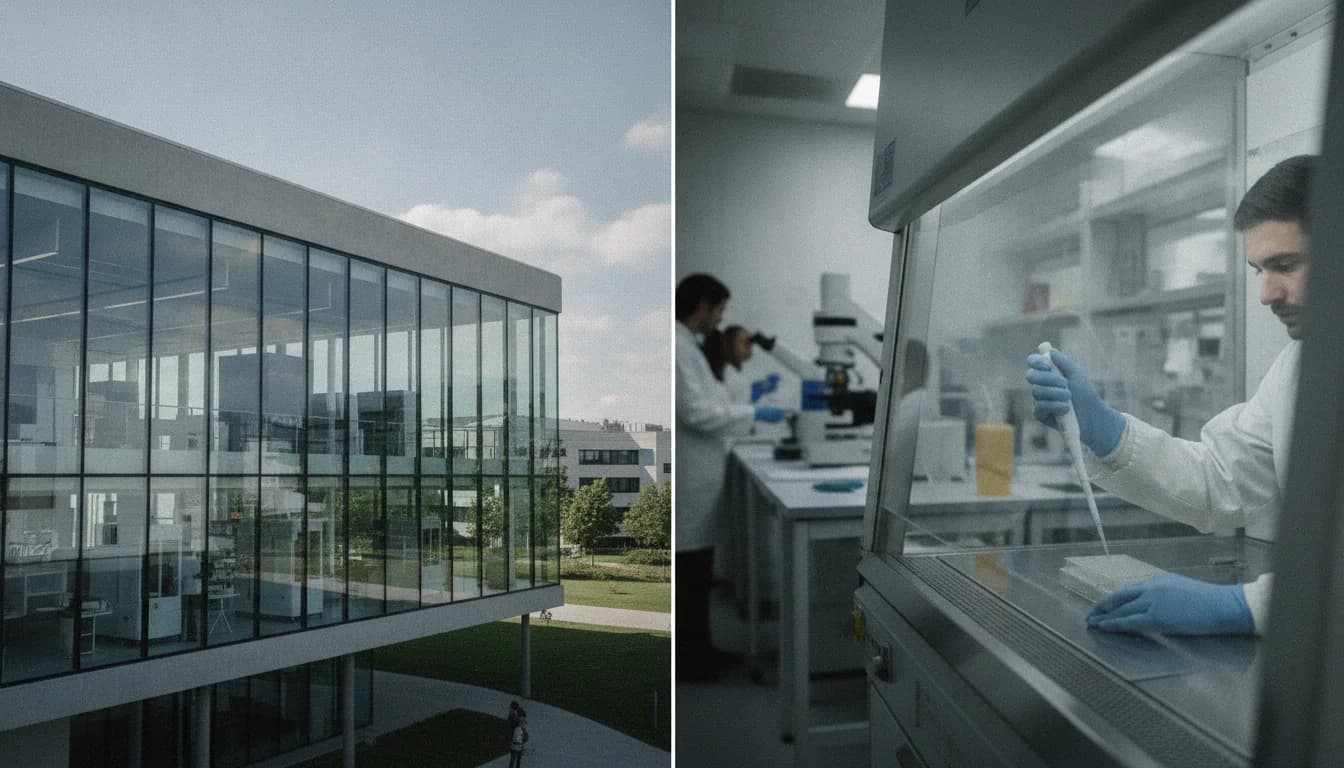
On September 8, 2026, the University of Basel announced a breakthrough collaboration with researchers from Cambridge to advance cancer immunotherapy using a new class of molecules called phagocytic synapse enhancers (PSEs). The release highlighted an effort to target what experts call “cold tumours”—tumors that typically evade immune detection and respond poorly to current immunotherapies. The announcement emphasized that the work, conducted in Cambridge and Basel, centers on reprogramming the tumor microenvironment to attract macrophages and sustain anti-tumor activity in settings where T cell–centric approaches have struggled. This development matters because it points to a potentially complementary route to existing checkpoint inhibitors and adoptive cell therapies, with implications for both science and the market for next‑generation immunotherapies. The primary news carries multiple signals: a new modality (PSEs) designed to engage the innate immune system, a transnational collaboration, and a rapid publication timeline that has already placed the work into major journals. In parallel, the research is being tracked by clinicians and industry observers for its potential to broaden the set of tools available to treat hard-to-treat cancers. As Cambridge Review covers technology and market trends, this story sits at the intersection of biology, translational science, and therapy development. The core message, anchored by institutional and peer-reviewed sources, is that cold tumours Cambridge Basel immunotherapy is moving from concept to an experimental framework with measurable preclinical readouts. According to the partners, their approach leverages the body’s own macrophages to engulf cancer cells while weakening tumor defenses, a dual-action strategy aimed at overcoming the immune-suppressive microenvironment that characterizes cold tumours. (biomedizin.unibas.ch)
A central fact guiding today’s coverage is this: on September 8, 2026, the Basel release stated that researchers developed PSEs that slowed tumor growth across three preclinical systems and outperformed a leading macrophage-targeting antibody in a colorectal cancer model. The claim underscores a shift toward macrophage-centric strategies and a broader interpretation of how to leverage the tumor microenvironment in immunotherapy. The same announcement notes that the work is a collaboration among groups led by Gonçalo J. L. Bernardes at Cambridge and Gregor Hutter at Basel, and that the preclinical results were described in Cancer Research. This juxtaposition—two premier research hubs advancing a novel mechanism in cancer immunology—offers readers a clear portrait of a field undergoing rapid evolution and increased cross-border collaboration. The peer-reviewed publication details, and the news release histories, together provide a reliable anchor for readers seeking to understand who did what, when, and why. The PubMed record for the Cancer Research article confirms the date and the authors, and it points to the online-ahead-of-print status that precedes final journal issue publication. (biomedizin.unibas.ch)
Section 1: What Happened
Announcement details
In the university press release dated September 8, 2026, Basel’s Department of Biomedicine described a distinct, modular class of immune-engaging molecules—phagocytic synapse enhancers (PSEs)—that aim to couple innate and adaptive immune responses within the tumor microenvironment. The release notes that the concept originated from a collaboration between researchers in Cambridge and Basel, with senior leadership including Gonçalo J. L. Bernardes (University of Cambridge) and Gregor Hutter (University Hospital Basel). The key novelty is the design of PSEs as bifunctional agents: a high-affinity PD-L1 binder connected to a macrophage-activating peptide (tuftsin). This architecture is intended to physically bridge tumor cells to macrophages and to reprogram macrophages toward a pro-inflammatory, anti-tumor phenotype. The release emphasizes that PD-L1 is present not only on tumor cells but also on tumor-associated macrophages, and that disrupting this axis at the macrophage surface can enhance phagocytosis and antigen presentation. The Basel article quotes Bernardes and Hutter, highlighting the shift from a T cell–centric paradigm to one that also exploits the myeloid-dominated tumor microenvironment. The main takeaway is that the PSEs create a functional “bridge” that promotes engulfment and simultaneously diminishes the immunosuppressive signals present in cold tumours. This leverages both innate and adaptive arms of the immune system, a strategy that researchers see as essential for tackling tumors that have historically resisted checkpoint inhibitors. For readers tracking primary sources, the Basel release serves as the official event narrative, with the original research described in Cancer Research as the formal publication of the work. (biomedizin.unibas.ch)
In parallel, PubMed’s entry for the Cancer Research article confirms the publication status (online ahead of print in September 2026) and lists the lead authors and affiliations, including the University Hospital Basel and the University of Cambridge. The PubMed page also confirms the article’s formal title and DOI, and it shows the cross-institution authorship that underpins the Cambridge Basel immunotherapy story. This bibliographic record is a critical companion to the Basel press release, because it anchors the event in a widely accessible, citable biomedical database. The abstract on PubMed describes the central mechanism: PSEs bridge PD-L1 on tumor or macrophage surfaces to the neuropilin-1 receptor on macrophages, enabling phagocytosis while modulating the local immune milieu. The abstract further notes that the lead molecule, longPSE, and a half-life–extended variant, ABD-longPSE, demonstrated superior efficacy in preclinical models relative to magrolimab, a clinically evaluated macrophage-targeting antibody, in colorectal cancer and pancreatic cancer models. The PubMed record thus provides a precise bibliographic frame for the event and confirms the scope of the reported preclinical results. (pubmed.ncbi.nlm.nih.gov)
Research scope and methods
The Basel release describes a preclinical program that examined PSEs in multiple model systems to gauge the breadth and robustness of the approach. Specifically, researchers reported testing in cell cultures (in vitro) and in living model organisms, including zebrafish and mice, to capture both cellular dynamics and whole-organism pharmacodynamics and tumor biology. The language emphasizes that the aim was to reprogram the tumor microenvironment by enabling macrophages to engulf cancer cells and by reducing PD-L1–mediated immune suppression. The modular, bifunctional design of PSEs means that individual moieties can be swapped to target different tumor types or to tune pharmacokinetic properties and receptor engagement. The announcement underscores the potential for rapid iteration and customization, which may shorten the path to clinical translation if preclinical safety and efficacy signals hold up in subsequent studies. The Cancer Research publication corroborates these preclinical methods and frames the work within a broader effort to integrate innate immune modulation with adaptive responses, a strategy increasingly discussed in both Cambridge and Basel immunotherapy circles. The joint emphasis on macrophage biology, phagocytosis, and PD-L1 biology positions the Cambridge Basel immunotherapy program as a unique confluence of chemical biology, tumor immunology, and translational science. The cross-referenced publication and institutional releases collectively map a path from bench to translational potential, with the caveat that clinical trials are still in the future and require rigorous safety testing. (biomedizin.unibas.ch)
Publication milestones
The Cancer Research paper, which details the bifunctional PSEs, appears in online ahead-of-print form in September 2026, with a formal print or open-access status following soon after. The PubMed listing confirms the early September date and the collaboration across Cambridge and Basel. The separate Cancer Research page (open-access and primary in the journal’s ecosystem) reiterates the same core findings and places them in the context of ENPHASYS (Enhancement of Phagocytic Synapses) as a conceptual framework for combining PD-L1 blockade with phagocytic engagement. The staggered release timeline—an online publication in early September 2026 and a Basel institutional release four days later—provides a practical example of how modern biomedical news cycles unfold across platforms: researchers publish first, institutions issue coordinated press statements, and journals populate their official records in parallel. For readers who want to confirm the event through multiple channels, the PubMed record provides a concise, citable summary of authorship, date, and affiliation, while the Basel release provides the institutional voice and the concrete description of the PSE mechanism and preclinical outcomes. Public-facing science communication in this sequence is increasingly common for high-impact, cross-border collaborations. (pubmed.ncbi.nlm.nih.gov)
A notable, practically quotable moment from the Basel release highlights the philosophical shift driving this line of work: “Immunotherapy has focused almost entirely on T cells, but the myeloid cells that dominate most solid tumors have been the missing piece.” That view is echoed by the Cambridge side of the collaboration, underscoring a shared conviction that macrophage biology can unlock new avenues when conventional T cell–centric strategies reach their limits. The emphasis on cold tumours—tumors that typically resist immune attack—places this work at the crosshairs of a long-standing clinical challenge, and the reporting frames the finding as a potential pivot point for future combinations, sequencing, and delivery strategies in immuno-oncology. As the field contemplates the translational trajectory of PSEs, these primary sources collectively anchor the narrative: a real, dated event with a defined mechanism and preclinical readouts, published in a major cancer research journal and disseminated through institutional channels. (biomedizin.unibas.ch)
Section 2: Why It Matters
Impact on patient care and scientific strategy
Cold tumours, by definition, present a set of obstacles that limit the efficacy of current immunotherapies. The Cambridge Basel immunotherapy work—centered on PSEs that tether a PD-L1 binder to tuftsin to activate macrophages and promote tumor phagocytosis—addresses a core gap in many solid tumors where T cells are scarce or functionally suppressed. If the preclinical signals persist in subsequent safety and efficacy assessments, PSEs could complement T cell–directed therapies (such as checkpoint inhibitors) and CAR T cell strategies by broadening the immune toolkit for solid tumors. The two-pronged approach—removing immunosuppressive signals via PD-L1 interactions and actively engaging macrophages to clear cancer cells—represents a dual-action paradigm, potentially accelerating tumor clearance and increasing antigen presentation to the adaptive immune system. The scientific rationale is reinforced by the preclinical observation that PSEs can reprogram the tumor microenvironment from a suppressive milieu to one that supports anti-tumor activity, a transformation that could enhance responsiveness to combination regimens or sequential therapies. This line of thinking has deep roots in tumor immunology and is aligned with broader industry interests in innate-adaptive immune synergy as a path to durable responses in cancers that have historically resisted immunotherapies. The primary sources underscore the mechanism and the translational ambition while acknowledging that clinical translation is still in the planning and early-testing phases. (biomedizin.unibas.ch)
Market implications and landscape context
From a market perspective, Cambridge Basel immunotherapy represents a compelling instance of cross-border collaboration in a field that has matured rapidly over the past decade. The emergence of a modular, bifunctional platform—PSEs—offers potential advantages for therapy developers seeking to expand beyond antibodies and T cell–centric modalities. The modularity implies the possibility of rapid customization to address different tumor types, PD-L1 engagement patterns, or macrophage activation profiles, which could translate into a differentiated product pipeline with multiple indications. If preclinical success translates into early-phase clinical data, the technology could attract interest from pharmaceutical and biotech players seeking to diversify their immuno-oncology portfolios, particularly those focused on tumors deemed immunologically “cold.” Investors and market analysts will be watching closely for readouts related to safety, pharmacodynamics (PD), pharmacokinetics (PK), and early efficacy signals in relevant tumor types. The two primary sources—institutional press material and peer-reviewed publication—frame the scientific and clinical signals that market observers will monitor as the program advances. While clinical data are the ultimate determinant of market potential, the early alignment between Cambridge’s chemical biology strengths and Basel’s translational immunology expertise is a noteworthy strategic asset that could influence collaboration models, funding trajectories, and early-stage partnerships. (biomedizin.unibas.ch)
Policy, regulation, and translational hurdles
Any pathway to patient access for a novel immunotherapy, including PSEs, will navigate a series of regulatory and safety considerations. Given the involvement of multiple institutions, regulatory agencies will expect robust preclinical safety pharmacology data, immunogenicity assessments, and clear strategies for manufacturing consistency and quality control, especially for bifunctional biologics or small molecules with complex pharmacodynamics. The preclinical work reported in the Cancer Research article and summarized by Basel provides a basis for initial safety signals; however, translating from mouse and zebrafish models to humans requires careful dose scaling, thorough toxicology studies, and phased clinical trials. The industry’s experience with innate-immune modulators has shown both promise and risk, particularly around cytokine release, macrophage activation, and off-target effects. Stakeholders will be attentive to how PSEs perform in terms of safety, tolerability, and immunogenicity, as well as how the platform interacts with established therapies such as PD-1/PD-L1 inhibitors or CAR T cells. The Cambridge Basel immunotherapy program’s emphasis on modularity could facilitate iterative design changes to optimize safety profiles, but regulatory agencies will insist on rigorous documentation of each component’s contribution to efficacy and safety. The primary sources provide the essential mechanism and early readouts, while future data disclosures will determine how these regulatory and translational questions are addressed in practice. (biomedizin.unibas.ch)
Section 3: What’s Next
Near-term milestones and anticipated readouts
The immediate next steps after the September 8, 2026 Basel release and the September 2026 publishing activity likely include continued preclinical validation, expanded model systems, and additional mechanistic studies to define the relationships between PSE structure, PD-L1 engagement, tuftsin activity, and macrophage polarization. In parallel, the teams are expected to prepare for regulatory discussions around early-phase clinical testing. While the Cancer Research article provides a preclinical foundation, translating PSEs into a clinical context will require comprehensive safety studies, Good Laboratory Practice (GLP) toxicology data, and scalable manufacturing processes for the bifunctional molecules. Observers will be looking for additional preclinical data, potentially in more tumor models, to establish a broader efficacy and safety profile across cancers that vary in PD-L1 expression, macrophage infiltration, and microenvironment composition. The cross-border nature of the work—linking Cambridge’s molecular design capabilities with Basel’s translational immunology assets—could influence collaboration strategies and funding opportunities as this program moves toward the clinic. The PubMed entry confirms the online-ahead-of-print status and the preliminary timeline, which can help readers anticipate publication cadence and additional data releases that typically accompany a transition to clinical development. (pubmed.ncbi.nlm.nih.gov)
What to watch for next
Two critical watchpoints stand out. First, the publication of full, peer-reviewed data in Cancer Research (and any subsequent supplementary materials) will provide the necessary detail to evaluate reproducibility, effect sizes, and the scope of efficacy across tumor models. The open-access or accession arrangements for the final paper will be a key signal to readers and industry watchers about data transparency and potential for independent replication. Second, preclinical-to-clinical translation will hinge on safety and pharmacology data, as described above. If early-phase trials move forward, investors and researchers will scrutinize early clinical signals, dosing strategies, and combination opportunities with existing immunotherapies. The cross-institutional nature of the work could influence regulatory engagement and the formation of potential partnerships with pharmaceutical companies seeking to diversify their immuno-oncology pipelines. In sum, the near-term future for cold tumours Cambridge Basel immunotherapy is defined by data publication, safety validation, and the careful navigation of translational hurdles toward a clinical testing ground. The primary sources provide a credible, citable baseline for these developments, while ongoing research and future disclosures will illuminate how this approach fits within the broader competitive landscape of cancer immunotherapy. (pubmed.ncbi.nlm.nih.gov)
Closing
The Cambridge Basel immunotherapy program around Phagocytic Synapse Enhancers represents a notable example of how scientists are rethinking tumor-immune dynamics to tackle stubborn cancers. By bridging the PD-L1 axis with macrophage activation in a modular, programmable platform, researchers are testing a concept that could complement and extend current immunotherapy strategies. While the path to the clinic remains in the early stages, the combination of Cambridge’s chemical biology expertise and Basel’s translational immunology capabilities offers a compelling story for researchers, clinicians, and market watchers alike. Readers who want to stay updated should follow the Cancer Research publication’s full text when available and monitor institutional updates from the University of Basel and the University of Cambridge for subsequent data releases, conference presentations, and any potential clinical trial announcements. The cross-border collaboration, coupled with a robust preclinical signal, makes this a story to watch for its potential to reshape how the field approaches cold tumours and their response to immunotherapy.
As the field progresses, Cambridge Review will continue to provide timely, data-driven coverage of technology and market trends related to cold tumours Cambridge Basel immunotherapy, highlighting both scientific advances and the business implications of next‑generation immunotherapies.