Campus Data Centres Chase Net-Zero From Bloomsbury to Cambridge West
Neutral, data-driven update on net-zero data centers in UK universities and what it means for research, energy, and strategy.
 By Fiona Galloway · 2 August 2026 · 12 min read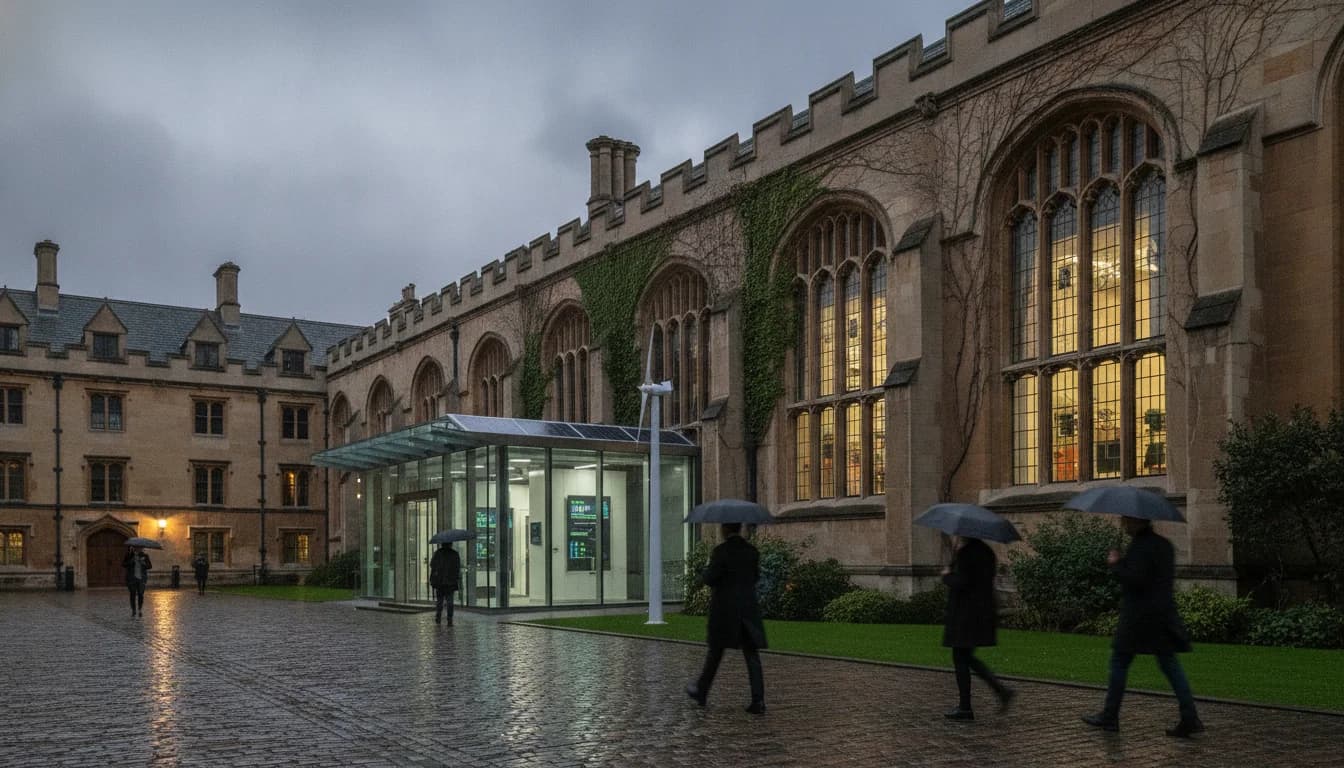
The landscape of higher-education technology is being reshaped by a clear, data-driven push toward net-zero data centers in UK universities. Across campuses from Bloomsbury to Cambridge West, universities are weaving together energy efficiency, heat recovery, and cloud transitions to curb power use while preserving or enhancing research and teaching capabilities. In 2026, several institutions have published concrete plans and milestone-driven programs that demonstrate how data centers—traditionally energy hogs—can align with the UK’s broader decarbonisation agenda. This coverage takes a neutral, evidence-based look at what’s changed, why it matters, and what observers should expect next as universities accelerate their net-zero data center journeys. The news arrives amid a growing emphasis on district heating, heat reuse, and data-center modernization as core components of campus sustainability strategies. In this context, net-zero data centers in UK universities are increasingly seen not only as an environmental objective but also as a strategic lever for energy security, resilience, and research continuity. (ucl.ac.uk)
A focal point in 2026 has been how major universities are integrating decarbonisation into their estates and IT operations. For example, University College London (UCL) has framed heat decarbonisation as central to its net-zero ambitions, detailing a portfolio of linked projects under the Infrastructure Masterplan to cut emissions and improve building performance. The program includes ambitious steps like upgrading heating networks, deploying low-carbon heat pumps, and reusing waste heat across multiple sites, supported in part by government funding. Notably, a crucial phase of this effort—the Cruciform building project—uses an innovative refrigerant approach to test low-carbon heating at scale in a dense urban campus. The announcement underscores that heat decarbonisation is not just carbon accounting; it directly affects comfort, reliability, and long-term resilience of campus facilities. This work is explicitly linked to UCL’s Sustainability Plan 2025–2035, which targets net zero for scopes 1 and 2 by 2030 and all scopes by 2040. Adrien Cooper, Director of Campus Infrastructure and Operations, emphasizes that decarbonising heat is among the most important actions to reduce operational emissions. (ucl.ac.uk)
In parallel, the University of Cambridge has continued to advance its West Cambridge Data Centre project, a long-standing example of low-power, low-carbon data facility design. The West Cambridge Data Centre was developed with an explicit aim to minimize energy use and is accompanied by district energy concepts and solar generation plans for the site. A third-party case study on the data center’s design notes a target overall PUE (power usage effectiveness) of 1.2, illustrating the efficiency gains that Cambridge seeks to achieve in its data-handling infrastructure. While the West Cambridge project’s details span multiple years and partners, the emphasis remains on integrating data-center operations with Cambridge’s broader decarbonisation and energy-network strategies at the campus level. (assets.legrand.com)
Other universities are contributing to the national conversation with structured, time-bound plans. The Open University has published a Net Zero Carbon 2030 Plan, outlining a path to reduce emissions and shift non-sensitive data services toward cloud-based architectures, supported by building retrofit and optimized operations to enhance energy efficiency. The plan explicitly maps data-center considerations into a wider estate strategy and underscores the role of technology procurement and lifecycle carbon in achieving its net-zero target by 2030. This approach is complemented by Leeds and Reading, which emphasize sustainable IT practices and ISO 50001 energy management systems as mechanisms to lower campus electricity use and coordinate with broader net-zero goals. (university.open.ac.uk)
Across the country, net-zero ambitions for data centers in UK universities are supported by ongoing research, pilot projects, and governance structures that connect campus energy systems, district heating, and data-center design. In Edinburgh, for instance, a 2024 project reuses data-center heat within a district heating network, reflecting a practical approach to capturing waste heat and feeding it back into campus energy loops. This kind of heat-reuse initiative is emblematic of the operational changes universities are pursuing to reduce inline energy demand while maintaining service levels for research computing and teaching. The Edinburgh example sits alongside other university efforts to deploy heat pumps, solar, and other low-carbon technologies as modules within broader decarbonisation programs. (ed.ac.uk)
The broader policy and industry context also informs this momentum. Parliamentary research briefings in 2024 highlighted the sustainability challenges and opportunities inherent to data centers, noting that sector-wide decarbonisation requires coordinated planning and demand-side measures. The briefing underscores the importance of data-center efficiency, cooling strategies, and the integration of digital infrastructure with energy systems—issues that universities are now addressing through campus-specific programs, energy management, and cloud-based modernization. This context helps explain why UK universities—already leaders in research and higher education—are coupling data-center modernization with net-zero commitments. (researchbriefings.files.parliament.uk)
Section 1: What Happened
A wave of university announcements and program launches
Universities across the UK have begun to publish concrete timelines and programmatic details tied to net-zero data centers and related infrastructure. UCL’s Infrastructure Masterplan (IMP), highlighted in a May 2026 update, presents a coordinated set of heat-decarbonisation and efficiency projects designed to reduce emissions while improving day-to-day campus performance. The announcement emphasizes a district-scale approach: upgrading heating networks, deploying air source heat pumps, and leveraging heat recovery to minimize waste. The plan is framed as a portfolio of linked projects rather than a single intervention, which enables rapid learning and staged implementation across sites such as Bloomsbury and Gower Street. A government-backed grant of £7.2 million supports the Bloomsbury Heat and Power Network upgrade, illustrating how public funding is matching strategic campus investments. Adrien Cooper’s explicit commentary reinforces the strategic importance of heating decarbonisation to UCL’s net-zero objectives, including long-term resilience and occupant comfort. (ucl.ac.uk)
Cambridge’s West Cambridge Data Centre continues to serve as a high-visibility example of low-power, low-carbon data-center design on a major research campus. The data center’s design is complemented by plans for district energy and on-site generation to align with Cambridge’s broader environmental commitments, including Cambridge Zero and the university’s climate-change initiatives. The Legrand case study on West Cambridge notes a targeted PUE of 1.2, underscoring the emphasis on energy efficiency in data center operations. This architectural and engineering emphasis demonstrates how universities are pursuing aggressive efficiency targets without compromising core research capabilities. (assets.legrand.com)
Open University, University of Reading, and University of Leeds are contributing via planning documents and sustainability pages that connect digital infrastructure to net-zero trajectories. The OU’s Net Zero Carbon 2030 Plan maps data-center modernization to cloud migration and procurement decisions, with explicit links to retrofit and operational optimization. Reading highlights ISO 50001-based energy management and digital services optimization as mechanisms to reduce energy consumption and carbon intensity. Leeds emphasizes a holistic Sustainable IT program that recognizes data centers as energy users but also as potential beneficiaries of cloud migration and efficient on-premises operations. These programs illustrate a common pattern: data-center efficiency is pursued in tandem with cloud adoption, energy management, and lifecycle optimization, all aimed at realizing net-zero outcomes for campus IT ecosystems. (university.open.ac.uk)
Notable funding, governance, and practical deployments
Funding for decarbonisation efforts across university data centers is increasingly explicit. UCL’s projects are supported by government funds and internal capital allocations as part of the IMP, with a visible emphasis on heat networks, heat recovery, and distributed energy solutions. The Bloomsbury Heat and Power Network project, in particular, demonstrates how district-scale energy planning can de-risk individual building retrofits while achieving meaningful emissions reductions. The approach combines new electric plant, thermal storage, and network-scale coordination to reduce gas reliance and improve resilience. The emphasis on data-driven performance—such as using real-time energy data to shape upgrades and operations—speaks to the data-centric ethos behind net-zero data centers in UK universities. The collaboration across institutions, including the Bloomsbury consortium (UCL, University of London, and SOAS), illustrates how shared energy and IT strategies can amplify outcomes across campuses. (ucl.ac.uk)
In parallel, industry and academic partnerships are expanding to support net-zero goals. Cambridge and partners, including UKAEA and DESNZ, are enabling AI and HPC initiatives that require substantial compute capacity, while also integrating energy efficiency and low-carbon power. These partnerships show how net-zero aims coexist with advanced computing, where the challenge is not only to deploy powerful hardware but to do so in a way that minimizes environmental impact. The scale of Cambridge’ AI and fusion-related computing programs—illustrated by recently announced investments and collaborations—highlights the dual role of these facilities as engines of research and as testbeds for energy-efficient data-center design and operation. (energy.cam.ac.uk)
Section 2: Why It Matters
Energy systems, emissions, and campus resilience
Net-zero data centers in UK universities are not isolated facilities; they sit within broader campus energy ecosystems that include district heating networks, heat pumps, solar generation, and energy-management systems. The UCL case demonstrates a shift from building-by-building upgrades to network-wide planning that can reduce emissions more comprehensively while improving building comfort and reliability. The Cambridge West Cambridge Data Centre illustrates how a high-profile data facility can be designed with energy efficiency as a core driver, including a target PUE of 1.2. These trends matter because they show that universities are moving beyond mere compliance to actively shaping energy systems that support stable research operations, predictable energy costs, and resilience against grid volatility. The Edinburgh heat-recovery project points to practical, scalable pathways for reuse of data-center heat within local energy networks, a model that can be replicated or adapted across other campuses. Taken together, these efforts illustrate how net-zero data centers in UK universities contribute to the country’s decarbonisation ambitions while maintaining research capability and academic mission continuity. (ucl.ac.uk)
From a policy and market perspective, these developments align with parliamentary discussions around data-center sustainability and decarbonisation progress. The research briefings emphasize the need for energy efficiency, heat reuse, and coordinated planning to address the emissions footprint of digital infrastructure. For universities, this means that net-zero data centers are not merely an environmental target but a governance and procurement priority that influences campus planning, energy budgets, and risk management. The integration of data-center operations with cloud migration strategies also signals an industry-wide shift toward more energy-aware IT architectures, where decisions about on-premises versus cloud-hosted workloads are increasingly informed by total cost of ownership and carbon impact. (researchbriefings.files.parliament.uk)
Impacts on research, operations, and stakeholder expectations
The move toward net-zero data centers in UK universities has direct implications for researchers, facilities teams, and students. On one hand, efficiency upgrades and heat-recovery initiatives can reduce energy costs and improve the reliability of research computing environments. UCL’s heat decarbonisation program, for instance, is framed as a way to cut emissions while delivering better-performing buildings and greater energy security. On the other hand, these initiatives require ongoing investment, governance, and data transparency. Real-time energy monitoring, performance dashboards, and evidenced-based decision-making become essential tools for maintaining trust with research communities and with government funders. The Open University’s Net Zero Carbon 2030 Plan, with its emphasis on data-center modernization and cloud adoption, models how institutions can balance academic needs with environmental commitments through structured roadmaps and accountable milestones. (ucl.ac.uk)
For stakeholders inside and outside the university ecosystem, the net-zero push generates a broader narrative about stewardship and leadership in sustainability. As data centers grow in scale and complexity, the ability to demonstrate measurable emissions reductions, improved energy efficiency, and responsible lifecycle management becomes a differentiator for universities seeking to attract research funding, talent, and collaborations. The case studies and program updates from UCL, Cambridge, Edinburgh, and OU collectively illustrate a sector-wide trend: net-zero data centers in UK universities are becoming a strategic priority, integrated with district energy systems, cloud strategies, and campus modernization programs. (ucl.ac.uk)
Section 3: What’s Next
Near-term milestones and ongoing pilots
Looking ahead to 2026–2027, the most tangible near-term milestones emerge from existing programs. UCL’s Infrastructure Masterplan continues to unfold, with heat-network upgrades, cooling-system optimizations, and energy-efficiency enhancements that will feed into annual carbon reporting and performance reviews. The progression from demonstrator projects (such as Cruciform’s low-carbon testing) to scaled implementations across other buildings and campuses is a key metric to watch. The government grant support and ongoing energy investments provide a funding signal that will likely accelerate execution, especially for district heating and heat-recovery initiatives. Observers should track changes in building performance metrics, such as reductions in carbon intensity per square meter and improvements in occupant comfort indicators as these projects scale. (ucl.ac.uk)
Cambridge is expected to continue expanding its district energy ambitions around the West Cambridge site and related facilities, with energy networks designed to integrate solar generation and heat reuse into the campus’s data-center and non-data-center energy demands. The Cambridge Zero ecosystem and associated research centers provide a policy- and research-backed framework that supports ongoing decarbonisation activities and investments in energy-efficient IT infrastructure. While precise project-by-project milestones may evolve, the trajectory toward lower-carbon data-center design and energy integration appears set to continue through the coming years. (cam.ac.uk)
The Open University’s roadmap to 2030 continues to shape how non-sensitive data services migrate toward cloud-based solutions, with a parallel emphasis on retrofitting facilities and optimizing operations for energy efficiency. As cloud adoption grows and on-campus IT services become more energy-efficient, OU’s plan provides a forecast of how a major distance-learning university can balance digital resilience with carbon reduction goals. The OU plan also signals that net-zero ambitions are not merely about the data-center perimeter but about end-to-end IT service delivery, including procurement, lifecycle management, and on-site energy infrastructure. (university.open.ac.uk)
What to watch for: policy, funding, and technology shifts
Several indicators will shape the next phase of net-zero data centers in UK universities. First, continued government funding and grants for district energy, heat networks, and low-carbon cooling will likely accelerate deployment across campuses that already host significant data-processing workloads. Second, the trend toward heat reuse and energy recovery across university districts is expected to expand, potentially inspiring partnerships with city authorities on public district heating schemes. Third, as universities scale cloud migrations, governance around data-center energy labeling, carbon accounting, and lifecycle carbon will become more standardized, potentially informing procurement policies and performance reporting to funders and the public. Finally, the broader industry context—such as growing attention to data-center efficiency, heat reuse, and decarbonization strategies—will provide benchmarks and competitive pressure for universities to demonstrate measurable progress toward net-zero targets. (researchbriefings.files.parliament.uk)
Closing
Net-zero data centers in UK universities are increasingly a practical reality rather than a distant ambition. Across institutions like UCL, Cambridge, Edinburgh, and Open University, data-driven programs are translating sustainability pledges into concrete engineering, procurement, and operational actions. The convergence of district energy networks, heat-recovery technologies, and cloud-centric IT strategies is redefining what it means to run world-class research infrastructure with a smaller carbon footprint. For readers following technology and market trends, these developments illustrate how sustainability goals are becoming integral to university strategy, governance, and day-to-day operations, rather than optional add-ons to be pursued only when convenient. As 2026 unfolds, the sector’s progress will depend on transparent reporting, continuous performance improvement, and collaborative governance that aligns energy systems with research ambitions—an approach that could serve as a model for other sectors grappling with the dual demands of scale and decarbonisation.
The path ahead remains data-driven and iterative. Stakeholders should stay tuned to annual carbon reporting updates, new district-energy milestones, and additional data-center efficiency projects announced by major universities. With ongoing research, policy alignment, and strategic investments, net-zero data centers in UK universities will continue to mature as a core capability that sustains cutting-edge research while advancing the nation’s broader climate objectives. (ucl.ac.uk)