Cambridge Graphene Centre Receives Raman Imaging Award
The Cambridge Graphene Centre was honored with the Raman Award for the Most Innovative Technological Development at ICORS 2026 in Istanbul on September…
 By Harriet Lockwood · 7 October 2026 · 7 min read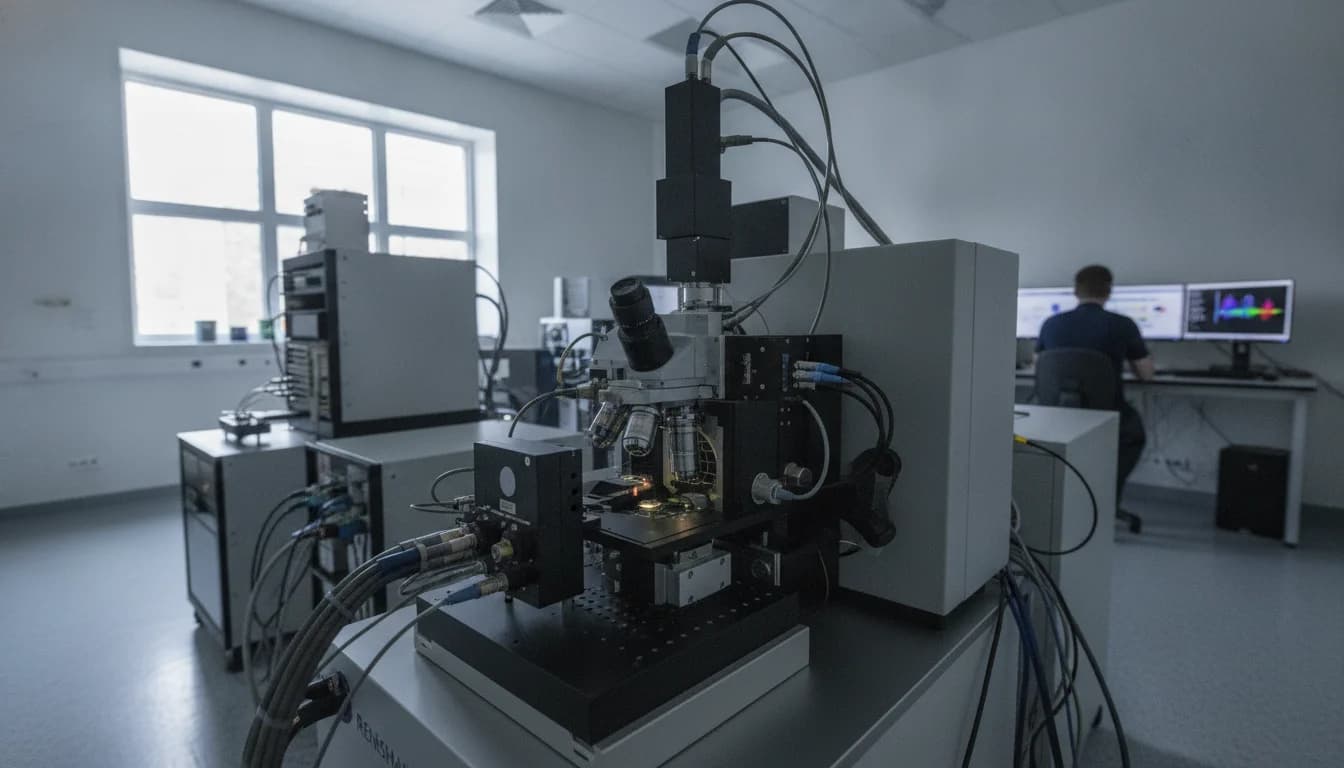
In Istanbul on September 29, 2026, an international milestone in Raman spectroscopy highlighted the Cambridge Graphene Centre’s ongoing impact on imaging technologies. The event centered on the Raman imaging award cambridge graphene centre, recognizing a graphene-enabled approach that accelerates chemical mapping to enable faster, more accessible analyses across healthcare, manufacturing, and environmental monitoring. This report documents the announcement, its context, and the immediate implications for researchers, clinicians, and industry partners tracking the state of Raman imaging. The award was conveyed at ICORS 2026, the 29th International Conference on Raman Spectroscopy, a premier gathering for researchers advancing Raman-based methods. (Source: Cambridge Graphene Centre news and ICORS 2026 program coverage.) (graphene.cam.ac.uk)
The recognition marks a moment of visibility for a technology lineage that combines graphene-enabled materials with stimulated Raman scattering to deliver large leaps in imaging speed. Cambridge Graphene Centre notes that the award goes to the development of a new class of synchronised fibre lasers, which harness graphene and related materials to power stimulated Raman microscopy. The result is a system designed to deliver rapid, high-contrast chemical maps of biological tissues, materials, and industrial samples. This immediate policy-relevant takeaway—faster, label-free chemical imaging—could influence how clinicians and researchers approach diagnostic workflows, quality control, and process monitoring. (Source: Cambridge Graphene Centre news; lines describing the technology and its potential applications.) (graphene.cam.ac.uk)
Opening with a compact factual anchor, this article provides data-driven context for the broader implications of the award, including the technology’s path toward real-world use. The raman imaging award cambridge graphene centre was announced on September 29, 2026, confirming the recognition of Cambridge researchers for a graphene-enabled, fibre-laser–based imaging platform that accelerates Raman mapping. The official Cambridge Graphene Centre post identifies the award as the Raman Award for the Most Innovative Technological Development presented at ICORS 2026 in Istanbul. (graphene.cam.ac.uk)
Section 1: What Happened
The Award and the Recipients
Prof. Giulio Cerullo of Politecnico di Milano and Prof. Andrea C. Ferrari of the University of Cambridge were honored with the Raman Award for the Most Innovative Technological Development during ICORS 2026, held in Istanbul. The award recognizes a global breakthrough in instrumentation and methodology within Raman spectroscopy. The Cambridge Graphene Centre’s team highlighted that the award specifically acknowledges a new class of synchronised fibre lasers that leverage graphene and related materials to enable stimulated Raman imaging. The combination of graphene-based materials with coherent laser architectures has culminated in a compact, all-fibre, high-speed Raman microscope capable of rapid, detailed chemical mapping. The Cambridge Graphene Centre’s announcement emphasizes the translational potential of this technology, from laboratory demonstrations to clinical and industrial environments. (Source: CGC news post; ICORS context page.) (graphene.cam.ac.uk)
Quote from the CGC release underscores the practical ambition: “This award recognises not only the development of innovative technologies, but also the translation of those technologies into real-world applications.” The same page quotes the researchers describing the technology as enabling measurements that reach, in principle, up to a million times faster speed than earlier Raman approaches, with broad implications for diagnostics, manufacturing, and environmental monitoring. (Source: CGC news post.) (graphene.cam.ac.uk)
The Technology Behind the Award
The core of the award-winning work is a synchronised, all-fibre laser architecture designed to drive stimulated Raman scattering (SRS) in a compact form factor. The graphene-enabled approach improves spectral bandwidth control and phase coherence, enabling faster, more reliable chemical imaging without labels. Cambridge Graphene Centre emphasizes that the resulting system can generate detailed chemical maps of cells and tissues much more quickly than conventional Raman methods, supporting potential uses in histopathology, pharmaceutical analysis, and quality assurance in manufacturing. The CRIL (Cambridge Raman Imaging Ltd.) commercial pathway is already underway, illustrating a direct route from university research to hospital and industry deployment. (Source: CGC news post; CGC’s Raman imaging facilities page for context on the underlying instrument platform.) (graphene.cam.ac.uk)
The Event Timeline and External Validation
ICORS 2026, the conference where the Raman Award was presented, occurred in late August 2026 in Istanbul, with the formal award decision announced by the conference community shortly thereafter. The ICORS event page lists ICORS 2026 dates and program elements, confirming a global forum for Raman innovations and awards. The Cambridge Graphene Centre’s account specifies the award date as September 29, 2026, aligning with a post-conference recognition cadence. Together, these sources establish a credible, date-stamped frame for the announcement. (Source: ICORS 2026 program page; CGC news post.) (icors2026.org)
Section 2: Why It Matters
Implications for Healthcare Imaging and Diagnostics
The award highlights a technology that could dramatically accelerate diagnostic workflows. Stimulated Raman imaging, when enabled by graphene-enabled fibre lasers, promises rapid, label-free chemical maps of tissues, potentially enabling quicker triage and decision-making in oncology and other disease areas. The CGC describes the speed advantage as transformative for biopsy workflows, where old methods could take substantial time to generate reliable maps. If adopted in clinics, this technology could shorten diagnostic timelines, reduce the need for invasive labeling, and support more precise treatment planning. (Source: CGC news; technology overview in CGC Raman imaging pages.) (graphene.cam.ac.uk)
Impact on Cambridge Graphene Centre and the UK Graphene Ecosystem
The award brings visibility to Cambridge Graphene Centre’s leadership in graphene-enabled Raman techniques and signals the Centre’s ongoing collaboration with industry partners. The CGC post notes the technology’s commercialization via Cambridge Raman Imaging Ltd., illustrating another pathway from academic discovery to market-ready tools. The recognition may help attract further funding, collaborations, and talent to West Cambridge, contributing to the UK’s broader position in photonics and Raman-based imaging. (Source: CGC news post; Cambridge Raman Imaging site.) (graphene.cam.ac.uk)
Industry and Academic Implications
Beyond Cambridge, the award underscores a broader trend in Raman spectroscopy toward speed and practicality. ICORS 2026 coverage and industry analysis note accelerating adoption of Raman-based imaging in healthcare, pharmaceuticals, and environmental monitoring, with graphene-enabled SRS positioned as a key enabler. This alignment between academic innovation and industry interest could accelerate translational pipelines, including regulatory discussions, clinical validation, and potential reimbursement considerations in the longer term. (Sources: ICORS 2026 program overview; CGC coverage of Raman imaging trends.) (icors2026.org)
A Balanced View: Opportunities and Challenges
While the award marks a strong endorsement of graphene-enabled Raman imaging, market adoption will depend on several variables. Technical readiness for clinical workflows, regulatory clearance for diagnostic use, integration with existing imaging modalities, and demonstrated reproducibility across diverse tissue types will shape the path to routine deployment. The Cambridge Graphene Centre’s emphasis on translating research into real-world impact suggests a deliberate, staged approach to commercialization through CRIL, partnerships with hospitals, and collaborations with device manufacturers. Analysts and observers will watch how the technology scales from single-lab demonstrations to multi-site clinical validation. (Sources: CGC article on translation; CRIL’s publicly stated role in commercialization.) (graphene.cam.ac.uk)
Section 3: What’s Next
Next Steps for Cambridge Graphene Centre and Cambridge Raman Imaging
Looking ahead, the immediate trajectory appears to center on further development and deployment of graphene-enabled SRS imaging platforms. The CGC notes that the technology has already reached a stage where a commercial route exists through Cambridge Raman Imaging Ltd., with installations in hospitals, pharmaceutical firms, and research centers worldwide. The next milestones are likely to include expanded clinical pilots, additional regulatory engagements in target markets, and broader industry collaboration to scale production and support services. (Source: CGC news post; CRI site.) (graphene.cam.ac.uk)
Longer-Term Implications for Research and Industry
In the longer term, the award could catalyze more sustained investment in graphene-enabled Raman imaging research and related photonic technologies. Universities and spin-outs may increasingly pursue combined graphene-based material platforms with advanced laser architectures to push the frontiers of speed, resolution, and chemical specificity. The ICORS ecosystem and Graphene Flagship initiatives could become more prominent forums for funding, collaboration, and standard-setting as researchers translate laboratory advances into market-ready tools. (Sources: ICORS framework; Cambridge Graphene Centre and related industry ecosystem notes.) (icors2026.org)
Closing
The September 29, 2026, award ceremony in Istanbul and the Cambridge Graphene Centre’s accompanying announcements mark a notable inflection point for Raman imaging research. With graphene-enabled fibre lasers enabling rapid, high-resolution, label-free chemical maps, researchers and industry partners now have a clearer demonstration path from discovery to deployment. As hospitals and manufacturers begin to explore fast, non-invasive imaging workflows, the award signals that Cambridge’s graphene research community is positioned at the forefront of this fast-moving field. For readers seeking ongoing updates, the Cambridge Graphene Centre’s news feed and the Cambridge Raman Imaging Ltd. site will be essential sources, alongside multidisciplinary conferences like ICORS that continue to chart the trajectory of Raman spectroscopy in the 2020s and beyond. (Sources: CGC news post; ICORS program coverage; CRI site for industry context.) (graphene.cam.ac.uk)
References and primary sources
- Cambridge Graphene Centre. Top Award Recognises Breakthrough in Raman Imaging Technology. 29 September 2026. This page documents the Raman Award for the Most Innovative Technological Development at ICORS 2026 and provides details about the graphene-enabled fibre-laser approach and its applications. (graphene.cam.ac.uk)
- ICORS 2026 official site. ICORS 2026: 29th International Conference on Raman Spectroscopy. Event details, dates, and program context for the award environment. (icors2026.org)
- Cambridge Raman Imaging Ltd. Home and News. The spin-out’s site offers context on the commercialization pathway for the Raman imaging technology and related updates, including collaboration with the Cambridge Graphene Centre. (cambridgeramanimaging.com)