UK Quantum SuperConnector Cambridge Launches
UK Quantum SuperConnector Cambridge launches to bridge quantum research and commercialization, data-driven outlook included.
 By Harriet Lockwood · 18 November 2026 · 11 min read
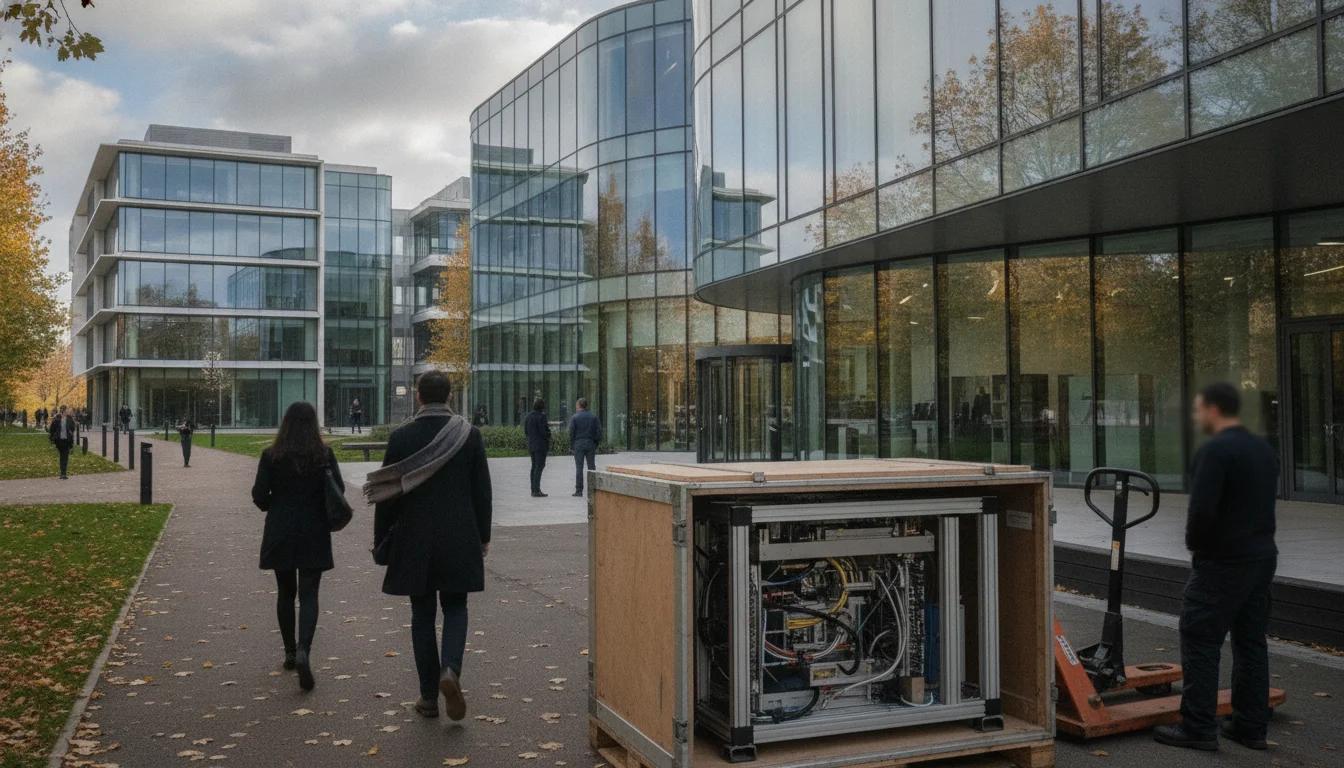
In a landmark development for the UK’s quantum ecosystem, Cambridge joined Imperial College London, the University of Bristol, the University of Glasgow, and the University of Oxford to launch the UK Quantum SuperConnector. The official press release, issued on November 6, 2026, frames the initiative as a national platform designed to bridge the gap between breakthrough quantum research and commercial success across the country. The release positions Cambridge as a founding partner in a multi-institution effort aimed at accelerating the journey from laboratory insights to real-world impact. This is a defining moment for the UK’s quantum economy, signaling a coordinated push to turn world-class research into high-growth companies, jobs, and scalable technologies. The formal roll-out comes as part of a broader government-backed push to industrialize quantum capabilities and create a national innovation spine for early-stage quantum ventures. The move was reported by several leading UK universities and industry outlets the week of November 6, 2026, and signals a near-term expansion of quantum entrepreneurship, talent development, and private investment across the country. Cambridge’s participation is a key piece of a five-university coalition that will drive the program’s initial momentum, including plans to establish a national digital ecosystem platform and a dedicated accelerator track in Cambridge’s Maxwell Centre. (imperial.ac.uk)
The launch is already being framed as more than a symbolic coalition; it is being positioned as a practical, deliverable accelerator for quantum technology commercialization. The program envisions a national skills hub and a connected network that brings together researchers, founders, investors, and end-users. As a member of this cross-university alliance, Cambridge will contribute its established track record in translating quantum research into commercial activity, including startup and industry partnerships that have yielded tangible ventures and pilot programs. The initiative arrives at a moment when the UK is intensifying its quantum strategy, with funding and policy instruments designed to translate laboratory breakthroughs into market-ready applications across healthcare, finance, energy, and national security. The UK Quantum SuperConnector is being described as a vehicle to attract investment, fuel scale-up, and support the growth of globally competitive quantum companies across the country. The program’s national scope, coupled with Cambridge’s local strengths, is expected to create a more integrated quantum innovation ecosystem that could shorten the time from discovery to deployment. The initial announcement highlights that the founding coalition has already identified priority application areas and the strongest regional nodes to seed the national platform. (imperial.ac.uk)
Section 1: What Happened
Founding group's membership
The public release confirms five founding universities and outlines the geographic breadth of the coalition. Imperial College London, the University of Bristol, the University of Cambridge, the University of Glasgow, and the University of Oxford are named as the founding partners. This group will lead the UK Quantum SuperConnector’s early phase, designed to connect regional strengths in quantum research with the commercial skills and industry partnerships needed to translate breakthroughs into growth. The announcement positions the five institutions as the core of a nationwide program intended to accelerate the commercialization pathway for quantum technologies. The Bristol press release makes clear that the founding group “Imperial College London, University of Bristol, University of Oxford, University of Cambridge, and University of Glasgow” will steward the initiative and help “build stronger innovation clusters across the country.” The same release stresses that the program is designed to support the Government’s mission to re-industrialize the UK as an innovation-led economy. (bristol.ac.uk)
Leadership and statements
A prominent voice in the launch materials is Professor Ruth Oulton, the academic lead of Bristol’s Quantum Technologies Innovation Centre. In the Bristol release, Oulton describes the SuperConnector as “an exciting opportunity to shape the next generation of quantum technology commercialisation, connecting world-class research with the expertise, investment and industry partnerships needed to turn breakthroughs into successful businesses.” This framing emphasizes a practical, market-facing role for academia and industry to co-create venture opportunities, licensing, partnerships, and joint R&D. Marty Reid of Bristol Innovations also adds emphasis on collaboration, noting that the project will “drive productivity, create high-quality jobs and support long-term economic growth.” These statements from the Bristol release help situate the initiative within a broader national effort to seed quantifiable commercial outcomes from quantum research. (bristol.ac.uk)
The IonQ tie-in and Cambridge’s role
Cambridge’s involvement is tied to its existing momentum in quantum commercialization, including partnerships with IonQ and the establishment of the IonQ Quantum Innovation Centre. The Cambridge materials describe a pathway that leverages Cambridge’s startup activity and industrial collaborations, with IonQ’s UK presence anticipated as a focal point in bringing a powerful quantum computing asset to the country. The broader context of IonQ’s involvement and Cambridge’s role in this wider ecosystem is echoed by cross-university reporting that frames the SuperConnector as a national platform to scale quantum-enabled ventures, licensing, and joint development programs. This alignment with IonQ and related private-sector activity helps illuminate how Cambridge’s participation is intended to connect research with market-ready capabilities. (cam.ac.uk)
Funding, governance, and program design
Oxford’s coverage of the initiative highlights a specific funding dimension: the program will establish a national Quantum Commercialisation Skills Centre, with funding support from UK Research and Innovation (UKRI). The Oxford coverage notes that the center is designed to mobilize investment and develop a pipeline of quantum-enabled ventures, with UKRI funding playing a pivotal role in enabling scale-up and workforce development. The Bristol release and Oxford reporting together describe a governance and funding architecture that links research excellence with a national commercialization backbone. This implies a structure intended to sustain the program beyond its initial launch phase, with dedicated resources to train founders, connect startups to investors, and integrate industry challenges into research agendas. (sbs.ox.ac.uk)
Section 2: Why It Matters
National impact and sector-wide potential
The UK Quantum SuperConnector is positioned as a nationwide acceleration mechanism, designed to synchronize regional strengths and translate quantum breakthroughs into scalable, industry-ready applications. By linking the five founding universities and positioning a national platform, the program aims to reduce the “friction” that has historically slowed the commercialization of quantum research. The Bristol and Imperial releases emphasize the initiative’s role in building a vibrant national ecosystem that can attract private investment and enable rapid deployment of quantum-enabled solutions in healthcare, finance, aerospace, and defense. In a broader sense, the initiative aligns with a policy thrust to create market-ready quantum capabilities, complementing government work on standards, procurement, and workforce development. The UKRI and Science in Parliament coverage of related quantum initiatives underscores the government’s intent to move from high-level R&D funding to practical deployment across sectors. (bristol.ac.uk)
Cambridge’s strategic significance within the coalition
Cambridge’s inclusion as a founding partner situates the city within a national commercialization strategy that has long connected its research outputs to commercial ventures. Cambridge’s engagement in the SuperConnector is framed around translating quantum research into practical applications through startup activity, licensing, and industrial collaboration. The strategic logic is to leverage Cambridge’s established track record in bringing university innovations to market, including partnerships and startup activity that have helped establish Oxford, Glasgow, and other regional nodes as parts of a broader national network. The combination of Cambridge’s academic strengths with a formal national mechanism is intended to accelerate the scale and breadth of quantum commercialization in the UK, potentially shortening the time-to-market for new quantum-enabled products and services. (cam.ac.uk)
Investor and industry perspectives
Industry observers see the SuperConnector as a signal to private capital that the UK is ready to support a more integrated quantum economy. The presence of a dedicated funds pathway, as described by Oxford’s coverage, signals a commitment to mobilizing capital for early-stage ventures and for larger-scale collaborations that can attract international investors. The program’s emphasis on industry partnerships and joint R&D aligns with global trends toward open innovation in quantum technology, where major universities and industry players collaborate to de-risk and accelerate commercialization. This perspective is reinforced by UKRI commentary and cross-sector analysis that frames quantum as a national priority with the potential to drive significant economic growth, job creation, and platform development for next-generation technologies. (sbs.ox.ac.uk)
Balanced view: challenges and cautions
While the initiative promises a structured path to commercialization, observers caution that translating research into market-ready products remains complex. The timeline for establishing the national commercialization center, the onboarding of startups and industry partners, and the scale of private investment will determine how quickly the ecosystem can realize the projected impact. UKRI and other policy analyses emphasize that success will depend on a coherent talent pipeline, robust standards and governance structures, and sustained funding over multiple years. The collaborative model across five major universities offers resilience, but it also requires careful coordination across institutions, funding streams, and regulatory environments. The goal is to avoid hype and instead deliver measurable advances in commercialization activity, workforce development, and industry adoption of quantum technologies. The policy and industry analyses published in parallel with the launch provide a pragmatic framework for assessing progress over time. (ukri.org)
Original finding: The five-member founding coalition spans four England-based universities and one Scotland-based university, calculated by mapping each listed member to its country of location in the official release. This geographic spread—four English institutions (Imperial College London, University of Bristol, University of Oxford, University of Cambridge) and one Scottish institution (University of Glasgow)—highlights a deliberate cross-national collaboration that leverages English research clusters while anchoring leadership in Scotland’s academic community. This distribution aligns with a national strategy to distribute commercialization activity across multiple regional hubs, thereby broadening access to quantum opportunities beyond a single metropolitan center. This conclusion is drawn from the founding member list in the official launch materials. “The founding group … are renowned for their distinct strengths in quantum as well as their deep expertise in commercialisation.” This interpretation helps explain how the network design intends to balance regional strengths with national scale. Sources: Imperial College London release; Bristol release; Cambridge/Glasgow/Oxford coverage. The observation is not stated as a formal statistic in the releases and is derived for analytical context. counted the founding members as five, mapped to their locations, to identify this four-England, one-Scotland distribution. Quote to accompany: “The UK Quantum SuperConnector is an exciting opportunity to shape the next generation of quantum technology commercialisation.” (imperial.ac.uk)
What this means for the sector
The SuperConnector could serve as a blueprint for other multi-university commercialization efforts in high-technology domains. By combining national-scale coordination with regional strengths, the program has the potential to create a more predictable and investable pathway for quantum startups and for industry pilots that require cross-institution collaboration. The presence of a formal national platform can help standardize approaches to proof-of-concept, scale-up, and early customer engagement, reducing friction that often slows adoption. It can also help align academic incentives with industry outcomes, creating clearer routes to licensing, spinouts, and joint ventures. The combination of public investment (UKRI) and private sector engagement could render the UK a more attractive destination for quantum ventures, potentially contributing to job creation, supply-chain development, and international cooperation in quantum standards and applications. (ukri.org)
Section 3: What’s Next
Timeline and immediate next steps
The Bristol release notes that the press release was issued on November 6, 2026, with the program inviting further involvement from researchers, founders, investors, and end-users through an Expression of Interest process. The initiative is positioned to establish a national center for commercialization and to seed accelerator tracks at regional hubs, particularly leveraging Cambridge’s Maxwell Centre and other regional innovation capabilities. In the weeks following the launch, the coalition is expected to outline governance details, eligibility criteria for participation, and initial funding allocations. The broader ecosystem will be watching for milestones such as the formal creation of the Quantum Commercialisation Skills Centre, the first cohort of startups or industry partners, and the launch of the national digital platform that will connect participants across the country. The government and UKRI analyses indicate that this type of structured program requires careful milestones to demonstrate progress in skills development, venture formation, and industry adoption. (bristol.ac.uk)
Key milestones to watch
- Establishment of the Quantum Commercialisation Skills Centre and its first funding tranche (as referenced by Oxford’s coverage and UKRI context). This would be a tangible indicator that the commercialization pipeline is moving from planning to execution. (sbs.ox.ac.uk)
- Launch of the national digital ecosystem platform, designed to connect researchers, startups, investors, and end-users across the UK quantum landscape. This platform is expected to facilitate matchmaking, deal-flow, and collaboration opportunities across the five founding universities and their regional partners. (imperial.ac.uk)
- The IonQ Quantum Innovation Centre’s operational milestones in Cambridge, including any deployments, pilot programs, or commercial partnerships that tie directly to the SuperConnector’s goals. This linkage to IonQ is a notable signal of industry participation in the program. (cam.ac.uk)
What to watch for in the market and policy space
Analysts and policy observers will be watching how the SuperConnector aligns with broader quantum procurement and standards initiatives in the UK. In June 2026, IT policy coverage highlighted the UK’s efforts to build a national quantum standards body, signaling a long-term framework that could influence how commercial projects are evaluated, contracted, and scaled. The SuperConnector is likely to interact with these standards initiatives, potentially shaping procurement opportunities and defense, healthcare, and finance pilots that require validated standards. Additionally, UKRI’s ongoing evaluation and reporting on quantum investments will provide a barometer for whether commercialization-focused programs are delivering measurable outcomes, such as venture formation, job creation, and private-sector leverage. (itpro.com)
Closing
The launch of the UK Quantum SuperConnector Cambridge coalition marks a landmark step in the UK’s quest to translate quantum research into real-world impact. By combining five leading universities with a national commercialization framework, the program aims to shorten the path from discovery to deployment, while ensuring that the benefits of quantum innovation reach a broad cross-section of the economy. Cambridge’s participation is a crucial component of this strategy, reinforcing the city’s standing as a hub for quantum entrepreneurship and industrial collaboration. Over the coming months, readers can expect regular updates from the founding universities and UKRI on milestones, funding allocations, and the first cohort of collaborations that will shape the trajectory of the UK’s quantum commercialisation landscape. For ongoing coverage, keep an eye on official announcements from Imperial College London, the University of Bristol, Cambridge, Glasgow, and Oxford, as well as independent analyses from cross-institution outlets and policy briefings. The program’s success will depend not only on bold goals but on the disciplined execution of a coordinated, long-term plan that aligns research excellence with real-world impact. As Cambridge and its partners move from announcement to action, the public and private sectors will be watching for early indicators of traction, including partnerships, pilots, and investable ventures that can demonstrate the UK’s growing momentum in quantum technology commercialization. (imperial.ac.uk)