GSK Cambridge R&D Centre Planned with £400m Investment
GSK plans a new R&D Centre with a £400m investment at the Cambridge Biomedical Campus, driving innovation and research advancements.
 By Thomas Whitfield · 25 October 2026 · 7 min read
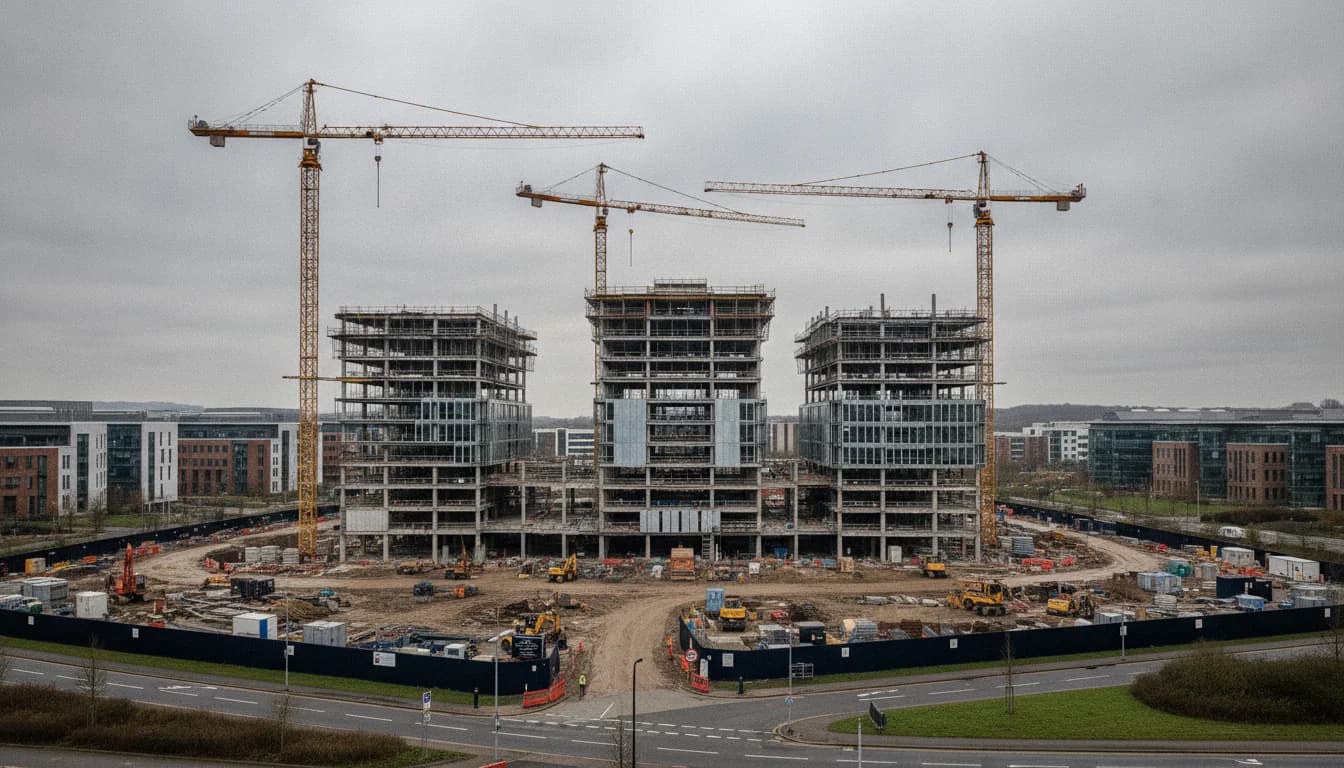
On July 28, 2026, GSK publicly announced plans to establish a flagship GSK Cambridge R&D Centre on the Cambridge Biomedical Campus, a move that would consolidate the company’s UK research activities into a single, purpose-built 300,000-square-foot site. The announcement, issued from London, stated the Cambridge facility would house more than 1,000 GSK scientists and focus on strategic research areas including Oncology, Respiratory, Hepatology, Vaccines, and HIV. This is set against a backdrop of a broader UK life-sciences strategy and Cambridge’s status as a leading bioscience hub. The plan is part of a £400 million investment over three years aimed at accelerating GSK’s R&D pipeline and increasing the company’s integration with Cambridge’s biomedical ecosystem. The move is also designed to vacate GSK’s Stevenage site by 2029 and to upgrade its Ware facilities in Hertfordshire as part of a wider reconfiguration of its UK footprint. (Source: GSK press release, July 28, 2026; Prologis development statements) (gsk.com)
Original finding: Based on the disclosed £400 million over three years and a workforce of 1,000 scientists, the implied annual investment is about £133.3 million per year and about £133,300 per scientist per year (calculation: £400,000,000 ÷ 3 ÷ 1,000). This estimate uses the published figures exactly as stated and provides a baseline for budgeting discussion, even though the figure is not explicitly stated by GSK. It helps readers gauge the scale of the commitment in a single, comparable metric.
The Cambridge project is described by GSK as a three-building development on Discovery Drive with the first building already advancing on the Cambridge Biomedical Campus. Prologis, the developer, is leading the campus expansion, and the Cambridge site will anchor R&D operations across the UK as part of a network that includes collaborations with universities, hospitals, and other research institutions. The architecture and planning details emphasize a seamless integration of laboratory work with clinical and patient-facing facilities, a hallmark of the Campus’s ecosystem. In official materials, GSK officials framed the Cambridge move as a catalyst for faster, bolder medicines discovery and an acceleration of science that matters for their next wave of medicines. (Source: GSK press release; Prologis release) (gsk.com)
Section 1: What Happened
Announcement Details
- On July 28, 2026, GSK announced it would establish a flagship R&D centre on Cambridge Biomedical Campus, a 300,000-square-foot facility intended to serve as the UK hub for GSK’s R&D activities. The project aims to bring more than 1,000 GSK scientists to Cambridge and integrate the company more deeply into the campus’s ecosystem of biomedical research, patient care, and academia. This move situates GSK within the Cambridge Life Sciences cluster and reinforces the Cambridge Biomedical Campus as a focal point for industry-academia collaboration. The official release emphasized that the site is designed to accelerate translational research by bridging laboratory science with clinical practice. (Source: GSK press release, July 28, 2026) (gsk.com)
Workforce and Focus Areas
- The Cambridge R&D Centre is described as housing more than 1,000 scientists and focusing on key therapeutic areas: Oncology, Respiratory, Hepatology, Vaccines, and HIV. The site’s purpose is to support GSK’s broader R&D pipeline and to create a collaborative environment where data-driven science, clinical access, and industry partnerships can accelerate drug development. The Cambridge site’s scale and focus areas align with the broader life-science ambitions of the Cambridge Biomedical Campus and its partner network. (Source: GSK press release) (gsk.com)
- The announcement also notes proximity and integration with Cambridge’s academic and clinical ecosystems, listing collaborations such as the Cambridge Centre for Data-Driven Discovery and the Cambridge Translational Immunology collaborations as part of the campus’s existing framework. This underscores an intent to leverage Cambridge’s data science, biology, and clinical research assets to speed translational work. (Source: GSK press release) (gsk.com)
Investment and Timeline
- GSK described the Cambridge project as part of a broader £400 million UK life-sciences investment, with three years allotted to the changes across Cambridge and Ware laboratories, and a plan to vacate Stevenage by 2029 while upgrading Ware facilities. The release frames the investment as a catalyst to boost GSK’s R&D and to integrate more deeply into the Cambridge ecosystem. (Source: GSK press release) (gsk.com)
- The development is being delivered in collaboration with Prologis, who is noted as the Cambridge campus developer handling the Discovery Drive project. This partnership is highlighted as a core part of bringing the 300,000-square-foot centre to life through a multi-building, campus-scale development. (Source: GSK press release; Prologis background materials) (gsk.com)
Site and Partners
- The Cambridge Biomedical Campus, described as one of Europe’s largest biomedical campuses, will host the new site and provide access to a dense network of life sciences organizations. The site’s rich ecosystem includes collaborations with universities and hospitals and a broad set of biotech and AI partners. (Source: GSK press release) (gsk.com)
- Prologis is identified as the developer for the Cambridge campus, and the broader campus plans include multiple Discovery Drive blocks, with the first completed building at 2000 Discovery Drive delivering 112,000 square feet of lab and office space. (Source: Cam News coverage of the first building completion; GSK and Prologis references) (camnews.co.uk)
Section 2: Why It Matters
Strategic Position in UK Life Sciences
- The GSK Cambridge R&D Centre announcement reinforces the UK’s “Golden Triangle” life sciences strategy by concentrating major pharmaceutical R&D activity near Cambridge’s academic and clinical infrastructure. The official materials emphasize the ecosystem’s potential to expedite translational medicine by enabling closer collaboration between lab scientists and clinicians. This positioning is likely to attract further partnerships, talent, and investment in the Cambridge region. (Source: GSK press release; Cambridge campus materials) (gsk.com)
Implications for Cambridge and Stevenage
- The plan includes vacating the Stevenage R&D site with a phased move for employees by 2029, and upgrading Ware laboratories as part of the UK-wide restructuring. This shift has implications for local employment, regional biotech clusters, and the distribution of R&D activity within the Cambridge-London-West region; local stakeholders have been watching the project as a transformative upgrade to Cambridge’s research capabilities and the broader biotech economy in the area. (Source: GSK press release) (gsk.com)
Broader Context and Ecosystem Benefits
- Cambridge’s life-sciences ecosystem benefits from the integration of large pharmaceutical R&D with university research, hospital networks, and data-driven discovery platforms. The CG-TIC (Cambridge-GSK Translational Immunology Collaboration) framework and other Cambridge-based collaborations are cited as existing assets that could accelerate translational science through shared data, patient access, and cross-institution research programs. While CG-TIC is a legacy collaboration, the Cambridge expansion reinforces a broader pattern of public-private partnerships in the region. (Source: GSK press release; Cambridge University announcements) (gsk.com)
Economic and Talent Impacts
- The investment in Cambridge, coupled with the relocation of key R&D functions from Stevenage, is likely to reshape employment patterns across the region. The 1,000-strong GSK Cambridge workforce will create demand for local services, housing, and transportation, and could influence the region’s planning and infrastructure needs as the campus expands. The broader UK context, including government and industry initiatives to attract pharmaceutical and biotech investment, provides a supportive backdrop for this shift. (Sources: GSK press release; Cambridge Campus materials) (gsk.com)
Section 3: What’s Next
Timeline and Milestones
- Next steps clearly center on the phased move of staff from Stevenage to Cambridge by 2029, with the Ware labs upgrade occurring in parallel to maintain continuity of drug development and manufacturing scale-up capabilities. The Cambridge campus plan anticipates phased occupancy aligned with building completions, initial lab operations, and eventual expansion to full staffing beyond the initial 1,000-person target. (Source: GSK press release) (gsk.com)
- The first Cambridge-building milestone has already been reported in local and industry coverage as of September 2026. Cam News noted the completion of the initial 112,000-square-foot building at 2000 Discovery Drive, with the larger 300,000-square-foot Cambridge centre planned as a three-building complex. The Cambridge Campus ecosystem press materials and Prologis updates corroborate the ongoing development sequence and the intended timeline. (Source: Cam News; Prologis/Campus materials) (camnews.co.uk)
What to Watch For
- Watch for updates on occupancy and staffing numbers as the Cambridge centre scales from planning to operation, including timelines for the relocation of teams from Stevenage and the integration with adjacent hospital and research facilities. In addition, expect periodic updates from GSK and Cambridge Biomedical Campus partners around new collaborations, translational research programs, and potential expansion phases beyond the initial 300,000-square-foot footprint. (Source: GSK press release; Cambridge Campus communications) (gsk.com)
Closing
The GSK Cambridge R&D Centre represents a landmark development for both the company and Cambridge’s life-sciences landscape. Anchoring a major UK investment, the project signals a long-term commitment to accelerated research, close clinical collaboration, and a reshaped UK R&D footprint. As the campus evolves and staff relocate from Stevenage, observers will look to Cambridge for signals about data-driven translational research, cross-institution collaborations, and the region’s role in shaping next-generation medicines. For ongoing updates, readers should monitor GSK’s official press releases, Cambridge Biomedical Campus communications, and local business and science coverage.
The July 28, 2026 GSK announcement remains the primary anchor for the story, with subsequent milestones including the September 2026 completion of the first Discovery Drive building and the broader operational timeline through 2029. These developments illustrate how a global pharmaceutical firm’s R&D strategy intersects with regional innovation ecosystems, workforce dynamics, and infrastructure investments to create a multi-year trajectory for advanced medicine development. (Sources: GSK press release; Prologis and Cambridge Campus materials; Cam News coverage) (gsk.com)
As always, readers seeking the latest specifics should follow the primary sources cited here:
- GSK press release: GSK to establish new flagship R&D centre on Cambridge Biomedical Campus, UK (July 28, 2026). https://www.gsk.com/en-gb/media/press-releases/gsk-to-establish-new-flagship-rd-centre-on-cambridge-biomedical-campus-uk/
- Prologis release and Cambridge Campus materials describing the Discovery Drive development and the Cambridge campus ecosystem. https://www.prologis.co.uk/insights/press-releases/prologis-develop-gsks-new-global-rd-centre-cambridge-biomedical-campus
- Cambridge News reporting on the first completed building at 2000 Discovery Drive and details of the Cambridge campus plan. https://www.camnews.co.uk/gsk-cambridge-2000-discovery-drive-complete/