Cambridge AI-Driven Climate Risk Forecasting for Cities
Neutral, data-driven coverage of Cambridge AI-Driven Climate Risk Forecasting for Cities and its implications for urban planning.
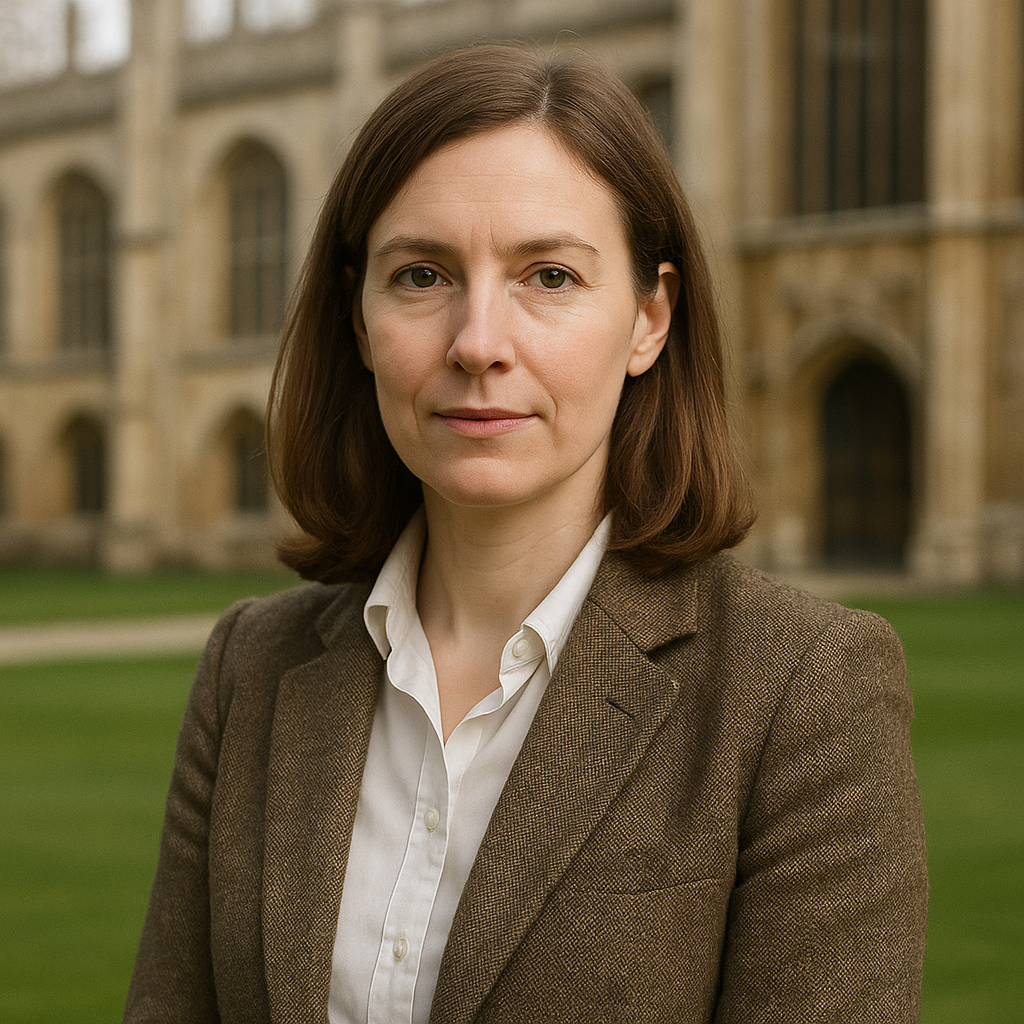 By Harriet Lockwood · 4 June 2026 · 10 min read
Cambridge AI-Driven Climate Risk Forecasting for Cities is taking center stage in a year that has already seen intensified focus on how cities adapt to an evolving climate. In 2026, Cambridge’s AI ecosystem has moved beyond lab-scale experiments to broader efforts aimed at translating climate data and AI insights into pragmatic decision support for urban planners, policymakers, and citizens. This week’s coverage draws on a series of Cambridge Zero–led climate-AI events and ai@cam initiatives that together illuminate how Cambridge researchers are stitching together climate science, machine learning, and public value into deployable tools for cities. The overarching aim is to equip city leaders with timely, interpretable forecasts that inform everything from zoning and infrastructure investments to emergency planning and public health preparedness, all while maintaining a commitment to transparency and accountability. (cambridgereview.uk)
In practical terms, Cambridge’s approach to climate risk forecasting for urban areas hinges on cross-disciplinary collaboration, real-time data integration, and governance mechanisms that ensure tools remain accessible as public goods. The Cambridge Climate Challenge 2026, a flagship program organized under Cambridge Zero and in partnership with the Maxwell Centre, CISL, ICCS, and related centers, showcases how ideas born in university laboratories move toward pilot projects and, potentially, city-scale deployments. The competition’s finalists—selected from across the University of Cambridge and its wider community—illustrate the breadth of work now underway, spanning AI-driven data infrastructure, climate-resilience design, and policy-support platforms for urban stakeholders. The Grand Final, held on May 1, 2026 at King’s College Cambridge, highlighted projects with potential to scale through partnerships with industry, public agencies, and philanthropic funders. This unfolding activity signals a deliberate, institution-wide strategy to move climate-AI research from concept to community impact. (cambridgereview.uk)
Opening the door to more systematic, city-focused AI-assisted climate planning, Cambridge’s climate-AI ecosystem is also engaging in policy conversations about governance and public value. A March 18, 2026 panel, Regulating AI for Climate and Nature, brought together legal scholars, policymakers, and researchers to discuss how new AI capabilities should be governed when applied to climate decision-making. The event underscored a broader emphasis on aligning rapid AI innovation with responsible governance, an issue Cambridge researchers say is essential if analytics-driven insights are to be trusted and widely adopted in city administration. The dialogue complemented other high-profile events during Cambridge Climate Week and the Cambridge Festival, reinforcing the notion that climate-AI advances must be explained, tested, and managed in the public arena. “Public trust in AI-enabled forecasts depends as much on governance as on accuracy,” a Cambridge Zero participant noted during coverage of the sessions. (cambridgereview.uk)
Section 1: What Happened
Announcement Details
Cambridge Climate Challenge 2026: finalists and grand final
On April 16, 2026, Cambridge Zero announced the finalists for the Cambridge Climate Challenge 2026. Nine teams from the University of Cambridge and its wider ecosystem were selected to pursue interdisciplinary approaches to climate risk and urban resilience, spanning AI-driven materials design, climate finance infrastructures, and data-enabled decision support for city planning. The competition’s structure emphasized the transition from concept to concrete impact, with a Grand Final scheduled for May 1, 2026 at King’s College Cambridge. Prize money and mentorship opportunities accompanied the event, intended to catalyze partnerships that could translate ideas into pilots or ventures. The organizers stressed a pipeline model, where ideas move from ideation through demonstration to adoption in real-world contexts. (cambridgereview.uk)
Cambridge Climate Roundtables and policy conversations
A March 13, 2026 Cambridge Climate Science Roundtable, hosted by the Cambridge Centre for Climate Science (CCfCS) in collaboration with the Institute of Computing for Climate Science (ICCS) and Cambridge Zero, focused on oceanography, atmospheric science, earth-system modelling, and climate projection. The roundtable aimed to map current research efforts, identify gaps, and surface collaboration opportunities that could unlock funding or joint proposals. A parallel policy-focused event, Regulating AI for Climate and Nature, occurred on March 18, 2026, featuring a keynote by a senior industry figure and panels showcasing perspectives from Cambridge researchers and legal scholars. These policy conversations were designed to ensure that AI-enabled climate insights are developed with governance in mind, promoting transparency and accountability as tools move toward deployment. (cambridgereview.uk)
Early-stage programs driving translation
Cambridge’s ai@cam initiative was instrumental in bridging the gap between academic discovery and public-sector impact in early 2026. The January 2026 AI Sciencepreneurship Bootcamp and the February 2026 Local Government AI Accelerator were highlighted as key steps in translating AI research into public-service applications. The outcomes reportedly included teams that evolved into public-facing tools and climate-risk capabilities, illustrating a tangible pipeline from research to practice. The emphasis on public-sector collaboration aligns with ai@cam’s mission to ensure AI research translates into policy-relevant, societally beneficial solutions rather than remaining locked in academic or commercial silos. (cambridgereview.uk)
The ecosystem and partnership network
The Cambridge climate-AI landscape in 2026 rests on a coordinated ecosystem: Cambridge Zero, the Maxwell Centre, CISL Canopy, ICCS, Centre for Earth Observation, and other Cambridge units. This network is designed to enable cross-disciplinary collaboration, data-sharing, and the co-design of climate tools that can inform urban planning decisions. In 2026, Cambridge’s climate-AI initiative framed its goals around real-time indicators, platform-based insights, and data integration across heterogeneous datasets, with governance features built into the development process to support public trust and responsible deployment. The emphasis on cross-disciplinary teams—combining computer science, climate science, urban planning, and policy—reflects a broader trend in Cambridge’s AI strategy: to fuse technical excellence with practical public value. (cambridgereview.uk)
Who is shaping the program and what tools are in scope
Cambridge Zero’s leadership, along with partners such as the Maxwell Centre and CISL, is shaping the climate-AI collaboration with a portfolio that includes AI for Climate & Nature, AI-in-science initiatives, and climate-focused symposia. The program is designed to bridge high-level research with municipal planning and industry pilots, ensuring that the resulting tools can be tested in real city contexts. The spectrum of participants includes researchers from climate science, data science, urban planning, and policy law, signaling a mature, institution-wide approach to AI-enabled climate decision-making. Participants and partners are widely cited across Cambridge’s climate and AI ecosystem in 2026. (cambridgereview.uk)
Why It Matters
Impact on urban resilience and planning
Real-time insights for city-scale decisions
The Cambridge AI-driven climate science collaboration is explicitly oriented toward producing real-time indicators and decision-support tooling that can inform urban planning and infrastructure resilience. The emphasis on platform-based insights and data integration is intended to give city authorities the capability to forecast climate risks such as heat waves, heavy rainfall, and urban flooding with greater clarity and timeliness. This shift toward AI-driven, city-scale forecasting could alter the way planning departments evaluate risk, allocate capital, and engage with communities around adaptation investments. The practical aim is to move from historical trend analysis to prescriptive, scenario-based decision support that helps cities prioritize resilience measures and allocate resources more efficiently. The initiative aligns with broader city-data dashboards and risk analytics efforts discussed in the climate-data community, including CityMetrics and related urban data platforms that compile climate and equity data to inform policy. (wri.org)
"Public trust in AI-enabled forecasts depends as much on governance as on accuracy," Cambridge researchers have observed in discussions about democratizing AI-driven weather and climate forecasts. This governance emphasis is central to Cambridge’s approach, ensuring that tools are transparent, auditable, and accountable for city use. (cam.ac.uk)
Economic and policy implications
Implications for insurers, utilities, and infrastructure finance
As cities face growing climate risk, AI-assisted forecasting can influence investment decisions in critical infrastructure, coastal defenses, drainage systems, and energy networks. The Cambridge ecosystem’s emphasis on governance, public value, and collaboration with public authorities signals a potential shift toward more evidence-based, risk-informed budgeting for climate adaptation. This aligns with broader industry trends toward climate risk quantification and resilience planning, where open data, shared models, and public-private partnerships are increasingly common. Notably, government and industry leaders are recognizing that AI-enabled climate analytics can support both risk reduction and more predictable budgeting for resilience projects. Cambridge’s ecosystem, anchored in university research and public sector collaboration, positions the city as a testbed for scalable, governance-aligned AI tools. (gov.uk)
Governance, ethics, and accessibility
Cambridge’s climate-AI initiatives place a premium on responsible governance, ethics, and public engagement. The policy dialogues and public-facing events around AI for climate and nature highlight a deliberate effort to align rapid AI capability with public accountability and ethical considerations. This is reflected in the wider research literature and policy discussions about AI in urban contexts, which emphasize accessibility, equity, and transparent decision-making as essential for successful deployment. Cambridge’s approach—rooted in public dialogue, multidisciplinary collaboration, and governance-oriented events—offers a practical blueprint for balancing technical ambition with social responsibility. (cambridgereview.uk)
Public engagement and equity considerations
Ensuring the benefits reach diverse communities
A core concern in climate risk forecasting for cities is ensuring that the benefits of AI-driven insights are accessible to diverse communities and do not exacerbate existing inequities. Cambridge’s public-facing workshops, policy panels, and festival programming are designed to broaden participation and foster trust in AI-enabled climate decision tools. Public engagement work in Cambridge echoes broader calls in the AI-for-climate literature to couple technical development with participatory processes, co-creation, and capacity-building at the village or district level. The PLOS Climate discourse on AI-driven climate risk forecasting to empower communities emphasizes the importance of local capacity-building and participatory design to ensure forecasts translate into actionable, equitable adaptations. Cambridge’s activities appear well-aligned with these principles. (journals.plos.org)
What’s Next
Upcoming pilots, partnerships, and milestones
Near-term milestones and the pipeline from idea to impact
Looking ahead from 2026, Cambridge’s climate-AI ecosystem is expected to continue its multi-track approach: advancing finalists’ projects from the Cambridge Climate Challenge 2026 into pilots with city partners; expanding the AI-for-climate-and-nature program to include additional datasets (satellite imagery, urban sensors, and meteorological data); and hosting governance and regulatory discussions to refine ethical frameworks for deployment. The Grand Final and the CCfCS Symposium in early 2026 underscore Cambridge’s intent to accelerate the translation of research into tangible tools for policy and practice. Observers are watching for concrete pilot announcements, new funding opportunities, and formal collaborations between Cambridge’s academic units and municipal governments or regional authorities. (cambridgereview.uk)
Metrics, evaluation, and public accountability
As these tools move from concept to deployment, evaluators will look for clear success metrics: prediction accuracy for climate hazards at city scale, lead time for warnings, user adoption by planners, and demonstrable improvements in resilience outcomes. The emphasis on transparent governance suggests that evaluation will extend beyond technical performance to include usability, equity impacts, and public-value outcomes. Cambridge’s governance-centric approach, including policy dialogues and public-facing events, may provide a framework for evaluating AI-enabled climate decision-support in a way that can be adopted by other universities or city partners. The literature on AI-driven climate forecasting supports a balanced evaluation framework that combines model performance with interpretability, governance, and stakeholder engagement. (cam.ac.uk)
What’s Next (Continued)
Pilot cities and international collaboration
Cambridge’s ecosystem could catalyze pilots in partner cities and potentially influence international collaborations in climate resilience. The Cambridge AI for Climate Science Collaboration 2026 narrative emphasizes cross-institutional and cross-sector partnerships, signaling a path toward broader adoption of AI-enabled tools in urban planning, resilience finance, and governance. Observers familiar with Cambridge’s climate-AI portfolio anticipate pilots that integrate climate forecasting with municipal planning processes, enabling cities to test adaptive strategies under various climate scenarios and to compare the performance of different AI-driven approaches in real-world conditions. The collaboration between Cambridge Zero, ICCS, Canopy, and related bodies remains central to coordinating these pilots and scaling successful solutions. (cambridgereview.uk)
Closing
Cambridge’s 2026 climate-AI landscape is evolving as a structured, ecosystem-driven effort that seeks to translate sophisticated AI capabilities into practical, city-scale decision support. The convergence of real-time data, cross-disciplinary teams, and governance-focused events positions Cambridge as a living laboratory for climate-risk forecasting in urban contexts. For city leaders and residents alike, the promise is a future where urban design and policy decisions are informed by transparent, data-informed forecasts that help communities anticipate and adapt to a changing climate with greater confidence. As Cambridge continues to publish milestones, host symposia, and advance pilots, stakeholders should stay tuned to Cambridge Zero’s news pages, the ai@cam platform, and the University of Cambridge’s broader climate-and-AI program for updates, pilot announcements, and opportunities to participate in this collaborative, evidence-driven journey. (cambridgereview.uk)

Photo by Dorin Seremet on Unsplash
As the city prepares for hotter, wetter conditions, Cambridge’s approach to Climate Risk Forecasting for Cities highlights a broader shift in urban analytics: data-driven insight coupled with transparent governance can empower cities to act decisively, while keeping public engagement and ethical considerations at the core of innovation. The coming months will reveal which pilot programs advance to deployment, how city officials integrate AI-driven insights into planning cycles, and what new models Cambridge and its partners will develop to ensure that climate resilience remains accessible, equitable, and accountable. In this moment, Cambridge’s AI-driven climate science collaboration stands as a notable example of how a university ecosystem can shape the future of urban resilience through research, collaboration, and responsible innovation. (cambridgereview.uk)