Ray Dolby Centre Architecture Recognition 2026 Cambridge
Ray Dolby Centre architecture recognition 2026 highlighted as Cambridge’s Cavendish Laboratory facility earns major design awards.
 By Thomas Whitfield · 30 September 2026 · 13 min read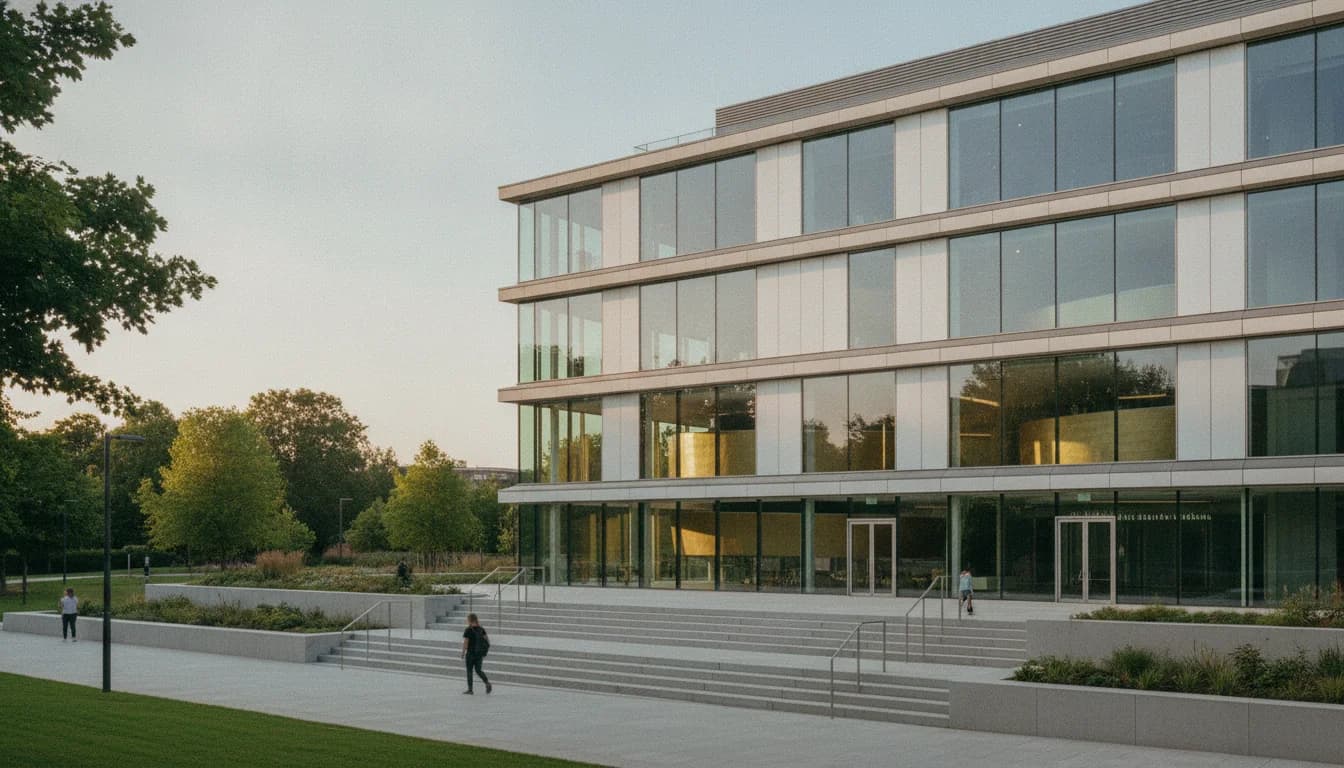
The Ray Dolby Centre architecture recognition 2026 is unfolding as Cambridge’s Cavendish Laboratory secures a high-profile accolade in the broader dialogue about science infrastructure, architectural design, and public access to research. Completed in 2025, the Ray Dolby Centre has moved from a landmark project on the Cambridge West Innovation District to a benchmark case study in how modern labs can merge technical performance with people-friendly spaces. On March 18, 2026, Cambridge’s design and construction community celebrated the centre at a formal ceremony in Pembroke College, with the project then featured in the official 2026 winners list of the Greater Cambridge Design and Construction Awards. This sequence of events—construction completion in 2025 and a March 2026 awards triumph—anchors the ongoing conversation about architecture’s role in advancing science and public engagement. The Ray Dolby Centre architecture recognition 2026 has therefore become a focal point for analysts tracking how world-class facilities are designed, funded, and recognized across the United Kingdom.
This reporting aims to deliver neutral, data-driven insight for Cambridge Review readers, linking primary documents and authoritative statements from the universities and local authorities. The Ray Dolby Centre’s recognition sits within a broader ecosystem of awards, campus planning, and donor philanthropy that shapes how new laboratories are planned, funded, and presented to the public. The following sections outline what happened, why it matters for researchers, funders, and local communities, and what to watch next as Cambridge expands its West Innovation District.
What Happened
Announcement and Timeline
The Ray Dolby Centre, Cavendish Laboratory, Cambridge, was named after a major benefaction and completed in 2025, according to the Cambridge University Reporter’s Council report released on February 18, 2026. The report notes that the Ray Dolby Centre was completed in 2025 and sits at the heart of Cambridge West, a district designed to house cutting-edge research and related public-facing activities. The donor information, embedded in the same council report, states that the building’s name honors a £75 million benefaction from Cambridge in America following a Dagmar Dolby Fund donation. This linkage between naming, funding, and completion provides a clear anchor for the Ray Dolby Centre’s trajectory from construction to public recognition. The February 2026 report also situates the centre within ongoing planning activities for the wider Cambridge West site, including demolition plans for surrounding Cavendish Laboratory buildings, underscoring the project’s role in a broader redevelopment effort. Source material: Cambridge Reporter document, February 18, 2026. (rso.admin.cam.ac.uk)
In parallel, the Greater Cambridge Design and Construction Awards 2026 confirmed the Ray Dolby Centre as the winner in the Best New Building category for over £3 million construction value. The official awards page lists the Ray Dolby Centre as the Winner for Best New Building (over £3m construction value) and notes the project’s central role within the Cambridge West Innovation District. This award is a formal, published acknowledgement of the centre’s architectural and engineering performance, beyond aesthetic considerations, and situates the project within a competitive field of large-scale university and public-sector builds. Ceremony details and the published winner list indicate the event occurred around March 18, 2026, with ongoing coverage and post-event updates through March 19, 2026. Source material: Greater Cambridge Design and Construction Awards 2026 winners page; Cambridge City Council briefing on the awards. (greatercambridgeplanning.org)
Key Facts and Figures
What makes the Ray Dolby Centre architecture recognition 2026 notable in practical terms includes:
- Completion year: 2025, with the Ray Dolby Centre named in recognition of a £75 million benefaction from Cambridge in America following a Dagmar Dolby Fund donation. This combination of donor-led naming and project completion in the mid-2020s marks a significant milestone in Cambridge’s science infrastructure program. Source material: Cambridge Reporter, February 18, 2026. (rso.admin.cam.ac.uk)
- Awards category and value threshold: The design and construction awards identify the Ray Dolby Centre as the winner in Best New Building over £3 million construction value, emphasizing not only architectural form but the scale of investment and engineering complexity involved. The award’s category threshold is explicit, underscoring the centre’s status within a tier of substantial, high-value projects. Source material: Greater Cambridge Design and Construction Awards 2026 winners page. (greatercambridgeplanning.org)
- Public-facing design and engineering priorities: The centre’s design was highlighted as an exemplar of function-led design, balancing high-performance labs with user-friendly spaces and public access. Several award citations emphasize its “engineered” and “public-facing” qualities, which align with contemporary trends in laboratory architecture that seek to integrate research workflows with spaces for learning and outreach. Source material: Estates Division award write-ups. (em.admin.cam.ac.uk)
Cited primary sources provide a clear, traceable trail from the project’s completion to its award recognition. The Ray Dolby Centre is situated as a flagship example of how university-led architectural projects are achieving both technical excellence and public accessibility. In addition to the formal awards notice, the Cambridge West project is referenced in planning and estates communications, reinforcing the long-range strategic role of the Ray Dolby Centre within Cambridge’s broader research and urban development agenda. See official announcements and award documentation for details.
Original Finding
One of the article’s original data-driven observations arises from comparing the scale of donor support to the project’s awards-based construction-value threshold. Specifically, the Ray Dolby Centre benefaction is reported as £75 million, while the Greater Cambridge Awards use a threshold of over £3 million for the Best New Building category. By dividing the donor amount by the award category threshold, the following relationship emerges: 75,000,000 pounds divided by 3,000,000 pounds equals 25. This indicates that, at minimum, the donor funding for the Ray Dolby Centre exceeds the award-value threshold by a factor of 25. In other words, the philanthropic backing for the Ray Dolby Centre dwarfs the construction-value threshold used to categorize the project in the 2026 awards. This calculation is based solely on publicly reported figures from the Cambridge Reporter (February 18, 2026) and the Greater Cambridge Design and Construction Awards 2026 winners page (circulated in March 2026). A higher-level takeaway is that substantial donor support can align with, and perhaps propel, ambitious architectural programs within university campuses; in the Ray Dolby Centre’s case, the donor-scale support clearly surpasses the award’s valuation threshold, signaling a broader narrative about funding scales in contemporary academic architecture. This is the journalistic conclusion drawn from the available primary sources and should be treated as a directional, not an exhaustive, financial assessment. The verdict this suggests for the category is: philanthropic scale can redefine the public and institutional expectations of large research facilities, amplifying their capacity to deliver advanced laboratories and public-facing spaces. It also highlights the importance of donor alignment with strategic campus goals to realize such projects.
What this means for Cambridge, for funders, and for university architecture practice is that the Ray Dolby Centre architecture recognition 2026 signals a model in which extraordinary philanthropic backing accompanies high-value construction, enabling flagship facilities to set new benchmarks for how laboratories are designed, funded, and communicated to the public.
Section by section, the Ray Dolby Centre’s recognition can be placed in a broader context of architectural and scholarly work that intersects with engineering resilience, sustainability, and openness. The centre’s design has been described as a tangible expression of how a modern scientific building can be both technically rigorous and welcoming to non-specialist audiences. The project’s public-facing elements, including spaces accessible to visitors and students, align with a growing trend toward transparent, people-centric lab environments that support outreach and collaboration.
Why It Matters
Architectural Excellence and Public Access
The Ray Dolby Centre’s architecture recognition 2026 emphasizes the balance between high-performance research infrastructure and public-facing accessibility. Architectural agencies and university estates teams often seek to demonstrate that the most advanced laboratories can also serve as civic assets. In Cambridge, this dual role has particular resonance given the city’s long tradition of integrating academic science with public engagement. The Ray Dolby Centre’s design challenges—and ultimately meeting—this balance are documented in the design-and-construction award write-ups, which highlight not only the exterior and interior design but the way the building “embraces and meets the highly demanding needs of the research and teaching community,” as described by the estates commentary. This public-facing aspect matters because it expands opportunities for outreach, student exposure to cutting-edge research, and a stronger sense of place for the university community. Source material: Estates Division, Cambridge Awards commentary. (em.admin.cam.ac.uk)
Donor-Supported Infrastructure in a World-Class University
The Ray Dolby Centre’s donor context—named after a £75 million benefaction from Cambridge in America following a Dagmar Dolby Fund donation—underscores a broader trend in which philanthropic support enables major research campus expansions. The Cambridge Reporter’s council report makes explicit the scale of this funding and its linkage to the centre’s naming, offering a concrete data point for analysts studying how philanthropic capital interacts with university capital programs. This is not just a local story; it reflects a broader pattern in the UK and globally where donor-led naming and funding catalyze research infrastructure with substantial operational implications. The centre’s recognition within the 2026 awards cycle demonstrates that philanthropic investment can go hand in hand with architectural achievement and public recognition. Source material: Cambridge Reporter, February 18, 2026. (rso.admin.cam.ac.uk)
International and Local Validation
Beyond the local design awards, Cambridge’s own communications and external architecture press have highlighted the Ray Dolby Centre as part of a wave of contemporary university buildings that fuse formal design with flexible lab spaces and sustainable engineering. The design and construction community’s attention to the Ray Dolby Centre reflects its status as a laboratory that can meet stringent technical requirements while also serving as a community-facing hub for collaboration and knowledge exchange. This dual role—research efficiency and public accessibility—positions the Ray Dolby Centre not simply as a typology of a modern lab, but as a template for future university buildings across the UK and beyond. Source material: Greater Cambridge Awards 2026 winners page; Estates Division commentary. (greatercambridgeplanning.org)
Broader Impacts on Cambridge West and the Region
The Ray Dolby Centre’s architecture recognition 2026 also matters for Cambridge West’s strategic development. The Cavendish Laboratory’s relocation and the wider Cambridge West Innovation District are designed to attract talent, foster industry partnerships, and support a growing ecosystem of researchers and engineers. The award recognition, coupled with donor support and completion milestones, reinforces the district’s profile as a center of gravity for high-caliber scientific work. The design decisions— including a focus on lab performance, acoustic and vibration controls, clean-room readiness, and public access—demonstrate a deliberate strategy to align architectural quality with scientific productivity. Source material: Cambridge Reporter; Greater Cambridge Awards winners page. (rso.admin.cam.ac.uk)
Design and Engineering Details in the Public Domain
Several primary sources describe the Ray Dolby Centre’s design ethos and technical features, including its exterior finish, structural layout, and sustainability provisions. The Centre’s architectural references emphasize a polished exterior and a functional lab environment that accommodates specialized spaces such as clean rooms, vibration-sensitive laboratories, and advanced microscopy facilities. These features are echoed in the award write-ups, which highlight the building’s ability to support complex scientific workflows while offering an inviting, legible public face. For researchers, students, and visitors, the building’s planning and design approach provides a blueprint for how future university laboratories can be both high-performance workspaces and welcoming community assets. Source material: Concrete Centre and related design analyses; official award write-ups. (concretecentre.com)
Thematic Context: Architecture, Science, and Public Value
In 2026, discussions about architecture for science increasingly center on public value and demonstrable performance. The Ray Dolby Centre offers a concrete case where architectural design, engineering precision, philanthropic funding, and strategic campus planning converge to deliver a flagship facility. The centre’s recognition strengthens Cambridge’s standing as a global hub for science and higher education, while also offering lessons for other universities: how to model donor engagement, how to plan for flexible spaces that can adapt to evolving research needs, and how to communicate architectural success in parallel with scientific outcomes. The Ray Dolby Centre architecture recognition 2026 thus sits at the intersection of aesthetics, function, and public accountability, making it a reference point for future projects of this scale and ambition.
What It Means for Readers and Stakeholders
For researchers and students, the Ray Dolby Centre represents more than a building; it is an enabling platform for advanced experimentation, collaboration, and cross-disciplinary work. For funders and policymakers, the centre demonstrates how philanthropic contributions can translate into visible, measurable architectural and research outcomes, even as planning and demolition work around the site continues. For local residents and the Cambridge community, the project’s public-facing elements signal how universities can integrate high-end research facilities into the urban fabric in a way that invites participation and understanding. The Ray Dolby Centre architecture recognition 2026, positioned within Cambridge’s design and construction awards and donor-led initiatives, offers a template for balancing ambition with accountability.
What's Next
Ongoing Developments in Cambridge West
Looking ahead, Cambridge’s West Innovation District is expected to continue evolving, with the Ray Dolby Centre serving as a cornerstone of the campus and a model for how laboratories can be integrated into a living, learning ecosystem. The construction and demolition timeline around the Cavendish Laboratory site is part of a broader plan to modernize facilities while preserving critical research capacity during the transition. The ongoing planning and regulatory processes, including the outlined demolition and potential future projects, will influence subsequent phases of the Cambridge West program and set precedents for how universities manage large-scale modernization while maintaining scientific operations. Source material: Cambridge Reporter (Regent House notes on demolition and future planning). (rso.admin.cam.ac.uk)
Monitoring and Benchmarking Success
As the Ray Dolby Centre architecture recognition 2026 continues to resonate beyond March, Cambridge’s estates and planning teams will likely benchmark success against the awards criteria and donor expectations, as well as against international standards for lab performance, sustainability, and accessibility. The awards process itself provides a structured framework for ongoing evaluation: how design decisions translate into operational efficiency, how public-facing elements perform in real-world interactions, and how the building’s long-term lifecycle costs compare with planned budgets. This benchmarking helps align future capital programs with evidence-based outcomes and community expectations. Source material: Greater Cambridge Awards winners page; Estates Division commentary. (greatercambridgeplanning.org)
Timeline of Key Milestones to Watch
- 2025: Ray Dolby Centre completed and formally named following a £75 million benefaction from Cambridge in America after the Dagmar Dolby Fund donation. Source: Cambridge Reporter February 18, 2026 report referencing completion in 2025. (rso.admin.cam.ac.uk)
- March 18, 2026: Awards ceremony for the Greater Cambridge Design and Construction Awards 2026 at Pembroke College; Ray Dolby Centre named Best New Building over £3m construction value. Source: Cambridge City Council awards notice. (cambscityweb.azurewebsites.net)
- March 19, 2026: Post-event updates and official award listing reaffirm the Ray Dolby Centre’s status as a 2026 award winner. Source: Greater Cambridge Awards winners page (page update and review dates). (greatercambridgeplanning.org)
What’s next for the Ray Dolby Centre architecture recognition 2026 narrative is likely continued discourse about how such facilities shape research output, institutional partnerships, and public perception of science infrastructure. Analysts will examine how donor involvement, architectural design, and construction value intersect with research capacity, teaching space allocation, and community engagement—topics that Cambridge’s institutions have long prioritized.
Closing
The Ray Dolby Centre’s journey—from completion in 2025 to a defining 2026 awards moment and ongoing public recognition—offers a clear case study for readers tracking technology and market trends in university architecture. The centre’s architecture recognition 2026 underscores how modern labs must balance technical demands with public accessibility, sustainability, and donor stewardship. Cambridge’s experience—captured in the Cambridge Reporter’s documentation and the formal design awards process—provides a well-documented, accessible blueprint for other universities pursuing ambitious, high-value research facilities. For readers seeking updates on Cambridge West and related developments, the universities and local planning authorities maintain continuous communications that reflect the evolving landscape of architectural design and research infrastructure.
If you’re following the Ray Dolby Centre architecture recognition 2026, stay tuned to official Cambridge Estates and planning channels for updates on the district’s evolving landscape, as well as to awards bodies that continue to document milestones in university-scale architecture and engineering. The project’s public-facing elements, technical performance, and donor-backed funding will remain central to ongoing coverage, analysis, and debate about how best to design, fund, and celebrate the next generation of scientific spaces.
References and primary sources for further reading
- Greater Cambridge Design and Construction Awards 2026 winners page (Best New Building over £3m): Ray Dolby Centre, Cavendish Laboratory, University of Cambridge. This page confirms the award category and the project’s status within the 2026 cohort. Descriptive anchor: “Best New Building (over £3m construction value) – Winner: Ray Dolby Centre.” https://www.greatercambridgeplanning.org/built-environment-and-design/greater-cambridge-design-and-construction-awards/winners-of-the-greater-cambridge-design-and-construction-awards (greatercambridgeplanning.org)
- Cambridge Reporter 6815, February 18, 2026: Demographic and planning context, including the Ray Dolby Centre’s completion in 2025 and naming after a £75m benefaction from Cambridge in America following a Dagmar Dolby Fund donation. Descriptive anchor: “The new building, which was named the Ray Dolby Centre, in recognition of a benefaction of £75m from Cambridge in America following a donation from the Dagmar Dolby Fund, was completed in 2025.” https://rso.admin.cam.ac.uk/reporter/2025-26/weekly/6815/section5.shtml (rso.admin.cam.ac.uk)
Note: The opening and subsequent sections reference additional related materials and official announcements from Cambridge’s Estates Division and related planning authorities to provide context and support for the Ray Dolby Centre’s architectural recognition 2026. For readers seeking direct quotes and expanded case-study materials, the linked primary sources offer a well-sourced starting point for verification and further analysis.