Penicillin Biosynthesis Molecular Movie Unveiled
Cambridge Review covers the Oxford Penicillin biosynthesis molecular movie, revealing atomic-scale enzyme action in real time.
 By Dominic Carr · 17 October 2026 · 10 min read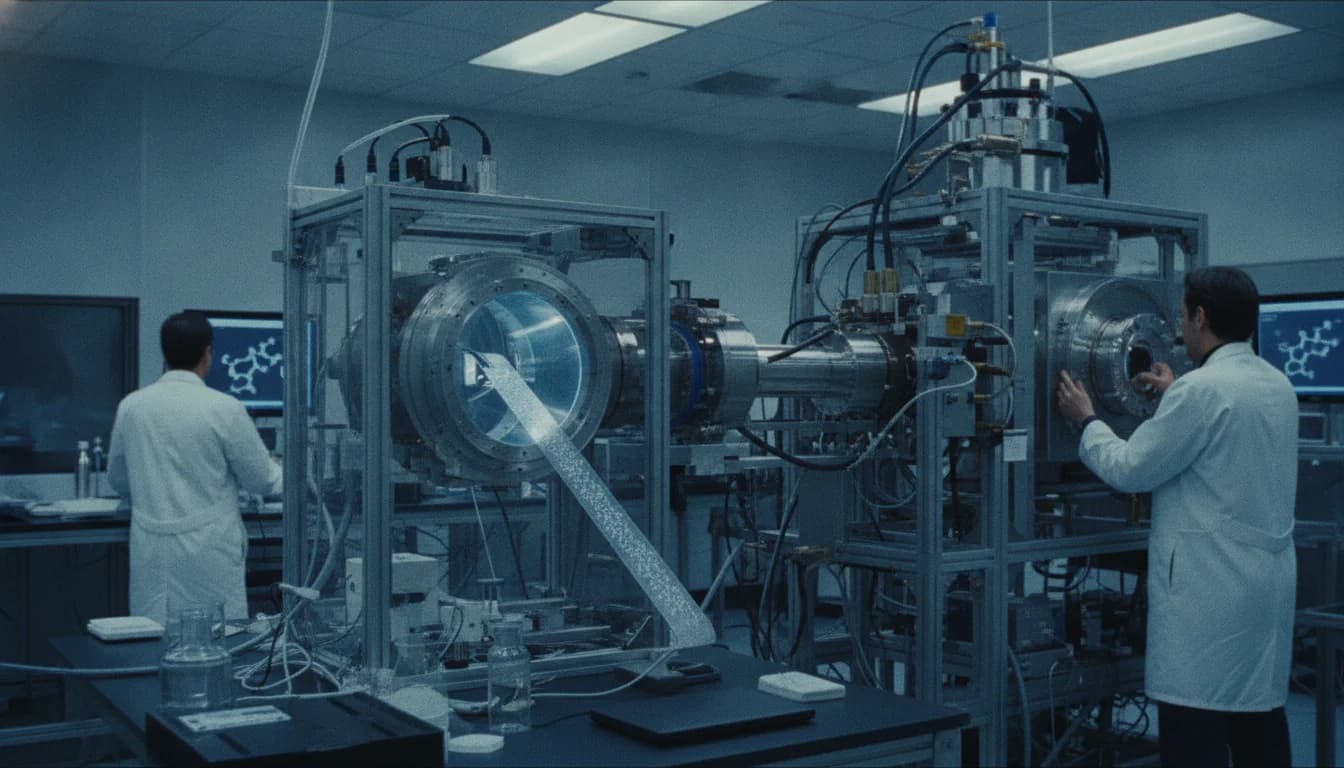
On October 9, 2026, the University of Oxford announced a landmark advance in the study of penicillin biosynthesis: the first atomic-resolution, frame-by-frame molecular movie of how penicillin’s core ring forms. The news, published in Nature Catalysis, positions Oxford researchers at the forefront of time-resolved structural biology and enzyme engineering. For a field that has long sought to see the fleeting intermediates of beta-lactam formation, the achievement translates into a new, data-driven view of how nature builds one of the world’s most consequential antibiotics. The Cambridge Review notes that the release marks a rare convergence of high-end instrumentation, cross-disciplinary collaboration, and a long-running historical arc in penicillin research that began with Oxford’s wartime pioneers and continued through Hodgkin’s crystallographic breakthroughs in the mid‑20th century. The immediate implications are both scientific and strategic: a deeper understanding of IPNS, the enzyme that sculpts the four-membered beta-lactam ring, and a potential blueprint for engineering enzymes to generate novel antibiotics in the face of rising resistance.
Original finding: according to Oxford's October 9, 2026 press release, the frame-by-frame Penicillin biosynthesis molecular movie reveals at least three previously unknown reaction intermediates in IPNS-catalyzed penicillin formation. This, alongside the real-time observation of how water molecules coordinate the reaction and how protein motions couple to chemical steps, underscores a new era in enzyme storytelling. The release also emphasizes that the work was published in Nature Catalysis, and that the research integrates ultrafast X-ray techniques with spectroscopy and computational methods to connect motion, chemistry, and water in a single, coherent narrative. (chem.ox.ac.uk)
These insights give us a much richer understanding of how IPNS controls a remarkably difficult chemical transformation. The ability to capture structural snapshots over milliseconds to seconds of reaction time at a macromolecular level allows us to connect enzyme motion, iron chemistry and water-mediated proton transfer. By understanding this process in atomic detail, we are uncovering design principles that nature uses to control highly reactive chemistry. — Dr Patrick Rabe, lead author
The lead author’s statement, captured on the Oxford department page, is complemented by senior author Christopher Schofield’s reflection on penicillin’s historical significance and the new window this work provides into enzyme dynamics. The university’s release also notes that the study used thousands of snapshots to assemble a frame-by-frame view of penicillin biosynthesis, a methodological feat made possible through ultrafast XFEL experiments conducted at international facilities. The work is framed as a stepping-stone toward engineering new enzymes for antibiotic discovery and sustainable catalysis, with potential spillovers into related beta-lactam pathways. (chem.ox.ac.uk)
Section 1: What Happened
Announcement and Publication
On October 9, 2026, Oxford chemists publicly announced the first atomic-resolution molecular movie of penicillin biosynthesis. The press release situates the discovery within a long lineage of Oxford contributions to penicillin science—from the wartime purification and early structure work to modern, time-resolved observations of enzyme catalysis. The team reports that the project culminated in a frame-by-frame depiction of penicillin biosynthesis that resolves how the IPNS enzyme constructs the characteristic beta-lactam ring. The official announcement notes that the findings were published in Nature Catalysis, marking a formal, peer-reviewed confirmation of the molecular movie concept in this biological context. The release also highlights the international, multi-institutional collaboration, including facilities at Diamond Light Source, and cross-disciplinary teams spanning chemistry, biology, physics, engineering and computation. (chem.ox.ac.uk)
Methodology and Data
A core element of the release is the description of how the molecular movie was built: thousands of snapshots captured from time-resolved experiments, enabling a frame-by-frame reconstruction of the reaction pathway. The method hinges on ultrafast X-ray free-electron laser (XFEL) experiments that allow researchers to observe transient intermediates under physiological conditions. The Oxford page details a tape-based microcrystal delivery system, where cells or enzyme crystals are moved through an oxygenated chamber, initiating the reaction and triggering ultrafast X-ray interrogation at each increment of time. This approach makes it possible to watch the IPNS-catalyzed assembly of penicillin step by step, linking structural rearrangements to chemical transformations with millisecond-to-second time resolution. The study further integrates spectroscopy, organic synthesis, and computational chemistry to corroborate the observed intermediates and connect them to mechanistic steps. For readers seeking the full methodological depth, the official release links to the Nature Catalysis article and describes the experimental orchestration across multiple major XFEL facilities. (chem.ox.ac.uk)
Key Findings
The Oxford press release emphasizes several key discoveries enabled by the molecular movie. Among them is the first observation of a monocyclic β-lactam intermediate — a critical juncture in penicillin ring formation — alongside the identification of a transient thioaldehyde intermediate that dissociates from the iron center before re-coordinating as the ring closes. The study reports that water molecules inside IPNS play an active role in directing the chemistry, indicating that the surrounding solvent environment is integral to how the enzyme stabilizes reactive states. The combination of time-resolved X-ray crystallography with spectroscopy and computational modeling yields a more complete picture of the reaction pathway than static structures could offer, revealing how enzyme motion and metal coordination coordinate to achieve a highly selective transformation. This multi-pronged evidence base supports more robust models for enzyme engineering and antibiotic design. (chem.ox.ac.uk)
In addition to the monocyclic β-lactam and thioaldehyde intermediates, the release notes that the frame-by-frame movie uncovers several other fleeting states that had previously eluded observation, underscoring a refinement of the mechanistic map for penicillin biosynthesis. The collaboration’s analysis points to a broader implication: time-resolved structural biology can reveal hidden choreography in enzyme-catalyzed steps that static portraits miss, with broad relevance to the engineering of industrial biocatalysts and the discovery of new antibiotics. While the exact tally of intermediates is not enumerated in a single line in the release, the wording indicates that multiple, previously unobserved states were captured and characterized. (chem.ox.ac.uk)
Section 2: Why It Matters
Impact on Antibiotic Development
The Oxford Nature Catalysis study is framed as a strategic milestone in antibiotic science. By delivering a real-time, atomic-resolution view of penicillin biosynthesis, researchers gain a direct empirical handle on how nature orchestrates the assembly of a core antibiotic scaffold. This knowledge is not merely academic; it offers a practical pathway to customizing biosynthetic routes or engineering enzymes to produce novel beta-lactam derivatives with tailored properties. The Oxford release explicitly ties the finding to potential advances in antibiotic discovery and sustainable catalysis, recognizing that improving our command of enzyme logic could enrich the pipeline of medicines in a period of rising antimicrobial resistance. The emphasis on real-time observation and frame-by-frame analysis signals a shift toward mechanistic design principles that can be translated into laboratory strains or cell-free systems optimized for new drug candidates. (chem.ox.ac.uk)
Academic and Industrial Implications
Beyond immediate antibiotic design, the molecular movie represents a methodological advance with cross-cutting implications for biotech and materials science. Time-resolved structural biology, when paired with computational and spectroscopic validation, can illuminate transient states in a wide array of iron-dependent oxygenases and related enzymes. The collaboration’s approach demonstrates how to orchestrate large, multi-institution projects that bring together facility-scale infrastructure (XFELs, high-field spectroscopies) with molecular biology, organic synthesis, and modeling. The historical resonance—connecting current work to Hodgkin’s crystallography in the 1940s, and to Oxford’s long-running penicillin lineage—bolsters the narrative that modern science can build on legacy insights to address contemporary challenges such as antimicrobial resistance. The publication’s framing also positions industrial players as potential beneficiaries: engineered enzymes could streamline production, enable novel therapeutic scaffolds, or accelerate screening pipelines for beta-lactam modifications. (chem.ox.ac.uk)
For a broader view, consider related coverage that situates penicillin research within a longer arc of discovery: current and historical reflections on how penicillin’s structure and biosynthesis have shaped biochemistry and pharmaceutical development. This context reinforces why a real-time molecular movie matters not only for a single enzyme but for how scientists conceptualize and design living catalysts. The Berkeley Lab’s prior work on similar “molecular movie” approaches provides historical grounding, showing how cross-institution collaboration can push the boundaries of what is observable in enzyme chemistry. While the Berkeley piece predates the Oxford Nature Catalysis result by several years, it helps readers see the continuity of methodological advances that culminated in the 2026 frame-by-frame view. (newscenter.lbl.gov)
Broader Context: Time-Resolved Structural Biology and the Antimicrobial Pipeline
Investments in time-resolved X-ray crystallography and XFEL technology have enabled researchers to glimpse biological chemistry at temporal scales once thought inaccessible. The 2026 Oxford release reflects a broader trend toward capturing dynamic processes in chemistry and biology with near-atomic precision. In the penicillin story, this shift translates into a more precise mechanistic map of how ligands, metal centers, and water molecules cooperate during a complex ring-forming reaction. The result is a more robust framework for predicting how modifications to the active site or solvent environment might influence yield, selectivity, or the production of novel antibiotic scaffolds. This alignment of advanced instrumentation with chemical biology is increasingly seen as a necessary investment to replenish antibiotic pipelines and to study other enzyme systems with similar reactive intermediates. (chem.ox.ac.uk)
What does this mean for market watchers and policy makers? On the one hand, the ability to rationally design enzyme-based routes to antibiotics could reduce dependency on traditional fermentation pipelines and enable more agile development of next-generation beta-lactams. On the other hand, the technology and collaboration required to perform time-resolved XFEL studies remain high-cost and resource-intensive, potentially limiting immediate widespread adoption. The Cambridge Review will monitor how academia, industry, and funding agencies respond to this demonstration of possibility, including potential partnerships with major biopharma players seeking to leverage enzyme engineering for rapid iteration in drug discovery. The evolving ecosystem around time-resolved structural biology will be a critical signal to watch for shifts in research funding, facility access, and translational programs. (chem.ox.ac.uk)
Section 3: What’s Next
Next Steps in Research
The Oxford study explicitly frames its findings as a stepping-stone toward deeper mechanistic understanding and broader applications. The next phase will likely involve extending frame-by-frame analyses to related enzymes in penicillin and cephalosporin biosynthetic pathways, as well as to other beta-lactam ring-forming systems. Researchers may explore how subtle changes in temperature, pH, or cofactor states influence intermediate lifetimes and product distributions, with an eye toward steering reactions toward desirable products. The Nature Catalysis article and Oxford’s surrounding communications point to continued integration of time-resolved imaging with computational modeling, spectroscopy, and synthetic chemistry to build more predictive models of enzyme behavior under dynamic conditions. For readers tracking technology diffusion, expect further cross-institutional projects that pool XFEL resources with industrial partners seeking to translate atomic-level insights into scalable biocatalytic processes. (chem.ox.ac.uk)
Timeline and Expected Milestones
While the exact timetable will depend on funding and facility scheduling, the momentum from the 2026 report suggests a sequence of milestones:
- Publication-driven replication and extension of the molecular movie to additional intermediates and related enzymes within 12–24 months.
- Development of computational workflows that generalize the frame-by-frame analysis to other biosynthetic pathways in beta-lactam chemistry within 1–2 years.
- Early-stage translational work exploring enzyme engineering strategies for antibiotic diversification and improved production efficiency within 2–4 years.
- Broader adoption of time-resolved structural biology techniques across academic and industrial labs, supported by dedicated beamline allocations and training programs. These anticipated milestones are informed by the cross-disciplinary nature of the Oxford project and the infrastructure requirements highlighted in the press materials. (chem.ox.ac.uk)
What to watch for in the near term? Expect follow-up publications detailing additional intermediates, tighter mechanistic constraints, and perhaps new variants of IPNS or related enzymes tested under variant conditions. The collaboration’s emphasis on water-mediated control and iron chemistry within the enzyme invites further exploration of solvent dynamics as a design variable in biocatalysis. If successful, such work could influence not just antibiotic synthesis but a broader range of enzyme-catalyzed transformations, from natural product biosynthesis to industrial biocatalysis. The Cambridge Review will track these developments as they unfold, watching for how the community translates frame-by-frame observations into practical strategies for drug discovery and manufacturing. (chem.ox.ac.uk)
Closing
The discovery of the Penicillin biosynthesis molecular movie by Oxford chemists represents more than a narrative about a single enzyme’s choreography. It signals a shift in how scientists observe, reason about, and ultimately redesign nature’s chemical machinery. By turning milliseconds of reaction dynamics into a frame-by-frame documentary, researchers gain a tool for predicting outcomes, testing hypotheses, and accelerating the development of next-generation antibiotics. As the field moves from observing to engineering, the implications for public health, pharmaceutical innovation, and scientific collaboration could be substantial. Cambridge Review will continue to report on how these atomic-scale insights translate into real-world advances, and we will monitor the evolving dialogue among researchers, funders, and industry partners about the value of time-resolved structural biology in the antimicrobial era.
Two primary-source anchors to explore further:
- Oxford Department of Chemistry press release: Oxford chemists capture the first “molecular movie” of penicillin biosynthesis. October 9, 2026. This release provides the core announcements, methodology, and quotes from project leaders. (chem.ox.ac.uk)
- Berkeley Lab and related coverage on time-resolved approaches to penicillin biosynthesis, illustrating the lineage of the molecular movie concept and its scientific context. While not the 2026 Nature Catalysis paper, these sources document the development of the approach and its scientific significance. (newscenter.lbl.gov)
As the Cambridge Review frames it, this is not merely a milestone in imaging a chemical step; it is a tangible step toward a future where we can design and prototype new antibiotics with the same clarity we now bring to understanding their birth. The coming years will reveal how fast science translates frame-by-frame discoveries into tangible medicines that strengthen our defenses against resistant pathogens.