IonQ Cambridge Quantum Innovation Centre Opens
IonQ Cambridge Quantum Innovation Centre opens in Cambridge, accelerating quantum research commercialization and UK ecosystem growth.
 By Thomas Whitfield · 16 October 2026 · 12 min read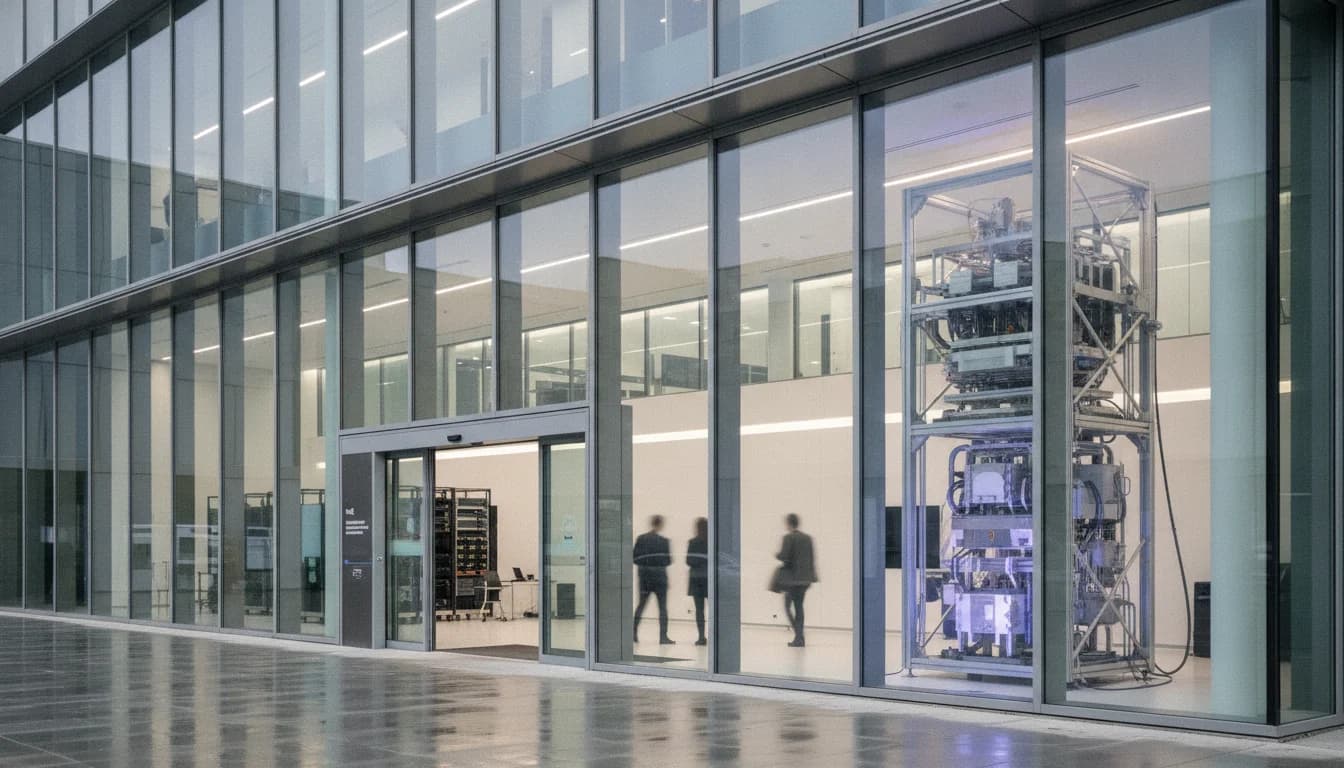
In Cambridge, United Kingdom, the IonQ Cambridge Quantum Innovation Centre opened its doors on October 15, 2026, marking the culmination of an earlier landmark agreement signed on March 11, 2026. The Centre, housed at the Cavendish Laboratory’s Ray Dolby Centre, represents one of the most significant university-industry quantum collaborations in the United Kingdom to date, signaling a concrete step from agreement to tangible research infrastructure. The opening follows a formal announcement by IonQ and the University of Cambridge that outlined the scope of the collaboration, the on-campus deployment of a next-generation quantum system, and a path to translating foundational research into commercial quantum advantage. This sequence—from agreement to on-site operations—illustrates the pace at which quantum technology partnerships are moving from concept to active research networks. IonQ press release, March 11, 2026 • IonQ press release, October 15, 2026.
The timing matters for the UK quantum ecosystem where government-backed programs and research institutions increasingly partner with industry to accelerate commercialization. The partnership aligns with national strategies to grow quantum computing capabilities, including access to national facilities and ecosystem-wide programs designed to translate scientific breakthroughs into market-ready technologies. In Cambridge specifically, the collaboration sits within a broader cluster of quantum activity, connecting Cambridge faculty, postdocs, and students with IonQ’s industrial scale, cloud-enabled quantum services. This development not only expands IonQ’s footprint in the United Kingdom but also strengthens Cambridge’s role as a global hub for quantum science and engineering. IonQ press release, March 11, 2026 • IonQ press release, October 15, 2026 • University of Cambridge Cavendish Laboratory news.
Opening the IonQ Quantum Innovation Centre in Cambridge also signals a formal expansion of IonQ’s UK strategy. The collaboration is designed to accelerate quantum research commercialization, expand IonQ’s intellectual property portfolio, and deepen the company’s commitment to the United Kingdom’s quantum ecosystem. The Centre is expected to host joint research efforts across quantum computing hardware, networking, sensing, and security, with research portfolios spanning chemistry, materials science, optimization, and advanced communication protocols. In practical terms, Cambridge researchers will gain access to IonQ’s cloud-enabled quantum resources and a planned deployment of IonQ’s next-generation hardware on campus. The initiative also integrates with national programs and actors—including Innovate UK and the National Quantum Computing Centre—to accelerate access to quantum capabilities across industry and academia. IonQ press release, March 11, 2026 • IonQ press release, October 15, 2026 • Cambridge Cavendish news and partnership overview.
Opening remarks from IonQ’s leadership frame the Centre as a bridge between discovery and commercial quantum advantage. Niccolo de Masi, IonQ’s Chairman and CEO, described the event as “turning a landmark agreement into a working home for quantum research inside one of the world’s most storied physics laboratories,” underscoring the practical focus of the Centre on turning theoretical advances into deployable technologies. Cambridge’s leadership highlighted the Centre as a milestone in Cambridge’s long-running engagement with industry and as a pathway to developing the UK’s next generation of quantum researchers and developers. These statements, echoed by university leadership, emphasize the shared ambition: to accelerate innovation cycles, expand training opportunities, and generate new IP that can feed into national and global quantum technology ecosystems. IonQ press release, October 15, 2026 • IonQ press release, March 11, 2026 • Cambridge Cavendish news.
What Happened: A detailed timeline and the core components of the IonQ Cambridge Quantum Innovation Centre
Timeline
March 11, 2026: Landmark partnership announced
On March 11, 2026, IonQ and the University of Cambridge publicly announced a landmark agreement to establish the IonQ Quantum Innovation Centre. The aim of the partnership was to accelerate quantum research commercialization, expand IonQ’s intellectual property portfolio, and deepen the United Kingdom’s quantum ecosystem. The release also indicated plans to deploy IonQ’s 6th-generation, chip-based, 256-qubit system on campus and to provide access to the IonQ cloud for advanced research across computing, networking, sensing, and security. This initial announcement set the strategic lens for the collaboration and laid out delivery pillars for research, workforce development, and industry engagement. The statement further highlighted the intention to generate significant innovation and IP under established licensing terms, signaling a structured pathway from academic work to market-ready outcomes. This date marks the formal start of a multi-year collaboration and a multi-generational hardware roadmap. IonQ press release, March 11, 2026.
October 14, 2026: Sign unveiling and project milestones
In the run-up to the physical opening, Cambridge and IonQ marked progress with the official unveiling of signs at the Ray Dolby Centre in Cambridge. The event underscored the tangible realization of the partnership: the IonQ Quantum Innovation Centre would become a physical hub connecting Cambridge researchers with IonQ’s hardware and software stack. The milestone signaled institutional commitment and provided a visual focal point for the academic-industry collaboration, reinforcing the narrative of moving from agreement to on-site research activities. University of Cambridge Cavendish Laboratory news, October 14, 2026.
October 15, 2026: Official opening of the Innovation Centre
The centre formally opened its doors on October 15, 2026, at the Cavendish Laboratory’s Ray Dolby Centre. The opening placed the first university-based IonQ Quantum Innovation Centre on Cambridge’s campus, creating a dedicated space for joint research, talent development, and industry-facing events. IonQ’s press materials describe the opening as a milestone that transforms a historical agreement into a living research ecosystem, with ongoing programs spanning hardware deployment, network development, and collaborative projects. The centre’s inaugural research program included nine projects spanning quantum hardware, networking, sensing, and security, illustrating the breadth of academic-industrial activities now underway on site. IonQ press release, October 15, 2026 • Cambridge Cavendish Laboratory news, first funded projects article.
The partnership’s structural backbone and its on-campus deployment
Beyond the opening date, the partnership rests on a formal, long-term framework. The IonQ Cambridge Quantum Innovation Centre was established through a 10-year strategic partnership between the University of Cambridge and IonQ, designed to accelerate research and translation into commercial quantum technologies. This long-duration commitment provides stability for research teams, postdocs, and students while enabling sustained IP development and industry collaboration. The on-campus deployment will include a state-of-the-art 256-qubit IonQ quantum computer, planned for on-campus deployment by summer 2027, along with a dedicated quantum networking data centre and nodes that will connect Cambridge to broader quantum networks in the UK. This multi-year horizon reflects a deliberate strategy to build durable research capacity and long-term industry ties. IonQ press release, March 11, 2026 • University of Cambridge Cavendish Laboratory news, 10-year partnership.
Key facts and program scope
- Hardware and capabilities: The collaboration envisions deploying IonQ’s 256-qubit hardware on campus and integrating it with the university’s research programs, enabling scientists to run advanced experiments and develop new quantum algorithms in chemistry, materials science, optimization, and security. The plan includes access to the IonQ cloud for researchers who require scalable computing resources. IonQ press release, March 11, 2026 • IonQ press release, October 15, 2026.
- Network and collaboration: A central feature is the on-campus quantum network that links IonQ’s hardware with Cambridge researchers, enabling experiments that require distributed quantum resources and novel networking protocols. The joint work enriches Cambridge’s existing Bristol-Cambridge quantum network and furthers cross-department collaboration across physics, engineering, and computer science. IonQ press release, October 15, 2026 • Cambridge Cavendish Laboratory news, ongoing project coverage.
- Funding and projects: The Centre announced nine inaugural funded research projects spanning quantum computing hardware, networking, sensing, and security, drawing on Cambridge’s physics, engineering, and computer science faculties, as well as the Milner Therapeutics Institute and Cambridge Judge Business School. University of Cambridge Cavendish Laboratory news.
Why It Matters: The broader significance for the UK quantum economy and global market
Impact on the UK quantum ecosystem and research commercialization
Strategic alignment with national programs
The IonQ Cambridge Quantum Innovation Centre aligns with the United Kingdom’s broader quantum strategy, including collaborations with Innovate UK and the National Quantum Computing Centre (NQCC). The partnership is positioned to translate academic breakthroughs into commercial technologies, which is a core objective of the UK’s quantum program. The collaboration also helps to bridge Cambridge’s world-class physics and engineering research with IonQ’s industrial-scale quantum capabilities, creating a bridge between public research investment and private sector deployment. This alignment is reinforced by public remarks from IonQ and Cambridge leadership, emphasizing joint efforts to move quantum research toward practical applications and industry engagement. IonQ press release, March 11, 2026 • IonQ press release, October 15, 2026 • Cambridge Cavendish Laboratory news.
Economic and workforce implications
The centre’s establishment is also framed as a catalyst for workforce development and IP creation within the UK. The nine inaugural funded projects illustrate a deliberate mix of fundamental and translational research designed to train the next generation of quantum scientists while generating technically valuable outcomes for industry. The presence of a major corporate partner on campus can accelerate recruitment of graduate talent, foster postdoctoral opportunities, and create pathways for Cambridge graduates to participate in early-stage quantum startups and tech transfer activities. This dynamic supports a broader national goal of keeping high-skilled jobs inside the UK quantum ecosystem and building a local talent pipeline for global quantum technology leaders. University of Cambridge Cavendish Laboratory news.
Scientific breadth and interdisciplinarity
The Centre covers a wide range of quantum technologies, from hardware (256-qubit systems and networking) to software (quantum algorithms for chemistry, materials science, optimization, and finance) and security applications. This breadth mirrors IonQ’s roadmap and Cambridge’s interdisciplinary strengths, combining physics, engineering, computer science, and business perspectives to tackle complex, real-world problems. The cross-pollination is expected to accelerate the translation of quantum theory into scalable, market-ready solutions, which is a key objective for both partners and the UK quantum community as a whole. IonQ press release, March 11, 2026 • IonQ press release, October 15, 2026.
Global context and competitive positioning
The IonQ Cambridge Quantum Innovation Centre places Cambridge squarely in the global race to build out quantum infrastructure that can support industry-grade workloads. IonQ’s momentum in deploying hardware and cloud-enabled services to customers around the world has been a distinguishing factor in the market, and the Cambridge Centre extends that reach into a leading European research hub. By combining on-campus hardware deployment with access to IonQ’s cloud and a robust network, the Centre strengthens Cambridge’s strategic role in both foundational science and practical, industry-driven quantum research. The public statements from IonQ and Cambridge leadership emphasize the integration of research discoveries with industrial capabilities, a model that many national quantum programs view as essential to achieving broad socio-economic impact. IonQ press release, October 15, 2026 • Cambridge Cavendish Laboratory news.
What’s Next: Future steps, milestones, and areas to watch
Timeline and milestones through 2027 and beyond
Hardware deployment and early research projects
The Centre is poised to deploy IonQ’s 256-qubit Superion system on Cambridge’s campus, with a target deployment timeline to be completed by summer 2027. Early projects will focus on a mix of hardware development, networking integration, and quantum applications across chemistry, materials science, finance, engineering, and life sciences. The nine inaugural funded projects are designed to demonstrate the breadth of the Centre’s research portfolio and to establish proof-of-concept results that the UK quantum ecosystem can later scale and commercialize. This program will also provide training opportunities for graduate students and postdoctoral researchers, reinforcing Cambridge’s role as a leading center for quantum talent development. IonQ press release, October 15, 2026 • University of Cambridge Cavendish Laboratory news.
Governance and collaboration mechanisms
A Joint Steering Committee comprising business and scientific leaders from both IonQ and Cambridge will oversee the inaugural program, selecting projects and managing IP pathways. This governance structure is designed to balance academic curiosity with commercial relevance, ensuring that outcomes meet both scientific standards and industry needs. The framework supports ongoing recruitment of researchers, postdocs, and PhD students, and it provides a mechanism to translate early-stage research into commercial opportunities consistent with the UK’s quantum strategy. IonQ press release, October 15, 2026 • Cambridge Cavendish Laboratory news.
The longer horizon: intellectual property and market applications
Over the 10-year partnership, a steady cadence of research results, IP generation, and industry engagement is expected. The Centre is designed to produce licensed IP, collaborative licenses, and joint ventures that can feed into IonQ’s product roadmap and Cambridge’s academic programs. The long horizon is intentional: it aligns with the UK’s National Quantum Technologies Programme and the NQCC’s objectives to create enduring capabilities in quantum computing, networking, sensing, and security. The combination of on-campus hardware, cloud access, and a structured IP framework is intended to accelerate the commercialization timeline and scale quantum innovations from Cambridge to global markets. IonQ press release, March 11, 2026 • University of Cambridge Cavendish Laboratory news.
The Road Ahead: What to watch for in 2027 and beyond
- Hardware performance and benchmarks: The deployment of the Superion 256-qubit computer and its integration with Cambridge’s research programs will be a focal point. Observers will watch for fidelity, error rates, and effective hardware-software co-design opportunities as researchers push toward practical quantum advantage in targeted applications. IonQ’s public claims about hardware capabilities and performance benchmarks will be cross-validated by Cambridge researchers and independent observers over the coming year. IonQ press release, October 15, 2026 • IonQ press release, March 11, 2026.
- Research outcomes and IP activity: The nine inaugural projects offer a structured lens into the Centre’s early impact, including potential patents, collaborative licenses, and joint publications. The status and progress of these projects will shape future funding calls, training programs, and industry partnerships. The project roster provides a concrete baseline for tracking the Centre’s early scientific yield and its translation into commercial applications. University of Cambridge Cavendish Laboratory news.
- UK policy and funding environment: As the UK National Quantum Technologies Programme evolves, the IonQ Cambridge Quantum Innovation Centre will likely influence future policy discussions around industry-academia collaborations, IP frameworks, and open-access models for quantum research facilities. Observers will monitor how Innovate UK’s involvement and NQCC’s activities interact with the Centre’s initiatives and Cambridge’s broader strategy for quantum leadership. IonQ press release, March 11, 2026 • Cambridge Cavendish Laboratory news.
Closing: Staying updated and ongoing coverage
The IonQ Cambridge Quantum Innovation Centre is positioned as a flagship example of university-industry collaboration in quantum technology. Its opening in Cambridge, the early nine-project portfolio, and the on-campus hardware deployment collectively indicate a strong signal about the UK’s role in the global quantum economy. For readers seeking ongoing updates, the IonQ Newsroom and the Cavendish Laboratory’s news feed offer primary sources for announcements, project details, and milestone updates. IonQ’s official materials highlight the Centre as a living hub for research, collaboration, and education, while Cambridge’s pages emphasize the Institute’s multi-department involvement and its role in training the next generation of quantum scientists and engineers. As the year 2027 unfolds, observers should track how the Centre’s activities translate into patent activity, academic publications, and industry collaborations, both in the United Kingdom and on the international stage. IonQ press release, October 15, 2026 • University of Cambridge Cavendish Laboratory news.
For readers who want a direct line to the primary sources, the following links provide the foundational materials behind this report:
- IonQ and University of Cambridge Announce Landmark Agreement to Establish Innovation Centre for Quantum Technology Commercialization — March 11, 2026. Descriptive anchor: IonQ press release detailing the Cambridge partnership. https://investors.ionq.com/news/news-details/2026/IonQ-and-the-University-of-Cambridge-Announce-Landmark-Agreement-to-Establish-Innovation-Centre-for-Quantum-Technology-Commercialization/default.aspx
- IonQ Opens First Quantum Innovation Centre at Cambridge — October 15, 2026. Descriptive anchor: IonQ press release announcing the Cambridge opening. https://www.ionq.com/news/ionq-and-the-university-of-cambridge-open-the-ionq-quantum-innovation-centre-at-cavendish-laboratorys-ray-dolby-centre
- The Cavendish Laboratory news: First funded research projects announced as IonQ Quantum Innovation Centre opens in Cambridge — October 2026. Descriptive anchor: University of Cambridge news coverage. https://www.phy.cam.ac.uk/news/first-funded-research-projects-announced-as-ionq-quantum-innovation-centre-opens-in-cambridge/
Additional context from third-party coverage and institutional sources reinforces the sequential events from March to October 2026 and situates the Centre within the UK’s broader quantum program. HPCWire provided contemporaneous coverage highlighting the formation of the first university-based IonQ Quantum Innovation Centre in Cambridge and framed the opening as a milestone for Cambridge’s physics ecosystem. https://www.hpcwire.com/off-the-wire/ionq-and-cambridge-open-quantum-innovation-center-at-cavendish-laboratory/
In sum, the IonQ Cambridge Quantum Innovation Centre stands at the crossroads of academic excellence and industrial scale, built to accelerate the commercialization of quantum research while expanding educational and training opportunities for the next generation of quantum scientists. The initiative reinforces Cambridge’s leadership in physics and engineering and signals a broader trend toward university-centered quantum innovation hubs that anchor global research ecosystems.