Lovell Telescope Funding Cuts Spark Debate
Proposed funding cuts for the Lovell Telescope have triggered debate over the future of UK radio astronomy.
 By Fiona Galloway · 13 August 2026 · 11 min read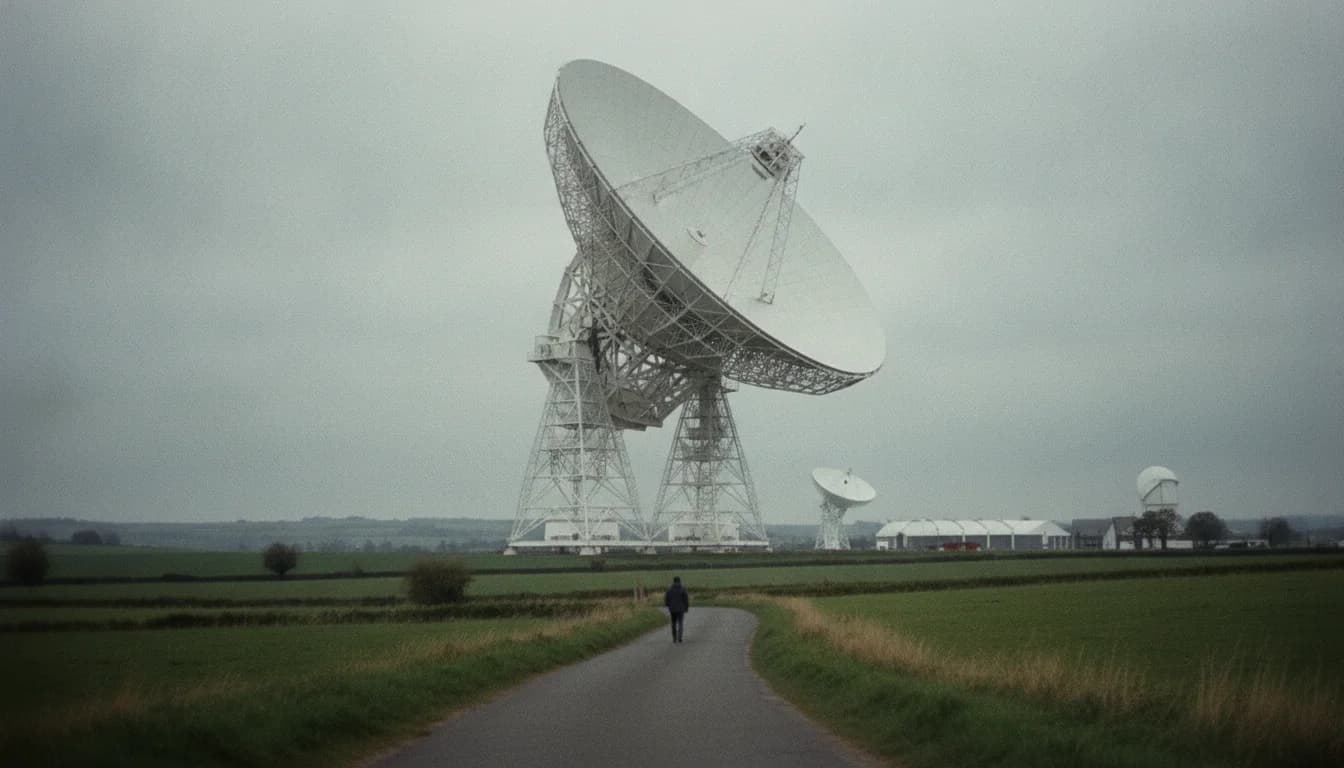
The Cambridge Review reports a pivotal development for UK radio astronomy: UKRI, the government’s research funding body, announced a withdrawal of public support for the Lovell Telescope as part of the e-MERLIN network, with funding to end after March 2028. This decision, disclosed on July 28, 2026, places one of the UK’s most recognizable scientific assets at a crossroads and raises questions about the nation’s long-term capabilities in radio astronomy, space science, and related technologies. The Lovell Telescope, housed at the Jodrell Bank Observatory in Cheshire, has long stood as a symbol of British scientific heritage and a workhorse in global astronomical research. UKRI’s prioritisation process identifies areas where investment will deliver the greatest long-term impact, and the Lovell Telescope’s future hinges on alternative funding sources or new partnership opportunities. The immediate news matters not only for the Lovell Telescope itself but for the broader UK research ecosystem that depends on national facilities for discovery, training, and international collaboration. (washingtonpost.com) (theguardian.com)
Beyond the headlines, the decision sits inside a tense fiscal environment for-STFC and UKRI, with Parliament and scientific societies scrutinizing how resources are allocated to UK astronomy, particle physics, and related disciplines. In the months leading up to July 2026, the government and UKRI signaled ongoing cost pressures and a formal prioritisation process designed to align expenditures with strategic priorities. Critics warn that reductions in core facilities could slow progress in cosmology, black hole physics, gravitational wave science, and planetary radio astronomy while supporters emphasize stewardship of scarce public funds and a shift toward sustainability and international collaboration. The dialogue around funding cuts to Lovell Telescope funding cuts is part of a broader policy conversation about maintaining world-class capabilities in a globally competitive research landscape. (committees.parliament.uk)
Opening context and immediate facts now in focus: The Lovell Telescope is part of a seven-telescope network known as e-MERLIN, a national radio astronomy facility connected with the Jodrell Bank Centre for Astrophysics. UKRI announced that the Lovell telescope’s funding, through e-MERLIN, will end as of March 2028, effectively marking the end of public support for that specific facility unless alternative funding is secured. The timeline is explicit: the current funding agreement ends in March 2028, and post-2028 operations depend on new funding streams or revised priorities. Scientists and policymakers emphasize that the Lovell Telescope’s fate reflects choices made during a formal prioritisation exercise intended to preserve long-term scientific capability while managing cost pressures. (washingtonpost.com)
Section 1: What Happened
Funding decision and scope
The central event occurred on Monday, July 27–28, 2026, when UKRI publicly stated it would withdraw funding for the e-MERLIN network, which includes the Lovell Telescope at Jodrell Bank. The formal commitment to end public funding for the telescope array after March 2028 follows a rigorous prioritisation process designed to concentrate investment where it yields the greatest long-term benefit to UK science. This decision affects the Lovell Telescope directly and the broader e-MERLIN network collectively, signaling a shift in how the UK funds and maintains its radio astronomy capabilities. The AP News report explicitly notes that the Lovell telescope forms part of e-MERLIN and that the funding withdrawal will take effect after March 2028. (apnews.com) (washingtonpost.com)
The Guardian’s reporting mirrors this framing, describing Jodrell Bank Observatory as facing closure after funder cuts, with UKRI withdrawing support for e-MERLIN as the current agreement ends in March 2028. The Guardian notes the Lovell Telescope’s status within this network and frames the outcome as a potential closure unless alternative funding emerges. Quotes from scientists underscore the perceived severity of the decision for UK astronomy. (theguardian.com)
The Washington Post adds a parallel narrative arc, highlighting that scientists reacted with alarm to the funding cut and noting that the Lovell Telescope could cease to function as a radio astronomy facility by March 2028 without new funding arrangements. The piece also captures statements from Brian Cox and other UK researchers about the broader implications for science and the country’s scientific standing. (washingtonpost.com)
Timeline and key facts
July 28, 2026: UKRI publicly announces withdrawal of funding for the Lovell Telescope through the e-MERLIN network, with no further public funds after March 2028. This constitutes a formal policy shift after a prioritisation process intended to focus scarce resources on the UK’s highest-impact facilities. The timing coincides with broader discussions in Parliament about STFC budgets and the overall direction of UK science funding. (washingtonpost.com)
March 2028: End of the current e-MERLIN funding arrangement, effectively leaving the Lovell Telescope without public funding for ongoing operations unless alternative sources are found. Independent voices, including university administrators and industry analysts, warn that this could lead to a shutdown of routine scientific activities unless new support is secured. The AP and Guardian reports place this date at the dramatic fulcrum of the telescope’s operational viability. (apnews.com)
Post-2028: The continued operation of the Lovell Telescope will depend on external or private funding, partnerships, or new business models. The prioritisation framework emphasizes shifting funds toward the areas judged to deliver the greatest long-term national impact, including international collaborations and critical infrastructure, while reducing or reforming support for some facilities. UKRI’s prioritisation outlines how PPAN (particle physics, astronomy, and nuclear physics) funding will be managed within STFC, including the projected percentage changes and the protective stance for discovery research within PPAN. (ukri.org)
Reactions and early responses
Brian Cox, a University of Manchester physicist associated with e-MERLIN and Lovell telescope work, characterized the cuts as "devastating and irreversible" in AP News coverage, reflecting the concern among scientists about the loss of a world-class facility and the impact on ongoing research programs. The Guardian similarly quotes researchers who describe the decision as a substantial blow to UK astronomy, underscoring the reputational and scientific consequences of the funding shift. (washingtonpost.com)
The Institute of Physics’ Paul Howarth and other science leaders called for reconsideration of the decision, arguing that the UK’s science ecosystem would be adversely affected unless new funding avenues were secured. The Guardian cites these voices as part of a broader call for policy reviews, while the AP coverage highlights a specific warning about the Lovell Telescope’s operational status by 2028 if funding cannot be secured. (washingtonpost.com)
In parallel, UK Parliament discussions and UKRI communications frame these actions within a larger, multi-year efficiency drive and a rebalancing of investment across disciplines. Parliament’s Science, Innovation and Technology Committee has published letters and briefings detailing the prioritisation framework, including the assertion that PPAN postdoctoral numbers would be maintained while overall funding for STFC facilities would undergo targeted reductions. The public record shows a careful, though contested, attempt to balance discovery research protections with financial sustainability. (committees.parliament.uk)
Section 2: Why It Matters
Impact on UK radio astronomy and the science ecosystem
The Lovell Telescope’s role in UK radio astronomy is inseparable from the e-MERLIN network, a national facility that aggregates data from seven radio telescopes across the country to enable high-resolution imaging and time-domain studies. When UKRI signals a withdrawal of funding for e-MERLIN, the immediate implication is a constraint on the UK’s ability to sustain a coherent national network for radio astronomy, potentially affecting ongoing research programs, training pipelines, and international collaborations. Guardian reporting explicitly frames the Lovell Telescope within this national network and the potential for a closure scenario if alternative funds are not found. (theguardian.com)
The prioritisation outcomes published by UKRI in 2026 show that, within STFC’s PPAN portfolio, the e-MERLIN component is not prioritised for further funding, while other core capabilities are shielded or rebalanced. This contrast between the protection of core discovery activities and the selective reductions in infrastructure and facilities underscores a strategic shift: money is being steered toward ensuring critical capabilities with high long-term impact, even as some established facilities face reduced operating support. The explicit language in the UKRI explainer highlights a 2.7% PPAN budget decrease over four years and the decision to not prioritise certain facilities like e-MERLIN for ongoing funding. The practical effect is a real risk to the Lovell Telescope’s ongoing operations if external or alternative funding cannot be secured. (ukri.org)
Stakeholders outside the UK government have weighed in, emphasizing the potential reputational and talent-trajectory consequences. The Washington Post quotes researchers warning that the UK risks diminishing its position as a science leader if such flagship facilities are curtailed, a sentiment echoed by the Royal Astronomical Society and other scientific bodies highlighted in Guardian coverage. The broader concern is that reduced flagship capacity may influence international collaborations, grant competitiveness, and the ability to train the next generation of astronomers and instrument developers. (washingtonpost.com)
Economic and workforce implications
Media coverage paired with official briefings points to potential workforce effects, including job losses or shifts in roles within the Jodrell Bank Observatory and its partner institutions. Guardian coverage references estimates of job losses tied to the broader cuts across multiple facilities, which is consistent with the structural nature of the STFC prioritisation exercise and the scale of adjustments that UKRI has signaled will accompany the funding changes. While some official documents emphasize that postdoctoral numbers in PPAN will be protected, the real impact on staff at facilities like e-MERLIN remains a live concern in the sector, underscoring the tension between fiscal constraints and the need to sustain critical scientific infrastructure. (theguardian.com)
Local and regional leaders have publicly expressed concern and a commitment to explore alternatives. Cheshire East’s council statement and local media coverage underscore a regional interest in preserving Jodrell Bank’s role as a scientific, educational, and economic asset. The local response reflects a broader national debate about science funding and regional science hubs, illustrating how policy decisions at the national level can reverberate through regional economies, talent pipelines, and STEM outreach. (cheshireeast.gov.uk)
Broader context: Science policy, funding, and international collaboration
The Lovell Telescope funding cuts sit within a larger policy conversation about sustaining a competitive science ecosystem in a global environment. STFC’s prioritisation outcomes explicitly aim to protect core discovery science, invest in long-term capabilities, and seek alternative funding models or partnerships for facilities that are not prioritised for core funding. This framework indicates a strategic pivot: the UK seeks to maintain leadership in key areas (like certain international collaborations and major projects) while working to reduce or restructure support for facilities deemed less critical to the immediate roadmap. The policy documents and parliamentary briefings show a careful but contested balancing act between preservation of national capability and fiscal realities. (ukri.org)
The international dimension is relevant here: UK science funding decisions have implications for collaborations on major projects such as the Square Kilometre Array and other global radio astronomy initiatives. While not all sources present every nuance of those international relationships, several credible outlets note that funding shifts could affect the UK’s capacity to participate in large-scale, international research efforts. The policy literature and press coverage emphasize the potential for both immediate disruption and longer-term strategic reorientation. (theguardian.com)
Section 3: What’s Next
Timeline and next steps
Short term (months after July 2026): UKRI and STFC will continue to implement the prioritisation decisions and assess transitional arrangements. Parliament’s ongoing scrutiny, including science minister briefings and council updates, will shape the eventual funding mix for 2026–2029 and beyond. The STFC prioritisation explainer indicates that some bridging support or transitional funding could be deployed to address critical gaps, but the precise allocations depend on ongoing reviews and governance decisions. These processes are documented in UKRI’s official materials and parliamentary briefings. (ukri.org)
Mid term (2027–2028): The major question will be whether alternative funding can be secured to maintain any level of public operation for Lovell Telescope and the e-MERLIN network, or whether the facility will transition to a different operating model (e.g., private partnerships, philanthropy, or industrial collaboration). The AP and Guardian coverage place a concrete deadline of March 2028 for public funding, with continued operation contingent on external sources. Local and national observers will monitor how universities, industry partners, and philanthropic actors respond to the funding vacuum. (apnews.com)
Long term (post-2028): If alternative funding cannot be secured, the Lovell Telescope may cease routine scientific operations, potentially altering the UK’s research landscape in radio astronomy and related fields. The Guardian’s reporting suggests possible closure scenarios, while other outlets emphasize the importance of preserving critical capabilities and exploring new models of collaboration. The policy literature suggests a cautious path forward, with a focus on sustaining core strengths while adapting to a tighter fiscal envelope. (theguardian.com)
What researchers and observers should watch for
- Key indicators will include: (1) any new funding announcements or bridging arrangements from UKRI or STFC; (2) statements from the University of Manchester and Jodrell Bank regarding fundraising, partnerships, or alternative funding channels; (3) updates from the e-MERLIN network about time allocations, science programs, and instruments’ operational status; (4) parliamentary questions and ministerial statements clarifying the government’s longer-term stance on UK astronomy infrastructure. In April 2026, Parliament’s Science, Innovation and Technology Committee signaled ongoing scrutiny and a desire for transparency in how cuts are implemented, while UKRI’s prioritisation explainer detailed the protected status of discovery-led PPAN research alongside targeted reductions elsewhere. These signals provide a roadmap for watching how the Lovell Telescope case evolves within the broader policy tapestry. (committees.parliament.uk)
Closing
The Lovell Telescope funding cuts mark a watershed moment for UK radio astronomy, illustrating the friction between fiscal discipline and the preservation of globally significant scientific infrastructure. While some observers stress that the national science portfolio must be continually reassessed to remain fiscally sustainable, others warn that losing a flagship facility could impair the UK’s ability to attract talent, maintain international collaborations, and deliver essential discoveries in space science. The coming months will reveal how researchers, universities, and policymakers reconcile competing priorities as they search for viable pathways to keep the Lovell Telescope and Jodrell Bank’s broader research ecosystem in operation beyond March 2028. Cambridge Review will continue to monitor official updates from UKRI, STFC, and partner institutions, reporting new funding decisions, partnership announcements, and the evolving policy landscape that shapes the future of UK astronomy.
As the sector awaits concrete funding trajectories, stakeholders recommend proactive engagement with potential funders—public, private, and philanthropic—and a transparent, public dialogue about the value of long-term investment in science facilities. The Lovell Telescope, with its storied history and ongoing scientific potential, remains a lodestar for the UK’s astronomical community. Readers can stay informed through official UKRI/STFC communications, the University of Manchester’s Jodrell Bank updates, and independent coverage from leading science outlets that continue to track the implications for research, training, and regional innovation ecosystems. (washingtonpost.com)