GSK Cambridge R&D Centre Investment Unveiled
Explore the GSK Cambridge R&D Centre's significant investment details and analyze its profound impact on the UK's thriving life sciences sector.
 By Dominic Carr · 23 August 2026 · 11 min read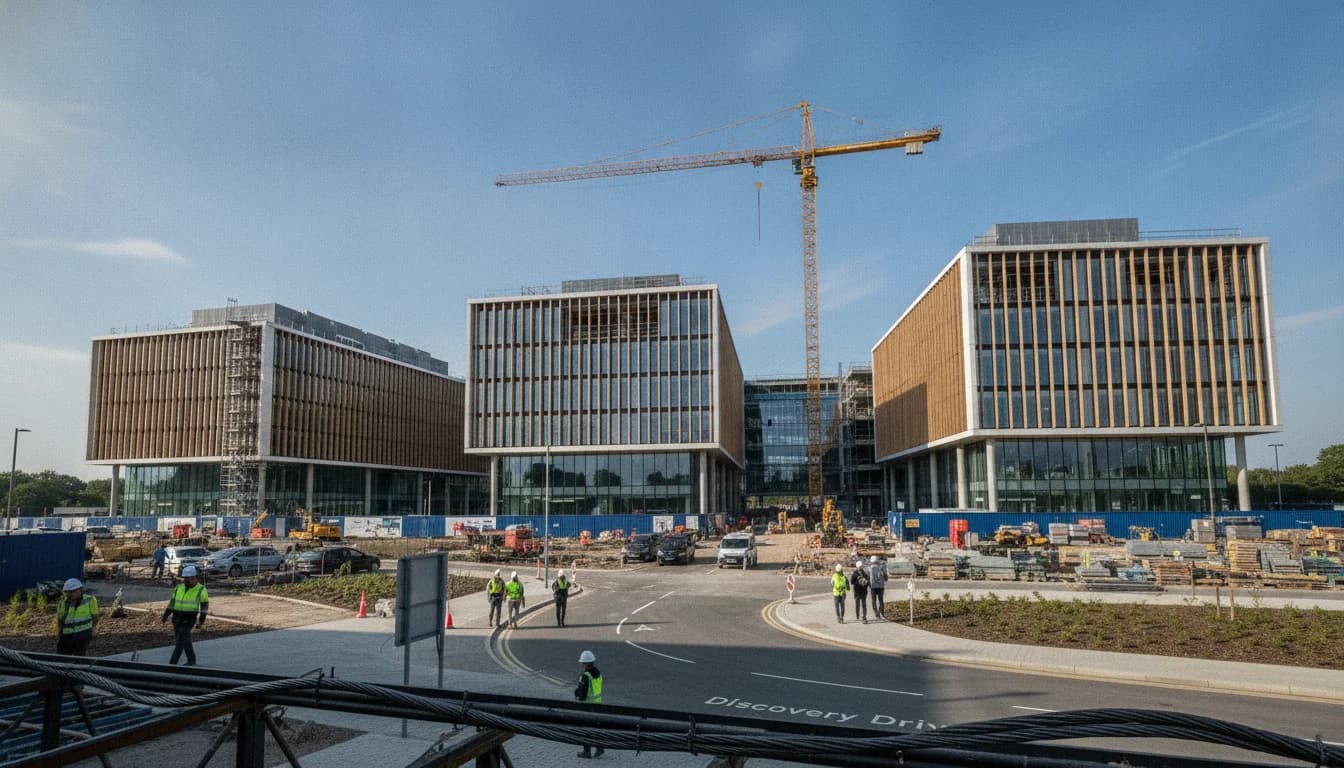
GSK Opens £400m Cambridge R&D Centre
GSK has announced a landmark £400 million investment to establish a flagship global R&D centre on the Cambridge Biomedical Campus, signaling a major expansion of its UK research footprint. The news, disclosed on July 28, 2026, places the Cambridge site at the heart of the Cambridge Biomedical Campus ecosystem, aligning GSK’s pipeline acceleration with one of Europe’s most dynamic life sciences clusters. The Cambridge announcement matters not only for GSK’s immediate R&D ambitions but also for the broader UK life sciences strategy, given Cambridge’s well-documented advantages in university-industry collaboration, clinical access, and a dense network of biotech startups and established pharmaceutical partners. The immediate impact includes a shift in where GSK concentrates talent and capabilities, with the new site set to host more than 1,000 scientists and to catalyze translational research across multiple therapeutic areas. This move is part of a broader UK-centric plan to strengthen late-stage development and deepen industry-academia collaborations, a trend that Cambridge Review will continue to monitor for its implications on competitiveness and patient outcomes. (gsk.com)
In the days since the announcement, industry observers have highlighted the significance of placing a major R&D hub within Cambridge’s life sciences ecosystem—the “Golden Triangle” within the UK that links Cambridge, Oxford, and London. The plan also signals a strategic shift for GSK, which intends to relocate its Cambridge footprint to a purpose-built flagship campus while vacating its Stevenage site by 2029 and upgrading facilities in Ware to maintain integrated drug development and manufacturing capabilities. With the Cambridge site designed to accommodate over 1,000 scientists and cover roughly 300,000 square feet, the project signals a substantial ramp-up in GSK’s UK-based R&D capacity and a commitment to an open, collaborative model with academic and industry partners on the campus. The site is being developed by Prologis as part of the Cambridge Biomedical Campus expansion, underscoring the scale and visibility of this investment in the region. (gsk.com)
The news is not isolated: Cambridge institutions and regional development bodies have framed this as a validation of the UK’s life sciences strategy and Cambridge’s ability to attract high-impact research investment. The collaborative framework cited by GSK includes partnerships across Cambridge’s research and clinical landscape, which will be integrated with GSK’s translational immunology, data-driven discovery, and other joint initiatives. The collaboration philosophy echoes prior partnerships and collaborations that Cambridge explicitly notes in related communications, reflecting a long-standing pattern of industry-academic synergy in this region. The combination of a dedicated R&D campus, an anchor tenant with a global pipeline, and a governance model oriented toward translational science is expected to shape hiring, supplier relationships, and clinical trial networks across the Cambridge Biomedical Campus and the surrounding biotech ecosystem. (gsk.com)
What Happened
Announcement and scope
GSK’s 28 July 2026 press release confirms the establishment of a major new global R&D centre on the Cambridge Biomedical Campus in Cambridge, UK. The site is described as a 300,000-square-foot facility that will host more than 1,000 GSK scientists and serve as a hub for R&D across key focus areas including Oncology, Respiratory, Hepatology, Vaccines, and HIV research. The executive leadership frames the move as a catalyst to accelerate R&D and to enable closer integration with Cambridge’s ecosystem of universities, hospitals, and biotech firms. The press release positions Cambridge as a central node in GSK’s strategy to shorten development timelines and to bring candidates through the pipeline more efficiently. The 300,000 sq ft facility will be part of a broader set of changes in GSK’s UK network, including a planned vacating of the Stevenage R&D site by 2029 and upgrades at Ware as part of a fully integrated end-to-end development and manufacturing pathway. The total commitment is stated as a £400 million investment over three years. These core facts—location, scale, focus areas, workforce, and the three-year investment horizon—are the backbone of the announcement and the basis for subsequent analysis. (gsk.com)
Site development and timeline
Prologis is named as the developer for the Cambridge site, reflecting a substantial real estate and site development plan that sits alongside GSK’s research ambitions. The Cambridge Biomedical Campus itself is highlighted as one of Europe’s largest biomedical campuses, a context that makes the new GSK hub a high-visibility anchor for the regional life sciences economy. The press release notes that the Cambridge site will provide direct access to an ecosystem rich in translational research, patient care, and academia, reinforcing a model in which laboratory science increasingly integrates with clinical practice to shorten the path from discovery to patient benefit. The timeline specifies a phased workforce relocation from Stevenage to Cambridge by 2029, signaling a multi-year transition period that will involve people, infrastructure, and operational reconfigurations. The focus on a phased approach is notable for stakeholders planning talent pipelines, local infrastructure, and university collaborations. (gsk.com)
Focus areas and partner ecosystem
GSK’s Cambridge R&D hub will concentrate on several therapeutic areas that align with the company’s portfolio strategy, including Oncology, Respiratory, Hepatology, Vaccines, and HIV. The press release and accompanying materials emphasize the intention to leverage Cambridge’s ecosystem—universities, hospitals, and biotech companies—to accelerate science and to drive translation from bench to bedside. The Cambridge campus is described as a collaborative platform that will strengthen GSK’s capacity to partner with the Cambridge Centre for Data-Driven Discovery and other Cambridge-GSK collaborations, reinforcing a model in which data science and translational immunology are central to early-stage discoveries. The site’s integration into existing Cambridge collaborations underscores a broader, ecosystem-based approach to innovation rather than a purely isolated corporate facility. (gsk.com)
Why It Matters
Impact on R&D capacity and pace
The Cambridge R&D centre investment is framed by GSK as a strategic accelerator for its R&D pipeline. By housing more than 1,000 scientists in a single flagship facility, GSK aims to consolidate talent and capabilities to shorten development timelines and improve cross-disciplinary collaboration. The emphasis on tech-enabled labs and infrastructure is designed to support translational efforts that bridge laboratory science with clinical applications, a dynamic that Cambridge Review expects to influence how fast new medicines move from discovery to patient use. The scale of the investment—£400 million over three years—signals a meaningful commitment to in-country R&D capacity that could influence GSK’s competitive position in immunology, oncology, and infectious disease spaces. The near-term implication for the company’s own portfolio is a potential acceleration of late-stage development and collaboration-driven programs, as well as a shift in where certain discovery activities occur within the UK network. (gsk.com)
Regional and national implications for life sciences
The Cambridge centre is part of a broader UK strategy to anchor global life sciences leadership within the country. The press release’s framing around a Cambridge hub—together with the relocation from Stevenage—also speaks to a national conversation about workforce strategy, science tenant mix on campus campuses, and investment in bioindustrial infrastructure. By embedding a large, globally oriented R&D operation in Cambridge, GSK is positioning the UK as a continuing center of medical innovation, with implications for local universities, clinical networks, and the regional biotech ecosystem. Publicly available coverage and institutional commentary surrounding the announcement emphasize Cambridge’s role as a magnet for partnerships, a driver of high-skilled employment, and a platform for international collaboration. This has potential spillover effects on suppliers, research services, and clinical networks associated with the Cambridge Biomedical Campus. (med.cam.ac.uk)
Workforce and economic impact for Cambridge and beyond
A cornerstone of the plan is the relocation of GSK’s Cambridge footprint, with a phased move of employees from Stevenage to Cambridge by 2029. This transition is expected to create significant demand for local talent—scientists, technicians, data scientists, and support staff—while also impacting housing, commuting patterns, and city planning around the Cambridge Biomedical Campus. The announced scale of the investment—over £400 million across three years—coupled with the hiring of more than 1,000 scientists, has implications for local wages, skills development, and partnerships with regional universities. Cambridge Network and local government bodies have framed such moves as confirmation of the Cambridge area’s status as a leading life sciences cluster, capable of absorbing large-scale corporate R&D activity while sustaining the region’s research output and economic vitality. (gsk.com)
Broader context: UK life sciences strategy and global competition
While the Cambridge R&D centre is a distinctive national milestone for GSK, it also sits within a larger international context in which major pharmaceutical companies are reconfiguring R&D footprints to balance proximity to clinical networks, regulatory hubs, and talent pools. The UK’s life sciences strategy has long prioritized collaboration with universities and clinical partners, along with incentives to maintain a competitive environment for innovation. In this frame, GSK’s Cambridge investment can be interpreted as both a signal of confidence in the UK ecosystem and a practical step toward accelerating the company’s late-stage development and commercialization timeline. The strategic choice to locate a flagship R&D centre on the Cambridge Biomedical Campus—an area already dense with biotech activity and clinical infrastructure—also suggests that GSK is prioritizing access to data-intensive translational science, early-phase discovery, and real-world clinical insights that can help shape more patient-relevant medicines. Observers will be watching whether this move catalyzes additional partnerships and whether it influences R&D site selection by peer companies in the region. (gsk.com)
What’s Next
Implementation timeline and milestones to watch
- 2026: Announcement and formal confirmation of the £400 million investment over three years to establish a flagship R&D centre on the Cambridge Biomedical Campus, with a 300,000-square-foot facility hosting more than 1,000 scientists. The plan also includes plans to vacate the Stevenage R&D site by 2029 and to upgrade the Ware site as part of an integrated development and manufacturing pathway. (gsk.com)
- 2027–2029: Phased relocation of staff from Stevenage to Cambridge, and ongoing site development by Prologis to deliver the new workspace, labs, and associated infrastructure. Cambridge’s campus ecosystem is expected to intensify collaboration with the Cambridge Centre for Data-Driven Discovery and other joint programs as the move progresses. (gsk.com)
- 2029 onward: Completion of the Stevenage vacate and continued integration of Cambridge-based R&D with Ware’s facilities to support end-to-end development and manufacturing. The press release frames this as a long-term realignment designed to maximize translational potential and speed up medicines development. (gsk.com)
What to watch for next
- Talent pipelines and recruitment activities: With more than 1,000 scientists moving or joining in Cambridge, regional universities and research networks will be key partners in supplying skilled researchers, postdocs, bioinformaticians, and data scientists. University collaborations and talent programs may ramp up to align with GSK’s new hub timeline.
- Collaboration and data-sharing ecosystems: The Cambridge Centre for Data-Driven Discovery and existing Cambridge-GSK partnerships will likely evolve as the new hub matures. Expect announcements around joint programs, shared facilities, and data governance arrangements that facilitate translational work.
- Clinical and regulatory engagement: Given the site’s proximity to Addenbrooke’s Hospital and other clinical networks, we can anticipate deeper integration with trial design, patient recruitment pathways, and regulatory science collaborations that shape how medicines advance through clinical development.
- Local and regional economic effects: A project of this scale typically yields broader impact on the local economy—employment, supplier contracts, ancillary services, and real estate activity around the Cambridge Biomedical Campus. Local governments may respond with targeted infrastructure or housing initiatives to support the influx of talent and the campus expansion.
- Competitive dynamics in the Golden Triangle: As GSK increases its presence in Cambridge, other life sciences players may accelerate their own campus development, partnerships, or hiring in the region to remain competitive in talent acquisition and collaboration opportunities. Analysts will be watching how this investment influences the region’s overall innovation velocity and capital allocation.
Closing
The GSK Cambridge R&D Centre investment marks a significant inflection point for the company’s strategic posture in the UK, as well as for Cambridge’s standing in the global life sciences landscape. By consolidating R&D activities in a purpose-built Cambridge facility, integrating with the campus’s ecosystem, and committing substantial funding over three years, GSK signals that it expects faster translation from discovery to patient impact. The next several years will reveal how this flagship hub reshapes collaboration, talent attraction, and the region’s broader life sciences economy. For readers focused on technology and market trends, the development offers a concrete case study in how large biopharma organizations are reconfiguring their R&D footprints to capitalize on data-driven science, clinical access, and regional innovation ecosystems. Cambridge Review will continue to track progress, milestones, and outcomes from this announcement, and will assess how the investment translates into new medicines, faster timelines, and sustained economic benefits for Cambridge and the UK.
To stay updated on this story, monitor ongoing statements from GSK, Cambridge Biomedical Campus partners, and regional economic development bodies, and follow independent coverage from credible industry outlets that analyze the implications for research ecosystems, workforce development, and patient access to new therapies. The core facts of the initial announcement—the £400 million investment, the Cambridge location, the 300,000-square-foot facility, and the relocation plan—are anchored in GSK’s 28 July 2026 press release, which also outlines the broader strategic context and the intended timeline for the staged move. (gsk.com)
References and context
- GSK press release: GSK to establish new flagship R&D centre on Cambridge Biomedical Campus, UK. 28 July 2026. This primary source confirms the £400 million investment, the 300,000-square-foot facility, the plan to host more than 1,000 scientists, the Cambridge location, and the phased move from Stevenage by 2029. It also notes the collaboration framework with Cambridge partners and the development arrangement with Prologis. (gsk.com)
- Cambridge Network: Prologis to develop GSK’s new global R&D centre at Cambridge Biomedical Campus. This article provides supplementary context on the site development and the campus’s role in the regional life sciences ecosystem. (cambridgenetwork.co.uk)
- Department of Medicine, University of Cambridge coverage: GSK to open £400m R&D centre in Cambridge to strengthen immunology research. While not a primary corporate release, this source highlights the alignment with Cambridge’s research strengths and the significance of the Cambridge campus in immunology research collaborations. (med.cam.ac.uk)
- Investment context and broader market coverage: Reuters and other outlets reported on the investment and its implications for the UK life sciences sector, confirming the scale and strategic intent of the Cambridge development within the UK’s broader life sciences and R&D strategy. (lse.co.uk)
Lead by data, report by fact, and present the story with focus on the implications for technology, markets, and the Cambridge ecosystem. This coverage draws on the primary sources and credible third-party reporting to provide readers with a clear view of what happened, why it matters, and what to watch next as the GSK Cambridge R&D Centre project unfolds on the Cambridge Biomedical Campus.