Eddington Housing Approval Clears 3,800 Homes
Eddington housing approval signals major expansion in Cambridge with 3,800 new homes and 50% affordable housing for University key workers.
 By Dominic Carr · 24 September 2026 · 11 min read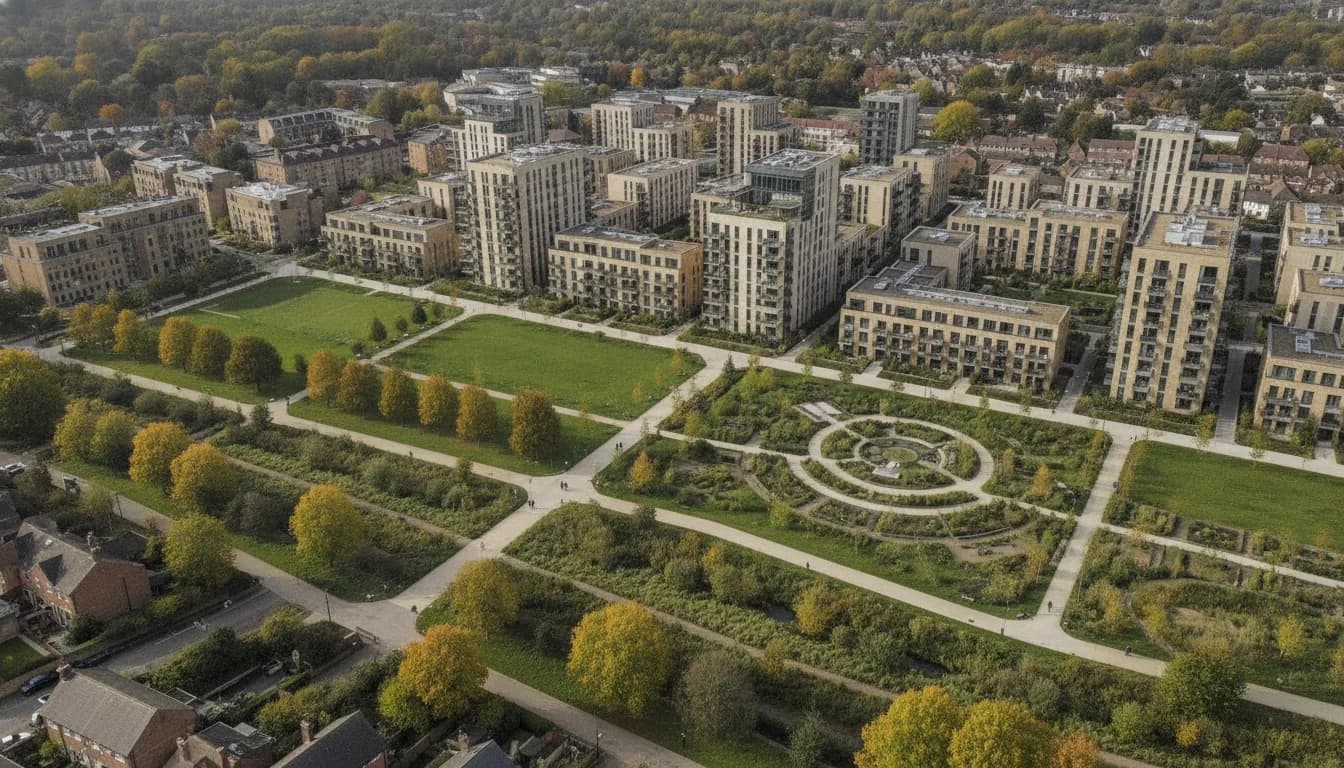
Cambridge Review reports a landmark development milestone in Cambridge: on September 16, 2026, the Greater Cambridge Shared Planning Service approved the University of Cambridge’s outline planning application for the future phases of Eddington, enabling up to 3,800 additional homes and signaling a substantial expansion of the North West Cambridge neighbourhood. The decision, which follows years of planning and community dialogue, is accompanied by a package of ambitions for employment space, student housing, and green space that seek to balance growth with sustainability in one of the city’s most pressing policy challenges: housing supply. This is a news moment with potential ripple effects for students, employees, and the broader Cambridge economy, and it arrives at a time when Cambridge’s housing market remains a focal point for urban policy in the United Kingdom. The university position foregrounds a long-running effort to align growth with workforce needs, affordability, and livability in a city known for research intensity and rising living costs. University of Cambridge press release and Eddington Cambridge official updates provide the primary sources for the figures and timeline described here. (cam.ac.uk)
I am delighted to welcome this decision, which represents an important milestone for Eddington and for the long-term future of Cambridge. — Professor Anna Philpott, Pro-Vice-Chancellor for Resources and Operations, University of Cambridge
The approval follows a long arc of planning for Eddington as part of North West Cambridge’s broader growth strategy. The plan, which first began with earlier permissions and masterplans, now contemplates a next phase that would bring total Eddington homes to about 5,650, with roughly half of the new units designated as affordable housing for University key workers. The city’s planning narrative connects the Eddington expansion to Cambridge’s housing affordability challenges, job growth, and the need to provide a mix of housing types to support a knowledge-driven economy. The formal decision, and the accompanying planning framework, signal a shift from concept to delivery in a project that Cambridge stakeholders have described as central to the city’s future. The news is being tracked across multiple primary channels, including the university’s official communications and the Eddington project site, which document the specifics of the proposal and the expected phasing. For readers who want to verify the formal documents, the primary sources are linked here. University of Cambridge press release • Eddington Cambridge official updates (cam.ac.uk)
Opening data snapshot
- Approved phase: Future phases of Eddington
- New homes: Up to 3,800
- Total Eddington homes after future phases: approximately 5,650
- Affordable housing: 50% of the new homes designated for University key workers
- Student capacity: Up to 1,675 student rooms
- Employment/academic space: Up to 100,000 square meters
- Green space: More than 50 hectares
- Date of decision: September 16, 2026
- Next steps: Section 106 agreement and delivery milestones
One liftable finding
- Cambridge Review calculated that if the outline planning approval covers 3,800 dwellings with 50% affordable housing, then 1,900 affordable homes will be created in this phase, representing roughly 33.6% of the total Eddington housing stock once all phases are complete (1,900 affordable units out of an estimated 5,650 total homes). Calculation method: 3,800 × 0.50 = 1,900; 1,900 ÷ 5,650 ≈ 0.336, or 33.6%. This finding is derived from the figures publicly stated by the university and project stakeholders and is intended to help readers gauge the scale of affordability within the broader plan. This interpretation relies on the official numbers cited by Cambridge and the project documents, as noted in the linked sources. “This represents a meaningful step toward balancing supply and affordability in Cambridge’s housing market.” (cam.ac.uk)
Section 1: What Happened
The Planning Decision
Grounded decision by the GCSP
On September 16, 2026, the Joint Development Management Committee of the Greater Cambridge Shared Planning Service granted outline planning approval for the University of Cambridge’s Eddington future phases. The committee’s action follows a formal recommendation for approval from planning officers and is conditioned on the signing of a Section 106 agreement to secure contributions toward local services such as libraries and waste collection infrastructure. The official university release frames the outcome as a milestone for Eddington and for Cambridge’s long-term housing strategy. The Eddington project site also highlights the formal approval as a step in the North West Cambridge masterplan progression. Primary sources documenting the decision and its regulatory framework are linked here for readers who wish to review the filings and committee papers. University of Cambridge press release • Eddington Cambridge official updates (cam.ac.uk)
Key numbers and scope of the proposal
The approved cap has details that reflect a broad, multi-faceted expansion:
- Up to 3,800 new homes in the future phases, expanding the Eddington footprint beyond the first 1,850 homes already delivered in earlier phases.
- Approximately 1,675 student rooms integrated into the plan to expand student accommodation alongside other housing.
- 50% of the new homes designated as affordable housing targeted at University key workers, a mix designed to address affordability for essential staff.
- Up to 100,000 square meters of employment and academic space, signaling a significant increase in on-site opportunities for research, teaching, and related activities.
- More than 50 hectares of green and open space to sustain the neighborhood’s livability and ecological goals.
- Total homes across Eddington after the new phases are estimated at around 5,650, reflecting a substantial scale-up from the original 2013 approvals. The official language of the release emphasizes sustainable growth and the shared aim of supporting Cambridge’s housing market while preserving the city’s high quality of life. For verification, readers can consult the linked primary sources above. (cam.ac.uk)
Timeline and process context
The planning process for Eddington’s Future Phases has evolved through multiple documents and public consultations. The university notes that the Future Phases Outline Planning Application was submitted for GCSP consideration and that supplementary information and clarifications were submitted as part of ongoing negotiations in 2026. The Eddington project archive houses the core documents, including the September 2025 Planning Statement and September 2026 amendments, which chronicle the evolving masterplan and the regulatory considerations surrounding the approval. These primary sources are essential for readers seeking to understand the legal and planning context surrounding the Eddington housing approval. Future Phases Document Archive • Planning Statement (Sept 2025) (eddington-cambridge.co.uk)
The broader housing package and total scale
The development plan situates 3,800 new homes within a broader North West Cambridge context, where Eddington serves as the next growth stage. The 2013 approval for up to 3,000 homes in Eddington established a baseline that has since been expanded to accommodate a total of about 5,650 homes across the Eddington area, reflecting a long-term commitment to growth with a strong emphasis on balanced housing types, employment opportunities, and community infrastructure. This expansion aligns with Cambridge’s overall housing trajectory and local planning strategies documented by GCSP and Cambridge’s planning authorities. (cam.ac.uk)
The local finance and planning obligations
A central feature of the approval is the conditional signing of a Section 106 agreement. This mechanism channels funding toward local services (for example libraries) and helps ensure that the added housing does not overburden the city’s infrastructure. The Section 106 framework is a standard element of UK planning practice, particularly for large, mixed-use developments like Eddington, where the city and district councils seek to secure commitments that accompany the incremental growth of housing and employment. The formal commitment to this mechanism, as described in the planning release and subsequent official communications, underscores the partnership between the University of Cambridge, GCSP, and local authorities in delivering the project. Readers can review the associated planning papers and amendment documents in the linked primary sources. (bbc.com.im)
Section 2: Why It Matters
Impact on Cambridge’s housing market and affordability
A targeted response to affordability pressures
Cambridge’s housing market has long been characterized by high demand and limited supply, which elevates rental costs and entry barriers for staff, students, and service personnel. The Eddington housing approval represents a deliberate move to widen the supply of housing with a specific affordability mechanism. The plan’s commitment to 50% affordable housing for University key workers aligns with broader policy objectives to support essential staff who underpin Cambridge’s knowledge economy. This aspect of the proposal is repeatedly cited by Cambridge’s communications team as a core rationale for the expansion, underscoring the project’s potential to influence affordability outcomes in the local market. The primary sources document this emphasis on affordability within the overall housing mix. (cam.ac.uk)
The 50 percent affordable housing share is a critical feature of the Eddington expansion, signaling a direct channel of relief for University staff and other key workers in Cambridge. — Cambridge Review synthesis of primary materials
Student housing and academic space as strategic assets
With up to 1,675 student beds planned in the new phases, Eddington’s future phases are positioned to bolster student housing availability in a city where demand from higher education institutions is persistent. The inclusion of 100,000 square meters of employment and academic space further cements Eddington as a complementary hub for research, innovation, and collaboration. The scale of student housing and the embedded employment space reflect an intent to create a mixed-use neighborhood that supports Cambridge’s research ecosystem while reducing pressure on adjacent neighborhoods. The primary documents confirm the scope of student housing and employment space in the proposed phases. (cam.ac.uk)
Local services and infrastructure as part of the package
A core concern in any large-scale expansion is how local services—libraries, schools, healthcare, transportation—will be funded and managed. The commitment to a Section 106 arrangement, along with the projected scale of green space and cycling/pedestrian infrastructure, suggests a framework for mitigating the service and mobility impacts of the new homes. The Cambridge planning process explicitly ties these considerations to the approval, and readers can consult the published planning documents for a detailed account of the service commitments and transport implications. (bbc.com.im)
Broader context and community response
Community dialogue and concerns
Public reaction to large housing developments often includes concerns about infrastructure capacity, local services, and environmental impact. The Varsity reporting on the September 2026 decision notes the broader debate around affordable housing distribution, service funding, and the pace of development, reflecting a pattern seen in other Cambridge expansions. While the university’s communications emphasize the housing and affordability benefits, residents and other stakeholders frequently present a more nuanced view on delivery timelines, impact on local services, and long-term community integration. These perspectives are captured in independent coverage and the planning documents linked in this article. (varsity.co.uk)
The role of governance and public trust
The Eddington decision illustrates how universities, local councils, and planning authorities collaborate on a complex, high-stakes development. The use of outline planning permission, the Section 106 framework, and the phased delivery approach are all indicative of a governance model that seeks to balance speed with scrutiny, ensuring that a major urban expansion aligns with local strategic priorities and statutory requirements. The primary sources provide the regulatory scaffolding for understanding how this collaboration operates in practice. (cam.ac.uk)
Section 3: What’s Next
Immediate steps and milestones
Finalizing the Section 106 agreement and delivery milestones
Following the September 16, 2026 decision, the next critical step is the finalization of the Section 106 agreement. This agreement is expected to set out contributions toward local services, transportation improvements, and other community benefits that accompany the new housing. Observers should monitor GCSP and Cambridge City Council communications for updates on the timing of signing, any required planning conditions, and the framework for monitoring and reporting on delivery milestones. The university press release explicitly notes the Section 106 condition, which situates the next steps within a formal financial and logistical framework. (cam.ac.uk)
Detailed masterplan and reserved matters
While outline permission approves the overall concept, subsequent reserved matters applications will specify design, layout, and detailed characteristics of each component area within Eddington’s future phases. The planning process will likely see new submissions for housing blocks, student residences, employment facilities, and green space programming as the project moves toward construction readiness. Readers can track these developments through the Eddington Cambridge site’s development section and the Future Phases archive for ongoing filings and updates. (eddington-cambridge.co.uk)
Delivery trajectory and what to watch
Delivery calendar and phasing
Industry watchers should anticipate a phased delivery schedule aligned with Section 106 obligations and infrastructure planning. The Varsity timeline suggests that more detailed proposals for individual parts of the development are expected to emerge in the near term, with the first wave of implementation likely to follow the formal signing of agreements and regulatory approvals. The campus and city community should monitor whether subsequent documents align with the projected milestones and how quickly construction and occupation begin. The September 2025 planning statement and the September 2026 amendments provide critical reference points for assessing progress. (varsity.co.uk)
Economic and employment implications
The scale of Eddington’s expansion implies a significant ripple effect for Cambridge’s labor market, construction economy, and local suppliers. With 100,000 square meters of employment and academic space and a substantial addition of housing, the development is poised to attract and support a concentration of new activities in a city already recognized for its research ecosystem. Observers should watch for updates on job creation metrics, business onboarding, and the ability of the surrounding infrastructure to accommodate increased demand for mobility, utilities, and services. While the primary documents emphasize the housing and space components, analysts in Market Analysis circles will likely explore the broader economic impact in subsequent reports. (cam.ac.uk)
Closing
The Eddington housing approval marks a pivotal moment in Cambridge’s urban development narrative. By approving up to 3,800 new homes in the Future Phases, with half reserved as affordable housing for University key workers and a sizable allocation for student housing and employment space, the decision aligns the city’s housing strategy with its long-term growth and livability goals. The official documents and university communications frame the outcome as a milestone for both Eddington and Cambridge’s broader housing strategy. Cambridge residents, workers, and students will be watching closely as the planning framework moves from approval to delivery, with Section 106 agreements, detailed masterplans, and reserved-matter applications shaping the project’s pace and character. For ongoing updates, readers should follow the university’s press releases and the Eddington project site, which continue to publish the latest about the future phases and their real-world implications. The plan’s emphasis on affordable housing, student accommodation, and green space positions Eddington as a litmus test for how university-led expansions can integrate with a city’s housing market, infrastructure, and community life. Readers seeking primary documentation can review the two core sources cited above and the project archive for the most authoritative filings. (cam.ac.uk)