UK deepfake law 2026: New Offences Unveiled

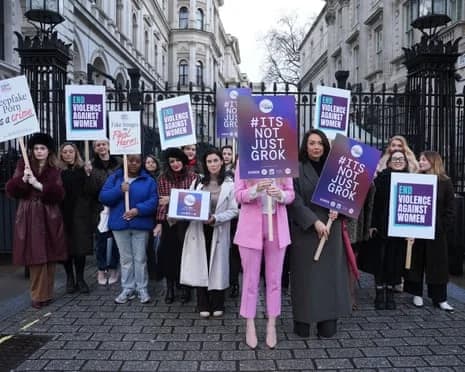
The news surrounding UK deepfake law 2026 emerged in early 2025, when the government signaled a decisive shift against sexually explicit deepfakes and related online abuse. On January 7, 2025, a government press release announced a crackdown on explicit deepfakes, with prosecutors poised to treat the creation and dissemination of explicit deepfake imagery as criminal offences. This move was framed as part of a broader Plan for Change to protect women and girls from online harm and to deter perpetrators who manipulate digital content for coercive or harassing purposes. The announcements underscored an intent to codify new offences within forthcoming criminal justice legislation, expanding the toolkit available to police and prosecutors to address a rapidly evolving threat landscape. This development is central to understanding the current state of UK deepfake law 2026 and how it intersects with existing frameworks addressing online abuse and sexual exploitation. (gov.uk)
In a separate but related strand, government officials issued updates in late 2025 that broaden protections for young people online and tighten controls around AI-enabled abuse. On December 18, 2025, ministers unveiled a Violence Against Women and Girls (VAWG) strategy that includes measures to ban “nudification” tools—technologies that use generative AI to turn real images into fake nude pictures or videos without consent. This initiative reflects an integrated approach to combat online grooming, extortion, and exploitation by raising the cost of abusing AI to harm others. The policy emphasis on safeguarding minors converges with the broader deepfake reform agenda, signaling that UK deepfake law 2026 may be shaped by both criminal offences and preventive regulatory actions across multiple government departments. (gov.uk)
Even as these announcements rolled out, the government highlighted that the Online Safety Act (OSA) framework remains a backbone for platform responsibility, with key amendments already in play since September 2024 to prioritise intimate-image offences. The September 2024 changes empowered enforcement around the sharing or creation of intimate images without consent, providing a baseline for how platforms and law enforcement should address a spectrum of non-consensual content. Taken together, these developments illustrate a layered approach to UK deepfake law 2026: criminalising explicit deepfakes at the point of creation, expanding protections for victims through new offences, and tightening platform responsibilities under the OSA framework. As the government progressed its Crime and Policing Bill, observers watched closely for how the final package would balance public safety with civil liberties. (gov.uk)
What Happened
Jan 7, 2025: Government announces crackdown on explicit deepfakes
The Government’s January 7, 2025 press release announced a plan to criminalise the creation of sexually explicit deepfakes. The key thrust was to ensure perpetrators could be charged for both creating and sharing such content, and to sanction those who enable the creation through equipment or other means. The package was described as a holistic response to non-consensual intimate-image abuse, aiming to provide prosecutors with clearer, enforceable offences that respond to the most harmful forms of deepfake misuse. The government framed these measures as part of its broader Plan for Change and its commitment to protecting women and girls online. The press release also signaled that the new offences would be incorporated into the Crime and Policing Bill when parliamentary time allowed. This set the stage for a formal, long-term reform of UK deepfake law 2026 within the criminal law framework. “Predators who create sexually explicit ‘deepfakes’ could face prosecution as the Government bears down on vile online abuse,” the press release stated, outlining the rationale and scope of the proposed offences. (gov.uk)
Quote from the Victims Minister: It is unacceptable that one in three women have been victims of online abuse. These new offences will help prevent people from victimising others online and ensure those who offend face meaningful consequences. (Source: GOV.UK press materials accompanying the January 7, 2025 announcement.) (gov.uk)
Sept 2024: Online Safety Act amendments address intimate-image offences
Prior to the 2025 deepfake offensives, the Online Safety Act had already been amended in September 2024 to give priority status to offences related to sharing intimate images without consent. This created a legal pathway for police and platforms to take swifter action against non-consensual content, including deepfake variants that manipulate intimate imagery. The amendments reinforced the existing legal framework by clarifying what constitutes a prosecutable offence in the online space and by elevating certain offences to priority status for enforcement. For observers of UK deepfake law 2026, the September 2024 changes were a prerequisite for the more expansive criminal offences discussed in 2025, signaling the government’s intent to couple content removal duties with criminal liability where warranted. (gov.uk)
Dec 18, 2025: New VAWG strategy expands protections for minors online
The December 18, 2025 update to the government’s VAWG strategy, including commitment to ban nudification tools, represented a noteworthy step in aligning regulatory efforts with emerging AI-enabled harms. The strategy documents proposed collaboration with technology firms to prevent young people from taking, sharing, or viewing nude images using their devices, and to curb grooming, extortion, and other exploitative behaviours amplified by AI. While these measures target a broad spectrum of online abuse, they are tightly connected to the UK deepfake law 2026 narrative by illustrating how policymakers are treating AI-generated deception as a systemic risk that requires both criminal sanctions and proactive platform-led safeguards. The government framed the move as part of a larger, cross-cutting agenda to protect women and girls online, as well as to strengthen resilience among youth users. (gov.uk)
Why It Matters
Protecting victims of online abuse

The government’s framing of UK deepfake law 2026 centers on reducing harm to women and girls, a demographic repeatedly identified as disproportionately affected by non-consensual deepfake imagery and related online abuse. The January 2025 announcement foregrounded the goal of assigning criminal liability to offenders who create or disseminate explicit deepfakes, aligning legal risk with the real-world harms described by victims and advocacy groups. The Victims Minister’s remarks highlighted the severity and pervasiveness of online abuse, and the policy emphasis on deterrence and accountability reflects a broader public safety aim. This is not just about criminal penalties; it is also about signaling societal condemnation of abuse and enabling prosecutors to pursue meaningful remedies for victims. The 2025 and 2024 actions collectively mark a shift from platform-only accountability to a hybrid model that combines criminal liability with platform responsibilities under the Online Safety Act. (gov.uk)
Quote from the Technology Minister: The rise of intimate image abuse is a horrifying trend that exploits victims and perpetuates a toxic online culture. These acts are not just cowardly, they are deeply damaging, particularly for women and girls. (Source: GOV.UK press materials accompanying the January 7, 2025 announcement.) (gov.uk)
Platform accountability and enforcement
The Online Safety Act framework is central to platform accountability in the UK. The 2024 amendments to prioritise certain intimate-image offences indicate that platforms bear heightened responsibilities to detect, remove, and report harmful content. The 2025 deepfake offences complement this by creating criminal exposure for creators and for those who facilitate the creation through equipment or enabling technologies. In practice, this means both the criminal system and platform operators face new expectations: better content moderation, faster takedowns, and more robust reporting mechanisms, backed by the prospect of enforcement action if standards are not met. The convergence of criminal law reform with platform duties suggests a more comprehensive approach to addressing AI-enabled harms, with potential implications for compliance budgets, technology investments, and risk management strategies across social media companies, content hosts, and search platforms. (gov.uk)
Public safety and civil liberties considerations
As with any reform of this scale, UK deepfake law 2026 prompts important questions about civil liberties, freedom of expression, and due process. Critics often caution that broad definitions of “creators” or “enablers” could capture legitimate artistic or journalistic use of AI tools, raising concerns about over-criminalization and chilling effects. Proponents argue that specific, targeted offences—such as creating or sharing explicit deepfakes without consent—address egregious harms not adequately deterred by existing laws. The government’s framing around protecting victims, while also clarifying the rules for platforms and consumers, reflects a deliberate attempt to balance these competing interests. Ongoing oversight, transparent enforcement, and periodic reviews will be essential to ensure that UK deepfake law 2026 achieves its aims without stifling legitimate online activity. (gov.uk)
What’s Next
Legislative timeline and expected path
The government has indicated that the new offences will be incorporated into the Crime and Policing Bill and introduced when parliamentary time allows. The precise timetable for passage remains contingent on legislative priorities, committee scrutiny, and potential amendments, but observers should anticipate a multi-month to multi-year process as the bill moves through Parliament, given the complexity and public interest surrounding online harms, privacy, and free expression. The ongoing updates around the Online Safety Act, the VAWG strategy, and related measures signal that UK deepfake law 2026 could be implemented in a phased manner, with some provisions entering force earlier as secondary legislation or regulatory guidance, while broader criminal offences take effect later. For readers and stakeholders, the critical question is not only “when will it come into force?” but “how will enforcement and platform obligations be harmonized across agencies and tech firms?” (gov.uk)
Watchpoints for stakeholders
- Lawmakers and prosecutors will monitor definitional clarity: what exactly constitutes a “sexually explicit” deepfake, and what evidence suffices to prove intent or knowledge in the creation or dissemination of such material.
- Platform operators will evaluate compliance burdens: enhanced moderation capabilities, reporting pipelines, and risk assessments will be essential as offences expand and platform duties tighten.
- Victim-support organizations will assess resourcing needs: more robust legal remedies may require dedicated victim services, rapid reporting channels, and accessible channels for reporting AI-enabled abuse.
- AI and tech companies will track innovation risk: as AI tools accelerate, developers and users will need clear guardrails to prevent misuse while preserving legitimate AI-enabled work, including journalism, research, and critique.
In terms of enforcement, the January 2025 package highlighted that perpetrators could face up to two years in custody for offences involving non-consensual explicit deepfakes, as well as related offences for taking intimate images without consent and for installing equipment to enable such offences. This emphasis on custodial penalties signals a robust stance on deterrence and creates a measurable standard for prosecutions under UK deepfake law 2026. Platforms may also face consequences if they fail to comply with corresponding duties under the Online Safety Act, including potential enforcement actions by regulators. These elements together provide a clearer, though still evolving, map of how the UK intends to govern AI-enabled deception and harm in public communications and personal safety domains. (gov.uk)
Closing
As the UK edges toward fuller implementation of UK deepfake law 2026, the confluence of criminal penalties, platform responsibilities, and targeted offensive measures suggests a more coordinated, data-driven approach to online safety. The government’s actions in early 2025, complemented by 2024 Online Safety Act amendments and the late-2025 VAWG strategy, reflect a multi-pronged strategy to deter, detect, and disrupt AI-enabled abuse while protecting vulnerable users. For readers seeking to stay informed, monitoring official GOV.UK updates, parliamentary schedules, and independent analysis from legal and tech-policy researchers will be essential. This coverage aims to provide timely, precise, and balanced context for a developing regulatory landscape that will shape how UK deepfake law 2026 affects individuals, businesses, and digital platforms in the years ahead. (gov.uk)

As Cambridge Review continues to cover technology and market trends with a neutral, data-driven lens, we will provide ongoing updates on the status, implications, and practical effects of UK deepfake law 2026 as the legislative process unfolds. Stay tuned for clarifications on timing, enforcement priorities, and how industry players adapt to these transformative changes in the regulation of AI-enabled content.