Rokos School of Government Debuts at Cambridge
Rokos School of Government launches at Cambridge University with a generous £190M donation to develop and train tomorrow's exceptional leaders.
 By Fiona Galloway · 2 June 2026 · 11 min read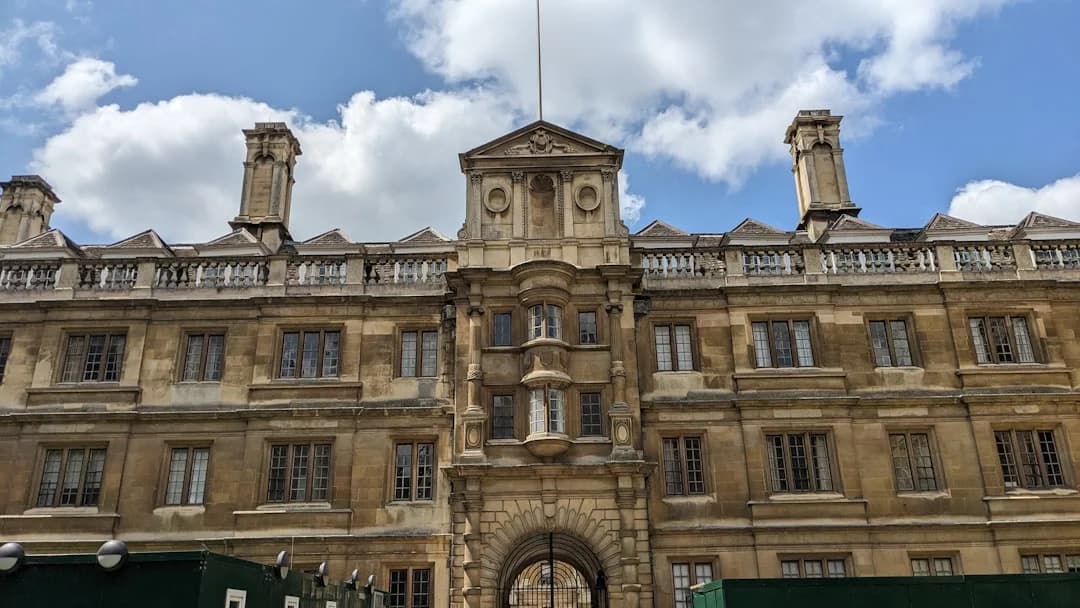
The University of Cambridge announced on March 31, 2026 that it will establish the Rokos School of Government, a new hub intended to train the leaders of tomorrow at the intersection of policy, technology, and public service. The initiative is anchored by a record-breaking £190 million gift from investor Chris Rokos, a sum Cambridge officials describe as the largest single donation to a British university in modern times. The news arrived amid wider momentum in UK higher education to situate governance studies within a data-driven, interdisciplinary framework that leverages Cambridge’s strengths in AI, climate science, economics, and public health. The Rokos School of Government is poised to become a focal point for leadership development, policy research, and practical governance training that can translate into real-world impact on issues ranging from national security to digital sovereignty. The announcement signals a broader trend in philanthropic support for public policy education, with Cambridge positioning itself to compete with long-standing programs in the domain, including Oxford’s Blavatnik School of Government. (cam.ac.uk)
The donor’s stated aim, as reflected in Cambridge and partner communications, is to advance governance education by combining rigorous analytic training with real-world problem solving. The gift is described as the catalytic funding needed to create an institution that can attract top faculty, design innovative degree and executive education programs, and foster collaborations with industry, government, and civil society. In statements accompanying the announcement, Rokos emphasized education as a lever for national competitiveness and international influence, invoking the UK’s soft power strengths. The philanthropic frame—paired with Cambridge’s research continuity—suggests a model in which rigorous theory integrates with applied policy work, underscoring the publication’s focus on data-driven, outcomes-oriented governance training. (theguardian.com)
Cambridge’s official communications underscore that the Rokos School of Government will build on the university’s existing, cross-disciplinary ecosystem—spanning artificial intelligence research, climate and health policy, and political science—to deliver practical leadership training. The school is described as a platform for translating scientific and technical insights into governance capacities, with programs designed to prepare leaders who can navigate complex, rapidly evolving challenges. The gift’s structure includes an initial commitment of £130 million, with potential further gifts of up to £60 million, to be matched by Cambridge University. Subject to regulatory approvals, including oversight by the Charity Commission, a Rokos School of Government Charity Trust will be formed to manage donor commitments and university contributions. This governance framework aims to ensure long-term stewardship and programmatic integrity. (cam.ac.uk)
In a broader regional and national context, Cambridge’s announcement sits alongside a wave of philanthropic investments in higher education to advance policy-oriented schooling. Coverage from national outlets and sector publications highlighted the scale of the donation and Cambridge’s intention to position the Rokos School of Government as a leading center for policy education in Europe. The Times Higher Education coverage framed the gift as a record-breaking contribution designed to bolster the UK’s soft power in global governance, while the Guardian’s reporting emphasized the potential influence of the school on international policy discussions and education. These accounts collectively frame the move as a high-stakes bet on Cambridge’s capacity to fuse rigorous scholarship with practical leadership training. (timeshighereducation.com)
Section 1: What Happened
Announcement Details
On March 31, 2026, the University of Cambridge publicly announced the creation of the Rokos School of Government, establishing a named academic program to carry forward leadership-focused research and training. The announcement confirmed a £190 million commitment from Chris Rokos, a hedge fund investor and philanthropist, intended to fund the new institution in its early years and beyond. The donor’s stated goal is to support an environment where Cambridge’s scientific and technological strengths—especially in AI, climate science, and quantitative analysis—are harnessed to produce practical governance capabilities. Cambridge officials framed the move as a strategic enhancement to the university’s public-policy portfolio and a national contributor to governance excellence. (theguardian.com)
Funding Structure and Governance
The funding package is described as multi-phased. An initial gift of £130 million will be complemented by further gifts totaling up to £60 million, with those subsequent amounts to be matched by the University of Cambridge. This staged approach is designed to ensure immediate momentum while enabling sustained growth as the School develops its academic and programmatic offerings. In addition to the financial endowment, the plan envisions the creation of a Rokos School of Government Charity Trust to oversee the donor commitments, Cambridge’s matching funds, and the School’s governance framework. The process is contingent on formal approvals from the Charity Commission, reflecting standard governance practices for major philanthropic gifts of this scale. The arrangement is described as a model that preserves donor intent while ensuring accountability and transparency in how the funds are deployed. (cam.ac.uk)
The governance architecture is described in Cambridge communications and related releases as a cross-institutional partnership that will position Rokos as a pillar of Cambridge’s governance education strategy. While the precise leadership appointments and initial academic programs were not disclosed in the initial announcement, university materials indicate a plan to recruit senior scholars and practitioners who can blend theoretical foundations with real-world policy applications. The overarching governance approach aims to align the School’s research outputs with policy delivery, practitioner training, and impact-oriented education. Donor and university documentation circulated in late March 2026 makes explicit that the School will be subject to external regulatory oversight, ensuring compliance, fiduciary responsibility, and the safeguarding of endowment assets. (eurekalert.org)
Location, Timeline, and Physical Footprint
Cambridge communications specify that the Rokos School of Government will be integrated into Cambridge’s broader ecosystem of innovation and research, with a projected presence in or adjacent to Cambridge’s West Innovation District. This location choice reflects a deliberate strategy to situate policy education near technology transfer activities, startups, and government-facing research initiatives. The real estate and facility plans are being developed in consultation with university planners, and the broader development timeline depends on building approvals and fundraising milestones. Media coverage has noted the potential for the Rokos School of Government to become a flagship for UK governance education, with observers comparing its trajectory to the Blavatnik School of Government at Oxford, which has become a reference point for public-policy education investments in Europe. (theguardian.com)
Reactions and Context
Reaction to the announcement was swift across academia, policy circles, and the philanthropic sector. In interviews and editorials, reporters underscored the scale of the donation and highlighted the donor’s background and philanthropic philosophy. Articles noted Chris Rokos’s career in high finance and his stated interest in long-term social impact through education and civic leadership initiatives. Critics and analysts emphasized that the success of the Rokos School of Government would hinge on clear programmatic outcomes, strong faculty commitments, and the ability to translate scholarly work into public-sector improvements. The broader context—namely, the UK’s competition to attract top governance programs and the ongoing evolution of public policy education—frames the Rokos gift as a defining moment that could shift regional and international perceptions of British higher education. (theguardian.com)
Section 2: Why It Matters
Impact on Governance Education and Soft Power
Photo by Christer Lässman on Unsplash
The Rokos School of Government is positioned as a key channel through which Cambridge intends to influence the future of governance education in Britain and beyond. Proponents argue that the combination of Cambridge’s research depth and Rokos’s philanthropic scale provides an opportunity to train leaders who understand both the science of policy and the political economy of implementation. In the public discourse surrounding similar institutions, the concept of “soft power” in governance education has gained traction—where universities serve as incubators for leadership that can shape global policy norms, standards, and practical governance capabilities. Early statements from Cambridge and media coverage underscore the aspiration for the Rokos School of Government to contribute to the UK’s soft-power toolkit, a framing that resonates with policymakers, business leaders, and international partners seeking evidence-based, globally oriented leadership education. (theguardian.com)
From a comparative perspective, observers point to Oxford’s Blavatnik School of Government as a benchmark for institutional impact in public policy training. Reports describing the Cambridge venture frequently reference the Cambridge–Oxford contrast, noting that the Rokos School of Government could intensify competition and collaboration across leading UK universities in this domain. While the exact programmatic mix remains to be seen, the emphasis on quantitative analysis, interdisciplinary research, and policy delivery signals a modern approach to governance education that prioritizes measurable outcomes and cross-sector partnerships. This framing—alongside Cambridge’s existing strengths in AI, climate science, and public health—suggests a potentially unique value proposition for students, practitioners, and researchers who seek rigorous training with real-world applicability. (theguardian.com)
Broader Economic and Research Implications
The Rokos gift is not simply a seeding endowment; it is a signal about the direction of public policy education funding in the UK. Donor-driven schools of government can alter the funding landscape for research centers, fellowships, and endowed chairs, potentially affecting recruitment pipelines for top faculty and senior researchers. Cambridge’s communications emphasize the School’s potential to attract talent across its broader campus ecosystem, encouraging cross-pollination between policy studies and technical disciplines such as machine learning, data analytics, and environmental economics. In the long run, the School could serve as a think-and-do tank—producing policy-relevant research that informs government strategies, industry regulation, and international development initiatives. Such a model aligns with Cambridge’s reputation for rigorous inquiry and practical impact, reinforcing the university’s status as a global hub for evidence-based governance education. (philanthropy.cam.ac.uk)
Donor Background and Philosophical Alignment
Chris Rokos’s philanthropic focus on education and social impact is well documented in mainstream media and charitable-sector reporting. Journalists have highlighted Rokos’s trajectory from finance to philanthropy, noting his emphasis on scalable, high-impact educational initiatives that reach underserved populations and promote excellence in STEM- and policy-related curricula. The Rokos gift to Cambridge has been described as a landmark contribution that could reshape perceptions of private philanthropy’s role in financing public policy education. In interviews and public statements, Rokos has connected his philanthropy to a broader vision of empowering future leaders to tackle global challenges with analytic rigor and ethical responsibility. This alignment between donor intent and university mission lies at the heart of the Rokos School of Government’s potential to become a generational institution. (theguardian.com)
Stakeholders and Equity Considerations
The Rokos School of Government is expected to affect a broad constellation of stakeholders, including current Cambridge departments, potential partner universities, government agencies, non-profit organizations, and students seeking policy-focused programs. Cambridge’s philanthropic communications emphasize that the School’s design will be consistent with inclusive access, rigorous training, and equitable opportunities for students from diverse backgrounds. The funds are intended not only to create new programs but also to broaden the university’s capacity to support underrepresented groups within governance education, aligning with broader UK higher-education fundraising goals. As with any large endowment, ongoing governance will be critical to ensuring that the School maintains academic integrity, transparency in spending, and demonstrable educational outcomes. The Charity Commission’s oversight will be a key mechanism to preserve this balance. (philanthropy.cam.ac.uk)
Section 3: What’s Next
Timeline and Immediate Next Steps
The immediate next steps focus on regulatory approvals, governance structuring, and program development. Cambridge and Rokos representatives have indicated that the Rokos School of Government Charity Trust will be established to manage the endowment and oversee governance, with formal Charity Commission processes to be completed before certain activities commence. In parallel, Cambridge will begin selecting leadership and academic chairs, with a view toward launching core degree programs, executive education offerings, and policy-research initiatives in the coming academic year. While specific program start dates and calendar milestones have not been announced in full, multiple outlets have noted the urgency of moving quickly to translate the donor’s vision into academic and public-impact outcomes. The timeline is subject to regulatory approvals and fundraising milestones, but the momentum from the March 31, 2026 announcement has already stimulated planning across Cambridge’s governance and policy research communities. (eurekalert.org)
Program Design, Leadership, and Academic Focus
Early communications describe a program architecture that blends rigorous analysis with practical leadership training. Expected program areas include governance analytics, public policy design, technology-enabled governance, climate and health policy, and international affairs. Cambridge officials have signaled that the Rokos School of Government will emphasize cross-disciplinary collaboration, leveraging Cambridge’s strengths in AI and data science to support evidence-based policymaking. Faculty recruitment for senior research chairs and visiting scholars is expected to begin in the months following the Charity Commission approvals, with a focus on attracting scholars who can bridge theory and practice. Additionally, the School is anticipated to develop graduate and executive education tracks designed for mid-career professionals who operate at the nexus of technology, policy, and public administration. (cam.ac.uk)
What to Watch For
Several indicators will signal the Rokos School of Government’s early trajectory. First, approvals from the Charity Commission will confirm the governance structure and endowment management framework, enabling the formal formation of the Rokos School of Government Charity Trust. Second, leadership appointments—particularly a founding dean or director with a track record in both policy research and executive education—will shape the School’s early reputation and programmatic priorities. Third, the initial program catalog and corresponding syllabi will reveal the emphasis placed on data-driven governance, public sector innovation, and international collaboration. Finally, announcements about facility plans, partnerships with public agencies, and industry collaborations will demonstrate how the School intends to translate scholarly insights into real-world governance practice. Observers will be watching for measurable outcomes—enrollment numbers, graduate placement rates, research outputs, and policy impact indicators—that demonstrate the School’s value proposition. (eurekalert.org)
Closing
The Rokos School of Government at the University of Cambridge represents a landmark moment in UK higher education and governance education. By channeling a substantial philanthropic endowment into a cross-disciplinary platform that pairs Cambridge’s analytical strengths with practical leadership training, the initiative aims to produce graduates and researchers who can contribute meaningfully to national and international policy. The funding model, governance framework, and regulatory oversight are designed to balance ambition with accountability, ensuring that the School’s impact is measured and sustainable over time. As Cambridge advances its program design and cultivates partnerships with government, industry, and civil society, observers will look to the School’s early outcomes to gauge whether this new institution can deliver on the promises of data-driven governance training and strategic leadership development. The coming months will be pivotal as the Rokos School of Government begins to take shape, and stakeholders across academia and public life monitor the School’s progress toward becoming a premier center for governance education in the 21st century. (theguardian.com)

Photo by Christian Lendl on Unsplash