Ray Dolby Centre Cambridge 2025 Opens
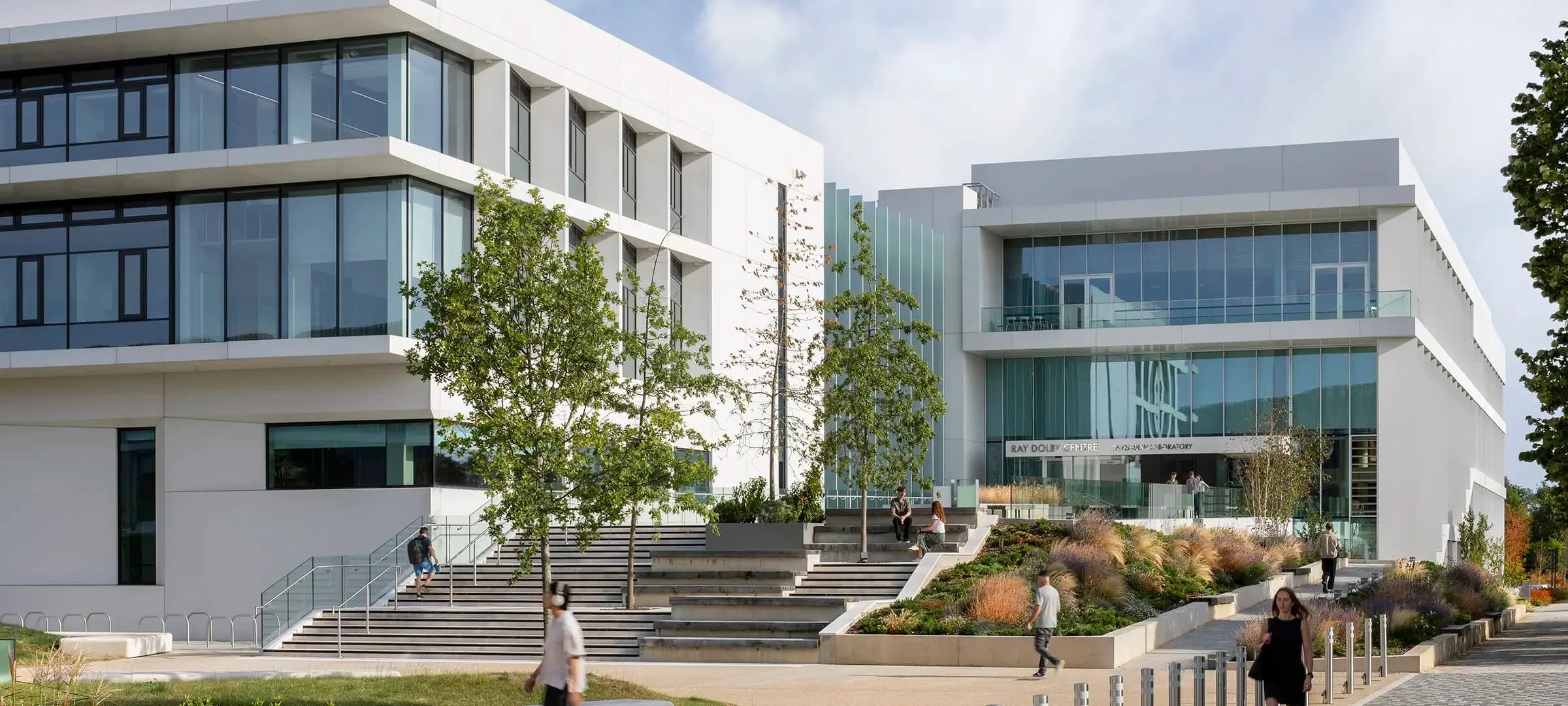
The Ray Dolby Centre Cambridge 2025 marks a pivotal moment for the Cavendish Laboratory and the wider UK physics research community. Officially opened in early May 2025, the new home of Cambridge’s Cavendish Laboratory represents a major investment in modern laboratory facilities, teaching spaces, and cross-disciplinary collaboration. The opening ceremony in Cambridge highlighted the project as a national milestone for physics research, a signal that the UK is doubling down on world-class infrastructure to support breakthroughs across quantum science, materials, and computational physics. The facility’s debut comes as part of Cambridge’s broader West Cambridge Innovation District expansion, a trend that has been unfolding over the past decade as universities scale their research ecosystems and partner with industry and government to accelerate discovery into impact. (phy.cam.ac.uk)
Two major funding streams underpinned the Ray Dolby Centre construction and outfitting, underscoring the phased nature of the project. A substantial £85 million gift from the Ray Dolby estate underwrites the centre’s core construction and research mission, a philanthropic cornerstone that aligns with the Cavendish Laboratory’s long history of transformative physics inquiry. In parallel, the UK government provided approximately £75 million through the Engineering and Physical Sciences Research Council (EPSRC) to support clean-room facilities, specialized laboratories, and shared instrumentation. The combination of philanthropic and public funding mirrors a pattern seen in other flagship university science facilities and reflects a national policy emphasis on preserving the UK’s leadership in physics and related disciplines. (philanthropy.cam.ac.uk)
From a logistical perspective, the Ray Dolby Centre is the centerpiece of a broader relocation and modernization effort at the Cavendish Laboratory. Construction reached a major milestone when works were declared complete on May 30, 2024, with the move of roughly 1,100 staff and students planned for 2025 and a fully operational state expected by the summer of 2025. The move-and-fit-out phase involved transferring laboratories, instruments, teaching spaces, and support facilities into the new building, followed by commissioning and IT installations to ensure seamless operation. This timeline underscores the meticulous planning required to migrate a world-class physics department, minimizing disruption to ongoing research while enabling new capabilities from day one. (phy.cam.ac.uk)
The official opening of the Ray Dolby Centre occurred on May 9, 2025, at a ceremony in Cambridge, signaling a formal acknowledgment of the building’s role as the new home of the Cavendish Laboratory. In the days that followed, a high-level government endorsement reinforced the centre’s strategic importance for UK science. Lord Spencer Livermore, the Financial Secretary to the Treasury and Minister for Growth, attended a formal opening event to mark the centre’s public debut, reinforcing the project’s national significance beyond Cambridge. The events surrounding the opening illustrate how the Ray Dolby Centre is positioned not only as a campus facility but also as a national asset for physics research and innovation. (phy.cam.ac.uk)
Beyond the ceremonial openings, the Ray Dolby Centre quickly integrated into Cambridge’s science and event ecosystems. In June 2025, the Cavendish Laboratory’s own festival program proceeded at the centre, reinforcing the building’s role as a platform for outreach, academic exchange, and public engagement with science. The Cavendish Science Festival 2025 took place on June 19–20, 2025, at the Ray Dolby Centre, featuring talks, panels, and tours designed to showcase cutting-edge physics research and the newly renovated Cavendish collections. This event framed the centre not just as a research hub, but as a living laboratory of ideas accessible to researchers, students, and the broader public. (phy.cam.ac.uk)
Section 1: What Happened
Timeline of Events
Construction milestone and site profile
The Ray Dolby Centre sits at the heart of Cambridge West Innovation District, occupying a footprint that Cambridge project materials describe as over 33,000 square meters spanning multiple floors. Early planning and design work culminated in construction led by Bouygues UK, with Jestico + Whiles delivering the architectural concept. The project’s scale reflects an ambition to provide integrated spaces for laboratories, teaching facilities, collaboration zones, and public-facing resources such as outreach and exhibition spaces. While the primary sources describe the building as spanning four floors in one narrative and five floors in another, the essential fact remains that the centre consolidates extensive laboratories, a large auditorium, and a public-facing wing to facilitate interaction with the local and national science community. The discrepancy in floor counts illustrates the complexity of large academic builds and the variability in how different Cambridge-affiliated pages count levels. (phy.cam.ac.uk)
Official opening and ceremonial events
The Ray Dolby Centre officially opened on May 9, 2025, in a ceremony that underscored the centre’s role as the new home of the Cavendish Laboratory. Nationwide coverage and university statements framed this event as a turning point for UK physics, with statements highlighting the centre’s potential to catalyze collaboration across disciplines and to support a wide portfolio of research activities. The opening attracted participation from government officials and academic leaders, signaling a recognition of the centre’s strategic value in advancing fundamental science and translating discoveries into technological progress. (phy.cam.ac.uk)
Formal government endorsement and subsequent events
A few days after the official opening, on May 12, 2025, a formal ceremony with a government minister—a sign of ongoing support for the project—took place. The event’s framing as a “Growth” and science infrastructure milestone reinforced the centre’s national significance in the context of UK science policy and economic strategy. This sequencing—official opening followed by a ministerial gesture—helped anchor the Ray Dolby Centre within both Cambridge’s local ecosystem and the national research infrastructure network. (phy.cam.ac.uk)
A broader program of use and public engagement
Throughout 2025, the Ray Dolby Centre began to host events, tours, and lectures that extended the Cavendish Laboratory’s public-facing activities. For instance, the Cavendish Science Festival in June showcased research talks, panel discussions, and tours of the building, offering a glimpse into the kinds of projects facilitated by the centre and the ways in which it would serve both researchers and the public. The festival’s program highlighted the centre’s role as a hub for science communication and education as Cambridge’s physics community integrates its new home into its broader mission. (phy.cam.ac.uk)
Real-world use cases and venue partnerships
As the Ray Dolby Centre settled into operation, its facilities—ranging from the Ray Dolby Auditorium (with a capacity of 407 seats) to multiple teaching laboratories and seminar spaces—began to support conferences and events hosted by Cambridge partners and external organizations. The venue’s capacity and flexibility have led to partnerships with Meet Cambridge and Cambridge Network, among others, illustrating how the centre functions as a high-profile meetings and events venue while serving academic and industrial collaboration goals. The venue-specific information, including the auditorium size, is publicly listed on university pages detailing conference and events hire. (phy.cam.ac.uk)
Key Facts and Infrastructure
Spaces and capacity

The Ray Dolby Centre includes a mix of spaces designed for research, teaching, outreach, and events. Notably, it features a large auditorium with a seating capacity of 407, designed to host large seminars, lectures, and public-facing events, alongside a 400-seat lecture theatre and multiple smaller teaching and meeting rooms. The combination of high-capacity spaces and more intimate rooms aims to support both formal academic activities and flexible collaborative sessions. This mix aligns with the Cavendish Laboratory’s long-standing role as a center for physics education and discovery, now enhanced by modern facilities that support a broad spectrum of activities. (phy.cam.ac.uk)
Facilities tailored to research and teaching
In addition to lecture theatres and auditoria, the Ray Dolby Centre houses cutting-edge laboratories, clean rooms, cryostat halls, microscopy suites, and laser and optical labs. The design emphasizes a seamless integration of research and teaching spaces, enabling a range of activities from undergraduate demonstrations to advanced, equipment-intensive experimental work. The building’s portfolio of spaces is intended to support not only ongoing Cavendish research programs but also collaborative projects with industry and other universities, which has been a strategic objective since the project’s inception. The fact that the centre includes a dedicated teaching resource and outreach spaces bolsters Cambridge’s ability to combine research excellence with public engagement. (phy.cam.ac.uk)
Funding mix and governance
The Ray Dolby Centre’s funding structure reflects a dual approach common to major scientific facilities: philanthropic support complemented by government investment. The £85 million gift from the Ray Dolby estate stands as a central philanthropic pillar, providing the anchor to the project’s ambition and capabilities. The EPSRC’s £75 million contribution represents a significant public investment intended to ensure state-of-the-art infrastructure and national access to specialized facilities. The governance and procurement processes for the project, including design by Jestico + Whiles and construction by Bouygues UK, are documented in university announcements and project updates, emphasizing accountability, collaboration with industry, and adherence to high standards of environmental and operational performance. (philanthropy.cam.ac.uk)
Who It Affects
Local and national research communities
The Ray Dolby Centre’s opening has a direct impact on Cambridge’s physics community, including undergraduate and graduate students, post-doctoral researchers, and senior faculty. By consolidating facilities and providing modern instrumentation, the centre has the potential to accelerate research productivity and attract new talent to Cambridge. The national dimension is evident in government endorsements and the centre’s positioning as a national asset for physics infrastructure, enabling cross-institutional collaborations and shared access to advanced facilities for researchers across the UK. (phy.cam.ac.uk)
Industry and policy stakeholders
For industry partners, the centre offers opportunities for collaboration, co-development, and technology transfer in areas ranging from semiconductors and quantum science to climate research and advanced materials. The centre’s opening was framed in part as a boost to UK competitiveness and innovation ecosystems, aligning with policy aims to stimulate knowledge-intensive growth and to maintain the UK’s leadership in strategic science domains. Public-facing events, such as the Cavendish Science Festival, further illustrate how the centre can function as a bridge between academia, business, and the public sector. (wired-gov.net)
Educational outreach and public engagement
Public-facing spaces and outreach programs hosted within the Ray Dolby Centre are designed to broaden access to physics education and to demystify advanced science for school groups, families, and lifelong learners. The Cavendish Laboratory’s visitor information highlights public-wing access and outreach opportunities, pointing to a broader strategy of engaging non-specialists with cutting-edge physics through tours, demonstrations, and curated exhibits. In practice, this means teachers, students, and curious residents can engage with physics research more directly and see first-hand how the university translates research into learning experiences. (phy.cam.ac.uk)
Why It Matters
A new hub for UK physics research

The Ray Dolby Centre is positioned as a national asset that supports world-class physics research across multiple subfields. The combination of large-scale laboratories, a substantial auditorium, and teaching spaces creates a physical environment conducive to collaboration and cross-disciplinary work. Independent assessments and official statements emphasize that the centre will help the Cavendish Laboratory tackle ambitious research programs, from quantum technologies to semiconductor physics and climate-related studies. The official communications and industry-related press coverage frame the centre as a flagship project that will help the UK sustain leadership in physics research by providing state-of-the-art facilities and enabling national access to specialized equipment. (phy.cam.ac.uk)
Strategic alignment with Cambridge’s innovation initiatives
Cambridge’s West Innovation District has evolved to become a focal point for research, entrepreneurship, and knowledge exchange. The Ray Dolby Centre complements other campus investments and partner programs by offering a centralized hub where researchers, students, and external collaborators can converge to design experiments, run simulations, and showcase results in formal and informal settings. The presence of public-facing spaces, touring options, and event venues within the centre helps integrate Cambridge’s academic ecosystem with its broader regional and national innovation networks. This alignment is reflected in official communications and in the activities of local partners such as Meet Cambridge and Cambridge Network, which have leveraged the venue for conferences, corporate showcases, and collaborative programs. (phy.cam.ac.uk)
Educational and cultural implications
The Ray Dolby Centre’s architectural and programmatic design also underscores a commitment to educational excellence and cultural engagement. The inclusion of a 400-seat teaching theatre and a 407-seat auditorium enables a broad range of programming, from undergraduate demonstration labs to internationally renowned lectures and public science events. By pairing advanced research facilities with teaching and outreach spaces, Cambridge reinforces its reputation as a holistic science campus where discovery and learning are inseparable. The Cavendish Laboratory’s own communications emphasize outreach and public programs as core aspects of the building’s mission. (phy.cam.ac.uk)
Economic and policy context
From a policy perspective, the Ray Dolby Centre aligns with broader national objectives to invest in science as a driver of economic growth and resilience. The government’s EPSRC contribution, combined with philanthropic support for a “centrepiece” facility, signals a long-term strategy to sustain research excellence while enabling knowledge transfer and industry partnerships. The project’s status as a national asset—cited in government and industry communications—highlights the importance of sustained funding and cross-sector collaboration to maintain the UK’s competitive edge in physics and related technologies. (wired-gov.net)
What’s Next
Next steps for operations and community engagement
With the official opening completed and the relocation phase underway, the Ray Dolby Centre’s next steps involve full commissioning of all labs and support services, ongoing IT and AV integration, and the full onboarding of staff into teaching, research, and administrative spaces. The Cavendish Laboratory’s official statements and event pages outline a program of ongoing lectures, workshops, and outreach activities designed to maximize the building’s impact for students, researchers, and the public. The university community anticipates continued scheduling of conferences, seminars, and tours, as well as expansion of collaborative programs with industry and other universities. (phy.cam.ac.uk)
Upcoming events and visibility milestones
Following the 2025 Cavendish Science Festival, the Ray Dolby Centre has become a prominent venue for both internal and external programming. The centre’s capacity and flexible spaces make it suitable for a wide variety of events, from academic symposia to corporate gatherings and public science nights. Organizations such as Meet Cambridge have highlighted the centre’s role as a premier events venue, signaling growing demand for high-profile conferences and collaborations in Cambridge. The centre’s operations and availability for events are publicly advertised through university channels and partner networks. (phy.cam.ac.uk)
What to watch for in the mid-term
In the medium term, observers will be looking for indicators of the Ray Dolby Centre’s impact on research output, collaboration metrics, and training outcomes. These may include new inter-institutional projects, joint grant applications, and cross-disciplinary research programs that leverage the centre’s labs and equipment. While specific numbers are not included in every public source, the ongoing reporting from the Cavendish Laboratory and related university channels suggests a trajectory toward enhanced research productivity and broader engagement with industry partners and the public. The centre’s status as a national hub for physics research means continued scrutiny from policymakers and funding bodies alike, with potential implications for future rounds of investment and programmatic funding. (wired-gov.net)
International and national context
The Ray Dolby Centre’s opening was framed within a global context of advancing physics infrastructure to support next-generation technologies, including quantum information science, advanced materials, and climate-related physics. While Cambridge’s local community benefits are immediate, the centre’s role in the UK’s national science capacity is designed to be broader, enabling access to facilities and expertise across institutions and potentially attracting international collaborations. This perspective aligns with the messages from Innovate UK and other national organizations that highlighted the centre as a catalyst for innovation and a beacon for UK science on the world stage. (wired-gov.net)
Closing
The Ray Dolby Centre Cambridge 2025 stands as a landmark achievement for the Cavendish Laboratory, Cambridge University, and the UK’s science ecosystem. By combining philanthropic generosity with government investment, the project has delivered a modern research campus that supports ambitious physics programs, cutting-edge teaching, and broader public engagement. The centre’s launch and its early programmatic activity—culminating in events like the Cavendish Science Festival—illustrate a concrete shift toward a more integrated, multi-stakeholder model of scientific infrastructure. As Cambridge and the nation continue to monitor the centre’s early performance, stakeholders will be watching for measurable impacts in research outputs, student training, collaborations with industry, and the centre’s ability to attract and retain top talent in physics and related disciplines. (phy.cam.ac.uk)
Readers can stay updated through the Cavendish Laboratory’s official news pages, Meet Cambridge announcements, and Cambridge Network event notices, which continue to report on the Ray Dolby Centre’s activities and opportunities for involvement. The centre’s blend of world-class research spaces, teaching facilities, and versatile event venues positions it as a reference point for future physics facilities in the United Kingdom and beyond. (phy.cam.ac.uk)