
Perovskite-Silicon Tandem Solar Cells UK Universities 2026


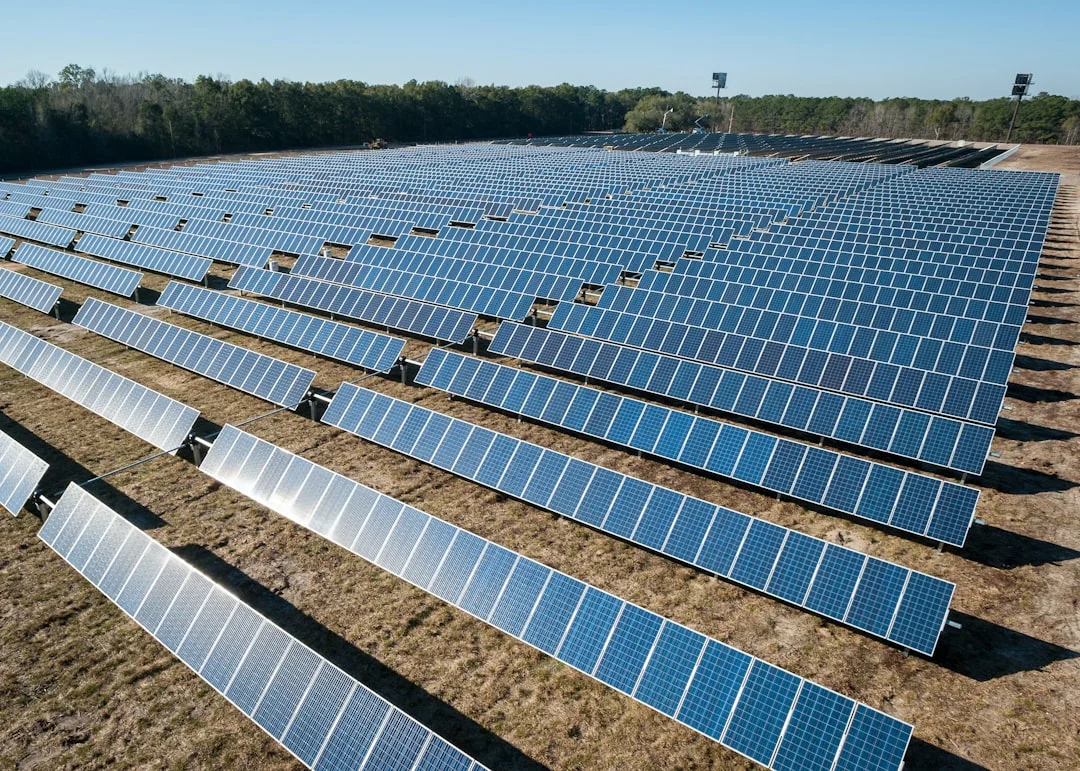
Photo by Soren H on Unsplash
In 2026, the United Kingdom’s research ecosystem has sharpened its focus on a defining technology for the next generation of solar power: the Perovskite-Silicon Tandem Solar Cells breakthrough UK universities 2026. Across leading universities and allied industry players, researchers reported tangible progress that could tilt the economics and scalability of next‑generation photovoltaics. The announcements come as the UK continues to map a strategic path for clean energy, aiming to accelerate commercial deployment while ensuring resilience in supply chains and manufacturing capabilities. The moment is being framed not just as a laboratory milestone but as a signal of how academia, industry, and policy can align to shorten the distance between discovery and market impact. This data-driven update examines what happened, why it matters, and what to watch next as the UK ecosystem navigates the evolving landscape of perovskite/ silicon tandems. (researchbriefings.files.parliament.uk)
Section 1: What Happened
The UK research wave: coordinated disclosures and milestones
UK universities and partner institutions intensified their reporting cadence around perovskite–silicon tandem work during mid-2026, bolstered by high-profile university programs and industry collaborations. This has included university-led demonstrations of stability improvements, processing innovations, and scalable architectures designed to move tandem devices from small-area cells toward modules suitable for rooftops and utility-scale deployments. In accelerant form, Oxford-based collaborations and spin-outs have been foregrounded as pivotal contributors to the national agenda for high-throughput manufacturing and improved device longevity. The broader narrative centers on combining a high-bandgap perovskite top cell with a silicon bottom cell to break past the conventional silicon efficiency ceiling. (physics.ox.ac.uk)

Oxford and Manchester: concrete results and leadership
- Oxford University researchers and their partners have highlighted solvent-free perovskite deposition routes that could simplify manufacturing and improve device reliability, a development repeatedly cited as critical for monolithic tandems where uniform, defect-free layers matter. This line of work aligns with recent Nature Materials references and related updates in 2026 that emphasize growth in manufacturing-compatible perovskite layers. The relevance for tandem devices is explicit: a higher-quality perovskite top cell can unlock higher overall module performance in tandem stacks. (physics.ox.ac.uk)
- Separately, the University of Manchester’s team, led by Prof. Thomas Anthopoulos, reported progress in tuning perovskite surface chemistry to enhance stability—an essential prerequisite for long-term performance in tandem devices exposed to real-world operating conditions. The Manchester work underscores a broader theme in 2026: the stabilization challenge is being addressed at the molecular and interfacial levels, reducing the risk of rapid degradation in fielded tandems. “Perovskite solar cells are seen as a cheaper, lightweight and flexible alternative, but long-term stability remains a hurdle,” noted Anthopoulos, highlighting the practical implications for deployment timelines. (manchester.ac.uk)
Industry partners and the ecosystem: early demonstrations and leadership
Industry outlets and trade press have tracked a sequence of demonstrations where shingled and monolithic tandem approaches are being tested in pilot lines. A notable example in 2026 is a module demonstration that achieved significant efficiency figures in a shingled-tandem architecture, which is relevant to UK manufacturing strategies that favor modular, scalable designs. The Fraunhofer ISE communications in 2026 illustrate how multi‑partner efforts can converge toward practical module concepts, even while UK‑based manufacturers pursue domestic capability development. While Fraunhofer’s activity is outside the UK government’s direct control, its emphasis on manufacturability and system-level integration mirrors a central UK policy objective: turning high-performance tandems into deployable products. (ise.fraunhofer.de)
Policy and parliamentary context: how 2026 outputs entered the public record
In June 2026, UK policymakers and researchers amplified the attention on perovskite/silicon tandems via official briefings, including the UK Parliament’s POSTnote 771 published on June 25, 2026. The document consolidates what is known publicly about the technology trajectory, addresses potential deployment timelines, and outlines questions for funding and regulation as the technology approaches commercial viability. This official acknowledgment underpins a broader national strategy to strengthen domestic capabilities in next-generation PV technologies and to calibrate incentives for early-stage manufacturing pilots. (researchbriefings.files.parliament.uk)
What the market saw in 2026: early performance benchmarks
Independent industry coverage in 2026 highlighted concrete module-level performances that researchers and developers are tracking for industrial relevance. A prominent datapoint from the Oxford PV ecosystem reported a mid- to late-2020s efficiency trajectory for tandem modules, with independent press and trade outlets reporting high 20s percentages in certain shingled or monolithic formats, representative of steady progress toward practical deployment. While early tandem milestones in 2026 were not presented as universal, the convergence of lab-scale gains, integration studies, and pilot-scale demonstrations signal a plausible near-term pathway to higher-power PV systems that could influence both residential and commercial markets. (pv-magazine.com)
Section 2: Why It Matters
Implications for the UK clean energy trajectory and economic competitiveness
The UK’s emphasis on perovskite–silicon tandems aligns with broader ambitions to improve energy security, accelerate decarbonization, and foster high-value manufacturing within the domestic economy. If the UK can translate lab breakthroughs into scalable manufacturing and cost-competitive modules, tandem devices could contribute to system-level cost reductions and enable power generation at lower levelized cost of electricity (LCOE) over time. Industry and policy watchers are evaluating how this technology could fit into the UK’s delivery plan for 2030–2035, with potential implications for energy mix, grid planning, and industrial policy. The ongoing collaboration between universities and industry associations is seen as a strength, given the UK’s dense network of research hubs and a growing ecosystem of startups and spin-outs. (physics.ox.ac.uk)

Weathering supply chain and manufacturing challenges
Perovskite–silicon tandems bring with them manufacturing questions, including the scalability of perovskite deposition processes, long-term environmental stability, and the integration of high-tilt module designs with conventional silicon bottom cells. UK researchers are actively addressing these issues through process chemistry, materials engineering at interfacial layers, and pilot-line demonstrations, all of which are essential to building confidence among solar installers and financiers. The importance of scalable, solvent-free or low-solvent processes, as reported by Oxford, is particularly salient for UK manufacturers aiming to minimize capital expenditure and reduce process variability in high-volume output. (physics.ox.ac.uk)
Strategic alignment with industry and long-tail benefits
Beyond immediate efficiency gains, the UK’s perovskite–silicon tandems could catalyze a broader ecosystem: new supply chains for advanced materials, specialized equipment for thin-film deposition, and workforce development to support high-precision manufacturing. Internationally, the technology’s progress has attracted attention from academic networks and industry groups, which can amplify knowledge transfer, standardization efforts, and cross-border collaborations. The 2026 period saw a growing emphasis on interoperability between modules and the need for standardized testing protocols—elements that UK researchers and policymakers are actively considering as they coordinate with European and global partners. (doi.org)
Academic and industry collaboration: the model and its limits
UK universities have long-practiced collaborative models with industry players, national labs, and international partners. The 2026 activity around perovskite–silicon tandems highlights both the strengths and the challenges of this model. On one hand, joint projects accelerate the translation of materials breakthroughs into practical designs (for example, stable passivation strategies and new interfacial architectures mentioned in Nature Energy and Nature Reviews Physics papers). On the other hand, moving from demonstration cells to packaged modules requires cross-disciplinary coordination across device physics, packaging, reliability testing, and supply chain readiness. The discussions reflected in 2026 coverage emphasize the need for continued, well-funded collaboration that can sustain long development timelines and sustain progress through the various stages of technology maturation. (nature.com)
Global context and competitive dynamics
The UK is not alone in pursuing perovskite–silicon tandems. International activity, including developments from European research institutes and Asian universities, shapes the competitive landscape and informs UK strategy. Analysts highlight that breakthroughs in perovskite materials, long-term stability, and scalable module designs could shift the global efficiency roadmap for tandem PV. UK researchers and industry players argue that domestic capacity, strong academic institutions, and supportive policy environments position the UK to play a significant role in this global shift, provided manufacturing scale-up can be achieved in the next few years. This assessment aligns with industry reporting on 2026 advances and ongoing discussions about deployment timelines. (nature.com)
Market perspectives: investment, risk, and opportunity
Investors and policymakers are watching several risk factors that could influence the rate of adoption for perovskite–silicon tandems in the UK market. Material costs, supply chain security for key components, and durability under real-world operating conditions are central topics. Yet the potential upside—higher power output per unit area, reduced material usage relative to single-junction silicon at certain scales, and the possibility of flexible or semi-transparent formats—continues to attract attention from venture investors, energy-focused funds, and national funding bodies. In 2026, preliminary market analyses emphasize the importance of staged deployment: pilot installations, demonstration projects, and evaluation in real-market environments before broad commercialization. (doi.org)
What the numbers tell us about progress and pace
The year 2026 brought a sequence of performance milestones that researchers and analysts are watching closely. For example, monolithic perovskite–silicon tandems that achieve efficiencies near the high-28% to low-30% range at the cell or small-module level, and high 20s% for certain module configurations, indicate a trajectory toward commercially meaningful gains. Independent reports and peer-reviewed summaries in 2026 point to continued improvements in interfacial passivation, carrier extraction, and thermal stability, all of which are critical for enduring performance in outdoor conditions. While not all results are directly comparable due to differences in test protocols, the converging trend across institutional reports reinforces a narrative of steady, incremental progress rather than sudden leaps. (nature.com)
The policy backdrop: funding, standards, and deployment pathways
As the technology advances, UK policymakers are weighing funding priorities that balance early-stage research with near-term deployment incentives. The 25 June 2026 POSTnote provides a snapshot of the policy questions in play, including how to structure support for pilot-scale manufacturing, how to integrate tandems into existing grid and building-integrated PV programs, and how to align intellectual property and standards development with industrial capability growth. This policy context matters because it shapes incentives, timelines, and collaboration opportunities for universities and industry players. (researchbriefings.files.parliament.uk)
Section 3: What’s Next
Near-term roadmap: what to expect in 2026–2027
Looking forward, UK researchers and industry partners are expected to push a few near-term milestones that could influence market conditions and investor confidence:
- Expanded pilot-production trials for tandem modules, with emphasis on repeatable, scalable deposition processes for perovskite layers and robust interfacial contacts with silicon bottom cells. This is a continuation of the process- and materials-focused work highlighted in 2026 Oxford and Manchester efforts. (physics.ox.ac.uk)
- Reliability testing programs that evaluate stability under thermal cycling, humidity, and prolonged illumination—critical stress tests for any commercial deployment scenario. Nature Energy and Nature Reviews Physics discussions in 2026 underscore the importance of addressing reverse-bias stress and other reliability concerns for monolithic tandems. UK researchers are actively contributing to this learning curve. (nature.com)
- Market-oriented demonstrations and policy-integration pilots that explore deployment scaffolds for commercial and residential sectors, in line with parliamentary briefings and national energy strategy objectives. The POSTnote’s coverage of deployment questions reinforces the expectation that 2026–2027 will see policy-anchored pilots that couple technology readiness with grid integration plans. (researchbriefings.files.parliament.uk)
Projected adoption pathways and potential timing
Industry observers anticipate that, provided manufacturing scaling succeeds and reliability concerns are addressed, tandem solar modules could begin to appear in select pilot projects and commercial demonstrations within a multi-year window beginning in the late 2020s. The pace will be influenced by the rate at which UK-based fabs reach commercial-scale throughput, the cost trajectory of perovskite materials, and the ability to maintain performance across large-area modules. While the precise timing remains contingent on several factors, the 2026 activity signals a deliberate, policy-friendly push toward accelerating the transition from laboratory-scale breakthroughs to practical deployments. (doi.org)
Long-term outlook: market, technology, and geopolitical considerations
In the longer horizon, perovskite–silicon tandems could reshape solar economics by offering higher total system efficiencies, better utilization of land area, and potential new form factors (including flexible or semi-transparent panels). UK universities’ continued contributions to materials science, device engineering, and manufacturing science are central to this ambition. However, the sector must navigate durability challenges, supply chain resilience, and standardization as it expands toward mass production. The 2026 period suggests a robust research-and-industry collaboration model, but it also underscores that breakthroughs must translate into reliable, scalable products to achieve durable market impact. Global competition will persist, but the UK’s distinctive advantages—academic depth, a growing industrial ecosystem, and targeted policy support—provide a solid foundation for continued leadership in tandem PV development. (nature.com)
Closing
As the Cambridge Review monitors the trajectory of Perovskite-Silicon Tandem Solar Cells breakthroughs within UK universities in 2026, the overarching narrative remains clear: sustained, well-coordinated investment in materials science, device engineering, and manufacturing capability is translating early-stage innovations into credible paths toward scalable deployment. The year’s developments illustrate not just incremental gains in efficiency or stability, but a broader ecosystem maturing—one that integrates research outputs with industrial capability and policy guidance to accelerate the clean-energy transition. For readers seeking to stay informed, ongoing updates from major UK universities, industry analysts, and parliamentary briefings will continue to shape how the technology evolves and how quickly it moves from the laboratory to rooftops and utility-scale projects. (physics.ox.ac.uk)