PAMELA papyri Cambridge University Library 2026 – Update

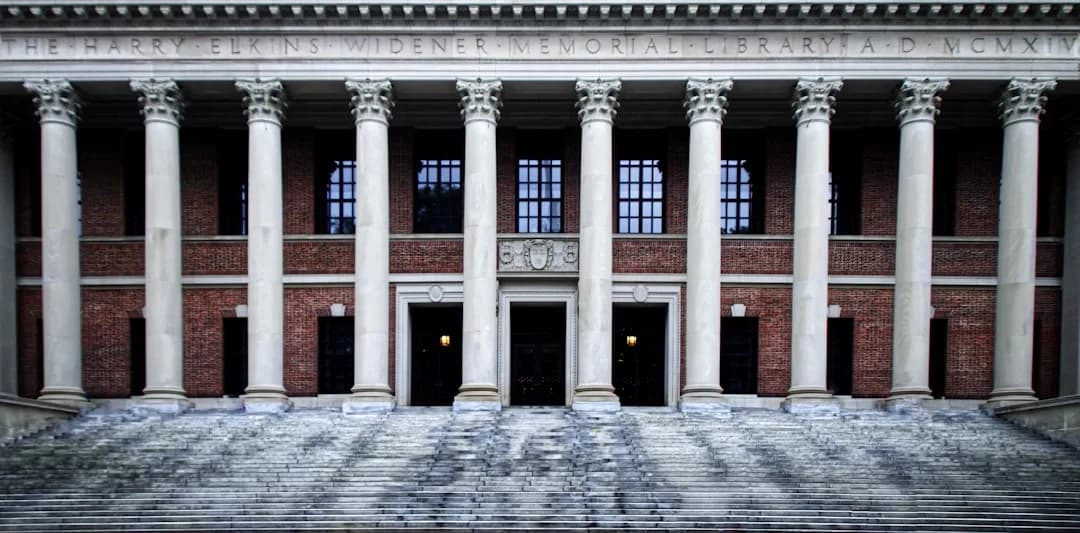
Photo by Chenyu Guan on Unsplash
Cambridge University Library has confirmed a major, forthcoming initiative for 2026 that signals a significant shift in how ancient texts are studied and taught. Papyri and Manuscripts: Exploring Layers of Ages (PAMELA) is described as a three-year program launching in January 2026, designed to fuse papyrology, manuscript studies, conservation science, AI-driven palaeographic analysis, and material sciences into a single, multidisciplinary research framework. This is not just an internal research project; it is framed as a consortium effort involving multiple partners with the goal of transforming how Greek papyri and medieval manuscripts are analyzed, preserved, and taught. The announcement positions PAMELA as a centerpiece of Cambridge University Library’s 2026 research agenda and as a signal to the broader academic community that traditional textual studies can be augmented by advanced computational methods. (lib.cam.ac.uk)
The library’s public briefing emphasizes that PAMELA is designed to run for three years, beginning in January 2026, and it outlines a deliberate plan to train new researchers and to foster international collaboration. The PAMELA program is described as a collaboration across disciplines—papyrology, manuscript studies, conservation science, AI-driven paleography, and materials science—an approach intended to yield new methods for dating, linking, and reconstructing fragile texts that span ancient to medieval periods. The project’s scope explicitly includes a training component for early-career researchers, international secondments, and an emphasis on developing open-access resources and standardized methodologies to share findings with the scholarly community. This framing suggests a long-term impact on how libraries, museums, and universities approach written heritage. (lib.cam.ac.uk)
The PAMELA announcement is part of Cambridge University Library’s broader 2026 program, which also highlights related initiatives within the University Library Research Institute (ULRI) and the AI for Cultural Heritage Hub (ArCH). The ULRI’s 2026 slate includes support for ground-breaking, collections-led research and the continuation of existing projects while ArCH wraps up in March 2026. The PAMELA project is presented as a key element of this ecosystem—an example of how Cambridge is integrating artificial intelligence with traditional manuscript studies to unlock new knowledge from papyri and medieval texts. The library’s communications indicate that PAMELA will feature periodic events, summer hackathons, and opportunities for researchers to travel to partner institutions within the PAMELA consortium. The overall message is that PAMELA is both a research program and a vehicle for capacity-building across Cambridge and its partners. (lib.cam.ac.uk)
What happened, exactly, is that PAMELA was launched as a formal initiative with January 2026 as its start point, backed by a consortium of twelve partners and a research agenda that aims to bridge multiple disciplines in the study of papyri and manuscripts. The Cambridge page explicitly states that PAMELA is a three-year initiative launching in January 2026, highlighting the scope and ambition of the project and its potential to reshape the field of manuscript studies. The start date is corroborated by related European research documentation that frames PAMELA as a coordinated, transnational effort with defined milestones, leveraging AI-enabled paleographic analysis to accelerate insights from fragile papyrus fragments and medieval codices. The collaboration’s breadth—twelve partners, training of nine staff members or PhD students for research exchanges, and planned summer hackathons—suggests a structured, programmatic approach to achieving tangible outcomes over the three-year horizon. (lib.cam.ac.uk)
Section 1: What Happened
Project Genesis
PAMELA emerges as a deliberate response to long-standing disciplinary silos in manuscript studies. The objective, as described in official materials, is to integrate papyrology, manuscript studies, conservation science, AI-driven paleographic analysis, and material sciences to create a holistic framework for analyzing Greek papyri and medieval manuscripts. This integration aims to reveal new connections across historical periods, improve dating and authorship attribution, and enable more robust reconstructions of textual transmission. The publicly available project materials emphasize that PAMELA is meant to serve as a model for how libraries, museums, and research institutions can coordinate cross-disciplinary work around fragile, high-value textual heritage. The purpose here is not only scholarly output but also the creation of scalable methodologies and resources that other institutions can adopt. (cordis.europa.eu)
Start Date and Timeline
The PAMELA initiative is scheduled to launch in January 2026 and run through December 2029, forming a three-year program with clearly defined milestones, including capacity-building activities, visits to consortium partners, and collaborative research outputs. The start and end dates are echoed across official project documentation and university communications, underscoring a finite program length designed to deliver concrete results and a replicable model for future cross-disciplinary work. In addition to the formal timeline, the program’s design anticipates a March 2026 hybrid conference to celebrate ArCH findings, with PAMELA serving as a parallel, overlapping strand of Cambridge’s AI-assisted heritage research agenda. Readers should monitor Cambridge University Library updates for detailed deliverables and milestone dates as the year unfolds. (lib.cam.ac.uk)
Participants, Partners, and Activities
PAMELA is described as a consortium-driven project that involves twelve partner organizations and a structured set of activities, including summer hackathons and short-term research exchanges. Cambridge University Library notes that nine staff members or PhD students will have the opportunity to visit partner institutions within the consortium for up to one month each, enabling hands-on experience with different collections, laboratories, and conservation facilities. This approach is designed to foster expertise in digital palaeography, imaging, and non-invasive material analysis while promoting international collaboration and knowledge transfer. The described activities align with the European Commission’s emphasis on training, mobility, and open-access resource development as central components of PAMELA. The modular exchange program is intended to diffuse best practices across the network and accelerate the pace of discovery across Greek papyri and medieval manuscripts. (lib.cam.ac.uk)
Section 2: Why It Matters
Advancing Palaeography with AI
A central aspect of PAMELA is the deployment of AI-driven paleographic analysis to examine handwriting, scribe identification, and text reconstruction in papyri and manuscripts. This approach represents a meaningful shift in how palaeographers work with fragile materials, offering the potential to accelerate transcription, improve script classification, and support more precise dating and manuscript lineage work. PAMELA’s emphasis on AI-enhanced palaeography is consistent with broader trends in digital humanities where machine learning and image-analysis tools are increasingly used to complement expert paleographic judgment. The European Commission and associated project documentation describe AI-enabled script recognition and related digital reconstruction techniques as core components of PAMELA’s methodology, signaling a durable shift toward data-driven analysis in the field. (cordis.europa.eu)
Cross-Disciplinary Collaboration
The PAMELA framework is explicitly designed to bridge disciplines that historically operated in silos. By combining papyrology, manuscript studies, conservation science, AI-driven paleography, and material sciences, PAMELA aims to create a more integrated understanding of textual transmission, manuscript production, and preservation strategies. This cross-disciplinary stance addresses longstanding fragmentation in the study of ancient and medieval texts and aligns with a broader trend in humanities research toward integrative teams, shared data, and standardized methodologies. The project’s stated objective emphasizes that such collaboration can yield new insights into the ways texts move through time and space, how scribes influence transmission, and how material conditions affect legibility and survivability. (cordis.europa.eu)
Access, Training, and Open Resources
PAMELA’s design includes a robust training component for early-career researchers, international secondments, and the development of open-access resources and repositories. The emphasis on training and mobility reflects a commitment to building lasting capacity in digital palaeography and related fields. By creating standardized methodologies and open-access outputs, PAMELA seeks to influence not only Cambridge’s local ecosystem but also the global scholarly community, enabling researchers from diverse institutions to build on PAMELA’s findings. Such openness is widely recognized as essential for reproducibility and collective progress in humanities research, particularly in areas that involve specialized data, imaging, and scientific instrumentation. (cordis.europa.eu)
Section 3: What’s Next
Near-Term Milestones
In the near term, PAMELA’s January 2026 start marks the launch of a three-year research program that will produce a sequence of milestones, including the nine staff or PhD researcher exchanges, the planned summer hackathons, and collaborative outputs with partner institutions. Cambridge’s documentation indicates ongoing events and programmatic updates through 2026 and beyond, with the potential for further milestones as findings emerge from imaging, material analyses, and palaeographic studies. The project is also situated within the broader ULRI and ArCH frameworks, suggesting parallel development in related AI-driven heritage initiatives and a continuing cadence of cross-institutional engagements. Readers should anticipate regular briefings from Cambridge University Library as the PAMELA consortium advances through its early and mid-stage activities. (lib.cam.ac.uk)
Longer-Term Outlook
PAMELA is designed as a three-year program with an anticipated end date of December 2029. While early outputs are expected to focus on methodological development, data pipelines, and training milestones, the long-term outlook envisions durable changes in how papyri and medieval manuscripts are studied and preserved. The European Commission’s fact sheet and project documentation describe PAMELA as a model for integrated manuscript research, with AI-enhanced paleography, non-invasive material analyses, and digital repositories forming a lasting infrastructure. If successful, PAMELA could influence how libraries, archives, and universities structure future cross-disciplinary collaborations, training programs, and knowledge-sharing platforms for manuscript studies. Stakeholders will want to monitor PAMELA’s publications, datasets, and open-access resources as primary indicators of its long-term impact. (cordis.europa.eu)
What to Watch for in Cambridge and Beyond
Several indicators will signal PAMELA’s early momentum. First, the creation and release of training materials, curricula, and documentation for early-career researchers will demonstrate the program’s capacity-building focus. Second, the demonstration of AI-assisted palaeographic workflows—such as automated script recognition, handwriting classification, and digital reconstruction of damaged or incomplete texts—will illustrate the practical benefits of cross-disciplinary AI in manuscript studies. Third, the expansion of open-access resources, digital repositories, and shared methodologies will establish a foundation for broader adoption by other libraries and research centers. Cambridge’s announcements suggest that PAMELA is designed to be a catalytic project, with measurable outputs including research papers, data products, and training programs that can be replicated in other institutions. (lib.cam.ac.uk)
Closing PAMELA represents a notable inflection point for Cambridge University Library and for the wider field of palaeography and manuscript studies. By uniting papyrology, manuscript studies, conservation science, AI-enabled palaeography, and materials science under a single three-year program, PAMELA aims to unlock new knowledge from fragile texts and to create a scalable model for cross-disciplinary collaboration in the humanities. As January 2026 approaches, researchers, conservators, and librarians will be watching PAMELA’s milestones closely, particularly the training outcomes, collaborative exchanges, and the release of open-access resources that could shape the field for years to come. Cambridge University Library has signaled that PAMELA will be a hallmark of its 2026 agenda, complementing ongoing AI heritage initiatives and strengthening Cambridge’s role as a leader in digital humanities and heritage science. For scholars and institutions seeking a more integrated approach to papyri and manuscripts, PAMELA offers a concrete blueprint—with real-world implications for research design, data sharing, and the future of textual analysis. (lib.cam.ac.uk)
If you’d like, I can expand this piece with additional expert perspectives, cross-institution comparisons, or a deeper dive into the potential methodological innovations PAMELA may introduce, drawing on related projects such as D-scribes and imaging papyrology initiatives cited in ongoing digital humanities work. For ongoing updates and official statements, the Cambridge University Library’s PAMELA-focused materials and the European Commission’s project briefs are reliable sources to follow. (eadh.org)