Milner Institute Yonsei collaboration: Global quantum trend

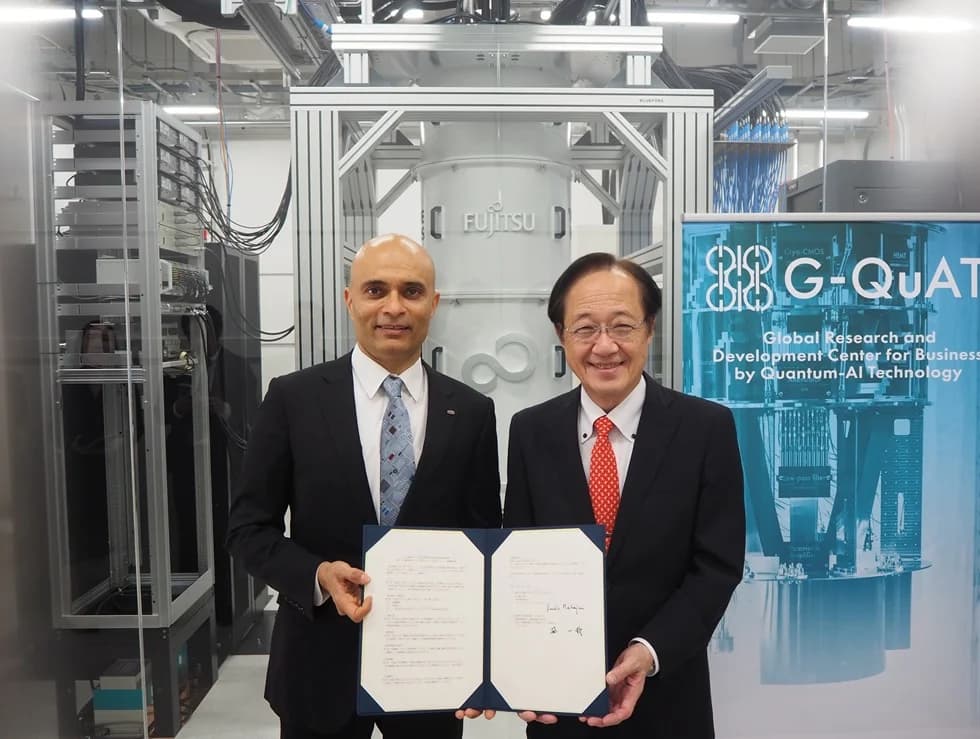
The Milner Institute Yonsei collaboration represents a milestone in cross-border quantum research, blending Cambridge’s AI-enabled drug discovery capabilities with Yonsei University’s momentum in quantum technologies. In April 2025, the Milner Therapeutics Institute announced a Memorandum of Understanding with Yonsei that frames joint research programs, researcher exchanges, and shared events across quantum computing and related fields. The signing ceremony drew attention not only for the formal agreement but for the breadth of participation: more than 20 Cambridge professors spanning medicine, chemistry, mathematics, and physics engaged in detailed strategy discussions and planning. This milestone is underscored by Yonsei’s plan to utilize Korea’s IBM Quantum Computer—the first of its kind deployed on Korean soil—to pursue practical joint research with Cambridge, signaling a new era of international collaboration at the intersection of quantum tech and biomedicine. (milner.cam.ac.uk)
The partnership sits within a broader wave of Korean–Cambridge collaboration in bioscience and quantum science. A separate Milner-MOU with KRIBB (Korea Research Institute of Bioscience and Biotechnology) in 2023 has already catalyzed cross-institutional activities, including discussions about establishing a European research outpost in Cambridge and integrating cell therapy, organoid screening, and AI-enabled drug discovery into joint programs. Taken together, these developments illuminate a growing global network around Milner’s translational science mission, with Yonsei representing a high-visibility expansion into quantum-enabled life sciences. (milner.cam.ac.uk)
Opening paragraph note: The Cambridge–Yonsei collaboration is not isolated; it sits within a broader internationalization of quantum and AI-enabled life sciences that Milner has been cultivating for years. The Milner Institute has publicly highlighted the value of cross-border affiliates and joint research networks as a core strategic priority, including a push to broaden access to industry-grade platforms and to accelerate translational outcomes. The inclusion of Yonsei into this ecosystem—along with KRIBB and other partners—signals a deliberate move toward quantum-enabled drug discovery and clinical translation. This analysis outlines what’s happening, why it matters now, and what to expect in the next 6–12 months as the Milner Institute Yonsei collaboration matures. (milner.cam.ac.uk)
What’s Happening
International MOUs Expand
The April 2025 MOU between the Milner Institute at the University of Cambridge, the Cambridge Stem Cell Institute, and the Cambridge Centre for AI in Medicine with Yonsei University marks a formal cross-border research agreement focused on quantum computing and quantum information science. The collaboration aims to activate joint research projects, researcher mobility, and co-hosted events that accelerate translational outcomes. Yonsei’s commitment to leveraging Korea’s IBM Quantum Computer for practical joint work with Cambridge signals a tangible hardware anchor for the partnership. This arrangement follows Milner’s existing, multi-partner approach to international collaboration, which has historically combined academic excellence with industry-scale capability. (milner.cam.ac.uk)
Shared Quantum Platforms
A central feature of the Milner–Yonsei collaboration is access to quantum hardware as a co-developed research resource. Yonsei plans to utilize the IBM Quantum Computer—the first such system implemented in Korea—to pursue joint projects with Cambridge in quantum computing and quantum information science. This hardware collaboration underscores a broader trend of quantum hardware becoming a strategic enabler for international academic partnerships, moving beyond theoretical work toward practical experiments that can inform drug discovery, biomarker research, and precision medicine. The emphasis on hardware access helps de-risk joint projects and creates concrete pathways for co-authored outputs. (milner.cam.ac.uk)
Talent Mobility and Exchanges
Executive leadership and cross-appointment activity further define the Milner–Yonsei role. In parallel with the MOU, leaders from Milner and Yonsei, including prominent researchers in AI and quantum information, have signaled ongoing talent exchange. Notably, the Milner Institute has already integrated Korean researchers into its ecosystem through joint appointments and collaborative programs. For example, Namshik Han, Milner’s Head of AI and Computational Research, has pursued cross-border collaboration and is associated with Yonsei’s quantum initiatives, reinforcing the strategic emphasis on shared talent and knowledge transfer. This cross-pollination is expected to accelerate algorithm development, data integration, and accelerator-based experimentation. (linkedin.com)
Early Engagement and Community Building
Beyond formal MOUs, the initial engagement included synthetic “triangulation” activities—workshops, campus visits, and participation in events such as the Cambridge AlphaFold Workshop. A signing ceremony attended by more than 20 Cambridge professors illustrates the scale of institutional buy-in and the confidence in rapid follow-on activities, including joint research planning and potential multi-institution workshops. The immediate post-signing discussions focused on concrete collaboration strategies and programmatic milestones, indicating a seriousness about translating the MOU into tangible projects. (milner.cam.ac.uk)
A quick comparison of Milner’s collaboration models within Korea helps illustrate how Yonsei fits into a broader blueprint. In addition to Yonsei, Milner has established partnerships with KRIBB (cell therapy, organoid screening, AI-enabled drug discovery) and affiliate networks with KPBMA (Korea Pharmaceutical and Bio-Pharma Manufacturers Association) to extend cross-border collaboration. These relationships demonstrate a multi-layered approach to international engagement—ranging from university-to-university to industry-to-academia—built to accelerate translational science through shared expertise and resources. (milner.cam.ac.uk)
A Quick Comparison of Milner Collaboration Models
| Collaboration | Focus | Agreement Type | Notable Outcomes |
|---|---|---|---|
| Milner–Yonsei (2025) | Quantum computing and quantum information science in biomedicine | Memorandum of Understanding (MOU) | Joint research programs, researcher exchanges, >20 Cambridge professors engaged; Yonsei to access Korea’s IBM Quantum Computer; events like Cambridge AlphaFold involvement. (milner.cam.ac.uk) |
| Milner–KRIBB (2023) | Cell/gene therapy, organoid screening, AI-enabled drug discovery | Memorandum of Understanding (MoU) | Discuss European research outpost in Cambridge; cross-disciplinary collaboration across biotech and AI; alignment with UK–Korea tech accords. (milner.cam.ac.uk) |
| Milner Affiliate – KPBMA (2021) | Pharmaceutical industry collaboration and network expansion | Affiliate partnership | Broadening international pharma/biotech ties; access to new networks for collaboration and inward investment in Cambridge. (milner.cam.ac.uk) |
The MOU with Yonsei thus sits at the intersection of hardware-enabled quantum research, cross-institutional academic exchange, and translational science that Milner has methodically cultivated since its inception. This multi-pronged approach is not just about co-authorship; it’s about co-creating research infrastructure, talent pipelines, and strategic opportunities for industry engagement across geographies. The existence of a hardware anchor (IBM Quantum Computer access) is a salient differentiator compared with partnerships that focus primarily on human capital or data platforms. (milner.cam.ac.uk)
Who’s Affected
- Researchers and PhD students at Cambridge and Yonsei who gain access to cross-border projects and shared facilities.
- The broader Cambridge life sciences and quantum computing ecosystems, which benefit from international projects, workshops, and joint publications.
- Industry partners and investors who watch translational pipelines emerge from joint programs, potentially accelerating drug discovery pipelines and new quantum-enabled workflows.
- Policy and funding bodies in the UK and Korea, observing the maturation of formalized international collaboration as a model for future research ecosystems. KRIBB’s and Yonsei’s partnerships have both visible policy implications (e.g., outpost discussions, tech accords) that influence funding and collaboration rules. (milner.cam.ac.uk)
Why It’s Happening
Market Forces and Global Demand

The quantum computing market is expanding rapidly as governments, universities, and industry players commit resources to hardware, software, and application layers. Market analyses project substantial growth across the 2025–2030 horizon, with credible projections ranging from roughly $1.4–$1.5 billion in 2024 to upwards of $4–$4.2 billion by 2030, depending on the source and scope. These trends are reinforced by rising demand for quantum-enabled drug discovery, optimization, and materials research, which helps fund collaborative efforts like the Milner–Yonsei collaboration. McKinsey’s Quantum Technology Monitor and leading market researchers emphasize that quantum computing could become a multi-decade, multi-trillion-dollar ecosystem as breakthroughs translate into real-world products and services. While projections vary, the signal is clear: cross-border partnerships in quantum research are accelerating in both scale and ambition. (mckinsey.com)
Tech and Social Drivers
- Hardware accessibility: As highlighted by the Yonsei–Cambridge agreement, access to state-of-the-art quantum hardware (IBM’s Q System) is a strategic lever for joint research and translational outcomes. These hardware anchors reduce the time to first results and increase the credibility of cross-institutional programs. (milner.cam.ac.uk)
- AI-accelerated discovery: The Milner Institute’s emphasis on AI as a companion to quantum computing—especially in drug discovery and multi-omics analysis—reflects a broader trend to fuse AI with quantum methodologies to tackle high-dimensional biological data. The Yonsei collaboration explicitly aligns quantum research with Cambridge’s AI-driven drug discovery capabilities. (milner.cam.ac.uk)
- Policy and funding ecosystems: The KRIBB MoU, as part of the UK–Korea Accord and related government-level initiatives, demonstrates how national strategies are converging on cross-border research as a lever for economic and scientific impact. This structural backdrop creates favorable conditions for joint ventures like Milner–Yonsei. (milner.cam.ac.uk)
Industry and Academic Ecosystem Dynamics
- Milner’s multi-partner model has evolved to include university centers, national labs, and industry affiliates. The Milner Consortium, for example, has delivered more than 40 joint projects with an investment exceeding £12 million, underscoring a track record that makes new collaborations more attractive to both researchers and industry sponsors. This historical context informs the confidence surrounding Milner–Yonsei and similar partnerships. (milner.cam.ac.uk)
- Cross-border talent pipelines are increasingly viewed as a core asset for translational research. The recruitment and cross-appointment of senior researchers (for example, Namshik Han’s involvement with Yonsei and Milner) illustrate how human capital moves are a central mechanism for sustaining long-term collaboration. (linkedin.com)
Acknowledging the Korea–Cambridge Quantum Corridor
The Milner Institute–Yonsei collaboration is part of a broader Cold War-era-level of global scientific exchange in modern disguise: a high-trust, multi-institutional research corridor that links Cambridge’s AI and biomedical strengths with Yonsei’s quantum capabilities. The MOU forms a blueprint for joint projects, exchange of researchers, and shared capabilities that could yield joint publications, co-developed curricula, and new research facilities—potentially culminating in co-funded centers or outposts in Europe, Korea, or both. These strategic moves align with KRIBB’s 2023 collaboration in Cambridge and with other cross-border partnerships in the Milner network. (milner.cam.ac.uk)
What It Means
Business Impact
- Translation pipelines accelerate: Joint quantum–biomedicine programs can compress discovery timelines, enabling earlier go/no-go decisions for drug targets and therapeutic strategies. The combination of Yonsei’s quantum capabilities with Cambridge’s AI-heavy drug discovery processes can yield integrated workflows that test hypotheses faster and with richer multi-omics data. This could attract more industry collaborators to Milner’s bio-incubator ecosystem and potentially unlock new translational funding streams. The presence of a hardware anchor (IBM Quantum System access) also strengthens the business case for industry partners seeking to prototype quantum-enabled services. (milner.cam.ac.uk)
- International grant leverage: The MOU and related partnerships position Cambridge–Yonsei as a compelling platform for jointly applying to international grants and consortia that fund cross-border research in quantum information and life sciences. The KRIBB and Cambridge alignment demonstrates a growing appetite among funders to back cross-border translational initiatives with measurable milestones. (milner.cam.ac.uk)
Consumer and Patient Effects
- Drug discovery acceleration: If the Milner–Yonsei collaboration delivers on AI-augmented quantum approaches to molecular targets, the downstream effects could include faster identification of novel drug targets and more efficient preclinical pipelines. While immediate patient impact hinges on subsequent clinical development, the collaboration creates a pipeline of translational research that could shorten the time from target discovery to therapy. This aligns with Milner’s long-standing emphasis on turning basic science into therapies. (milner.cam.ac.uk)
- Improved risk assessment in biotech investment: As cross-border collaborations mature, investors gain visibility into longer, more diversified translational programs that span hardware, software, and biology. Partnerships with prestigious institutions like Yonsei can increase both credibility and access to international funding sources, potentially improving the risk-adjusted return profiles for portfolio biotechnology ventures connected to Milner’s ecosystem. (milner.cam.ac.uk)
Industry Shifts
- Cross-border R&D engines become standard: The Milner–Yonsei collaboration serves as a case study in a broader shift toward multinational, cross-disciplinary R&D ecosystems that blend quantum hardware access, AI-driven analytics, and wet-lab translational science. This model could influence how other universities and biotech hubs structure international partnerships, particularly in quantum-enabled life sciences and drug discovery. The KRIBB experience provides a precedent and a blueprint for similar initiatives elsewhere. (milner.cam.ac.uk)
Looking Ahead
6–12 Month Outlook
- Joint project pipelines and pilot studies: In the 6–12 month horizon, expect the Milner Institute Yonsei collaboration to yield at least a few joint research projects that combine Yonsei’s quantum hardware access with Cambridge’s AI-enabled discovery pipelines. Early publications, conference talks, and preprint collaborations are likely as teams converge on test cases in drug discovery and quantum information science. The initial signing and the involvement of a broad Cambridge professor network strongly support near-term deliverables. (milner.cam.ac.uk)
- Talent exchanges and short-term secondments: Expect structured researcher exchanges and visiting fellowships aimed at bridging theory and practice, enabling Cambridge and Yonsei to co-develop tools, datasets, and curricula that advance both quantum methods and translational biology. This aligns with Milner’s past emphasis on talent mobility as a core driver of collaboration success. (milner.cam.ac.uk)
- Community-building events and hands-on workshops: In the wake of the initial MOUs, joint seminars, hackathons, and themed workshops featuring AI, quantum, and biomedicine are likely. The AlphaFold workshop and other targeted events in Cambridge demonstrate how such gatherings can catalyze idea generation and project formation. (milner.cam.ac.uk)
Opportunities for Partners
- Private-sector participation: Pharmaceutical and biotech firms may seek to participate in Milner–Yonsei projects that sit at the interface of quantum computation and AI-assisted drug discovery. Given Milner’s existing consortium and international affiliations, sponsor engagement could expand to shared risk-reward models and sponsored research initiatives. The Milner Consortium history underscores the potential for industry-vetted collaboration with measurable outcomes. (milner.cam.ac.uk)
- Academic expansion and spin-out potential: As joint outputs accumulate, there could be opportunities to form spin-outs or new academic programs that leverage quantum-enabled biomedicine, potentially attracting tertiary-level funding or creating new training pipelines for engineers and biologists. Namshik Han’s cross-appointments and Yonsei’s quantum program expansion signal talent and programmatic growth that could feed new ventures. (linkedin.com)
Preparation Guidance for Institutions Eyeing Similar Partnerships
- Align hardware access with translational goals: A formal hardware resource (e.g., a national or partner quantum computer) can anchor collaboration activities and accelerate project milestones. Ensure arrangements include clear data-sharing protocols, joint publication plans, and equal representation in governance structures. The Milner–Yonsei arrangement demonstrates how to anchor collaboration with a concrete, high-value asset. (milner.cam.ac.uk)
- Build cross-disciplinary teams early: The initial engagement with 20+ Cambridge professors across disciplines signals the importance of broad-based buy-in. For any new collaboration, assemble a diverse committee to map potential use cases, data requirements, and regulatory considerations early in the process. (milner.cam.ac.uk)
- Leverage existing networks to scale quickly: Milner’s existing KRIBB and KPBMA partnerships provide a blueprint for expanding international networks with complementary strengths. Institutions pursuing similar models should identify anchor partners with aligned strategic goals and complementary capabilities. (milner.cam.ac.uk)
Closing
The Milner Institute Yonsei collaboration exemplifies a data-driven, forward-looking trend in cross-border quantum research with translational potential. By pairing Yonsei’s quantum expertise and Korea’s on-site hardware with Cambridge’s AI-driven drug discovery and strong biomedical programs, this partnership encapsulates a modern model for accelerating science at scale. Early milestones—such as the MOU signing, hardware access, and the involvement of a large, multi-disciplinary Cambridge cohort—signal a concrete path from agreement to actionable research outputs. As the next 6–12 months unfold, stakeholders should watch for joint projects, talent exchanges, and event-driven milestones that translate the promise of quantum-enabled life sciences into tangible advances for science and, ultimately, patient outcomes. The Milner Institute Yonsei collaboration thus sits at the heart of a broader, global trend toward integrated quantum bioscience partnerships, with real potential to redefine how international collaborations deliver translational impact. (milner.cam.ac.uk)