Local Power Plan 2026 Labour: Community Energy Push

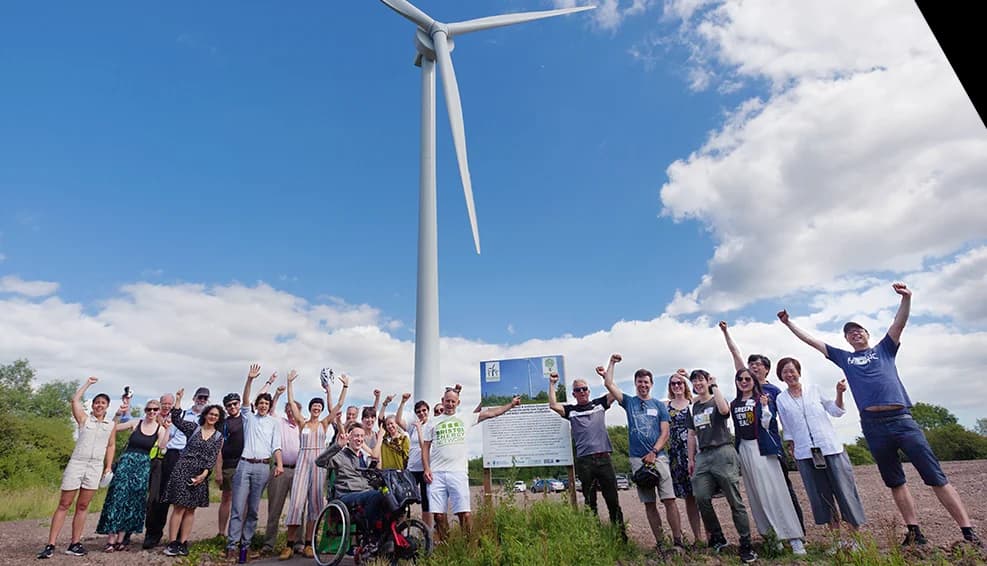
The Cambridge Review is delivering a data-driven update on the Local Power Plan 2026 Labour, a policy initiative designed to expand local and community ownership of energy across the United Kingdom. Announced in early February 2026, the Local Power Plan represents a substantial step in aligning public investment with community-led energy generation, ownership, and resilience. The plan is framed as the largest public investment in community energy in the country’s history, with funding and structural reforms aimed at enabling local groups, councils, and co-operatives to own and operate a broad mix of energy projects. This development matters not only for energy policy and climate targets but also for regional economic development, municipal budgeting, and consumer bills in the years ahead. Its early reception has been framed by the broader political conversation around energy security, local governance, and the role of publicly owned energy entities in delivering a just transition. (gov.uk)
At the heart of the Local Power Plan is a clear mandate: empower communities to participate in energy generation and governance while ensuring real, tangible benefits, including lower bills for local services and households. The plan envisions a portfolio approach that combines grants, loans, advisory services, and scalable business models to accelerate the deployment of local and community-owned clean energy projects. In practice, this means that local authorities, cooperatives, and other community groups will be able to access funding and technical support to sponsor rooftop solar, small-scale wind, hydro, and other distributed energy resources, paired with finance and regulatory reforms intended to streamline project development. The policy is being advanced by Great British Energy (GBE) alongside the Department for Energy Security and Net Zero (DESNZ), reflecting a cross-government effort to institutionalize local ownership as a central pillar of the UK’s energy transition. The initial public framing describes Local Power Plan as a pathway to cut bills, strengthen energy resilience, and build local wealth through ownership and participation. For readers seeking how this fits within the broader political landscape, Labour’s energy platform and long-term policy discussions provide important context, even as the Local Power Plan remains a government initiative rather than a party program alone. (gov.uk)
What Happened
Announcement date and key actors
On February 9, 2026, the UK government released the Local Power Plan, with updates and accompanying materials published through February 11, 2026. The policy paper, issued by Great British Energy (GBE) and the Department for Energy Security and Net Zero (DESNZ), positions Local Power Plan as a major public investment and a structural shift toward local energy ownership. The plan emphasizes that communities directly benefit from the energy they help to produce and outlines a framework for scaling local and community-owned clean energy projects across the country. The accessible webpage and the main policy paper both confirm the publication date and the strategic intent to move from a centralized model to a more bottom-up, community-driven energy system. Key figures cited in official materials include a commitment to up to £1 billion of funding and a roadmap to support thousands of local projects over the coming years. The plan explicitly invites local groups to submit proposals and emphasizes collaboration with local authorities and devolved governments. (gov.uk)
Quote from the foreword encapsulates the ambition: “Local and community energy is at the heart of our government’s vision. Local Power Plan is how we turn this around.” This framing underscores the government’s intent to pair public investment with local participation and ownership. Public officials stress that ownership matters for community wealth building, local services, and long-term energy resilience. (gov.uk)
Funding, scope, and immediate mechanics
The Local Power Plan commits up to £1 billion in funding as part of a broader package that includes grants, loans, advisory services, and new or improved regulatory and market frameworks designed to unlock local energy investment. The plan outlines a pathway to deploy a mix of energy technologies—onshore wind, solar, hydro, and other distributed resources—while developing standardized financing templates, revenue models, and governance structures that make it easier for communities to participate and sustain ownership over time. The plan’s “Our offer” section and forewords describe a multi-year program designed to scale from pilot projects to nationwide deployment, with the stated objective of enabling over 1,000 local and community projects by 2030 in the first phase. This is intended to complement ongoing public energy initiatives, including the establishment of a publicly owned energy company and related support mechanisms. In short, Local Power Plan is the centerpiece of a national push to broaden ownership, reduce bills, and stimulate community wealth through localized energy generation. (gov.uk)
Real-world examples and early progress
The Local Power Plan builds on a track record of community energy activity in the UK, including pilots and existing schemes where community groups have partnered with local authorities to deploy solar PV on public buildings, micro-hydro installations, and wind projects that generate local revenue streams. The plan highlights examples from Wales, Scotland, and England to illustrate what scalable local ownership can look like in practice. Early progress includes support for community energy organizations and public building projects that have already delivered tangible energy savings and revenue opportunities at the local level. According to the plan’s foreword and opening sections, these efforts demonstrate the feasibility and value of expanding local ownership through a formal national strategy. The document also signals that the Local Energy Platform and other finance and regulatory tools will be used to standardize processes and increase participation across diverse communities. (gov.uk)
Labour context and the energy policy milieu
While Local Power Plan is framed as a government initiative, it sits within a broader political context in which Labour has publicly articulated a cluster of energy and ownership objectives. Labour’s policy platform has long called for a publicly owned energy company and a stronger emphasis on local ownership and worker/consumer participation in energy projects, including plans to scale Great British Energy (GBE) and to advance local ownership through a suite of financing and regulatory reforms. The Labour Party’s own materials outline a strategy to increase public control over energy and to deliver affordable, clean power, with specific emphasis on local energy production and job creation as part of a broader transition to a secure, low-carbon economy. These policy positions provide planks of continuity with the Local Power Plan’s goals, even as the plan itself is presented as a cross-government effort. For readers tracking the broader political debate, Labour’s published materials on GB Energy and the wider energy platform illustrate how party priorities intersect with, and influence, national energy strategies and the environment in which Local Power Plan operates. (labour.org.uk)
Timeline and milestones
The publication date (February 9, 2026) and the update on February 11, 2026 mark the policy’s cradle-to-launch phase. The plan’s documentation emphasizes the immediate invitation to local groups to submit proposals and the ongoing work with Ofgem, NESO, and other regulatory bodies to “unlock the growth of local and community energy” through policy and regulatory changes. The plan articulates a milestone-driven approach that will be evaluated through 2026-27 and beyond, with a stated aim to empower more communities to participate in ownership and decision-making around energy projects. The plan also references existing or parallel programs (like the Pride in Place and Community Right to Buy initiatives) to situate Local Power Plan within a portfolio of place-based approaches to energy and community wealth. This timeline is critical for reporters and readers who need concrete, date-stamped markers for government action and project procurement windows. (gov.uk)
What the plan tries to fix
The Local Power Plan is positioned as addressing market barriers and governance gaps that have limited local ownership in the past. It points to issues such as access to finance, regulatory friction, and the lack of standardized procurement and ownership models as key bottlenecks. By introducing a centralized funding pool, streamlined processes, and a coordinated platform (the Local Energy Platform concept), the plan aims to de-risk local involvement and to diversify the ownership base beyond traditional public or private actors. Forewords in the plan emphasize shifting from a “one-way street” energy system to a more participatory model where communities become stakeholders in the energy future. These arguments—coupled with the plan’s explicit targets—give reporters concrete angles to explore when examining the policy’s feasibility, equity implications, and potential for job creation and regional development. (gov.uk)
Why It Matters
Local ownership as a driver of bills and resilience

One of the core claims of Local Power Plan is that community ownership can directly influence household and public-sector bills by cutting energy costs at source and by keeping value within communities. The plan’s foreword and narrative repeatedly tie local ownership to lower bills for local services—such as leisure centres, schools, and public buildings—alongside improved energy resilience and community wealth generation. The policy paper explicitly frames ownership as a mechanism for distributing the benefits of clean power more broadly, with local communities receiving returns that can be redeployed into local priorities. The emphasis on tangible, recurring savings for public sector assets is a practical hook for local taxpayers and council leaders facing tight budgets. The plan also ties ownership to long-term risk reduction by diversifying energy supply locations and reducing exposure to centralized price fluctuations. (gov.uk)
Economic and employment implications
Beyond bills, the Local Power Plan outlines goals for job creation, skills development, and local industrial opportunity. The Local Power Plan’s ambition to support thousands of local projects, alongside the creation of a platform for financing and ownership, is framed as a means to build local economic ecosystems. The plan’s forewords repeatedly reference local jobs and wealth-building as intertwined with clean energy deployment. Analysts can assess likely employment effects by examining the types of projects—rooftop solar in public buildings, community wind, micro-hydro schemes, and distributed storage—and the supply chains they would catalyze across construction, operation, and maintenance. The broader Labour policy context, with its emphasis on public ownership and local, labor-supported energy development, provides a complementary frame for evaluating the plan’s potential to generate skilled jobs and regional economic benefits. (gov.uk)
Regional and demographic considerations
The Local Power Plan is designed to be national in scope, yet the opportunities and challenges will be uneven across regions. The plan highlights community energy activity in Wales, Scotland, and England as evidence of the feasibility and social value of local ownership, but it also underscores the need for tailored local strategies that account for geography, grid access, and local finance capacity. Analysts can scrutinize how the plan’s funding and regulatory reforms will play out in high-renewables regions versus those with less natural resource density. The plan’s approach to co-create products with communities, local authorities, and financial partners points to a collaborative governance model that could help address regional disparities if implemented with robust local engagement, capacity-building, and transparent evaluation. (gov.uk)
Public sentiment, trust, and democratic legitimacy
A recurring thread in the Local Power Plan discourse is trust: communities owning energy, sharing the proceeds, and having a say in investment choices. Public forewords and the plan’s emphasis on local ownership are designed to strengthen democratic legitimacy for energy transitions, particularly at a moment when energy policy intersects with local governance, municipal budgets, and social equity concerns. Critics may ask how the plan’s public investment interacts with private sector risk and whether it might crowd out other essential infrastructure investments. Proponents, meanwhile, argue that local ownership can improve legitimacy and accountability by ensuring that energy decisions reflect local preferences and priorities. The plan’s explicit invitation to community groups to submit proposals is designed to create visibility and participation that could, over time, translate into broader public support for energy transition goals. (gov.uk)
Labour policy alignment and differences
Labour’s public-facing energy platform emphasizes Great British Energy (GBE) and local energy ownership, aligning with parts of Local Power Plan’s philosophy even as the plan operates as a government initiative rather than a party program. Labour’s advocacy for public ownership, investment in domestic energy production, and a framework to secure affordable, clean power resonates with the Local Power Plan’s objectives to empower communities and to decouple energy resilience from volatile fossil fuel markets. The party’s materials underscore a vision of a cleaner, more secure energy system with a strong domestic economy, including a public role in financing and coordinating energy projects at scale. Observers should note the nuanced distinction: Local Power Plan is the government’s policy vessel for delivering these aims, while Labour’s platform provides the political and policy backdrop that shapes public expectations about ownership, investment scale, and the long-term direction of the energy transition. (labour.org.uk)
Comparative landscape: how Local Power Plan fits with ongoing energy reforms
In the broader energy policy landscape, Local Power Plan intersects with other major reforms and investments, including grid modernization, energy storage development, and regulatory reforms designed to unlock private and public capital for local projects. The plan’s emphasis on a Local Energy Platform and standardized financing mechanisms is designed to reduce transaction costs and create replicable models that community groups can deploy in multiple regions. This standardization is critical for practical scaling, as it helps reduce the time between concept and project realization and increases the likelihood that successful models can be reproduced elsewhere. Reports from government sources describe how the Local Power Plan will work with Ofgem, NESO, and other actors to streamline access to markets and to unlock new revenue models, including consumer-led flexibility and virtual PPAs, which could have implications for local energy markets, utility business models, and consumer prices. For readers seeking a macro view, this alignment across policy, regulatory, and financial instruments is a notable feature of the Local Power Plan and a key variable in evaluating its potential impact on energy affordability and security. (gov.uk)
What's Next
Timeline projections and near-term steps
Looking ahead from the February 2026 publication, the Local Power Plan outlines a phased approach to rollout. In the immediately upcoming months, communities and local authorities are expected to start submitting proposals, with the expectation that the Local Energy Platform, financing mechanisms, and regulatory adjustments will begin to take shape in 2026-27. The plan signals ongoing collaboration with central and devolved governments, along with regulatory bodies, to simplify shared ownership offers and improve access to local capital markets. Observers should track the plan’s progress through government updates, quarterly performance reports, and the evaluation of pilot projects, as well as the uptake by local authorities and community energy groups. The plan’s architecture is designed to support a rapid initiation in 2026-27, followed by a broader scale-up toward 2030 and beyond, with a target that by 2030 every community in the UK will have the opportunity to own a local energy project. The milestones and measurement criteria will be essential for assessing the plan’s effectiveness and equity outcomes. (gov.uk)
Next steps for communities, Local Authorities, and investors
For communities and local authorities, the Local Power Plan offers a clear call to action: identify suitable buildings, sites, and community energy opportunities; form or join local ownership entities; engage with Great British Energy and DESNZ through the Local Energy Platform; and prepare proposals that align with the plan’s standards and funding pathways. Investors and lenders will be watching for standardized financing products, risk-sharing models, and performance metrics that enable bankable local projects. The plan’s emphasis on partnerships—with public buildings, housing bodies, schools, and local enterprises—suggests a multi-stakeholder approach to project development. It also signals a need for capacity-building and technical assistance for communities that may lack prior experience with energy project development, financing, and governance. Journalists and analysts should monitor government briefings, local authority workshops, and community energy forums for real-time updates on application processes, funding rounds, and the early projects that will set the tone for future rounds. (gov.uk)
What to watch for in the policy’s implementation
The success or challenges of Local Power Plan will hinge on several factors: the speed and efficiency of funding disbursement, the effectiveness of the Local Energy Platform in standardizing processes, and the degree to which regulatory reforms reduce friction for community-owned projects. Additionally, the plan’s ability to deliver real, measurable energy savings and local wealth generation will be a critical gauge of its value to households and public services. Regional variations in grid capacity, administrative readiness, and local political support will likely influence project pacing and scale. Media coverage and independent analysis will be important to track, as the plan’s outcomes—lower bills, job creation, local ownership shares, and grid resilience—are inherently linked to the plan’s design details and implementation fidelity. The newspaper and think-tank communities are likely to produce longitudinal studies and case analyses in the coming years, which will be valuable for readers seeking to understand the plan’s real-world impact across different communities and sectors. (gov.uk)
Closing
The Local Power Plan 2026 Labour, as presented by government sources in February 2026, marks a hallmark shift toward locally owned clean energy and community wealth building. While the plan is officially a government initiative, its trajectory sits squarely within Labour’s broader energy policy discourse, which emphasizes public ownership, domestic energy development, and a more participatory energy system. For readers of the Cambridge Review, this coverage highlights how a nationwide policy can manifest locally—through new funding, new governance structures, and new opportunities for communities to participate in and benefit from energy development. The immediate takeaway is clear: communities across the UK are invited to propose local energy projects, with an unprecedented level of public support and funding designed to turn plans into tangible projects that reduce bills, bolster resilience, and create local jobs. The coming months will reveal how quickly and effectively local actors can mobilize, access capital, and navigate regulatory pathways to bring these projects from idea to operation. In a broader sense, the Local Power Plan is a litmus test for how public policy, private finance, and community initiative can intersect to deliver a cleaner, cheaper, and more democratic energy future.

To stay updated, readers should follow official updates from Great British Energy and DESNZ, monitor local council agendas for energy proposals, and review independent analyses of pilot projects as they roll out. For policymakers and researchers, the plan provides a framework for evaluating the efficacy of local ownership as a tool for energy security and affordability, while for communities it offers a practical pathway to participate in the energy transition and to reap the benefits directly in their neighborhoods. The conversation around Local Power Plan 2026 Labour is far from finished, but the message from the policy’s early months is one of invitation, collaboration, and tangible opportunity for communities to own the energy future they power. (gov.uk)