Global Cultural Heritage AI Governance 2026
Neutral, data-driven analysis of Global cultural heritage AI governance 2026: reforms, stakeholder roles, and market implications.
 By Harriet Lockwood · 5 June 2026 · 15 min read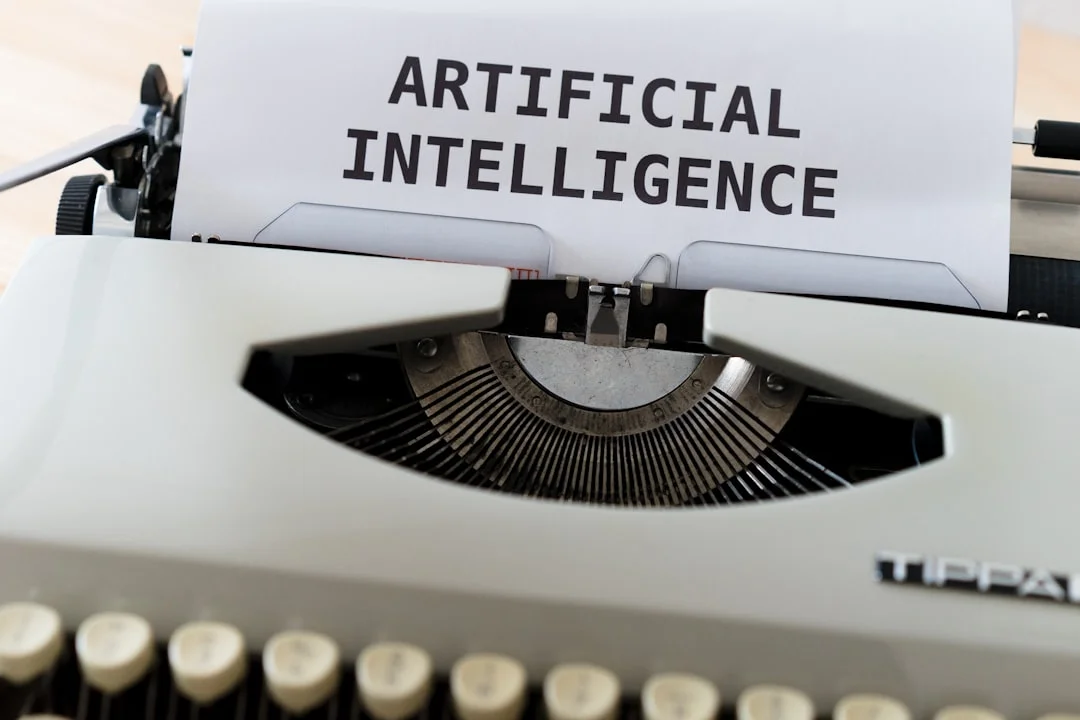
The Cambridge Review brings you a data-driven briefing on Global cultural heritage AI governance 2026, a year poised to redefine how institutions preserve, present, and protect culture through artificial intelligence. On the global stage, policy makers, technologists, and cultural institutions are aligning around a set of emergent frameworks designed to balance innovation with preservation and public trust. With major international dialogues expected to shape norms in 2026, the announcement of a Global Dialogue on AI Governance set for Geneva in early July marks a turning point for how AI intersects with World Heritage, libraries, archives, and museums. The gathering, led by a coalition headed by UNESCO, the International Telecommunication Union, and the UN Office for Digital and Emerging Technologies, signals an intention to codify governance principles that can operate across borders and cultures, while grounding them in transparency, accountability, and human rights. This development matters because it directly influences how cultural data is created, stored, and shared, and it could determine the pace at which museums and archives adopt AI-powered tools for restoration, documentation, interpretation, and public engagement. (unesco.org)
In parallel, policymakers and industry bodies are advancing concrete regulatory steps that will shape every cultural institution’s AI journey. The European Union’s AI Act is moving into a new stage, with concrete transparency obligations set to take effect in August 2026, a milestone that will require providers and deployers of high-stakes AI systems to disclose intent, data usage, risk management, and decision-making processes to the public and to regulators. Meanwhile, several departments within the EU and UNESCO are releasing practical implementation guidance and governance manuals aimed at harmonizing cross-border efforts in heritage AI. May 8, 2026, for example, saw the publication of draft guidelines on Article 50 transparency obligations, underscoring a push toward consistent disclosure practices across jurisdictions. Together, these developments create a framework in which Global cultural heritage AI governance 2026 is not a single policy but a mosaic of standards, workflows, and participatory governance models that institutions can adapt to local contexts while maintaining global compatibility. (digital-strategy.ec.europa.eu)
Against this backdrop, Cambridge Review’s coverage also highlights on-the-ground experimentation and collaboration. In 2026, Cambridge is hosting initiatives that aim to translate AI research into practical tools for cultural heritage stewardship, with events designed to test governance models, secure data workflows, and develop capacity among curators and archivists. A key highlight is the AI for Cultural Heritage Hub project, a proof-of-concept space that emphasizes secure data analysis, privacy-by-design approaches, and transparent AI-assisted interpretation for public audiences. This Cambridge effort aligns with broader European and international work, signaling that 2026 may be a watershed year for field-tested governance practices that can scale across GLAM (galleries, libraries, archives, and museums) institutions. (cambridgereview.uk)
Section 1: What Happened
Global governance announcements and events
Over the course of 2026, international bodies have elevated AI governance as a central dimension of cultural policy. The Global Dialogue on AI Governance, scheduled for Geneva on July 6–7, 2026, is designed to create a shared policy space for stakeholders from UNESCO, ITU, ODET, and the EOSG to articulate a coordinated approach to AI in culture and heritage contexts. The dialogue aims to ground cross-border norms that address data sovereignty, digital preservation ethics, and the transparency required when AI systems influence public access to cultural assets. The event is framed as part of an ongoing effort to build a resilient governance architecture for AI that respects cultural rights, supports community stewardship, and fosters trust in AI-enabled cultural experiences. (unesco.org)

Photo by CHUTTERSNAP on Unsplash
UNESCO’s broader engagement on AI and culture is reflected in a suite of activities, including the ongoing World Heritage governance discussions and new resources that translate AI considerations into practical site management. The World Heritage Centre has published a new manual, Managing World Heritage, which provides a governance framework for site managers and partners to integrate AI-assisted monitoring, condition assessment, and risk analysis into conservation workflows. The manual emphasizes intersectoral collaboration, rights-based frameworks, and participatory governance to ensure that technology strengthens, rather than obscures, the cultural significance of sites. The release underscores how AI governance is being embedded into core heritage management practices at the field level, not just in policy debates. (whc.unesco.org)
In parallel, UNESCO has signaled its role in coordinating global AI governance through increasingly structured contributions from sectoral experts and national partners. The organization has published a set of contributions from its sectoral teams that outline expectations for the Global Dialogue and for the broader governance architecture, indicating a move toward increased legitimacy, knowledge sharing, and practical implementation guidance for heritage AI projects. This material situates the 2026 dialogue as a milestone within a longer arc of UNESCO-led governance-building, rather than a standalone event. (unesco.org)
New policy frameworks affecting cultural heritage AI
The European Union’s AI Act remains a central reference point for governance in cultural heritage contexts, particularly as it expands into practical transparency and accountability obligations. The EU’s Digital Strategy portal outlines the AI Act as a comprehensive regulatory framework for AI systems, with a progressive rollout of obligations that has tangible implications for GLAM organizations deploying AI tools for curation, restoration, and public-facing interpretation. A key feature that affects heritage institutions is the phased implementation of transparency rules, which are slated to take effect in August 2026. This regime places heightened emphasis on explaining AI-driven decisions to both users and regulators, a critical factor for museums and archives that rely on public trust and scholarly integrity. (digital-strategy.ec.europa.eu)
In the same regulatory ecosystem, the Global Partnership on Artificial Intelligence (GPAI) Code of Practice is presented as a voluntary set of practical guidelines to help providers and deployers align with the AI Act’s core obligations on transparency, safety, and copyright considerations. While voluntary, the Code of Practice is widely referenced in policy discussions as a near-term bridge between foundational legal requirements and day-to-day operational governance for cultural heritage AI projects. The combination of binding EU rules and voluntary global practices creates a layered governance landscape that heritage institutions will navigate in 2026 and beyond. (digital-strategy.ec.europa.eu)
Additionally, in May 2026, European policymakers released draft guidelines on the implementation of transparency obligations under Article 50 of the AI Act. These draft guidelines are intended to standardize how authorities assess and enforce transparency provisions, reducing cross-border friction for organizations that operate in multiple jurisdictions. The timing of these guidelines—published in May 2026—is particularly relevant for heritage institutions preparing to implement more transparent AI workflows in 2026, 2027, and the years that follow. (digital-strategy.ec.europa.eu)
Regional and institutional actions
Beyond the EU, regional and national initiatives are accelerating the adoption of AI in cultural heritage with governance guardrails. For example, CENL (the Conference of European National Librarians) published a volume in early 2026 focusing on AI’s role in cultural heritage preservation and access, illustrating the growing interest among national libraries in establishing governance norms for AI-assisted digitization, metadata creation, and digital repatriation of cultural materials. The publication highlights the need for harmonized standards that protect author rights, ensure public access, and maintain integrity in digitization workflows. While the work originates in the library sector, the implications extend to archives and museums that rely on similar AI-enabled processes. (current.ndl.go.jp)

Photo by Amin Hekmat on Unsplash
On the policy front, Horizon Europe’s heritage-themed program components in 2026 emphasize the governance of AI within cultural and creative industries (CCI), illustrating a concerted push to ensure that AI technologies support creativity and cultural diversity while safeguarding research commons and data sovereignty. The program documents stress cross-sector collaboration and the alignment of AI deployment with broader European cultural policy goals, underscoring that governance is not a narrow technical issue but a cross-cutting policy concern. (cordis.europa.eu)
Within the academic and NGO communities, scholarly work and practitioner-oriented publications are actively mapping governance gaps and proposing governance models for AI in culture. For instance, research on the regulation of AI in museums—grounded in EU law, GDPR, and UNESCO/Council of Europe ethics frameworks—offers practical insights into how institutions can classify AI systems by risk, manage data provenance, and implement transparent disclosure practices that align with anticipated EU requirements. While some of these studies are still evolving, they provide a critical knowledge base for cultural heritage institutions preparing for stricter governance in 2026 and beyond. (researchgate.net)
Section 2: Why It Matters
Impacts on museums, libraries, and archives
The governance developments surrounding Global cultural heritage AI governance 2026 have direct implications for GLAM institutions. AI-powered digitization and restoration workflows offer unprecedented capabilities for preserving fragile artifacts, stitching together damaged historical records, and making materials accessible to diverse audiences. At the same time, they raise questions about data provenance, model bias, and the integrity of digital reproductions. The new UNESCO manual for managing World Heritage integrates AI considerations into conservation planning, emphasizing rights-based governance and participatory decision-making to ensure that communities are not merely passive recipients of AI-enabled interpretation but active stewards of how cultural assets are presented and protected. For curators and conservators, this means adopting governance frameworks that clearly define data sources, model limitations, and human oversight mechanisms for AI-assisted conclusions about artifact authentication, restoration authenticity, or landscape-scale conservation planning. (whc.unesco.org)

Photo by Artur Matosyan on Unsplash
Libraries and archives face parallel challenges and opportunities. National libraries are increasingly evaluating AI tools for metadata enhancement, digitization throughput, and multilingual access, while seeking to preserve the integrity and authenticity of digital surrogates. The CENL volume on AI and cultural heritage demonstrates a collective push toward standards that balance automation with scholarly rigor and user rights. In practice, institutions will need to implement robust data governance, maintain audit trails for AI decisions, and ensure that digital surrogates remain faithful representations that scholars can rely on. The regulatory backdrop, including the AI Act’s anticipated transparency obligations, reinforces the importance of documenting how AI systems operate, what data they use, and how outputs are vetted before public sharing. (current.ndl.go.jp)
Public trust is a central stakeholder consideration. As AI becomes more involved in selecting artifacts for display, curating virtual exhibitions, or generating interpretive narratives, the public’s ability to understand how those AI-driven outcomes were produced becomes part of the ethical baseline for cultural institutions. The EU’s emphasis on transparency, along with UNESCO’s rights-based governance approach, suggests a future in which visitors can access concise explanations of AI-assisted decisions—whether in a gallery label, an online data portal, or an in-gallery kiosk. This transparency is not merely a compliance exercise; it is a core element of ensuring that AI enhances understanding rather than obscuring provenance or cultural significance. (digital-strategy.ec.europa.eu)
Governance models and stakeholder roles
A central conclusion emerging from 2026 policy activity is that governance in AI for cultural heritage cannot be siloed within technical departments. It requires cross-disciplinary collaboration among curators, conservators, digital humanities researchers, data scientists, legal/compliance officers, and diverse community representatives. UNESCO’s governance architecture emphasizes participatory governance and inclusive frameworks, aligning with the broader human-rights-based approach that cultural heritage stewardship often requires. The evolving guidance also stresses accountability mechanisms, such as governance councils or ethics boards that include community voices and local Indigenous or descendant communities where relevant. In practice, this means new governance protocols for AI projects—covering consent for data use, open documentation of model capabilities and uncertainties, and ongoing community engagement throughout project lifecycles. (unesco.org)
From a market and technology perspective, the 2026 landscape features a mosaic of standards, best practices, and voluntary frameworks that institutions can adopt incrementally. The EU’s AI Act provides a legal backbone for high-risk AI systems, which may encompass certain image analysis, automated metadata tagging, or diagnostic tools used in artifact restoration. The GPAI Code of Practice and the forthcoming Article 50 guidelines help translate those legal requirements into concrete operational steps that museums and libraries can implement—such as model risk assessments, documentation of training data sources, and publicly accessible information about the decision-making processes embedded in AI tools. This layered approach—legal-technical-ethical—helps ensure that AI adoption in cultural heritage is both responsible and sustainable, reducing the risk of misinterpretation or misrepresentation of heritage data. (digital-strategy.ec.europa.eu)
Broader cultural policy considerations also shape governance. The World Heritage governance manual released by UNESCO and the ongoing dialogue at Geneva reflect a trend toward recognizing AI as a strategic instrument for cultural preservation and access rather than simply a productivity tool. By foregrounding participatory governance, the governance ecosystem seeks to ensure that communities retain agency over how their cultural heritage is represented and explored by automated systems. This is particularly important for communities with strong ties to living heritage practices, oral histories, and intangible cultural heritage, where AI-generated interpretations could have lasting cultural implications if not carefully managed. (whc.unesco.org)
Market implications and technology trajectories
The governance conversations of 2026 are tightly coupled with technology trajectories in AI for culture. Advances in AI-driven restoration, 3D reconstruction, archival digitization, and multilingual retrieval create opportunities to democratize access to cultural assets and accelerate scholarly research. However, these capabilities also increase the importance of robust governance to prevent misapplication, bias, or misattribution of authorship and provenance. The EU’s regulatory approach—tied to transparency and accountability—signals that the cultural heritage sector may see more standardized disclosure practices for AI-assisted workflows and more standardized expectations for data governance across institutions and borders. The result could be a more level playing field for smaller GLAM centers that historically faced resource constraints, enabling them to adopt governance frameworks with confidence, knowing there are interoperable standards and external oversight that protect public trust. (digital-strategy.ec.europa.eu)
Section 3: What’s Next
Timeline, milestones, and next steps
The coming months will feature a sequence of milestones that stakeholders should monitor to understand how Global cultural heritage AI governance 2026 unfolds. July 6–7, 2026, Geneva hosts the Global Dialogue on AI Governance, creating a high-visibility moment for policy-makers, industry leaders, and cultural institutions to align on governance models, data standards, and ethical norms. This event will likely yield concrete recommendations, working groups, and potentially draft norms that member states could adapt at national or regional levels. Institutions should prepare by aligning internal AI governance with anticipated guidance, including transparency documentation, data governance policies, and stakeholder engagement plans. (unesco.org)
August 2026 marks a pivotal regulatory milestone with the entry into force of the transparency rules under the EU AI Act. Cultural heritage actors operating in Europe—or serving European audiences via cloud-based platforms—will need to ensure their AI systems provide clear disclosures about purposes, datasets, and decision-making processes. Institutions outside the EU may experience indirect effects through supply chain requirements, cross-border data flows, and collaborations with European partners who must comply with EU obligations. Proactive planning now can reduce disruption when these rules take full effect. (digital-strategy.ec.europa.eu)
May 8, 2026, saw the publication of draft guidelines for Article 50 transparency obligations under the AI Act. While still in draft form at that point, these guidelines offer a practical reference for how authorities expect transparency duties to be interpreted and implemented. Museums, libraries, and archives should monitor the final guidelines and incorporate recommended disclosure formats, accessible explanations of AI outputs, and user-friendly documentation into their governance plans. (digital-strategy.ec.europa.eu)
February 19, 2026, the UNESCO World Heritage Centre announced the new Managing World Heritage manual, which integrates AI governance into site management practices. Organizations responsible for World Heritage properties will watch how this manual is adopted by national authorities and site managers, and how it might influence broader governance standards for AI in cultural heritage worldwide. For institutions outside UNESCO’s direct Sphere, the manual provides a useful blueprint for how AI governance considerations can be folded into conservation planning and stakeholder engagement processes. (whc.unesco.org)
In addition, Cambridge Review’s 2026 reporting on the Cambridge Arts-tech Collaboration—focusing on the AI for Cultural Heritage Hub and related events—points to a growing ecosystem of live, practically tested governance models. The hub’s aim to enable secure, auditable AI workflows for libraries, archives, and museums demonstrates how governance concepts translate into real-world applications, from data protection measures to interpretable AI outputs for diverse audiences. Institutions may look to these pilots as templates for piloting governance-enhanced AI tools in controlled settings before wider deployment. (cambridgereview.uk)
What to watch for next includes further UNESCO actions and potential regional statements, additional drafting of implementation guidelines, and new case studies from GLAM institutions that publish their governance learnings. Expect more cross-border collaborations on standards for data provenance, model transparency, and ethical storytelling in AI-enabled exhibitions. The coming months will also likely bring additional sector-specific publications, such as library science and museum studies outlets detailing practical governance checklists and auditing procedures for AI systems used in cultural heritage contexts. (unesco.org)
What institutions should do now
- Build and document an AI governance framework tailored to cultural heritage activities. This should include data provenance, model risk assessment, and an explicit human-in-the-loop process for critical decisions in restoration, classification, and interpretation.
- Align internal policies with the EU AI Act expectations, particularly around transparency and data usage. Even if an institution operates outside the EU, harmonizing with EU standards can facilitate international partnerships and grant opportunities.
- Establish participatory governance mechanisms that include community representatives, Indigenous or descendant communities where relevant, and other stakeholders who have a legitimate cultural stake. This aligns with UNESCO’s emphasis on rights-based, people-centered governance.
- Invest in capacity-building to train curators, conservators, and data scientists to work effectively within governance frameworks. Cross-disciplinary teams will be essential to ensure that AI tools are used responsibly and that outputs are well understood by both experts and the public.
- Develop auditable, public-facing explanations of AI-driven processes. Even simple labels or explainer panels that describe how an AI tool influenced a decision can strengthen trust and meet transparency requirements anticipated in 2026.
- Monitor regulatory developments and pilot programs in related sectors (libraries, archives, and museums) to stay ahead of compliance requirements and to adopt best practices as they emerge from the Global Dialogue and other official guidance. (digital-strategy.ec.europa.eu)
Closing
As 2026 unfolds, Global cultural heritage AI governance 2026 sits at the nexus of policy, technology, and cultural stewardship. The convergence of UNESCO dialogues, EU regulatory progress, and hands-on institutional pilots points toward a governance landscape in which AI enhances access, understanding, and preservation without compromising the integrity and rights at the heart of culture. For cultural heritage institutions, the coming year represents both an opportunity and a responsibility: to embrace transparent, rights-based governance that fosters trust, while pursuing innovative AI-enabled workflows that expand access to humanity’s shared heritage. Readers and practitioners should anticipate regular updates from UNESCO, the European Commission, and national libraries as these governance initiatives mature, and they should prepare now to integrate robust governance practices into AI projects that touch museums, archives, and libraries around the world. (unesco.org)
Conclusion
Global cultural heritage AI governance 2026 is unfolding as a multi-faceted program—one that blends international policy development with pragmatic, field-level governance. The news agenda centers on a July Geneva dialogue, progressive EU rules, and proactive manuals and pilots that together shape how cultural assets are preserved, described, and experienced in a AI-enabled era. Institutions that act now—aligning with transparency standards, embedding participatory governance, and building capacity—will be well positioned to steward heritage responsibly while unlocking new possibilities for public engagement, scholarship, and cultural resilience.