Global Climate Tech Breakthroughs 2026: News & Analysis

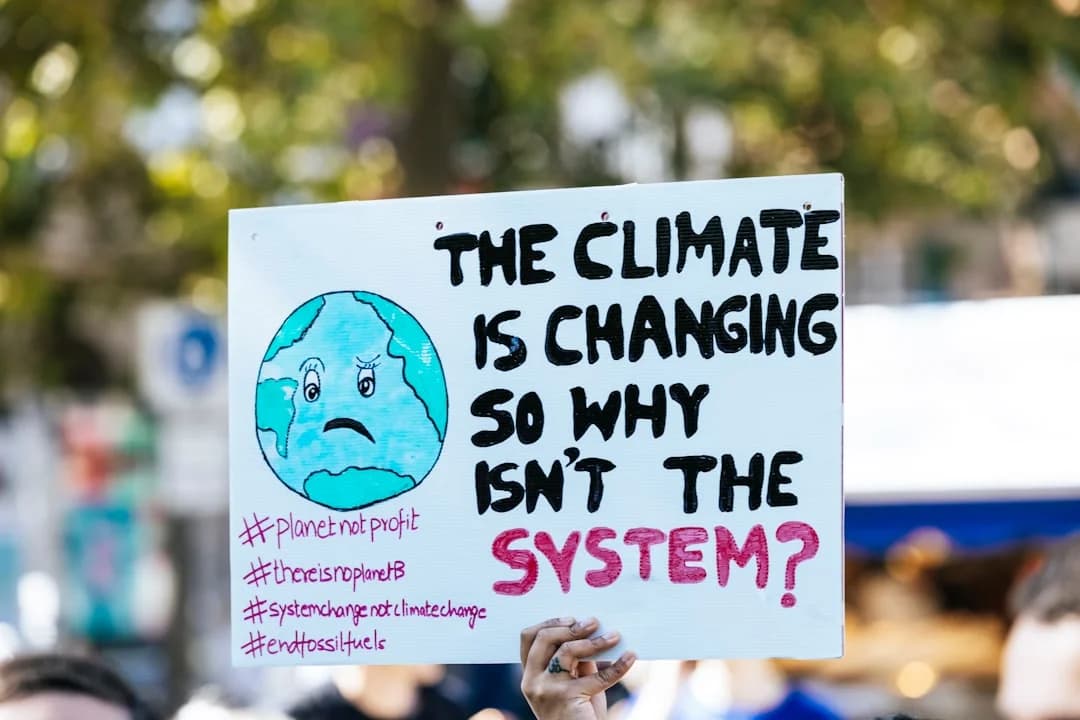
Photo by Markus Spiske on Unsplash
The year 2026 is shaping up as a watershed moment for global climate tech breakthroughs 2026, with several high-profile deployments and commercial efforts moving from demonstration to scale. In early 2026, industry trackers and policy observers are pointing to a growing convergence of carbon removal, low-carbon cement, and energy-transition infrastructure as a trio of levers that could push global emissions down at a faster clip than earlier forecasts assumed. The Cambridge Review is monitoring these developments through data-driven reporting, focusing on technology maturity, market implications, and policy signals. The latest deployments and funding rounds underscore that ventures once viewed as niche experiments are now entering industrial-scale operations, signaling a shift from aspirational net-zero pledges to measurable, near-term decarbonization outcomes. As researchers and executives repeatedly emphasize, the pace and cost trajectory of breakthroughs in 2026 will materially influence corporate strategies, government programs, and climate finance in the years ahead. The global climate tech breakthroughs 2026 narrative thus rests on a handful of anchor developments that combine technical feasibility with economic viability and policy alignment. (weforum.org)
Direct air capture, cement decarbonization, and finance-enabled scaling are at the center of the discourse this year. The world’s largest direct air capture (DAC) facility—Mammoth, operated by Climeworks and located in Hellisheiði, Iceland—has become a focal point for investors and policymakers alike. Mammoth’s nameplate capacity is 36,000 tonnes of CO2 per year at peak operation, representing a milestone in industrial carbon removal. The plant’s development began to take shape in 2024 and achieved a notable scale-up in 2025, with ongoing performance data guiding the roadmap toward gigaton-scale removal in the coming decades. As of 2026, Mammoth continues to serve as a reference point for the DAC sector, illustrating both the potential and the challenges of large-scale direct air capture. The broader narrative around Mammoth is complemented by industry-wide expectations that cost reductions and process efficiencies will continue as more DAC facilities come online and as accompanying storage solutions mature. The 2024–2025 timeline for Mammoth has been accompanied by broader media and technical coverage, highlighting the plant’s scale relative to earlier DAC pilots and the significance of permanent storage partnerships. (time.com)
In parallel, cement decarbonization—an area that clusters large-scale emissions with material demand—made tangible progress through Fortera’s ReCarb initiative. Fortera opened its first industrial green cement plant in Redding, California, in April 2024, a development that signaled practical decarbonization at scale for a commodity critical to infrastructure. The ReCarb plant is designed to capture CO2 emissions directly from cement kilns and convert them into cement products with far lower net emissions. At full operation, the plant is capable of producing about 15,000 tonnes of ReAct green cement annually while permanently mineralizing approximately 6,600 tonnes of CO2 each year. This is one of the largest demonstrated steps toward near-term cement decarbonization in North America and provides a deployment model that other cement facilities could emulate. The Fortera project has continued to evolve through 2025 and into 2026, reinforcing the view that decarbonization in heavy industry can be achieved with bolt-on or retrofit-friendly approaches that do not require complete plant replacement. (businesswire.com)
A broader policy and investment backdrop intensified around 2025–2026, with major industry and international actors signaling sustained momentum. The World Economic Forum, in its 2025 report on transformative innovations for climate action and planetary health, highlighted ten technology solutions with potential for rapid scaling—ranging from carbon-locking concrete to sustainable desalination and grid-responsive vehicles. The emphasis in 2026 remains on moving beyond pledges toward deployment that reduces risk and costs at scale, a shift that aligns with investor interest in climate tech as a credible long-term value proposition. The policy environment also continued to evolve, with cross-border collaborations and public-private partnerships shaping project pipelines and financing arrangements. (weforum.org)
In late 2025 and early 2026, DAC-related financing and corporate demonstrations continued to expand. Notably, Avnos—backed by a coalition including Shell and Mitsubishi Corp.—announced project-finance for a commercial DAC demonstration, signaling growing corporate willingness to back high-capital, long-gestation removal projects. Industry observers described this phase as a turning point: the technology was transitioning from R&D incentives to project finance and supply-chain integration. While DAC remains capital-intensive, the reference cases from 2024–2025 provided a proof-of-concept framework that allowed financiers to model long-duration payoff streams, making 2026 a year when more DAC projects are likely to begin locking in offtake arrangements and engineering contracts. (axios.com)
Beyond DAC and cement, 2026 coverage has also included accelerating advances in climate-tech solvents and materials, as researchers explore AI-guided discovery of lower-energy capture solvents and more stable long-term storage options. While these advances are still at varying stages of commercialization, they collectively contribute to a broader trend: climate tech breakthroughs 2026 are increasingly characterized by integrated value chains, where capture, storage, and utilization are linked to end-use markets and lifecycle economics. The academic and industry research communities have begun to publish practical explorations of novel solvents and process optimizations, signaling that the efficiency frontier in carbon capture and utilization is continuing to move. (arxiv.org)
Section 1: What Happened
Direct Air Capture scales up to industrial reality
Mammoth’s operational milestone and capacity
The Icelandic DAC facility Mammoth, operated by Climeworks, has become a central case study for large-scale direct air capture. Mammoth’s intention to capture tens of thousands of tonnes of CO2 annually places it among the first DAC facilities to approach meaningful removal at scale, well beyond earlier pilot-scale plants. The plant’s official capacity, at peak operation, is 36,000 tonnes per year. The deployment is accompanied by a partnership model that includes underground storage for permanent removal, aligning with Carbfix’s geologic storage approach. In public communications, Climeworks has framed Mammoth as a critical accelerator for the DAC industry’s cost-reduction curve and reliability improvements. While 2024 marked the plant’s commissioning and 2025 yielded a slower-than-expected ramp, 2026 projections and investor feedback suggest a path toward higher utilization and more predictable performance benchmarks. The broader industry response has been cautiously optimistic, noting that Mammoth demonstrates both the feasibility and the remaining engineering and logistical challenges of scaling removal. This milestone has influenced policy and financing conversations around the role of carbon removal in achieving climate targets. (time.com)
The economics and energy intensity of DAC
DAC facilities inherently require substantial energy input and balancing—electricity costs, heat integration, and energy supply reliability shape operating economics. In 2025, commentators highlighted the need to drive energy intensity down to make DAC competitive with other abatement options. Industry analyses through 2025–2026 have documented both improvements in process efficiency and ongoing cost challenges, underscoring that breakthroughs in energy efficiency and heat recovery will be pivotal to DAC’s long-run cost trajectory. Analysts have cited DAC cost curves in the context of policy support, electricity pricing, and storage capacity, arguing that the economics hinge on access to low-cost, low-carbon energy and durable offtake commitments. While Mammoth remains a reference point rather than a fully cost-competitive facility today, its existence helps calibrate expectations for future DAC projects and informs corporate and public-sector investment strategies. (europe.carbon-capture-conference.com)
Cement decarbonization moves from concept to commercial reality
Fortera’s ReCarb pathway and plant-level impact

Fortera’s Redding ReCarb plant opened in April 2024 as a leading example of industrial decarbonization that can be deployed within existing kilns and manufacturing lines. The facility demonstrates a bolt-on approach to capturing carbon dioxide from cement production and mineralizing it into cement products with a markedly lower net-emissions profile. The operation is designed to produce about 15,000 tonnes of ReAct green cement annually and to permanently mineralize around 6,600 tonnes of CO2 per year. Fortera positions ReCarb as a scalable, retrofit-friendly solution that can be integrated with a broad set of cement plants, enabling substantial carbon reductions without forcing a complete plant rebuild. The plant’s opening was widely reported in 2024 as a milestone for decarbonization in heavy industry, with ongoing updates in 2025–2026 highlighting scaling steps and potential replication opportunities for other kilns and facilities. The market response has included collaboration with building-materials players and construction firms seeking to reduce embodied carbon in infrastructure projects. (businesswire.com)
Industry momentum and cross-sector adoption
The Fortera example has catalyzed a broader conversation about retrofit-based decarbonization across heavy industries. In parallel, industry analyses and press coverage in 2025–2026 have underscored that cement is a material with outsized climate impact—global cement production has historically accounted for a non-trivial share of emissions, which has motivated a wave of R&D and pilot deployments aimed at reducing process emissions and enabling carbon-negative or near-zero concrete products over time. The practical implications extend to construction procurement, infrastructure policy, and corporate sustainability reporting, where firms seek to demonstrate progress toward science-based targets through tangible, plant-level decarbonization projects. Fortera’s ongoing communications emphasize piloting, deployment milestones, and the potential to scale, with market participants monitoring how the retrofit model could unlock broader adoption in regions with aging infrastructure and high cement demand. (graymont.com)
Investment momentum and policy momentum shape the 2026 landscape
Corporate finance and project finance signals
The climate-tech funding environment in 2025–2026 has shown renewed vigor, with investors seeking evidence of scale, stability, and demonstrable outcomes. Notably, financing activity around DAC has ramped, with companies pursuing larger capital commitments to build out commercial-scale facilities and to secure offtake agreements tied to CO2 removal credits and utility-scale storage projects. Financing rounds and strategic partnerships reflect confidence in the potential for DAC and carbon-capture-enabled cement to become credible contributions to net-zero strategies. Analysts emphasize that the best opportunities arise where technology, policy incentives, and demand-side demand for carbon credits align in durable, long-term contracts. (centest.acs.org)
Policy signals and international collaboration
Policy signals in 2025–2026 have reinforced the business case for climate tech breakthroughs. The World Economic Forum’s 2025 report on planetary health and climate action highlights how policy, funding, and deployment can be synchronized to accelerate climate tech adoption. Regional programs and international collaborations continue to emphasize the need for scalable, cross-border projects that leverage shared know-how, supply chains, and investment platforms. The Cambridge Review’s assessment of policy and market dynamics in 2026 notes that regulatory clarity around carbon removal credits, cement decarbonization standards, and cross-border CO2 transport/storage will be critical for unlocking the next wave of project pipelines. (weforum.org)
Section 2: Why It Matters
Emissions reductions and market viability
The scale required to bend the curve

Experts point out that decarbonizing a high-emissions world requires a portfolio of solutions that includes both emissions reductions and negative emissions. The cement sector alone has historically accounted for a meaningful share of global CO2 emissions, and Fortera’s ReCarb demonstrates how retrofit technology can meaningfully reduce emissions without requiring a full plant rebuild. The combination of DAC deployments like Mammoth and cement decarbonization efforts creates a dual-pathway to lower atmospheric CO2, with the potential for cumulative impact if these models scale across industries and geographies. The collaboration models—industrial players joining with DAC developers and storage providers—are a key enabler of this progress. In public commentary, industry observers have highlighted that achieving scale will depend on reducing energy costs, improving capture efficiencies, and creating reliable value propositions for buyers of carbon removal credits and low-carbon cement. (time.com)
Supply-chain and infrastructure implications
The 2026 climate tech breakthroughs are not isolated to single facilities; they create ripple effects across supply chains and infrastructure investment. For example, DAC facilities require secure storage capacity and reliable energy streams, which in turn influence grid investments and decarbonization of power supply. Cement decarbonization initiatives influence raw materials sourcing, kiln technology, and construction practices, with potential knock-on effects for building codes and standards development. The Fortera and Climeworks projects illustrate how a few large deployments can motivate suppliers, engineering firms, and financial institutions to participate in broader rollouts. Investors are watching for clear takeaways about the long-run cost per tonne of CO2 removed or avoided, the capital intensity of scaling, and the policy frameworks that would monetize or subsidize these emissions reductions. (businesswire.com)
Public policy, incentives, and market expectations
Policy design remains a critical lever for accelerating global climate tech breakthroughs 2026. The WE Forum’s 2025 work highlights that policy can unlock scale by reducing policy risk, enabling models for public-private partnerships, and establishing credible accounting for carbon removal and low-carbon construction materials. In practice, governments and multilateral development banks are exploring funding streams that de-risk early-stage deployment while ensuring that revenue streams for carbon credits or green cement are robust enough to sustain long investment horizons. As a result, market participants expect continued emphasis on transparent verification, standardized accounting for storage and removal, and credible lifecycle analyses that demonstrate real, measurable climate benefits. The alignment of policy signals with market demand is critical for translating breakthroughs into widespread adoption and durable emissions reductions. (weforum.org)
Who is affected and how the landscape shifts
Enterprises and project developers
Large industrial players—cement manufacturers, energy companies, and engineering firms—stand to gain from reduced emissions costs and greater reliability in low-carbon supply chains. Fortera’s retrofit approach offers a blueprint for other cement plants seeking to lower their emissions without performing complete plant overhauls, potentially reducing capital expenditure and accelerating time-to-deployment. Direct air capture developers, like Climeworks and partners, are building a brand around scalable removal, which in turn affects corporate sustainability strategies, supplier relationships, and carbon accounting practices. The 2025–2026 period has seen a surge of corporate engagements—from offtake agreements to technology licensing—indicating that the private sector is integrating climate tech breakthroughs into strategic planning. (businesswire.com)
Investors and financiers
Financiers are increasingly comfortable with the project-finance structure common to DAC and cement decarbonization projects, especially when credible long-term offtake arrangements and storage assurances exist. The announcement of DAC project financing and the launch of large-scale commercial facilities have the potential to shift capital allocation toward climate tech sectors that were previously viewed as high-risk or long-duration. The investment community’s appetite will depend on the clarity of policy incentives, the reliability of storage arrangements, and the economic viability of these technologies at scale. The year 2026 is shaping up to be a turning point in which investors differentiate between pilots and reproducible, bankable deployment. (axios.com)
Policy-makers and the public
For policymakers, the breakthroughs in 2026 offer both opportunities and responsibilities. The ability to demonstrate real CO2 removal or avoided emissions at scale can strengthen climate targets and national sovereignty in energy transitions, while also requiring robust verification, environmental safeguards, and community engagement. The public stands to benefit from lower-carbon construction and cleaner industrial processes, but concerns about risks, costs, and environmental justice persist. Transparent reporting and accessible information about project performance will be crucial to maintaining public trust as technologies scale. (weforum.org)
Section 3: What’s Next
Timeline and near-term milestones
Short-term milestones for 2026

Moving through 2026, the key milestones scientists, investors, and policymakers will watch include: expanding DAC capacity and reducing energy intensity and costs; achieving higher utilization of existing plants; replicating the Fortera retrofit approach across more cement plants, with near-term pilots transitioning into commercial-scale deployments; and advancing regulatory frameworks for carbon removal credits and the lifecycle accounting of low-carbon cement. In practice, 2026 is expected to see further press releases about new DAC facilities, expanded collaborations among energy providers, cement producers, and storage partners, and additional sustainability case studies that quantify lifecycle emissions reductions. The pace of announced projects, the pace of permitting and approvals, and the degree of private finance secured will collectively determine the trajectory of global climate tech breakthroughs 2026. (centest.acs.org)
Longer-term watchpoints for scale
Beyond 2026, observers anticipate deeper integration of climate tech breakthroughs into national and sectoral decarbonization roadmaps. This includes wider adoption of retrofit decarbonization in cement production, broader deployment of DAC with durable storage, and expansion of funding mechanisms to support the supply chains, manufacturing facilities, and skilled labor required to sustain growth. Analysts argue that breakthroughs in 2026 must be paired with reliable revenue streams, R&D investment, and policy stability to avoid productivity and cost volatility that could undermine scale. The path from pilot to reliable, cost-competitive deployment requires systematic data collection, rigorous performance verification, and ongoing collaboration between industry participants and policymakers. (weforum.org)
What to watch in the months ahead
Key indicators of progress
Among the most telling indicators of progress in 2026 will be: energy consumption per tonne of CO2 captured or avoided in DAC facilities; output and utilization rates of cement decarbonization plants; total CO2 captured or avoided across major deployments; the trajectory of investment in climate-tech projects and related project-financing deals; and the emergence of standardized accounting practices for carbon removal credits and low-carbon cement products. Analysts will be watching for cross-cutting metrics that reveal how breakthroughs translate into real-world climate benefits, including the number of kilns retrofitted, the emissions reductions achieved in project footprints, and the rate at which developers convert pilots into scalable, bankable businesses. (centest.acs.org)
Strategic moves to expect from leading players
Leading players in 2026 are expected to pursue expansion strategies that blend technology licensing, co-development with customers, and the deployment of integrated storage and utilization solutions. Insurers, banks, and climate-focused funds will scrutinize risk-adjusted returns and the durability of revenue models, especially for DAC projects that rely on long-term credit frameworks. For cement producers, the emphasis will be on retrofit solutions and process optimization that deliver immediate emissions reductions while enabling longer-term transitions toward zero-emission cement products. These strategic moves will shape quarterly earnings trajectories, project pipelines, and partnership opportunities in the climate-tech ecosystem. (businesswire.com)
Closing
The climate-tech breakthroughs 2026 narrative is more than a series of headline announcements; it reflects the maturation of technologies that were once considered experimental and now sit at the heart of industrial decarbonization strategies. As Mammoth demonstrates, DAC is moving toward a broader deployment pathway, while Fortera’s ReCarb plant provides a replicable, retrofit option for cement manufacturing that has clear emissions-reduction potential. The combination of high-profile deployments, backing from major corporate players, and sustained policy attention suggests that 2026 could be a hinge year for climate technology, with tangible implications for industries, markets, and global climate outcomes. For readers seeking to understand the evolution of global climate tech breakthroughs 2026, ongoing monitoring of plant performance, capital flows, and policy developments will be essential. The Cambridge Review will continue to report with a data-driven lens, delivering analyses that help readers assess both the opportunities and the constraints that shape this rapidly evolving landscape.
Staying updated will require paying attention to project milestones, new investment rounds, and regulatory changes that influence how quickly and cost-effectively these breakthroughs translate into real-world emissions reductions. As the year unfolds, we will provide ongoing coverage of deployments, partnerships, and policy developments that define the trajectory of global climate tech breakthroughs 2026, offering readers the clarity needed to navigate an increasingly complex decarbonization landscape.
“We need both rapid emissions reductions and carbon removal,” as Climeworks’ leaders have emphasized, a principle that remains central to credible, scalable climate action. The Mammoth project demonstrates the practical steps toward that dual goal, while Fortera’s retrofit approach shows a concrete path for cement decarbonization that could unlock broader adoption across the construction sector. Together, these developments illustrate how climate tech breakthroughs 2026 could translate into meaningful progress when coupled with policy support and market confidence. (time.com)