Frontiers in Stem Cell Innovation 2026 Cambridge Recap

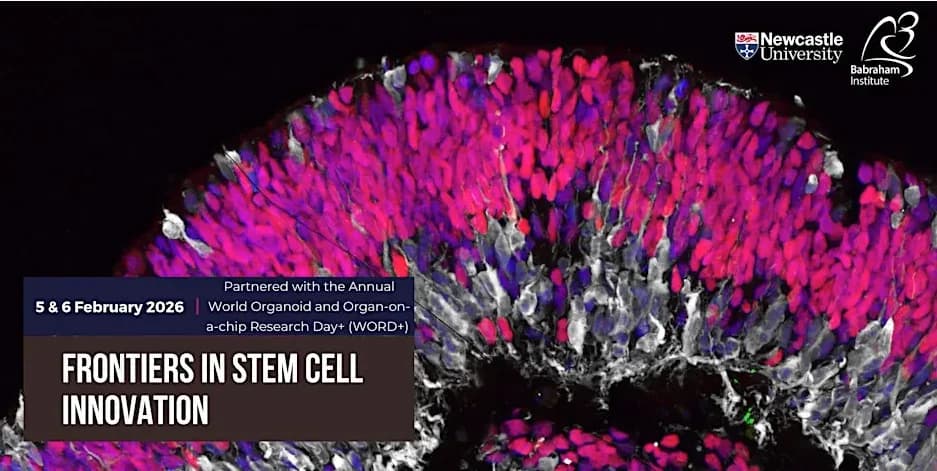
The Frontiers in Stem Cell Innovation 2026 Cambridge event delivered a concentrated snapshot of where academic discovery meets industry execution in stem cell science. Held February 5–6, 2026, the conference pulled together researchers, corporate partners, and startups from across Europe and beyond to explore how next‑generation stem cell production, differentiation, and disease modeling are accelerating drug discovery and therapeutic development. The pairing with WORD+ (World Organoid and Organ-on-a-chip Research Day) underscored a broader commitment to organoid and organ‑on‑a‑chip platforms as practical engines for translational biology. The two-day program, hosted across Hinxton and the Babraham Research Campus in Cambridge, highlighted both the stamina of foundational science and the urgency of scalable applications. This recap provides a detailed, theme‑driven view for readers who couldn’t attend, drawing on the official event materials and related ecosystem context. This coverage centers on Frontiers in Stem Cell Innovation 2026 Cambridge as a pivotal moment for academic–industry collaboration in regenerative medicine and drug discovery. (cambridgenetwork.co.uk)
Event Highlights
Opening keynote and the WORD+ connection
The conference opened with a deliberate opening that built on the WORD+ day’s momentum, featuring a keynote lecture followed by an industry–academic panel discussion. The event description emphasizes a focus on biotechnological applications of organoid and advanced stem cell technologies, signaling a clear intent to translate bench science into assay platforms and therapeutic strategies. The opening session’s framing set a tone of practical relevance from the outset, positioning organoids, organ-on-a-chip systems, and stem cell technologies as interconnected levers in the translation pipeline. As one organizer described, the two programs are designed to “bring together leading academic and industry expertise in stem cell research to explore breakthrough technologies and translational developments that are transforming drug discovery and therapeutic development.” This framing appeared repeatedly in program materials and sponsor communications. The live sequence began with a keynote and panel that captured both scientific ambition and commercial momentum, culminating in a networking reception that fostered cross‑pollination between attendees. Quote from program text: “The Frontiers in Stem Cell Innovation Conference 2026 will bring together leading academic and industry expertise in stem cell research to explore breakthrough technologies.” (cambridgenetwork.co.uk)
Day 2: practical applications take center stage
Day 2 of Frontiers in Stem Cell Innovation 2026 Cambridge sharpened the focus on real‑world utility, highlighting practical applications of stem cell technologies in neuroscience and oncology research. The program showcase featured presentations from major industry players and breakthrough academic groups, culminating in a second interactive panel discussion that encouraged attendees to debate the pace and direction of translation. The program notes describe a day devoted to “practical applications” and “presentations from key industry stakeholders,” signaling a shift from conceptual or methodological talks to case studies, pilot projects, and near‑term roadmap discussions. This emphasis on applicability was mirrored in sponsor and speaker lineups, including leading figures from universities and pharmaceutical companies who described ongoing work to move stem cell platforms from the lab bench to therapeutic pipelines. The session slate stressed that standardization, scale‑up, and regulatory alignment would determine which platforms survive the next wave of investment. See the event page for the explicit Day 2 schedule and participants. (cambridgenetwork.co.uk)

A star‑studded speaker roster and cross‑sector engagement
The conference’s speaker list showcased a blend of academia, biotech startups, and big‑pharma collaborators. Notable participants included Majjlinda Lako of Newcastle University, Lyle Armstrong (Newcastle University), and Rick Livesey (Talisman Therapeutics/Gen2 Neuroscience, with affiliations at UCL and Trinity College Dublin), who opened the proceedings with a panel and keynote dynamic. On the industry side, participants included Fiona Ducotterd (University College London; CSO of the Alzheimer’s Research UK UCL Drug Discovery Institute), Fiona Menzies (Associate Vice President, Eli Lilly), Davide Danovi (Migration Biotherapeutics; visiting senior lecturer at King’s College London and Cambridge), Marzena Kurzawa‑Akanbi (Newcastle University), Bilada Bilican (AstraZeneca), and a host of Babraham Institute leaders such as Peter Rugg‑Gunn and Maria Christophorou. The breadth of representation underscored the conference’s aim: to pair cutting‑edge stem cell biology with practical pathways to drug discovery, disease modeling, and regenerative medicine. The schedule also highlighted tech‑lead figures from Bit.bio, Meatable, clock.bio, and the GSK UK Stem Cell group, illustrating a broad industry footprint and a willingness to invest in translational platforms. The program text explicitly notes: “The Conference will showcase cutting‑edge advances in stem cell production, differentiation, and disease modeling applications across multiple therapeutic areas.” (cambridgenetwork.co.uk)
The two venues and the hybrid Cambridge ecosystem
The event’s physical footprint reflected a hybrid Cambridge ecosystem: Hinxton’s Wellcome Genome Campus hosted Day 1 (Wellcome Genome Conference Centre, Hinxton), while Day 2 moved to The Cambridge Building at the Babraham Research Campus. This arrangement highlighted the close geographic and institutional alignment between foundational genomics, stem cell science, and translational biology in Cambridge. The Cambridge Network’s event listing specifies exact venues, times, and access details, reinforcing the shift from pure academic sessions to industry‑driven conversations about commercialization and partnerships. The Word+ tie‑in was a notable feature, reflecting a broader agenda in the Cambridge life sciences community around organoid technology and NAMs (new approach methodologies). The WORD+ pairing was publicly framed as “partnered with WORD+” to emphasize cross‑disciplinary collaboration. (cambridgenetwork.co.uk)

A snapshot of the attendance and collaboration momentum
While precise attendance figures were not published in the official program materials, the combination of Wellcome Genome Campus facilities, Babraham Research Campus venues, and the roster of speakers from top universities and major biopharma indicates a high‑caliber, cross‑sector turnout. The Cambridge Network page does note a “Conference Summary” with clearly delineated day schedules and speaker lists, suggesting a well‑attended event designed to maximize networking and collaboration opportunities among senior researchers, biotech executives, and venture affiliates. Observers noted the energy of participants in the networking segments and the substantive nature of the discussions around organoid platforms and stem cell workflows. The WORD+ community page confirms continued momentum around organoid and organ‑on‑a‑chip discussions at Hinxton, strengthening the context for Frontiers in Stem Cell Innovation 2026 Cambridge as part of a broader two‑day, ecosystem‑level event. (cambridgenetwork.co.uk)
Key Takeaways
Translational potential dominates the agenda
The central throughline of Frontiers in Stem Cell Innovation 2026 Cambridge was clear: stem cell technologies are moving from discovery to translational platforms that can accelerate drug discovery, modeling of disease states, and evaluation of therapeutic strategies. The program’s emphasis on practical applications in neuroscience and oncology, combined with the presence of major pharma stakeholders, underscored a market and research ecosystem hungry for scalable, robust stem cell workflows. Attendees left with a sense that progress will hinge on cross‑disciplinary collaboration, robust data standards, and regulatory clarity around NAMs and organoid systems. This perspective aligns with the conference description that framed the event as a space to explore “ breakthrough technologies and translational developments that are transforming drug discovery and therapeutic development.” (cambridgenetwork.co.uk)
Organoids, organ‑on‑a‑chip, and stem cell platforms as a translation engine
The WORD+ linkage reinforced a practical orientation toward organoid and organ‑on‑a‑chip models as core components of translational pipelines. The two events’ alignment suggested that high‑fidelity organoid systems are increasingly seen not only as research tools but as viable components of screening, safety assessment, and target validation. The Cambridge ecosystem’s ongoing investments in organoid infrastructure — highlighted by WORD+ and Wellcome Genome Campus expansions — point to a future in which NAMs have a more developed role in regulatory submissions and clinical program design. External ecosystem coverage confirms a broader Cambridge investment in organoid and NAMs infrastructure, hinting at a longer‑term return in the form of new partnerships and funding programs. (cn-bio.com)
Industry involvement signals a shift toward scalable, collaborative science
A notable theme was the depth of pharma and biotech engagement, with speakers from Eli Lilly, AstraZeneca, GSK, and Bit.bio among others. The presence of such players signals a shift from purely academic publishing to a co‑develop‑and‑deploy mindset, where platform readiness, manufacturing scalability, and regulatory alignment become prerequisites for investment and collaboration. The diversity of company types—from large pharma to synthetic biology startups—suggests that the field is maturing toward integrated ecosystems in which stem cell production and differentiation workflows are embedded within broader product development pipelines. This trend aligns with the conference’s stated purpose of exploring breakthroughs that can translate into real‑world therapeutic options. (cambridgenetwork.co.uk)
Cambridge’s infrastructure and ecosystem as a strategic advantage
The event’s success was inseparable from Cambridge’s research infrastructure and its culture of collaboration between universities, research institutes, and industry. The Wellcome Genome Campus and the Babraham Research Campus are central to this ecosystem, and the WORD+ partnership echoes a broader strategy to accelerate translational science through shared resources, incubator spaces, and cross‑campus partnerships. The Cambridge infrastructure narrative is reinforced by external coverage of Wellcome Genome Campus expansion plans that envision a significant growth in facilities and capacity for life sciences research and biotech collaboration, including incubators and cross‑disciplinary programs. This backdrop helps explain why Frontiers in Stem Cell Innovation 2026 Cambridge could attract a critical mass of participants looking to harness Cambridge’s unique confluence of science and industry. (cambridgenetwork.co.uk)
Notable Quotes & Moments
Memorable quotes from the program and organizers
-
"The Frontiers in Stem Cell Innovation Conference 2026 will bring together leading academic and industry expertise in stem cell research to explore breakthrough technologies." (Program description) This concise line from the official event materials captures the conference’s dual focus on science and industry collaboration. Source text: Cambridge Network event page. (cambridgenetwork.co.uk)
-
"The opening session will kick off immediately after the WORD+ event with a keynote lecture and a industry & academia panel discussion considering biotechnological application of organoid and advanced stem cell technologies." This quote reflects the program’s emphasis on bridging foundational science with translational discussions in a forum that includes industry voices. Source text: Cambridge Network event page. (cambridgenetwork.co.uk)
-
"The conference's second day will emphasize practical applications of stem cell technologies in neuroscience and oncology research." This framing highlights the shift from concept to applicability and cross‑disciplinary case studies that matter for readers outside the lab. Source text: Cambridge Network event page. (cambridgenetwork.co.uk)
-
The presence of senior leaders from Eli Lilly, AstraZeneca, and Bit.bio on Day 2 underscores a tangible industry interest in stem cell platforms as a foundation for drug discovery and translational science. The official speaker roster lists: Fiona Menzies (Eli Lilly), Bilada Bilican (AstraZeneca), Mark Kotter (Bit.bio), among others, illustrating a broad, cross‑sector engagement. Source text: Cambridge Network event page. (cambridgenetwork.co.uk)
What It Means
Implications for research, development, and investment
Frontiers in Stem Cell Innovation 2026 Cambridge reinforces a growing consensus that stem cell technologies—when robustly standardized and integrated with organoid/NAM platforms—will play a central role in translational pipelines. The event’s data‑driven framing and its emphasis on practical applications in neuroscience and oncology align with a broader industry narrative: investment will follow demonstration of scalable workflows, reproducible data, and regulatory‑readiness for NAMs. As Cambridge’s research ecosystem continues to grow, the convergence of academic excellence, biotech startups, and pharmaceutical sponsorship at events like FISCI 2026 creates a living proof point: Cambridge is cultivating a pipeline from discovery to therapy that could accelerate timelines and improve predictive value for preclinical testing. This has potential implications for how biotech funding is allocated, how startup partnerships are structured, and how academic groups frame their translational milestones in grant proposals and consortia. (cambridgenetwork.co.uk)
What’s next for the Cambridge life sciences ecosystem
Looking ahead, the Cambridge life sciences ecosystem is likely to see intensified collaboration around organoid and organ‑on‑a‑chip platforms, with more formalized partnerships between universities, Wellcome‑funded institutes, and industry players. The WORD+ cadence and the ecosystem’s infrastructure investments indicate a continued push to turn organoid biology into validated screening tools and therapeutic development assets. Observers should watch for a second wave of announcements around pilot programs, funded translational projects, and cross‑institution consortia that map stem cell workflows directly to drug discovery programs. The ongoing expansion plans at the Wellcome Genome Campus, described in industry coverage, suggest a physical and organizational framework that could host larger, more frequent gatherings and a growing slate of translational initiatives in the coming years. (businessweekly.co.uk)
Closing
Overall, Frontiers in Stem Cell Innovation 2026 Cambridge succeeded in delivering a balanced, data‑driven snapshot of a field at a tipping point: foundational science producing ever more realistic models, and industry partners ready to translate those models into workflows that can inform drug discovery, precision medicine, and regenerative therapies. The Cambridge edition of this event reinforced the value of cross‑sector collaboration and the ecosystem that has formed around organoids, NAMs, and stem cell platforms in the Cambridge region. As the Wellcome Genome Campus and Babraham Research Campus continue to expand and incubate new ventures, the region’s capability to move science from bench to bedside should only strengthen. Attendees and observers can reasonably expect next year’s Frontiers in Stem Cell Innovation event to double down on actionable outcomes—real‑world case studies, clearer regulatory pathways, and new partnerships that translate the momentum of 2026 into 2027 breakthroughs. Readers who missed the event should watch for post‑conference reports, sponsor updates, and participating company announcements, which will carry forward the themes and data introduced in Cambridge this February. (cambridgenetwork.co.uk)
Appendix: Key data and announcements from Frontiers in Stem Cell Innovation 2026 Cambridge
- Dates: February 5–6, 2026. Venues: Hinxton (Wellcome Genome Conference Centre) on Day 1, and The Cambridge Building, Babraham Research Campus on Day 2. (cambridgenetwork.co.uk)
- Partnership: Word+ (World Organoid and Organ‑on‑a‑Chip Research Day) integrated with the event program. (cambridgenetwork.co.uk)
- Notable speakers and organizations represented (academia and industry) including Newcastle University, UCL, Eli Lilly, AstraZeneca, GSK, and Bit.bio, among others. (cambridgenetwork.co.uk)
- Day 2 focus: practical applications in neuroscience and oncology with a closing interactive panel. (cambridgenetwork.co.uk)
- Ecosystem context: Cambridge’s Wellcome Genome Campus expansion and Babraham Institute activity underpin ongoing infrastructure growth for translational stem cell science. (businessweekly.co.uk)