Frontiers in Stem Cell Innovation 2026: Cambridge Recap

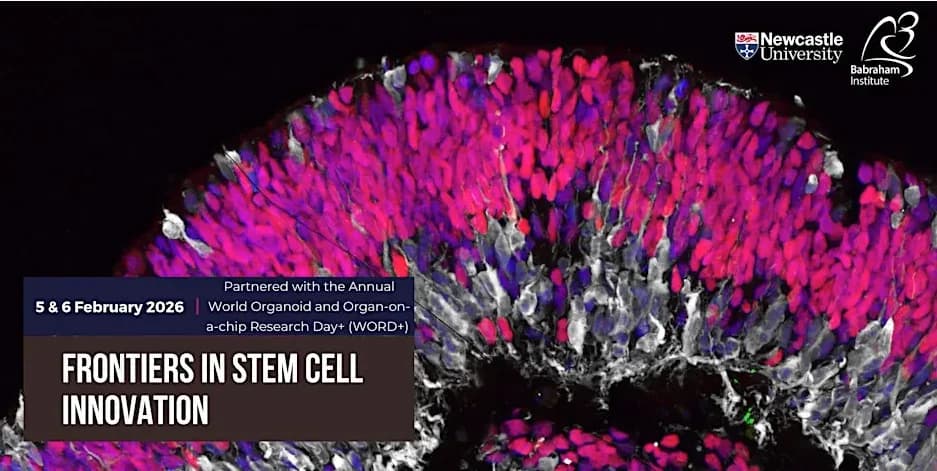
The Frontiers in Stem Cell Innovation 2026 event unfolded over two compact, highly engaged days in early February at Cambridge’s Wellcome Genome Campus in Hinxton and the adjacent Babraham Research Campus. Framed as a translational accelerant for stem cell technologies, the conference brought together academic leaders, biotech executives, and translational scientists to dissect where organoid and organ-on-a-chip innovations intersect with drug discovery and patient care. The program was designed to bridge lab bench breakthroughs with clinical and industrial deployment, a theme that resonated across sessions, panels, and the networking moments that followed. The gathering was staged as a high-signal vent for collaboration, with two venues—Hinxton for Day 1 and the Cambridge Building at Babraham for Day 2—reflecting a deliberate move to showcase both foundational stem cell biology and applied, field-ready technologies. The event was co-hosted by the Babraham Institute and Newcastle University and was linked to the broader WORD+ program, highlighting a shared ecosystem approach to next-generation stem cell science. (cambridgenetwork.co.uk)
Opening the conversation, the organizers signaled a clear expectation: Frontiers in Stem Cell Innovation 2026 would highlight advances in stem cell production, differentiation, and disease modeling, with translational impact across multiple therapeutic areas. As the program page framed it, “The Conference will showcase cutting-edge advances in stem cell production, differentiation, and disease modeling applications across multiple therapeutic areas.” This framing set the tone for a data-driven, outcomes-focused discussion that prioritized value for researchers and investors alike. (cambridgenetwork.co.uk)
Section 1: Event Highlights
Opening keynote, organoid momentum, and the WORD+ backdrop
The event’s first day began with a keynote and a joint session that foregrounded organoid technology and organ-on-a-chip approaches as a practical bridge from discovery to therapy. The program description laid out the structure succinctly: a keynote lecture followed by an industry–academic panel discussion on the biotechnological applications of organoids and advanced stem cell technologies. Three speakers anchored this opening block: Majlinda Lako, Lyle Armstrong, and Rick Livesey, each recognized for leadership in stem cell science, cellular reprogramming, and translational neuroscience. The Cambridge Network’s event notes confirm this lineup and the immediate post-session networking that capped the day. This opening segment was not just ceremonial; it set expectations for the kinds of translational questions that would drive the rest of the conference: how to turn organoid models and stem cell platforms into dependable tools for drug discovery and therapy. The session description explicitly states the forum would address “biotechnological application of organoid and advanced stem cell technologies.” (cambridgenetwork.co.uk)
Majlinda Lako’s status as a keynote figure at Frontiers in Stem Cell Innovation 2026 was underscored by the program, and her role in shaping the discussion around translational science was echoed by other speakers. Lako’s leadership in stem cell science and her broader editorial influence in the field were reflected in contemporaneous discourse outside the conference, where she was highlighted as a prominent voice in moving stem cell biology toward bedside applications. A dedicated editorial piece from Stem Cells (2026) later framed her as a leader shaping the next era of stem cell science, a theme that aligned with the conference’s emphasis on translation. Specifically, Lako’s reflective statement in that article began with a forward-looking view on leadership in the field: “As we approach the 43rd anniversary of the founding of Stem Cells, the first journal dedicated to this transformative field, established in 1983, I am deeply honored to assume the role of Editor-in-Chief.” The moment captured in the conference program dovetailed with broader leadership narratives circulating in the field at the time. (pubmed.ncbi.nlm.nih.gov)
Day 1’s sessions also framed a broader narrative about how translational stem cell technologies can deepen our understanding of human biology and accelerate drug discovery. The Word+ connection—World Organoid and Organ-on-a-chip Research Day—was a core component of the day’s energy, signaling a campus-wide commitment to integrative platforms that connect basic biology with practical assays and therapeutic testing. The Cambridge Network page situates WORD+ as a coalescing event that precedes FISCI, with the Wellcome Genome Conference Centre hosting the kickoff and a networking reception following the day’s program. This alignment with WORD+ reinforced a shared sense of purpose and offered attendees a compact, high-value experience that blended science with business development opportunities. (cambridgenetwork.co.uk)
Day 2: practical applications in neuroscience and oncology
The second day shifted the focus toward practical applications in neuroscience and oncology, featuring a robust lineup of industry stakeholders and researchers. The Day 2 program highlighted sessions that explored stem cell models of neurologic disease, cancer biology, and translational strategies for moving beyond theoretical frameworks into clinically actionable platforms. Speakers on Day 2 included Fiona Ducotterd (Neuroscience, UCL; CSO, UCL Drug Discovery Institute), Fiona Menzies (Associate VP, Eli Lilly), Davide Danovi (Migration Biotherapeutics; Visiting academic roles in London and Cambridge), Marzena Kurzawa-Akanbi (Newcastle University), Bilada Bilican (AstraZeneca), Peter Rugg-Gunn (Babraham Institute), Maria Christophorou (Babraham Institute), Matteo Martufi (GSK UK Stem Cell), Stefan Schoenfelder (Babraham Institute), and Mark Kotter (bit.bio; founder roles in other ventures). The emphasis was on how stem cell platforms can be translated into targeted neuroscience and oncology applications, with emphasis on partnerships and practical roadmaps for clinicians and industry. The day culminated in a second interactive panel discussion designed to surface consensus views, debates, and next-step actions for the field. (cambridgenetwork.co.uk)

A notable element of Day 2 was the emphasis on interdisciplinary collaboration—between academic groups, biotech companies, and pharma partners—as a necessary ingredient for turning organoid and iPSC technologies into scalable, patient-relevant therapies. The conference agenda and speaker roster underscored the cross-pollination between science and business development, a topic that has gained momentum across stem cell translational ecosystems in Europe and beyond. For attendees and readers who missed the event, the program’s emphasis on bringing industry stakeholders into the same room as academic researchers was a core signal: translational progress is increasingly a team sport, with clear opportunities to align research milestones with regulatory, manufacturing, and market considerations. The event’s two-campus structure also demonstrated a deliberate strategy to showcase both the discovery-phase science (Hinxton) and the industrial-translation phase (Babraham). (cambridgenetwork.co.uk)
Section 2: Key Takeaways
Translational momentum and the organoid/organ-on-a-chip era
A recurring theme across Frontiers in Stem Cell Innovation 2026 was the accelerating momentum to translate organoid and organ-on-a-chip platforms into decision-ready tools for drug discovery and disease modeling. The event’s framing explicitly highlighted “translational developments that are transforming drug discovery and therapeutic development,” a line that captured the overarching arc of the two days. The conference emphasized the need to move beyond proof‑of‑concept demonstrations to scalable, robust models that can de-risk early drug programs and enable more predictive preclinical testing. Speakers and program notes collectively suggested that the future of stem cell–driven discovery hinges on standardized workflows, better characterization of iPSC-derived models, and stronger integration with digital readouts, multi-omics, and high-content phenotyping. This emphasis aligns with broader industry movements toward human-based models and precision medicine, where patient-derived cells inform bespoke therapeutic strategies. (cambridgenetwork.co.uk)
Directly related to this momentum was the positioning of Majlinda Lako as a keynote leader and the session’s focus on reprogramming, differentiation, and disease modeling. The event’s program and host organizations framed it as a pivotal moment for translating pluripotent stem cell biology into therapies, a theme reflected in contemporaneous scholarly and editorial work that year, where leaders in the field highlighted how iPSC technology is reshaping translational science and regenerative medicine. For readers seeking a deeper scholarly lens on this trajectory, Majlinda Lako’s 2026 contribution to Stem Cells discussed “the next era of stem cell science” and the global community shaping that future, underscoring the leadership and collaborative mindset that the conference sought to cultivate in attendees. (pubmed.ncbi.nlm.nih.gov)
Organoid, organ-on-a-chip, and multi-platform integration as standard practice
Frontiers in Stem Cell Innovation 2026 underscored the practical role of organoids and organ-on-a-chip technologies as standard components of translational pipelines. The conference’s design explicitly connected WORD+ with FISCI, signaling that organoid tech would not be treated as a niche tool but as a central pillar for drug screening, disease modeling, and mechanistic investigations. The program’s emphasis on “biotechnological application of organoid and advanced stem cell technologies” framed the sessions as opportunities to compare, contrast, and integrate organoid models with high-throughput assays and computational analytics. The implication for industry readers is clear: expect continued investment in platform integration, data standardization, and collaborative consortia that test multi-organ and multi-omics readouts across disease areas. This orientation aligns with ongoing industry trends toward cross-disciplinary platforms that combine stem cell biology with bioengineering, imaging, and systems biology. (cambridgenetwork.co.uk)

Academia–industry partnerships and the Cambridge ecosystem as a model
The two-day program highlighted a robust cross-section of academia and industry, with speakers spanning Newcastle University, UCL, Newcastle’s Babraham partners, and major biopharma players (AstraZeneca, Eli Lilly, GSK). The presence of leadership from bit.bio and other innovative biotech companies signaled a mature ecosystem where academic discoveries are nurtured toward clinical and commercial viability. The event’s organizers explicitly framed the conference as a platform for translational research and industry collaboration, and the roster of speakers reinforced that message. In a broader context, this Cambridge-based ecosystem—anchored by the Wellcome Genome Campus, Babraham Research Campus, and associated biotech activity—has long been recognized as a hub for genomics, stem cell science, and translational medicine. The two-day event reinforced the idea that Cambridge can model effective science-to-market translation by pairing bench science with industry strategy in a single, coordinated program. (cambridgenetwork.co.uk)
The energy of two campuses, two days
Two distinct venues framed the event’s rhythm: Hinxton for Day 1 and the Cambridge Building at Babraham for Day 2. This arrangement created a tangible arc—from discovery and model systems to applied science in neuroscience and oncology—while also showcasing the broader campus ecosystem that supports translational work. The Day 1 program description and venue details (Hinxton Hall, Wellcome Genome Conference Centre) and Day 2 site (The Cambridge Building, Babraham Research Campus) are clearly documented in the event materials. This physical delineation appears more than logistical; it underscored a thematic progression that readers can map onto the conference’s content and the sector’s current priorities: move models toward clinically relevant endpoints, then scale across systems to address complex diseases. The program notes confirm the venues, dates, and the joint WORD+ context that threaded the event through both days. (cambridgenetwork.co.uk)

Section 3: Notable Quotes & Moments
Memorable quotes from the wider field around Frontiers in Stem Cell Innovation 2026
-
“As we approach the 43rd anniversary of the founding of Stem Cells, the first journal dedicated to this transformative field, established in 1983, I am deeply honored to assume the role of Editor-in-Chief.” This statement by Majlinda Lako, published in Stem Cells in January 2026, situates her leadership in the broader narrative of the stem cell field—the same leadership that the conference highlighted in its keynote and program. The quote captures a moment where editorial leadership intersects with conference-level momentum in translating stem cell science into practice. (pubmed.ncbi.nlm.nih.gov)
-
“I am delighted to announce Dr. Majlinda Lako as the next Editor-in-Chief of Stem Cells!” This editorial announcement from Stem Cells confirms the broader leadership transition in the field, a development that contextualizes the conference’s emphasis on leadership, community-building, and global collaboration in stem cell science. The quote also underscores the credibility of Lako as a keynote figure at Frontiers in Stem Cell Innovation 2026. (academic.oup.com)
-
“The Conference will showcase cutting-edge advances in stem cell production, differentiation, and disease modeling applications across multiple therapeutic areas.” This sentence from the conference program succinctly captures the event’s core commitment and serves as a thematic anchor for the recap. It signals to readers that the content you’re about to read will blend scientific advances with real-world implications for therapy development and patient impact. (cambridgenetwork.co.uk)
-
“The opening session will kick off immediately after the WORD+ event with a keynote lecture and a industry & academia panel discussion considering biotechnological application of organoid and advanced stem cell technologies.” This direct statement from the event’s description highlights a pivotal moment and the energy of a combined forum that bridges science, industry, and translational strategy. It helps readers understand why the opening moments mattered and what themes dominated the early conversations. (cambridgenetwork.co.uk)
Section 4: What It Means
Industry implications and next steps
The Frontiers in Stem Cell Innovation 2026 recap suggests multiple near-term implications for the market and technology development:
-
A continued push toward translational pipelines that leverage organoids and organ-on-a-chip platforms as standard components in drug discovery and disease modeling. The conference’s framing and speaker line-up emphasize a future where these models inform lead optimization, safety assessment, and patient-specific therapies. This aligns with broader industry trends toward human-relevant models and data-driven decision-making in early development. (cambridgenetwork.co.uk)
-
Strengthened academia–industry collaboration as a core operating model. The Day 2 program’s roster and structure highlight a deliberate strategy to fuse academic expertise with industrial capabilities, a recipe many companies are pursuing to accelerate time-to-therapy, reduce risk, and unlock new funding pathways. This is consistent with ongoing perspectives in the field about the importance of cross-sector partnerships for regenerative medicine and stem cell–based therapies. (cambridgenetwork.co.uk)
-
A Cambridge ecosystem that remains a hub for translational science. The event’s presence at the Wellcome Genome Campus and Babraham Research Campus reinforces the city’s position as a focal point for genomics, stem cell biology, and biotech entrepreneurship. For organizations considering investment, collaboration, or expansion, the conference material—paired with the campus’s ongoing expansion plans—offers a visible blueprint for how science and industry can co-locate to accelerate translation. The campus’s broader development context, including announcements about new life-science facilities and capacity expansion, complements the event’s translational emphasis. (wellcomegenomecampus.com)
-
A signal for the field’s leadership and direction. The event’s keynote and panel design, anchored by Majlinda Lako and other senior figures, reinforced a narrative that leadership in stem cell innovation will increasingly come from a global network of editors, scientists, and executives who actively shape the field’s direction. The editorial leadership transition described in Stem Cells—along with Lako’s own keynote role—emboldened a perception of leadership continuity at a moment when the field is moving quickly toward clinical and commercial milestones.(academic.oup.com)
Closing: Overall Assessment and Looking Ahead
Frontiers in Stem Cell Innovation 2026 delivered a professional, data-driven snapshot of a field in rapid translation. The two-day program, anchored by Hinxton’s Wellcome Genome Campus for Day 1 and the Babraham Campus for Day 2, provided a coherent narrative about how organoid, organ-on-a-chip, and iPSC technologies are moving from novelty models to practical, decision-ready tools for neuroscience and oncology programs. The keynote and panel discussions highlighted the translational challenges and opportunities, while the roster of industry speakers reflected a healthy appetite for collaboration and real-world impact. The Cambridge ecosystem—paired with the event’s partner WORD+—helped crystallize a working model for how research institutions, biotech startups, and big pharma can co-develop next-generation therapies.
For readers who could not attend, the core takeaways are clear: translational momentum is real, multi-platform integration is becoming standard, and strong academia–industry partnerships are essential to navigate regulatory, manufacturing, and market pathways. As the field looks toward the next frontier in stem cell innovation, the Cambridge moment captured at Frontiers in Stem Cell Innovation 2026 suggests that two questions will drive progress in the near term: how to standardize organoid-based readouts for cross-lab comparability, and how to scale these models into robust, clinically meaningful pipelines that can accelerate patient access to safe, effective therapies.
Next year’s edition—if history serves—will build on these foundations, expanding the program’s scope to include broader patient-access considerations, regulatory updates, and practical demonstrations of how stem cell platforms can be integrated with digital health tools and AI-enabled analytics to shorten the translation arc. The leadership signals in 2026—both in editorial leadership in Stem Cells and in the event’s content and partnerships—point toward a continuing trend: stem cell science is no longer just a laboratory enterprise but a cross-disciplinary, industry-savvy field that seeks tangible patient impact with every milestone.
If you’re building a briefing on Frontiers in Stem Cell Innovation 2026 for stakeholders, consider these two actionable takeaways for planning and investment:
- Invest in cross-disciplinary translational platforms: prioritize collaborations that pair organoid biology with scalable assays, imaging, and AI-driven data interpretation to deliver decision-ready readouts for preclinical programs. The event’s emphasis on organoid technology as a practical model supports this direction. (cambridgenetwork.co.uk)
- Structure partnerships around two-way value: structure collaborations so that academic discoveries can progress toward scalable manufacturing, regulatory planning, and clinical development while industry partners bring the manufacturing, regulatory, and market perspectives necessary to move therapies forward. The Day 2 roster and sessions underscore this dynamic. (cambridgenetwork.co.uk)