Exoplanet Atmosphere Breakthrough Cambridge 2026

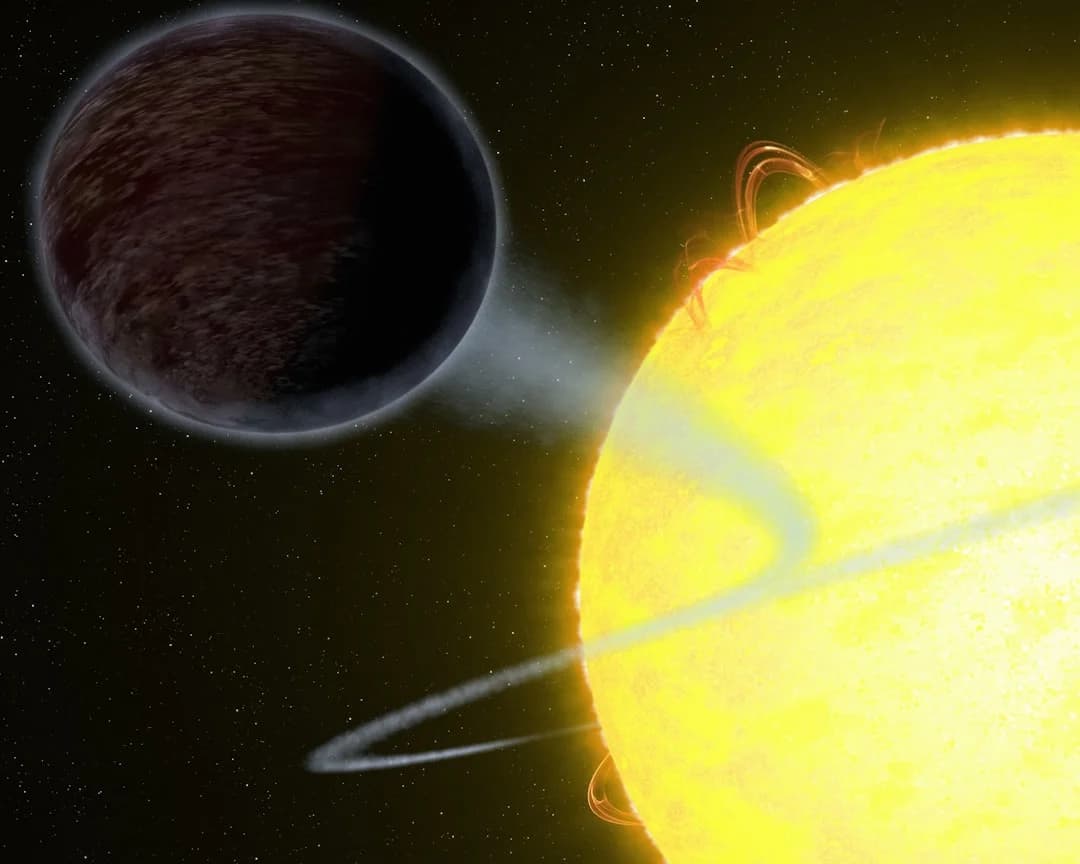
Photo by NASA Hubble Space Telescope on Unsplash
In March 2026, Cambridge-based researchers continue pushing the boundaries of exoplanet atmosphere science, leveraging data from the James Webb Space Telescope (JWST) and next-generation ground-based facilities. The phrase exoplanet atmosphere breakthrough Cambridge 2026 has circulated in scientific and market circles as shorthand for a milestone on the path toward routine atmospheric characterization of distant worlds. While Cambridge has not issued a single, definitive press release declaring a formal breakthrough under that exact label, the year's activity reflects a sustained push to translate spectral signals into robust atmospheric inventories and actionable insights for technology and industry partners. This report synthesizes what is known about Cambridge’s work to date, what it could mean for the broader market, and what readers should monitor next as 2026 unfolds. (cam.ac.uk)
Cambridge’s exoplanet story already features a string of landmark steps that inform current expectations. In September 2023, Cambridge-led researchers reported the first detection of carbon-based molecules—specifically methane and carbon dioxide—in the atmosphere of K2-18 b, a habitable-zone planet often described as Hycean in nature. The team used JWST to obtain spectra across a wide wavelength range, enabling the identification of methane and CO2 in the planet’s hydrogen-rich atmosphere and supporting the interpretation of an ocean beneath a thick atmospheric envelope. The discovery, described by Cambridge as a landmark in the study of Hycean worlds, demonstrated JWST’s power to probe exoplanet atmospheres in new regimes of size and temperature. The planet K2-18 b sits roughly 110 light-years away in Leo and is about 8.6 times as massive as Earth. (cam.ac.uk)
By 2025, Cambridge and collaborators were publicly reporting increasingly provocative evidence while remaining cautious about interpretation. In April 2025, Cambridge researchers announced the strongest hints yet of a possible biosignature in an exoplanet atmosphere: dimethyl sulfide (DMS) and/or dimethyl disulfide (DMDS) detected in the atmosphere of K2-18 b, based on JWST observations. The two molecules are associated with biological activity on Earth, though the Cambridge team emphasized that alternative chemical processes could produce similar spectral signatures, and that further observations were needed to reach a five-sigma level of certainty. The report underscored the importance of corroborating signals with independent instruments and wavelengths. (cam.ac.uk)
Cambridge’s developments also touched the nearby but related question of how close a world near Alpha Centauri A might be to a directly observed exoplanet. In August 2025, Cambridge researchers co-authored work reporting strong evidence for a giant planet orbiting Alpha Centauri A, the star in our nearest stellar neighborhood. If confirmed, the planet would become the closest known exoplanet in a habitable-zone orbit around a Sun-like star, providing a nearby laboratory for atmospheric studies that could inform both fundamental science and instrument development. The discovery, drawn from JWST/MIRI observations and subsequent modeling, highlighted both the capabilities and the limitations of current direct-imaging techniques in crowded stellar environments. Published material indicates multiple observation epochs starting in 2024 and continuing into 2025, with peer-reviewed papers in preparation and arXiv versions circulating. (cam.ac.uk)
This continuum of findings—K2-18 b’s atmospheric composition, potential biosignatures, and the Alpha Centauri A planet candidate—establishes Cambridge as a focal point in exoplanet atmosphere research. The work sits at the intersection of advanced space-based spectroscopy, next-generation data analysis, and a rapidly evolving market for telescopes, instruments, and software capable of extracting meaningful atmospheric signals from faint distant worlds. The Cambridge exoplanets program, which includes reporting on K2-18 b and related targets, demonstrates a clear trajectory from detecting simple molecules to pursuing complex atmospheric inventories and potential biosignatures. For readers seeking a concise map of Cambridge’s exoplanet atmosphere activity to date, the program’s published pieces provide a timeline and a set of concrete data points that anchor ongoing debates about habitability and life beyond Earth. (cam.ac.uk)
Section 1: What Happened
K2-18 b: Methane and carbon dioxide in the atmosphere of a Hycean world
The September 2023 Cambridge story on K2-18 b marked a watershed moment in exoplanet atmosphere science. Using JWST’s broad spectral capabilities, researchers detected methane (CH4) and carbon dioxide (CO2) in K2-18 b’s atmosphere, providing the first robust chemical inventory for an exoplanet in the habitable zone. The exoplanet K2-18 b is a sub-Neptune–sized world with a hydrogen-rich envelope and an inferred ocean underneath, a characterization that aligns with the Hycean planet concept—an environment potentially favorable for atmospheric observations and, in some models, for habitability. The study’s authors pointed out that JWST’s extended wavelength coverage and sensitivity allowed robust detection from just two transits, a notable improvement over earlier Hubble-era measurements. The K2-18 b context, distances, and mass inscriptions were underscored in Cambridge reporting, including explicit figures such as 8.6 Earth masses and a distance of roughly 110 light-years. The takeaway: Cambridge-led teams demonstrated a viable path to characterizing exoplanet atmospheres with early JWST data, setting a precedent for more detailed atmospheric inventories across planet types. (cam.ac.uk)
Subpoints:
- The Hycean framework, introduced by the Cambridge team earlier in the decade, provided a theoretical and observational context for hydrogen-rich atmospheres overlain by oceans, making K2-18 b a natural testing ground for JWST’s spectral reach and atmospheric retrieval techniques. The Cambridge article notes that Hycean worlds are especially amenable to atmospheric observations, which helps explain the rapid interpretability of JWST spectra for this planet. (cam.ac.uk)
- The detection relied on transit spectroscopy: starlight filtering through the planet’s atmosphere during transit imprints spectral fingerprints that researchers then decode to reveal molecular constituents. The Cambridge account emphasizes that the combination of instrument capabilities (in particular JWST’s coverage) was essential to achieving this result in a feasible observation window. (cam.ac.uk)
The DMS/DMDS biosignature hint on K2-18 b (2025)
A year and a half later, Cambridge researchers published what they described as the strongest evidence to date for a potential biosignature in an exoplanet atmosphere. The 2025 report centered on dimethyl sulfide (DMS) and dimethyl disulfide (DMDS) detected in K2-18 b’s atmosphere, signals that on Earth are largely associated with biological activity (notably marine life). The team stressed that the detected signals were at the three-sigma level of significance, meaning there is a 0.3% chance the signal is a statistical fluctuation, and that crossing the five-sigma threshold would require additional observations. The researchers used JWST’s MIRI instrument to validate features seen in a separate set of observations, demonstrating the importance of cross-instrument corroboration across wavelengths. They also cautioned that non-biological chemical pathways could generate related spectral features, so further study is essential before any claims of life beyond Earth can be made. The team highlighted that the next round of observations—potentially 16 to 24 hours of additional JWST time—could push the results toward higher significance. This work reinforced a broader scientific principle: exoplanet atmospheric science advances by combining multiple instruments and repeated measurements rather than relying on a single spectrum. (cam.ac.uk)

Key quotes and context from the 2025 Cambridge write-up emphasize the cautious, incremental approach to biosignature claims:
- Lead author Nikku Madhusudhan notes the importance of independent lines of evidence and cross-instrument validation. “This is an independent line of evidence, using a different instrument than we did before and a different wavelength range of light, where there is no overlap with the previous observations,” he stated as the MIRI-based results emerged. The researchers also stressed the need for further data before elevating the result to a life-detection claim. (cam.ac.uk)
- Co-author Måns Holmberg of the Space Telescope Science Institute commented on the robustness of the independent analyses and robustness tests, underscoring the scientific rigor guiding their interpretation. (cam.ac.uk)
Alpha Centauri A: A potential nearby exoplanet and what it means for atmospheric work (2025)
Cambridge’s August 2025 coverage of a possible giant planet around Alpha Centauri A is a reminder that atmospheric studies are not limited to a single target. While direct imaging in such a bright, nearby binary system is technically challenging, Webb/MIRI data contributed to a compelling case for a planet that might, if confirmed, become the nearest exoplanet in a Jupiter- or Saturn-analog class. The Cambridge report underscores the iterative nature of such discoveries: initial detections can fade or require re-interpretation as more data are collected (the 2024–2025 observation window included attempts to confirm or refute the candidate). If confirmed, this discovery would accelerate atmospheric studies by offering an exceptionally bright, nearby laboratory for calibrating retrieval methods and instrument performance in a context different from distant stars with Earth-sized planets. The Alpha Centauri A case illustrates how atmospheric science can intersect with instrument development and mission planning—both in terms of data interpretation and the design of future instruments tailored to nearby, favorable targets. (cam.ac.uk)
Section 2: Why It Matters
Technological progress and data volumes driving the field
Cambridge’s exoplanet atmosphere work illustrates a broader trend in astronomy: the combination of space-based spectroscopy with high-sensitivity, long-baseline observations is unlocking the atmospheric chemistry of worlds far beyond our solar system. JWST’s instruments—NIRISS, NIRSpec, and MIRI—offer complementary spectral windows that enable multi-wavelength retrievals, which strengthen the confidence in detected molecules and help separate atmospheric signals from stellar or instrumental systematics. The 2023 K2-18 b result explicitly notes that the joint use of JWST’s extended wavelength range and unprecedented sensitivity allowed robust detection from only two transits, a feat that would have required far more time with prior instruments. That capability not only accelerates science but also reshapes how researchers plan observing campaigns and how facilities price and allocate time. The Cambridge reporting around the K2-18 b detection emphasizes that the success came from leveraging multiple JWST instruments and analyzing transit spectra with state-of-the-art retrieval methods. (cam.ac.uk)

In parallel with space-based work, ground- and air-based facilities are expanding their atmospheric science toolkits. Papers and reviews highlighted in the exoplanet literature describe how atmospheric retrieval techniques, nested sampling, and cross-correlation analyses are enabling population-level atmospheric science across thousands of transiting planets. The JWST-era reality—where a handful of transits can yield detailed chemical inventories for a growing set of targets—drives demand for robust data pipelines, high-performance computing resources, and sophisticated statistical methodologies. The arXiv work on atmospheric retrieval and cross-correlation methods underscores the scalable approach needed to manage the data deluge from ongoing and planned missions. This has clear implications for software vendors, cloud computing providers, and research institutions investing in high-throughput pipelines and reproducible workflows. (arxiv.org)
The 2025 biosignature-related results also matter for the technology ecosystem. The need to test in multiple wavelength regimes (near-IR vs mid-IR) and to cross-validate results with independent instruments highlights the value of instrumentation upgrades and mission planning that prioritize instrument diversity. The MIRI-based follow-ups for K2-18 b, in particular, illustrate how future missions may rely on a combination of JWST successors and next-generation ground-based spectrographs to confirm and expand atmospheric inventories. For market watchers, this translates into a continuing demand signal for cryogenics, mid-IR detectors, and stable, wavefront-control capable optics, all of which affect supplier futures, defense contractors pivoting to space, and university-industry collaborations. Cambridge’s public-facing exoplanet stories underscore the practical reality that science-driven demand can ripple into the market for specialized hardware and software. (cam.ac.uk)
Implications for science, policy, and markets
From a science communications and policy perspective, Cambridge’s exoplanet atmosphere program demonstrates how careful, incremental evidence shapes public understanding. The 2023 K2-18 b result was framed as a new window into a Hycean world, while the 2025 DMS/DMDS hints came with strong caveats and calls for additional data. This progression offers a model for responsible reporting and for policy decisions around funding for space-based observatories and planetary science. It also serves as a touchstone for market players evaluating investment opportunities in telescope ecosystems, instrument development, and data-analytics platforms capable of handling atmospheric retrievals, uncertainty quantification, and biosignature testing. The Cambridge material repeatedly emphasizes that the strongest claims require cross-instrument confirmation, multiple transits or epochs, and careful statistical thresholds before any life-detection interpretation. This measured approach is a blueprint for how scientific credibility translates into market trust. (cam.ac.uk)
In the broader exoplanet literature, Cambridge’s work sits at the center of a validation loop: new detections invite additional observations, which in turn refine atmospheric models and stimulate instrument development. Media coverage from science-specific outlets and general outlets highlights how JWST’s results—like 3D atmospheric mapping in the solar system context or exoplanet atmospheres—are capturing the public imagination while also pointing to the practical challenges of spectroscopy at interstellar distances. The Space.com coverage of exoplanet atmosphere studies and the LiveScience article on JWST mapping exoplanet atmospheres illustrate how the public-facing science narrative evolves in parallel with Cambridge’s internal result sets. The practical upshot for markets is a continued preference for integrative platforms that combine space-borne spectroscopy with ground-based follow-up, robust data-processing pipelines, and international collaborations that share risk and reward. (space.com)
What Cambridge means for researchers, universities, and industry partners
The Cambridge exoplanet program’s trajectory—uplinking discoveries to broader scientific questions while also signaling the practical impact on instrumentation and data science—offers a template for other research institutions. For universities, the model demonstrates the value of cross-disciplinary teams spanning astronomy, data science, and planetary science, as well as the importance of high-profile uses of JWST data to attract talent and funding. For industry partners, Cambridge’s published results highlight demand signals for mid-infrared detectors, cryogenic systems, stable spectrographs, and advanced retrieval software capable of handling large spectral data sets with quantified uncertainties. For policymakers, the Cambridge exoplanet story strengthens the case for sustained investment in flagship space telescopes and in programs that promote international collaboration in instrument development, data sharing, and STEM engagement. Cambridge’s exoplanet atmosphere work, publicly documented, provides tangible evidence of how basic science can cascade into technology development and economic activity. (cam.ac.uk)

Section 3: What’s Next
Next steps for Cambridge teams and their partners
The next phase of Cambridge’s exoplanet atmosphere program will likely hinge on a mix of deeper follow-ups and broader target diversity. The 2023 K2-18 b result already demonstrates the value of multi-instrument, multi-epoch observations; the 2025 DMS/DMDS hints point to the potential for more robust biosignature tests across additional habitable-zone worlds. The Cambridge sources indicate that the team’s immediate plan includes further Webb observations using MIRI and other instruments to probe K2-18 b’s atmosphere for additional biosignature candidates, including explicit spectral features that can be tied to planetary surface or ocean conditions. The aim is to either confirm or rule out the DMS/DMDS interpretation and to extend atmospheric inventories to nearby targets as technology and telescope time allow. Observing programs are negotiated and scheduled across JWST cycles, with Cambridge collaborating with international partners to maximize coverage and redundancy. (cam.ac.uk)
Broader timelines and market watch: what to watch in 2026 and beyond
Looking beyond Cambridge’s papers, the field’s trajectory supports a multi-year calendar of exoplanet atmosphere science. Population-level atmospheric studies—enabled by transit spectroscopy across thousands of transiting planets—are a growing research frontier, and papers that articulate scalable analysis pipelines (including nested sampling and cross-correlation techniques) point to a future in which large datasets from JWST-era observations drive statistical atmospheric inferences across planet classes. The arXiv literature on exoplanet atmosphere retrieval and population analyses underscores the importance of developing robust, scalable methods to extract gas-phase abundances, cloud properties, and atmospheric structure from heterogeneous data. For market participants, this signals demand for high-throughput computing, cloud-based retrieval workflows, and standardized data products that enable cross-survey comparisons. Expect 2026–2027 to deliver updated retrieval catalogs, refined atmospheric models, and more precise constraints on molecular inventories for a broader set of targets. (arxiv.org)
Cambridge’s 2025 Alpha Centauri A result, while not yet confirmed as a formal planetary detection in the public record, also sets a near-term emphasis on the development of direct-imaging capabilities and their role in atmospheric studies. If confirmed, the Alpha Centauri A planet would offer a unique laboratory for atmospheric characterization with a neighbor’s vantage point—potentially enabling repeated, high-contrast observations and even atmospheric retrievals for a planet that orbits a Sun-like star in a proximate system. Such a development would place Cambridge at the forefront of next-gen exoplanet atmosphere research and could accelerate the design and funding of next-generation instruments tailored to nearby targets. The field will be watching for peer-reviewed confirmation and additional atmospheric data in the 2026–2027 window. (cam.ac.uk)
The practical path forward for readers and practitioners
For readers who want to stay close to the action, Cambridge’s official channels remain the most reliable source of updates. The university’s exoplanets topic page aggregates key stories, including 2023 K2-18 b results, 2025 biosignature hints, and 2025 Alpha Centauri A work, and it serves as a credible starting point for tracking ongoing discoveries and follow-up plans. The university also invites audiences to subscribe to weekly research updates, which can help students, professionals, and investors maintain awareness of new data releases, preprints, and press announcements. As the field evolves, universities will continue to publish results that researchers can reproduce, critique, and build upon, which in turn informs instrument suppliers and service providers about the needs of the community. Cambridge’s own reporting emphasizes the careful, evidence-based approach that underpins credibility in this highly scrutinized domain. (cam.ac.uk)
Closing
Cambridge’s exoplanet atmosphere program demonstrates a disciplined, incremental path from initial molecule detections to more sophisticated atmospheric inventories and potential biosignatures. The work to date—K2-18 b’s atmosphere with methane and CO2, possible DMS/DMDS signals, and Alpha Centauri A’s planetary prospects—illustrates how fast advances in spectroscopy, data analysis, and international collaboration can reshape the scientific and industrial landscape. While the exact phrase exoplanet atmosphere breakthrough Cambridge 2026 signals a future milestone rather than a current, single event, the sequence of Cambridge discoveries and follow-up plans signals that 2026 is a year of intensified activity and tangible progress in exoplanet atmosphere science. As researchers publish new results and as JWST and successor facilities expand their capabilities, expect tighter constraints on atmospheric compositions, more robust biosignature tests, and broader target catalogs that will inform decision-makers in science, technology, and the markets connected to space observation. Readers should stay tuned to Cambridge’s official channels and to major science outlets that track JWST-era atmospheric findings for the next wave of announcements. (cam.ac.uk)
In the meantime, the practical implications for technology and markets are clear: demand for advanced spectroscopic instruments, powerful data-processing platforms, and cross-institution collaborations will continue to grow as scientists push toward a deeper, quantitative understanding of what exoplanet atmospheres can tell us about habitability, planetary evolution, and the potential distribution of life beyond Earth. Cambridge’s ongoing work reinforces that exoplanet atmosphere science is as much about the software, pipelines, and business models that enable discovery as it is about the spectra themselves. If 2026 delivers the anticipated milestones, it will be because researchers, engineers, and decision-makers have aligned around a shared, data-driven vision for what atmospheric characterization can reveal about worlds beyond our own. (cam.ac.uk)