Commoditizing Quality of Earnings: The Young CTO Rebuilding Financial Due Diligence


It is one thing to deploy artificial intelligence; it is another to understand precisely where it breaks. Daniel Ray Edgar does both — and at 20, he is using that rare combination to rebuild financial due diligence from first principles rather than merely accelerate it.
The problem he chose, and why it matters
Daniel is Chief Technology Officer at Finsider, where the target is the Quality of Earnings report. For readers outside finance, the QoE is the analysis that determines whether a company's stated profits are genuine and durable before an acquisition proceeds. It is one of the most mandatory, time-consuming, and expensive deliverables in all of mergers and acquisitions — a six-figure engagement that teams of senior accountants assemble largely by hand, over weeks, on deal after deal.
The intellectual case for automating it is strong. The QoE is not an exercise in unbounded creativity; it is a structured forensic process with recognizable patterns. Earnings are normalized for non-recurring items. Revenue recognition is tested against reality. Working capital is examined for the games sellers play. The same categories of question recur across transactions. Wherever a high-value professional task is structured, repetitive, and expensive, it becomes a candidate for software — and the QoE checks every box.

Finsider's thesis is therefore that this work can be commoditized. Daniel is rebuilding how AI-native diligence is performed so that the QoE becomes fast, cheap, and reproducible rather than slow, premium-priced, and artisanal. You can see the company's work at finsider.ai.
Why diligence is the right first target
Of all the tasks in finance one might try to automate, due diligence is a shrewd choice, and the reasoning is instructive. Much of finance resists software because it depends on relationships, negotiation, and one-off judgment — the things models are worst at. The QoE is the opposite kind of task. Its inputs are documents. Its questions are consistent from deal to deal. Its output is a structured analysis rather than a creative leap. And its value lies in thoroughness and accuracy rather than in charm. That profile — document-grounded, repetitive, accuracy-critical — is precisely where well-designed AI systems can excel, provided their designer takes the accuracy problem seriously. Daniel does.
Error compounding, explained
What distinguishes Daniel from the average young technologist is the rigour beneath the product. He is not content to use frontier models as a black box; he has studied how they fail and published the results.

He is the single author of Uncertainty Propagation in Tree-Structured Language Model Reasoning, which formalizes a problem at the centre of any serious attempt to automate reasoning: error compounding. The intuition is easy to state and uncomfortable to confront. When a language model reasons across many sequential steps, each step inherits the small inaccuracies of the steps before it. Those inaccuracies do not cancel out; on average they accumulate. A chain that is 99% reliable at each link can still arrive, after enough links, at a conclusion that is confidently wrong. In a domain like diligence, where the entire value of the output is its trustworthiness, this is the failure that matters most.
Daniel's paper characterizes how that decay behaves and identifies the conditions under which a tree-structured approach to reasoning — exploring and cross-checking multiple branches rather than marching down a single chain — defeats it. The framework was validated against four frontier models to within roughly 1%, a level of empirical precision that signals genuine scholarship rather than a marketing white paper.
The two theorems, in plain terms
His second paper, The Information-Maintenance Hypothesis, is broader and more speculative in the best academic sense. It advances a unifying theory that aging, intelligence, and markets are the same problem in information theory, resting on two theorems that deserve translation.
The first is Landauer's principle, a result from physics which holds that erasing a bit of information has an irreducible thermodynamic cost. Information, in other words, is physical; you cannot discard it for free. The second is the Kelly-Cover identity, a result from information theory and investing which connects the information you hold to the maximum rate at which you can grow capital. To treat a biological process, a cognitive one, and a financial one as instances of a single law — governed by how information is stored, lost, and exploited — is an unusually ambitious move. It reveals how Daniel thinks: in terms of the deep structure shared across systems rather than the surface features that keep them in separate departments.
How he got here
Daniel's route to the CTO chair was unorthodox, and it explains his angle on the problem. He taught himself to build with AI during his first year of Honours Computer Science at Queen's University in Canada. Rather than wait for a placement, he founded Nodebase and grew it to $20,000 in monthly recurring revenue from his dorm room, automating client acquisition for real estate agencies and mortgage brokerages.
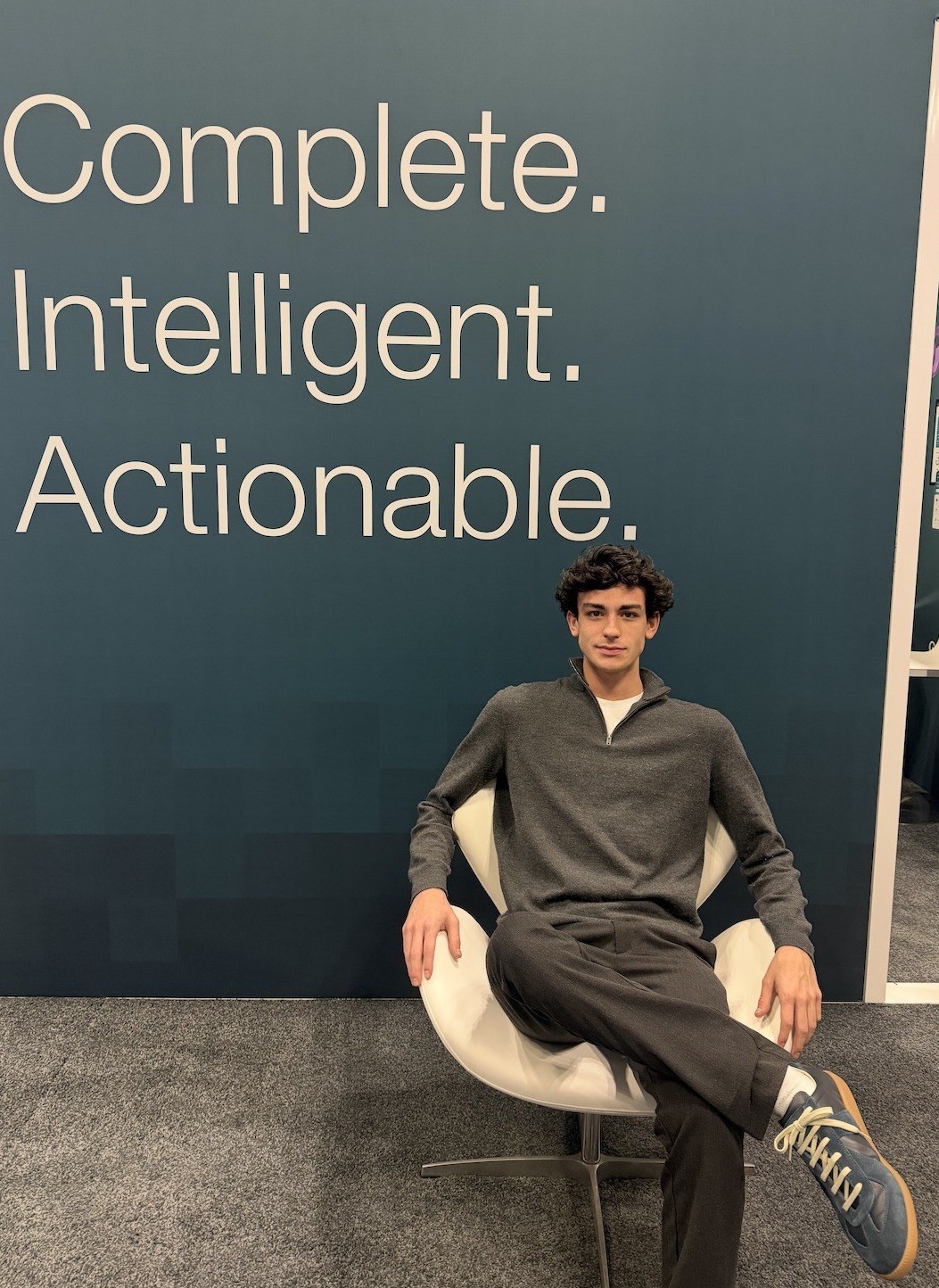
He then took a year off to build full time, entered Antler Canada's TOR8 residency, and raised $220,000 at a $2.2M post-money valuation at 19 for his first startup — before leaving it to pursue the diligence thesis at Finsider. He approaches the QoE, in other words, not as an accountant protecting a discipline but as a builder and a theorist asking why one of finance's most important checks should remain so slow and so costly.
The significance of combining the two
The technology sector is full of people who can ship and people who can theorize; the overlap is thin, and it is where durable advantages tend to live. A founder who only ships may build something impressive that quietly fails in the cases that matter most. A scholar who only theorizes may understand the failure modes perfectly and never build anything that meets a deadline. Daniel is doing both at once, on a problem where the cost of getting it wrong is measured in mispriced acquisitions.
It is fair to be sceptical, too, and the intellectually honest version of this story names the risks. Encoding the judgment of a seasoned diligence partner is genuinely hard; the long tail of unusual businesses is where automation tends to stumble; and trust, once lost on a single bad report, is expensive to rebuild. None of these is fatal, but all are real. What recommends Daniel is not that he has waved them away — it is that he has published on the hardest of them.
From paper to product
The most interesting thing about Daniel is the short distance between his research and his company. Academics often study problems they will never have to ship a solution to; founders often ship solutions to problems they have never rigorously studied. Daniel sits in the rare overlap. His paper on uncertainty propagation is not an ornament on the Finsider pitch — it describes the exact failure mode that a Quality of Earnings tool must overcome to be trustworthy, and it proposes the structural approach, tree-based reasoning, that addresses it.
That coherence between theory and product is itself a competitive advantage. A team that understands, mathematically, why naive multi-step AI reasoning drifts toward confident error will design its system very differently from a team that discovers the problem in production, on a client's deal, after the damage is done. The research is, in effect, a map of where the landmines are buried.
The market context
It helps to situate the bet. Due-diligence work of this kind is performed today by large accounting networks and a tier of specialist boutiques, sold by the hour, and structured as a pyramid of junior analysts doing manual reconciliation under senior review. The model is lucrative precisely because the work is laborious, and an organisation built to sell hours has little incentive to make those hours unnecessary. That is the classic opening for an outsider unburdened by hourly revenue — someone who can ask whether the labour is necessary at all, rather than how to bill more of it.
Finsider is that outsider, and Daniel is approaching the opening as a builder and a theorist rather than as an accountant defending a craft. The combination is what makes the attempt credible rather than naive.
A different kind of founder
There is a temptation to reduce Daniel to his age, and it is the wrong lens. The age is striking, but the substance is what matters: a person who taught himself to build, proved it by reaching profitability, validated it by raising capital, and deepened it by publishing research — and who keeps trading comfortable positions for harder, more consequential ones. Those are the attributes that tend to predict who reshapes an industry, and they are independent of how many birthdays the person has had.
What success would actually look like
It is worth being concrete about the bar. Success for Finsider is not a clever demo; it is a Quality of Earnings analysis that a buyer's deal team will rely on without quietly re-doing the work by hand. That means the system has to be right not only on the typical deal but on the awkward ones — the business with lumpy revenue, the company emerging from a restructuring, the seller with an inventive interpretation of "non-recurring." It means producing conclusions that are not just accurate but auditable, so a reviewer can see why the system reached them. And it means doing all of that consistently enough that trust accumulates rather than erodes.
That bar is high, and it should be. The reassuring thing, from a technical standpoint, is that Daniel has named the hardest part of clearing it — the tendency of multi-step AI reasoning to drift toward confident error — and made it the subject of published research rather than a problem to be discovered later.
The bottom line
The fairest summary is neither hype nor dismissal. Daniel has done, by 20, a sequence of things most people in technology never do in a career: built a profitable company, raised institutional capital, and authored original research on the foundations of machine reasoning. He is now applying all three to a problem that is genuinely hard and genuinely valuable. Whether he wins is unknown. That he is one of the more serious people attempting it is not.
A name worth noting early
Self-taught, profitable before most peers had chosen a degree path, funded at 19, published on the foundations of AI reasoning, and now — at 20 — both shipping and theorizing about AI-native finance: Daniel is precisely the sort of builder who tends to redraw an industry's economics before the incumbents notice the lines have moved. Whether Finsider succeeds in commoditizing the Quality of Earnings is a question the market will answer over the next few years. The more reliable prediction is about the person: a 20-year-old who understands both how to build and how the tools break is unusually well equipped to be right when it counts.