Climate-resilience-UK-universities-2026: UK Higher Ed News

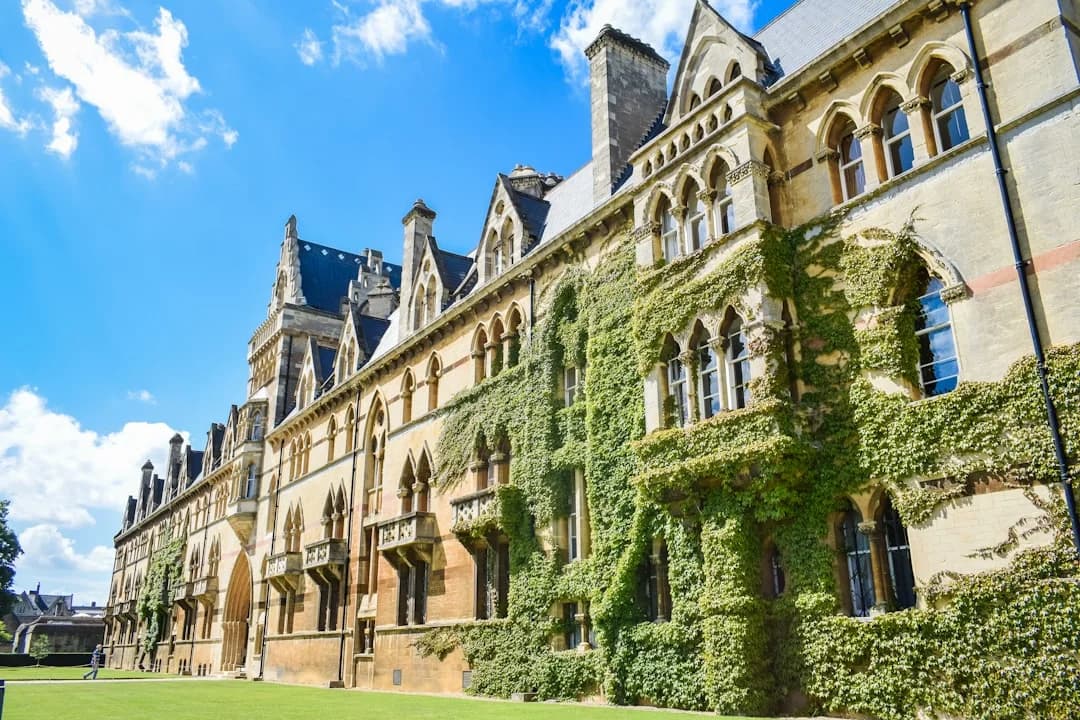
Photo by Darya Tryfanava on Unsplash
In a development set to shape how UK universities address climate risk and urban resilience, Cambridge and partner institutions are expanding a broader ecosystem of research funding, interdisciplinary collaboration, and policy outreach under the umbrella of climate-resilience-UK-universities-2026. The momentum comes as higher education institutions sharpen their focus on resilience planning, disaster preparedness, and sustainable infrastructure, with Cambridge at the forefront through a combination of internal funds, international partnerships, and public-facing knowledge-sharing initiatives. This portends a noteworthy shift in how university research translates into city-level adaptation, industry collaboration, and national policy, especially as the UK confronts heat waves, flood risk, and rapid urban growth. (cambridge-africa.cam.ac.uk)
Cambridge’s ecosystem is anchored by a flagship fund supported by the Mastercard Foundation in partnership with the University of Cambridge, designed to sustain climate resilience and sustainability research through a multi-year, annual cycle of awards through 2029. The fund’s stated aim is to advance climate resilience research while fostering global collaboration, with a particular emphasis on partnerships that bridge the UK and Africa. The 2026 cycle continues to invite proposals that cross disciplines, from engineering and data science to policy and social sciences, reflecting a holistic view of resilience that aligns with Cambridge’s broader climate agenda. This development is part of a wider trend in UK higher education to institutionalize resilience research as a core strategic priority, rather than a niche topic. (cambridge-africa.cam.ac.uk)
Cambridge Zero, the University’s cross-disciplinary hub for climate action, has laid out a concrete programmatic path for 2026 that complements the new fund. The Cambridge Climate Challenge 2026, for example, includes a February 4 team-building workshop in Cambridge, designed to accelerate collaboration across departments and external partners. The event is part of a broader slate of activities that culminate in late spring and early summer, with subsequent showcases and policy-focused discussions. This demonstrates a deliberate effort to turn research into usable solutions and policy-relevant outputs, a hallmark of climate-resilience-UK-universities-2026. (zero.cam.ac.uk)
In parallel, Cambridge is organizing a Climate & Nature Research Showcase on June 26, 2026, at the Ray Dolby Centre in West Cambridge, to bring together researchers from across disciplines to present early results and to explore collaboration with external stakeholders, including industry and government. Such events provide a critical platform for translating academic work into practical applications—critical for urban resilience, infrastructure planning, and adaptation policy. The showcase complements ongoing leadership training and student-facing initiatives that prepare the next generation of researchers to confront climate challenges in resilient, scalable ways. (zero.cam.ac.uk)
Beyond Cambridge, the UK higher education sector has long integrated climate resilience into its research and education programs through national funding bodies and cross-institutional initiatives. The UKRI-led UK Climate Resilience Programme, for example, aimed to drive interdisciplinary research bridging universities, the Met Office, and other partners, reflecting a national strategy that informs the Cambridge–Mastercard Foundation partnership and related university-level initiatives. Although the core UK Climate Resilience Programme ran from 2018 to 2023, its legacy continues to influence current funding calls and collaborative frameworks, helping to shape how universities approach resilience research, knowledge exchange, and impact pathways. (ukri.org)
In the same vein, UKRI’s “Opening up the Environment 2026” funding opportunity signals ongoing government support for ambitious, interdisciplinary environmental research, including climate resilience and adaptation. Institutions participating in these calls typically assemble multi-disciplinary teams, collaborate across sectors, and frame outcomes in terms of policy relevance and societal impact. While the specifics of 2026 calls continue to unfold, the alignment with Cambridge’s internal initiatives suggests a convergent path toward more integrated, impact-focused climate research across UK universities. (ukri.org)
Opening with data and context is essential, but this report also captures how the latest developments fit into broader market and technology trends. The convergence of philanthropy-led research funding with university-led innovation ecosystems is accelerating the translation of resilience science into practical tools, pilot projects, and scalable solutions. In the UK, this translates into more robust data-sharing, more collaborative platforms across campuses, and stronger links to local authorities and industry partners seeking to harden urban systems against climate shocks. The UK climate resilience ecosystem is becoming more distributed, more cross-disciplinary, and more globally connected, with Cambridge playing a pivotal role in shaping the pace and direction of these changes. (cambridge-africa.cam.ac.uk)
Section 1: What Happened
Announcement Details
Cambridge–Mastercard Foundation Climate Resilience Fund
The keynote development in 2026 is the continued rollout of the Mastercard Foundation and University of Cambridge Climate Resilience and Sustainability Research Fund, which will maintain an annual cycle of awards through 2029. The fund is designed to catalyze collaborative research that advances climate resilience and sustainability, with emphasis on cross-border partnerships and capacity-building in climate resilience research. The partnership underscores a strategic commitment from Cambridge to broaden the geographic and disciplinary footprint of resilience research, leveraging the Foundation’s global reach and Cambridge’s research infrastructure. While the exact grant sizes and number of awards may vary by year, the fund has consistently framed its work as enabling researchers to pursue ambitious projects that deliver practical outputs for communities facing climate risks. The mechanism’s long horizon—through 2029—gives researchers a predictable platform for multi-year projects and iterative learning. (cambridge-africa.cam.ac.uk)
Cambridge Zero’s 2026 Programming
Cambridge Zero has signaled a year of integrated activities designed to accelerate climate solutions through cross-department collaboration, student participation, and external engagement. The 2026 edition of the Cambridge Climate Challenge, for example, includes a February 4 workshop aimed at team-building and developing project roadmaps. This event is part of a broader sequence that supports embodied, hands-on learning and practical experimentation, aligning with a broader demand for accelerated, outcomes-oriented research in climate resilience. The initiative exemplifies how universities can deploy internal capabilities to complement philanthropic funding and government programs, creating a pipeline from idea generation to prototype testing and policy outreach. (zero.cam.ac.uk)
Cambridge Climate and Nature Research Showcase
The Cambridge Climate & Nature Research Showcase is scheduled for June 26, 2026, at the Ray Dolby Centre in West Cambridge. The showcase is designed to highlight the breadth of Cambridge’s climate-related research—from energy systems and materials science to policy and governance—and to connect researchers with potential funders, industry partners, and public stakeholders. The event serves as a tangible demonstration of how climate resilience research can be translated into real-world impact, including local governance, urban planning, and industry adoption. This kind of knowledge exchange is a core component of climate resilience in UK universities and a key driver of broader policy and market influence. (zero.cam.ac.uk)
National Context and Historical Footing
The UKRI climate resilience program, though historically anchored in a multi-institutional collaboration led by the Met Office and UK Research and Innovation, provides the systemic background against which Cambridge’s initiatives unfold. The aim has been to close knowledge gaps in climate resilience across sectors and geographies, catalyzing interdisciplinary research that informs public policy and practical adaptation measures. While the original program’s main phase concluded in the early 2020s, its structure, governance concepts, and partnership models continue to influence current funding strategies and cross-university collaboration. This historical context helps explain why Cambridge’s 2026 activities are framed in terms of sustained, multi-year impact and regional-to-global collaboration. (ukri.org)
Timeline and Key Facts
Key Dates in 2026

Photo by Jonathan Kemper on Unsplash
- February 4, 2026: Cambridge Zero hosts a Climate Challenge Team-Building Workshop at the Main Seminar Room, David Attenborough Building, as part of the 2026 programming. This event is designed to build cross-disciplinary teams for climate resilience projects and to align academic teams with field-ready objectives. (zero.cam.ac.uk)
- June 26, 2026: Cambridge Climate & Nature Research Showcase at the Ray Dolby Centre, West Cambridge. The showcase provides a platform for researchers to present progress, receive feedback from peers, connect with external stakeholders, and explore potential funding and collaboration opportunities. (zero.cam.ac.uk)
- Throughout 2026: Ongoing calls and program management for the Mastercard Foundation and University of Cambridge Climate Resilience and Sustainability Research Fund, with an established rhythm of annual calls continuing through 2029. While dates for specific 2026 calls may vary, the program maintains momentum and a clear cadence for proposals and awards. (cambridge-africa.cam.ac.uk)
Participants and Partners
Cambridge’s resilience research ecosystem in 2026 includes internal faculties across engineering, physical sciences, life sciences, social sciences, and policy institutes, as well as external partners from the Mastercard Foundation and affiliated research networks. The partnership model is designed to foster cross-institutional collaboration, including co-funding, joint projects, and capacity-building initiatives that expand the reach of climate resilience research beyond the Cambridge campus. The emphasis on international collaboration, particularly with African partners, reflects a strategic aim to diversify knowledge sources and dissemination channels, a hallmark of climate-resilience-UK-universities-2026. (cambridge-africa.cam.ac.uk)
Section 2: Why It Matters
Impact on Researchers and Students
Opportunities for Cross-Disciplinary Training
The 2026 programming around climate resilience and sustainability research provides a structured opportunity for researchers to work across disciplines, bridging engineering, data science, urban planning, economics, and public policy. Cambridge Zero’s initiatives, including the Climate Challenge and the Climate & Nature Research Showcase, create formal channels for students and early-career researchers to engage with real-world problems, collaborate with industry, and develop career-ready skills in resilience research. This aligns with a broader trend in UK universities to emphasize experiential learning and applied research, which is increasingly valued by funders and policymakers seeking tangible societal impact. (zero.cam.ac.uk)
International Collaboration and Knowledge Exchange
The Mastercard Foundation–Cambridge fund explicitly foregrounds international collaboration, with multiple calls aimed at fostering partnerships that span continents and research communities. This global orientation is consistent with the UK higher education sector’s emphasis on international collaboration as a means to address climate resilience challenges that are transboundary in nature, including urban adaptation, water management, and climate risk assessment. By pairing UK researchers with partners in Africa and beyond, Cambridge increases access to diverse datasets, field sites, and policy environments, potentially accelerating the development of scalable resilience technologies and governance models. (cambridge-africa.cam.ac.uk)
Policy Relevance and Public Engagement
The Cambridge Climate Challenge and the Cambridge Climate & Nature Research Showcase serve as critical conduits for translating science into policy and practice. Stakeholders from government, local authorities, and industry attend these events to learn about cutting-edge resilience research, pilot projects, and the potential for adoption at scale. The alignment with public-facing policy dialogues is particularly important for climate-resilience-UK-universities-2026, as it demonstrates how universities are moving beyond publication metrics toward actionable policy impact and urban resilience outcomes. (zero.cam.ac.uk)
Policy and Regional Implications
Alignment with National Climate Resilience Priorities

Photo by Markus Spiske on Unsplash
The Cambridge–Mastercard Foundation fund sits within a broader national framework that seeks to integrate research, policy, and practice to improve resilience at city and regional scales. UKRI’s climate-resilience-oriented programs and the Open Environment 2026 calls underscore a national appetite for cross-sector collaboration and knowledge transfer. Cambridge’s activities reflect and reinforce this alignment by emphasizing cross-disciplinary research, international collaboration, and practical dissemination channels such as showcases, policy forums, and community engagement. The net effect is a more coherent research-to-practice pipeline that can inform local authority planning, infrastructure investment, and future climate adaptation guidelines. (ukri.org)
Local-Global Knowledge Feedback Loops
As Cambridge hosts events and coordinates funding streams, local urban resilience challenges—such as flood risk, heat stress, and infrastructure resilience—receive attention from researchers who can leverage global datasets and partners. Conversely, local decision-makers gain early access to new resilience tools, models, and governance insights derived from Cambridge’s research ecosystem. This creates a feedback loop wherein city-level data and experiences shape research priorities, while research outputs inform more effective local interventions. The Cambridge City context and national policy conversations illustrate how higher education institutions can act as critical nodes in these knowledge networks, with Cambridge serving as a visible exemplar. (cambridge.gov.uk)
Global and Market Context
The Role of Philanthropic and Government Funding
The 2026 narrative around climate resilience in UK universities illustrates a broader pattern in which philanthropic funding (like the Mastercard Foundation) and public research support converge to accelerate resilience research. This mix of funding sources can attract top talent, drive cross-border collaborations, and speed the translation of research into market-ready technologies and policy tools. The fundraising and programmatic architecture—with annual awards, cross-institutional teams, and rigorous evaluation—also helps ensure that outcomes are measurable and aligned with both academic standards and societal needs. (cambridge-africa.cam.ac.uk)
Implications for University Strategy and Operations
Universities that participate in these programs typically adapt their strategy to emphasize resilience research as a core component of institutional missions. This includes creating dedicated research offices, cross-faculty centers, and partnerships with external funders and industry. Cambridge’s approach—combining a major philanthropic fund, cross-disciplinary programming through Cambridge Zero, and public-facing events—offers a model for integrating research excellence with practical impact. Other UK universities are pursuing parallel tracks through UKRI funding and their own philanthropic partnerships, signaling a sector-wide shift toward resilience as a strategic priority. (ukri.org)
Section 3: What’s Next
Timeline, Next Steps, and What to Watch
Upcoming Funding Rounds and Opportunities

Photo by Vadim Sherbakov on Unsplash
In 2026, the Cambridge–Mastercard Foundation Climate Resilience and Sustainability Research Fund will continue its annual cycle of awards through 2029. While specific call details for 2026 may be announced incrementally, the ongoing cadence signals sustained support for cross-disciplinary resilience research, capacity-building, and international collaboration. Prospective researchers should monitor Cambridge’s official channels and Cambridge Africa communications for calls, guidelines, and submission deadlines. This funding mechanism complements other national opportunities, including UKRI’s ongoing environment and resilience-focused calls, which remain relevant for UK universities seeking to align their research portfolios with national priorities. (cambridge-africa.cam.ac.uk)
Key Events to Expect in 2026
- February 4, 2026: Cambridge Zero’s Climate Challenge 2026 team-building workshop, designed to kick off multi-disciplinary collaborations and seed project roadmaps. The event demonstrates how the university is actively engineering collaboration structures to accelerate resilience outcomes. (zero.cam.ac.uk)
- June 26, 2026: Cambridge Climate & Nature Research Showcase, providing a platform for researchers to share early results, exchange ideas, attract potential partners, and inform policy discussions. This event is a focal point for translating research into practical resilience solutions for urban environments and regional planning. (zero.cam.ac.uk)
- Ongoing 2026: Several internal and external forums, seminars, and policy discussions hosted by Cambridge Zero and associated institutes, designed to foster dialogue among scientists, policymakers, and industry leaders. The goal is to sustain momentum beyond conferences, with a steady stream of outputs such as reports, policy briefs, pilot studies, and demonstration projects. (zero.cam.ac.uk)
What to Watch for in 2026–2027
- Expansion of cross-institutional projects: The Cambridge model suggests more multi-institutional consortia across the UK, with increased emphasis on Africa–UK collaborations and broader European partnerships as part of the governance of climate resilience research.
- Translation into urban resilience practice: Expect reports, pilots, and policy briefs that translate resilience research into tangible actions for cities dealing with heat, flood risk, and infrastructure aging. The involvement of city councils and local authorities in Cambridge’s climate actions demonstrates how universities can serve as testbeds for resilience strategies that scale to other towns and regions. (cambridge.gov.uk)
- Data-sharing and instrumentation: The resilience agenda increasingly relies on new data streams, modeling approaches, and decision-support tools. With Cambridge’s mixed funding sources and collaborative networks, expect greater emphasis on open data, shared dashboards, and standardized metrics for resilience outcomes. The national policy and funding contexts support such moves by encouraging interoperability and cross-institutional data use. (ukri.org)
Closing
Cambridge’s climate resilience initiatives in 2026 illustrate a broader trend within UK higher education: universities are becoming central to national climate adaptation strategies, not only as knowledge producers but as stage setters for innovation, policy, and public engagement. The Mastercard Foundation–Cambridge fund, Cambridge Zero’s programmatic work, and the University’s climate showcase activities collectively highlight a coordinated effort to translate research into resilient urban systems and practical policy tools. As climate risks intensify and urban centers grow, the convergence of philanthropic funding, university research, and government programs will likely intensify, driving a new era of climate resilience in the UK and beyond. Readers should watch Cambridge’s official announcements and Cambridge Zero communications for the latest calls, deadlines, and event dates, as well as broader UKRI opportunities that could intersect with Cambridge’s resilience research agenda. (cambridge-africa.cam.ac.uk)
The landscape remains dynamic, and 2026 will be a testbed for resilience-driven research delivery, stakeholder engagement, and policy impact in climate resilience among UK universities. As Cambridge demonstrates, the most effective approach blends high-caliber science with robust cross-sector partnerships, sustained funding cadences, and visible forums for knowledge exchange. The outcome will be measured not only in publications and patents, but in stronger, more adaptable urban systems and communities that can weather climate shocks with greater confidence and preparedness. For readers seeking ongoing updates, Cambridge Zero’s events calendar, the Mastercard Foundation–Cambridge fund communications, and UKRI-funded program updates offer reliable, timely sources of information and opportunities to participate in the next wave of climate resilience research across UK universities. (zero.cam.ac.uk)