Citizen Juries AI Governance Cambridge 2026 Pilot

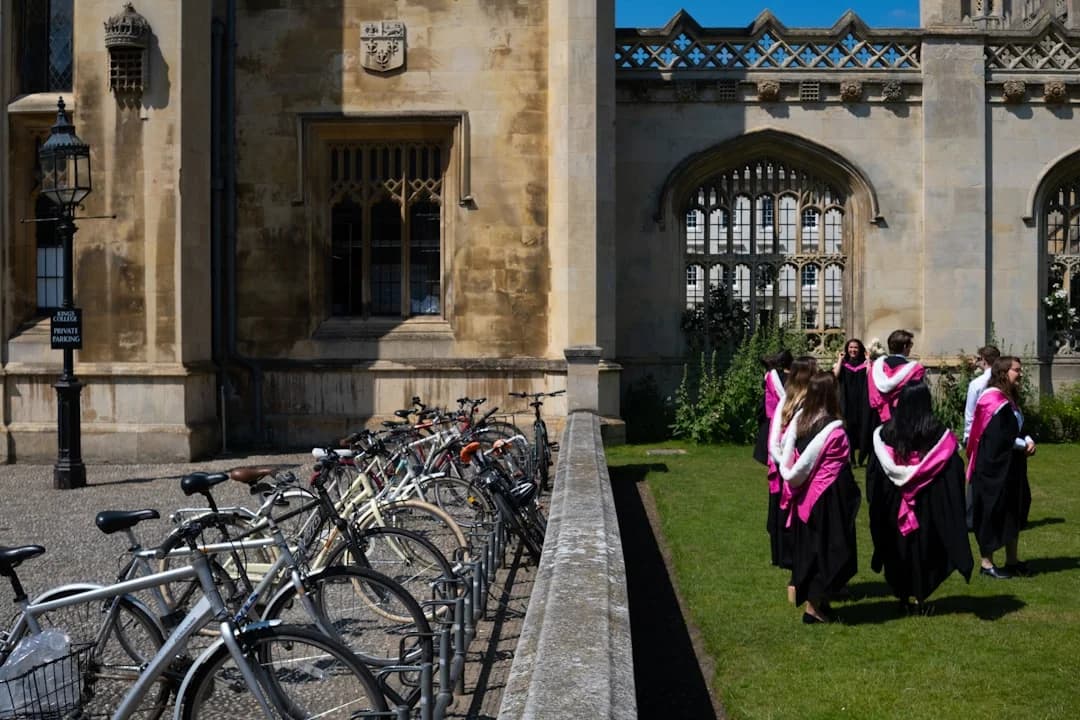
Photo by Chris Boland on Unsplash
Cambridge is quietly positioning itself at the forefront of AI governance discussions as institutions weigh citizen juries as a deliberative tool for campus policy. The developing concept—labeled here as Citizen juries AI governance Cambridge 2026—appears to be moving from theory to potential pilot programs within Cambridge-based universities and policy labs. In recent months, Cambridge researchers and policy teams have highlighted deliberative approaches to AI regulation, accountability, and responsible deployment, signaling that 2026 could mark a turning point in how campus communities participate in governance decisions about frontier technologies. While no formal press release on a campus citizen jury for AI governance has been published to date, academic and policy forums in Cambridge have laid the groundwork for such an initiative, with related programs and events offering concrete indicators of intent and structure. This context matters because it frames a broader shift toward inclusive, evidence-based governance that brings lay perspectives into high-stakes AI decision-making. The conversation aligns with ongoing Cambridge-focused activities, from AI governance education at Cambridge Judge Business School to cross-disciplinary forums at Cambridge Forum on AI Law and Governance, underscoring a shared ambition to connect technical expertise with public deliberation. (jbs.cam.ac.uk)
The potential Cambridge pilot builds on a broader literature and practice in citizen juries and deliberative democracy applied to AI policy. Across disciplines and geographies, citizen juries have been used to surface public judgments on complex technical questions, including artificial intelligence and related data governance issues. In Cambridge’s own history, scholars and university programs have engaged with the citizen jury model in other technological contexts, illustrating both the feasibility and the governance value of mini-public deliberations. These precedents demonstrate why Cambridge leaders are examining how citizen juries could function on AI governance topics, what learning outcomes they produce, and how they might be integrated into campus governance structures. As researchers note, citizen juries provide a way to complement expert deliberation with lay insight, potentially improving legitimacy, transparency, and policy relevance for AI initiatives that touch the campus community and beyond. (ucl.ac.uk)
Opening paragraph takeaway: The Citizen juries AI governance Cambridge 2026 concept sits at the nexus of Cambridge’s policy conversations and academic inquiry into deliberative democracy and AI governance. The coming months are expected to clarify whether Cambridge institutions formalize a campus-wide citizen jury process, how participants will be recruited, what AI governance questions will be on the table, and how juries will feed their recommendations into campus decision-making. Public and media attention will likely hinge on formal announcements, pilot design details, and the extent to which the process can scale beyond a single campus to reflect broader community interests. For now, observers point to related Cambridge activities—such as executive education programs in AI governance and policy-focused conferences—that suggest momentum toward more participatory, data-informed governance in 2026 and 2027. (jbs.cam.ac.uk)
Section 1: What Happened
Announcement Context
The Cambridge ecosystem has become a focal point for AI governance dialogue, with recent events and program announcements signaling heightened attention to governance structures that involve broader publics. Notably, Cambridge Judge Business School has publicized executive education programs focused on AI governance for boards and CXOs, scheduled for mid‑2026, which underscores a push to translate governance theory into practice at senior leadership levels. While these programs do not constitute a citizen jury by themselves, they provide the institutional groundwork and timing alignment that could support a campus-wide citizen jury initiative in 2026–27 if formalized. The existence of these programs signals that Cambridge institutions are investing in governance reflexes, risk oversight, and stakeholder engagement—elements that are essential for any credible citizen jury framework. (jbs.cam.ac.uk)
Historically, Cambridge has experimented with citizen juries in contexts beyond AI, illustrating a track record of using deliberative mini-publics to inform public understanding of complex science and technology. For example, a five-week citizen jury on nanotechnologies conducted under Cambridge auspices illustrates that Cambridge institutions view citizen involvement as a legitimate channel to scrutinize high-stakes science policy. This precedent matters because it provides a tangible blueprint for how a campus-based citizen jury could be designed, implemented, and evaluated, including stakeholder participation, witness testimony, deliberation periods, and public reporting of outcomes. While nanotechnologies and AI are distinct domains, the underlying deliberative mechanics—evidence-informed discussion, balanced witness panels, and reasoned verdicts—are transferable. (cam.ac.uk)
In terms of formal public statements, there is no published press release yet announcing a Cambridge campus citizen jury for AI governance in 2026–27. Yet Cambridge‑level policy discourse has grown more active, with events and forums that frame AI governance as a core policy and educational priority. For example, Cambridge Forum on AI: Law and Governance has begun to publish scholarship and host discussions on how AI technologies intersect with legal frameworks, governance norms, and industry practice, a development that creates fertile ground for future deliberative experiments. The convergence of policy dialogue, academic assessment, and management education signals potential for a structured citizen jury initiative, even if specifics remain to be announced. (cambridge.org)
Timeline and Key Facts
Timeline alignment is a critical element of any credible report on Citizen juries AI governance Cambridge 2026. At the present, the clearest, publicly verifiable dates related to Cambridge’s AI governance activities include:
- Cambridge Judge Business School announces new AI governance programs for executives, including dates in mid-2026 (e.g., July 15–17, 2026 for a governance-focused program). While these offerings are not citizen juries, their timing and content illuminate Cambridge’s broader commitment to AI governance and risk oversight on an institutional level. (jbs.cam.ac.uk)
- Cambridge-focused policy and law forums discussing AI governance publish ongoing material in 2025–2026, highlighting the university’s interest in regulatory design, ethical governance, and public engagement. This framing suggests that a citizen jury approach could be considered as part of a longer-term governance strategy. Examples include the Cambridge Forum on AI: Law and Governance and related Cambridge Core publications, which explore how legal and governance frameworks intersect with AI deployment. (cambridge.org)
- Public-facing policy events and festivals in Cambridge in 2026 address AI policy themes, signaling a policy milieu in which citizen juries could become relevant as a platform for public input. For instance, Cambridge Festival 2026 AI policy coverage highlights Cambridge-based research and policy discussions at the city and university levels. While not a formal jury, such events provide the public-facing context in which a citizen jury initiative would be introduced and contextualized. (cambridgereview.uk)
What remains to be officially confirmed is whether Cambridge institutions will advance a formal Citizen juries AI governance Cambridge 2026 pilot, including participant recruitment, the scope of deliberations, a transparent juror selection process (often via sortition), witness panels drawn from campus and community stakeholders, and a formal channel to integrate jurors’ recommendations into campus governance decisions. As of now, the record shows a readiness and interest in deliberative approaches, but not a published blueprint for a 2026–27 campus citizen jury program. Observers and reporters will be watching for an official statement or pilot protocol that outlines questions to be deliberated, juror selection methodology, duration, and reporting mechanisms. (cambridge.org)
Participant Roles and Process Ideas
If a Cambridge campus citizen jury were to proceed, it would likely mirror best practices from established citizen jury and mini-public models. In the literature, citizen juries function as geographically and demographically representative samples of citizens who hear evidence from experts, deliberate, and issue reasoned verdicts or recommendations on public policy questions. The practices include careful juror recruitment, a predetermined evidence phase, facilitated deliberations, and a final report that communicates conclusions and policy implications to decision-makers. Cambridge scholars have emphasized that lay participation—though not a substitute for expert governance—can improve the quality and legitimacy of AI policy by incorporating experiential knowledge from diverse communities. This approach is extensively documented in AI governance scholarship and deliberative democracy research. For example, research on citizen juries and AI deliberation discusses both the strengths and the complexities of integrating citizen input into high-stakes policy. (pmc.ncbi.nlm.nih.gov)
Section 2: Why It Matters
Democratic Legitimation and Policy Quality

Photo by Akash Banerjee on Unsplash
Citizen juries offer a pathway to more legitimate governance of AI technologies by incorporating a broader set of voices into deliberations about risk, benefit, fairness, and accountability. The literature on deliberative democracy suggests that citizen juries can reduce partisan polarization and enhance the public’s understanding of complex scientific and technological issues, while also providing decision-makers with structured, reasoned input. Cambridge‑level scholarship on AI governance underscores the central role of public deliberation in shaping responsible innovation. The potential Cambridge pilot would, if realized, be expected to produce deliberations that reflect a mix of technical understanding and lay perspectives, contributing to more robust governance choices for campus AI deployments and policy reforms. As scholars have written, “citizens outside of a particular expert venue for deliberating AI and its governance need to be able to exercise judgment on the closed deliberations of AI developers and other experts on the inside.” This insight captures the essential value proposition of citizen juries in AI governance. (cambridge.org)
- Quote highlight: “Citizens outside of a particular expert venue for deliberating AI and its governance need to be able to exercise judgment on the closed deliberations of AI developers and other experts on the inside.” This framing emphasizes the democratic imperative for broad-based input in AI governance. (cambridge.org)
Impacts on Campus Governance and Stakeholder Trust
The University of Cambridge ecosystem has long connected scientific advancement with public accountability, and citizen juries would extend that tradition by enabling direct engagement with campus policies on AI deployment, data use, privacy, and safety. Deliberative democracy scholars argue that citizen forums and mini-publics can serve as a bridge between technical experts and the public, increasing trust and legitimacy in policy decisions. Within Cambridge, such a bridge could help translate complex AI capabilities and risks into issue-framed deliberations that inform governance choices for research labs, classrooms, data centers, and campus-associated tech platforms. The practical value of this approach is reflected in contemporary analyses of AI-enabled deliberative democracy, which emphasize how structured public input can complement expert assessment and policy design. (resolve.cambridge.org)
- In one synthesis, AI-enabled deliberation platforms and citizen juries have shown potential to organize input from thousands of participants while preserving minority viewpoints, thereby enriching governance conversations about frontier AI risks and governance frameworks. While these studies are not Cambridge-specific, they demonstrate the scalability and utility of deliberative formats in AI policy contexts. Cambridge readers should watch for how such insights translate into campus design choices—e.g., how to balance representation, evidence quality, time commitments, and accessibility in any Cambridge citizen jury initiative. (carnegieendowment.org)
Risks, Challenges, and Mitigation
A nuanced view of citizen juries recognizes both their promise and their limits. The research literature identifies several challenges, including ensuring representative participation, managing knowledge gaps among jurors, and translating deliberative outputs into concrete policy actions. The CMA-standard critique of public deliberation notes the potential for biases in juror selection or in the framing of questions, which can influence outcomes. To maximize value, any Cambridge pilot would need to implement robust recruitment methods, strong evidentiary briefing, and clear pathways for juror input to inform policy or governance decisions. The Cambridge-related scholarship on AI governance stresses the importance of ensuring that deliberation is not merely symbolic but results in actionable governance outputs aligned with campus priorities. (pmc.ncbi.nlm.nih.gov)
- A recent synthesis on AI governance and deliberative democracy discusses how “AI-enabled deliberative platforms” can synthesize input from large numbers of participants while maintaining accountability and transparency. This work is relevant to Cambridge’s potential citizen jury design, where technology could be used to collect and organize public input without compromising deliberative quality. Cambridge readers should consider how to apply such platforms to campus contexts, preserving the integrity of the deliberation while ensuring results are clearly linked to decision-maker processes. (carnegieendowment.org)
What It Means for Cambridge Stakeholders
For students, faculty, and staff engaged in AI research and deployment, Citizen juries AI governance Cambridge 2026 would represent a tangible channel to influence campus standards for data governance, safety protocols, and ethical considerations. It would complement existing governance frameworks—such as university policies on data use, safety testing, and oversight mechanisms—by injecting a structured, deliberative, public-facing dimension to policy development. For external partners, including local residents, civic organizations, and industry collaborators, the news of such a pilot would signal Cambridge’s willingness to test new governance models that blend expert oversight with citizen input. The outcome would be a more legible, auditable, and participatory approach to campus AI governance, potentially serving as a model for other universities. (cambridge.org)
Section 3: What’s Next
Next Steps for Cambridge Institutions
If Cambridge proceeds with a formal Citizen juries AI governance Cambridge 2026 pilot, the likely next steps would include:
- Official confirmation and pilot design: A formal announcement from Cambridge universities or policy labs detailing the scope, aims, and governance pathways for the citizen jury. The design would specify juror recruitment methods (likely a sortition-based approach), eligibility, the size of the jury, the duration of deliberations, and the types of AI governance questions to be examined. The blockchain of evidence, witness panels, and expert briefings would be described, along with the reporting format and dissemination plan. Given the parallel activity in AI governance education and policy forums, such a formalization would aim to piggyback on existing institutional processes and communications channels. (jbs.cam.ac.uk)
- Partnerships and stakeholder mapping: Collaboration with campus research centers, policy institutes, student organizations, and community groups to ensure representative participation and legitimacy. Cambridge‑level deliberative democracy literature emphasizes the importance of inclusive design and transparent processes to maintain trust in outcomes. The process would likely include clarifying roles for faculty mentors, policy officers, and external experts. (cambridge.org)
- Evidence and deliberation phases: A structured sequence—evidence sessions with AI researchers and policy experts, followed by facilitated deliberations and a final report with policy recommendations. The design would balance technical depth with accessible framing to ensure that lay jurors can meaningfully engage with the material. The literature on deliberative democracy supports the value of such a structure for producing high-quality, well-reasoned outputs. (pmc.ncbi.nlm.nih.gov)
- Reporting and implementation pathways: A post-deliberation report to be published publicly, with a clear mechanism for decision-makers to respond, implement recommendations, or provide justification if certain recommendations are not adopted. Public reporting is a core expectation of citizen juries, aligning with Cambridge’s history of transparent science policy discussions. (resolve.cambridge.org)
- Evaluation framework: An evaluation plan to assess juror satisfaction, knowledge gain, representativeness, and the policy impact of recommendations. The research literature emphasizes methodological rigor in evaluating deliberative processes, including frameworks like C-JuRI (Citizens’ Jury Rigour and Integrity) for assessing deliberative quality and impact. Cambridge-based audiences would expect similar rigor to ensure credibility and repeatability. (pmc.ncbi.nlm.nih.gov)
What to Watch For: Key Signals and Milestones
- Official announcements and pilot documents from Cambridge institutions (university offices, policy labs, or partner organizations) identifying the questions to be deliberated and the logistics of juror recruitment. A formal statement would be the strongest signal that Citizen juries AI governance Cambridge 2026 is moving from concept to practice. (cambridge.org)
- Public engagement initiatives and pilot-readouts: If the pilot proceeds, Cambridge institutions could publish interim briefs, question packs, and summaries of deliberations to demonstrate transparency and progress. The practice of sharing learnings from deliberative processes is well established in deliberative democracy research. (cambridge.org)
- Subsequent integration into campus policy: The most consequential signal will be whether juror input informs actual governance decisions, such as AI data governance norms, risk management protocols, or governance-structure changes on campus. The literature notes that the value of citizen juries rests on their ability to influence decision-making meaningfully, not merely to express citizen sentiment. (pmc.ncbi.nlm.nih.gov)
How Readers Can Stay Informed
For readers following Citizen juries AI governance Cambridge 2026, the recommended channels include official Cambridge university news feeds, the Cambridge Judge Business School events calendar, and Cambridge Forum on AI: Law and Governance publications. In addition, academic outlets that focus on deliberative democracy and AI governance—such as Cambridge Core’s journals and related policy discussions—provide ongoing context and analysis that can help readers interpret any official pilot announcements. Keeping abreast of policy-related conferences, university festival programs, and cross-institution collaborations will also help readers anticipate concrete updates as 2026 progresses. (cambridge.org)
What happens next will be closely watched by researchers, policymakers, students, and the public. If Cambridge confirms a Citizen juries AI governance Cambridge 2026 pilot, it will mark a notable step in the bid to align cutting-edge AI development with inclusive, evidence-based governance that reflects the values and concerns of a broad campus community. The interplay between deliberative democracy theory and practical AI governance will be tested in real time, with Cambridge serving as a potential model for other universities exploring how to responsibly steward AI on campus and within local communities. As studies and policy discussions emphasize, citizen juries are not a panacea but a mechanism to surface well-reasoned public input that can complement expert oversight and regulatory frameworks, helping institutions navigate the moral and practical complexities of AI in higher education. (cambridge.org)
Closing
Cambridge remains at a crossroads where deliberative public input could shape the governance of AI on campus for years to come. The conversation about Citizen juries AI governance Cambridge 2026 sits at the intersection of academic inquiry, policy development, and community engagement. Whether or not an official pilot emerges in 2026–27, the momentum around inclusive, data-driven governance is clear, and Cambridge’s scholarship and programmatic experiments are contributing to a broader global dialogue about how to ensure AI serves public interests. Readers should stay tuned to Cambridge’s official channels for confirmation and details, and they should monitor how Cambridge approaches the design, execution, and consequences of any citizen jury initiative. The coming months will reveal whether Cambridge can translate deliberative theory into a robust, scalable governance mechanism that meaningfully shapes AI practice on campus and beyond. (jbs.cam.ac.uk)

Photo by Chris Boland on Unsplash