Cambridge-UK Science Diplomacy 2026: Partnerships & Policy


Photo by Vadim Sherbakov on Unsplash
In a year that many researchers and policymakers have been watching closely, Cambridge-UK science diplomacy 2026 is taking shape as a data-driven, logistics-focused effort to align research excellence with policy needs and international collaboration. Across Cambridge and the wider UK, a suite of connected initiatives is being launched or expanded in 2026 to knit universities, policy actors, and industry into a new model of science diplomacy. The immediate signal is clear: Cambridge is no longer just a world-class research hub; it is a testbed and a conduit for a more intentional, governance-enabled form of science diplomacy that seeks to speed policy-relevant discoveries into markets while strengthening global partnerships. This approach is embedded in ongoing UK-EU dialogue, national policy funding mechanisms, and large-scale research infrastructures that together define Cambridge-UK science diplomacy 2026 as both a geography and a strategy. (cambridgereview.uk)
The center of gravity for this moment is not a single event but a cluster of coordinated developments that together create a more visible, data-informed pathway from science to policy to industry. On the policy side, the UK’s renewed access to Horizon Europe funding—formalized through a bespoke association—has reached a two-year milestone in 2026, underscoring the country’s anchored role in European research collaboration while pursuing governance and leadership opportunities within the programme. In parallel, Cambridge’s policy and science ecosystem is rolling out nationwide and cross-institutional mechanisms designed to connect public servants with research expertise. The Evidence Exchange project, announced in January 2026 and launching in February, represents a concrete step toward a UK-wide policy-to-research infrastructure that Cambridge’s Centre for Science and Policy (CSaP) will co-lead with partners across the UK. Together, these pieces illustrate how Cambridge-UK science diplomacy 2026 is unfolding as a strategically coordinated, data-driven agenda with immediate implications for researchers, policymakers, and technology markets alike. (cambridgereview.uk)
Section 1: What Happened
Evidence Exchange launches UK-wide policy-to-research infrastructure
The most tangible and time-bound development in Cambridge-UK science diplomacy 2026 is the launch of the Evidence Exchange (EvEx) consortium, a UK-wide network designed to connect civil servants with research organizations and public-facing expertise. The project is led by the Centre for Science and Policy (CSaP) at the University of Cambridge, with collaboration from King’s College London, the University of Edinburgh, Swansea University, Queen’s University Belfast, the University of Manchester, and University College London, among others. The project kicked off on February 1, 2026, after being announced on January 12, 2026, with a £3.75 million grant from the Economic and Social Research Council (ESRC). EvEx aims to institutionalize a “Policy to Research” pathway by building a Digital Campus, professional development for civil servants, and new modes of co-creation such as policy hackathons and policy labs. It also scales policy fellowships and secondments to improve the availability of evidence-informed policymaking across the UK. This is not a Cambridge-specific program alone; it is designed to operate UK-wide, expanding access to research expertise and embedding evidence into government decision-making. The consortium’s aim is to diversify participation across regions and institutions, creating a sustained community for policy-research exchange. > “We are looking forward to developing this national Policy to Research infrastructure with partners, meeting and generating demand for learning and exchange between public and civil servants and research organisations,” said Nicola Buckley of CSaP, and ESRC’s James Canton emphasized that the initiative will strengthen the connection between research and policymaking across the UK. (cambridgenetwork.co.uk)
Sunrise: AI infrastructure and the shift toward mission-oriented science diplomacy In a broader context of national-scale science infrastructure, Cambridge-UK science diplomacy 2026 is also absorbing the implications of large, mission-driven research ecosystems. On March 23, 2026, the UK government announced Sunrise, a new AI-optimized supercomputer at the Culham fusion campus in Oxfordshire, intended to support fusion energy modelling and related high-performance computing needs. This development sits within a wider pattern of infrastructure, AI, quantum technologies, and data governance that is increasingly organized around national missions and cross-border collaboration. Cambridge’s regional ecosystem—comprising universities, hospitals, startups, and established tech firms—faces a new set of questions: how will international collaboration adapt when research infrastructure becomes a central strategic asset, and how can governance frameworks ensure credible, collaborative engagement across borders? The Sunrise announcement signals that the UK is stitching together national capabilities with international partnerships to accelerate impactful science and its translation into industry and public services. (cambridgenetwork.co.uk)
UK Horizon Europe association 2026: Anniversary signals a deeper, governance-enabled partnership with Europe Cambridge-UK science diplomacy 2026 is further anchored by the UK’s Horizon Europe association, now marking its two-year anniversary in February 2026. The Cambridge Review highlights that on January 5, 2026, EU officials underscored strengthened collaboration in research and innovation as the UK continued its formal association with Horizon Europe and Copernicus. The process began with a government-led agreement in September 2023 and culminated in formal implementation by December 4, 2023, enabling UK researchers to participate from January 1, 2024, on equal terms with EU partner states. This governance-enabled participation is more than a funding channel; it represents a framework in which UK researchers can lead consortia and influence programme direction. By 2026, the EEAS notes that UK researchers have access to a broader set of strategic areas—quantum technologies, space, AI, robotics, and connected computing—reflecting a more integrated and strategic cross-border science diplomacy with Europe. For Cambridge and the national ecosystem, Horizon Europe participation translates into clearer funding pathways, mobility for talent, and opportunities to integrate European calls with regional innovation priorities. (cambridgereview.uk)
Policy Innovation Funds 2026: Funding routes to accelerate policy engagement
A parallel milestone in Cambridge-UK science diplomacy 2026 is the Policy Innovation Funds (PIF) call, designed to empower Cambridge researchers to co-create policy-engaged projects with policy partners. The fund, administered by CSaP in collaboration with the University’s Research Strategy Office, opened for applications in 2026 with two distinct funding routes: PIF Micro Grants of up to £2,000 and PIF Full Grants of up to £10,000. The program targets short, impactful policy engagement projects and allows PhD students to participate with appropriate supervision. The deadline for applications is 30 June 2026, with support from CSaP and Cambridge Cardiovascular and broader Cambridge research communities. The fund’s design aims to embed policy-relevant research at multiple stages of policy development, from scoping through piloting to dissemination, and to document case studies that future cohorts can learn from. The PIF program complements EvEx by offering concrete channels through which researchers can engage with policy audiences and test governance-enabled mechanisms for evidence-based decision-making. “Applications are now open for the Policy Innovation Funds 2026,” the Cambridge Cardiovascular network reports, highlighting the dual-track approach to funding and the emphasis on collaboration across faculties and partners. > Deadline: 30 June 2026. (cardiovascular.cam.ac.uk)
Section 2: Why It Matters
Strengthening the UK-EU science and technology alliance through governance-enabled participation

Photo by Phil Hearing on Unsplash
The Horizon Europe association anniversary is more than a ceremonial milestone; it signals a mature governance framework that allows UK researchers to participate as equal partners, submit leadership roles in consortia, and access European funding directly. The EEAS and European Commission communications frame this arrangement as a durable, strategic pathway for cross-border collaboration in a broad range of cutting-edge fields, from quantum technologies to AI and space. In practical terms, UK institutions—ranging from top universities to regional innovation clusters—gain enhanced access to large-scale European programmes, more predictable funding flows, and stronger alignment with European priorities. For Cambridge, the effect is twofold: it helps anchor local research in a broader European context and creates incentives for regional players to scale collaborations across borders, a dynamic that can accelerate technology transfer and market entry for Cambridge-based innovations. The two-year anniversary is thus a marker of operational integration rather than a one-off event, with ongoing governance opportunities and new calls that Cambridge and UK partners can pursue together. (cambridgereview.uk)
Policy-to-Research linkages as a lever for policy impact and market-readiness
EvEx embodies a deliberate attempt to formalize policy-to-research exchange, turning what used to be informal interactions into a structured, scalable ecosystem. The digital campus, professional development, and policy labs aim to create repeatable pathways for policymakers to access research insights quickly, while researchers gain visibility and access to policy dialogues that shape funding priorities and regulatory environments. By pairing policy engagement with evidence-based research, EvEx is designed to compress the time between discovery and adoption, a critical objective for markets that rely on rapid translation of scientific advances into products and services. The EvEx group’s explicit aim to broaden participation across nations and regions aligns with the UK’s broader science diplomacy objectives, which emphasize inclusivity, evidence-based policymaking, and regional resilience. As Cambridge-UK science diplomacy 2026 progresses, observers will be watching how EvEx-supported engagements translate into policy pilots, regulatory pilots, and new funding opportunities that leverage European and domestic funding streams. The program’s design and partners—alongside the horizon of Horizon Europe collaboration—signal a deliberate fusion of science, policy, and markets. > “We are looking forward to developing this national Policy to Research infrastructure with partners, meeting and generating demand for learning and exchange between public and civil servants and research organisations,” CSaP’s Buckley said, echoed by ESRC’s endorsement of a robust, policy-informed research ecosystem. (cambridgenetwork.co.uk)
Infrastructure-enabled diplomacy and market acceleration
The Sunrise AI supercomputer development is more than a single technology milestone; it is a signal that national-level science diplomacy in 2026 increasingly revolves around integrated ecosystems where computing, data governance, and international collaboration are orchestrated as a singular mission for national competitiveness. For Cambridge’s technology and market ecosystems, Sunrise and related infrastructure investments can accelerate modelling, simulation, and data-intensive research that fuel startups and scaleups in the region. The Cambridge Network frames this trajectory as a shift toward infrastructure-driven collaboration—one where governance, industry partnerships, and university capabilities align to deliver outcomes that matter for both science and commerce. In practical terms, Cambridge-UK science diplomacy 2026 could translate into more joint calls with European partners, faster tech transfer cycles, and the emergence of new public–private partnerships that deploy Cambridge innovations in global markets. The Sunrise example is a touchstone for how national missions can steer investments that have spillover effects on regional ecosystems and global competitiveness. (cambridgenetwork.co.uk)
Balanced perspectives on opportunities and risks
There is broad agreement that these developments bring substantial opportunities for Cambridge and the UK’s science and tech sectors, including greater access to European calls, clearer policy guidance, and structured channels for researchers to influence public policy. Yet stakeholders also note the need for steadier funding streams, predictable timelines, and careful governance to prevent over-reliance on any single mechanism. The Horizon Europe governance discussion emphasizes that while the UK now participates with leadership rights in governance bodies, calls and award rates can still fluctuate with the EU’s multi-year planning cycles. Similarly, the EvEx initiative requires careful coordination among universities, regional partners, and civil servants, including attention to data sharing, intellectual property, and cross-border collaboration norms. The policy-to-research interface is powerful, but it must be managed to avoid potential bottlenecks in administration or misalignment between policy priorities and research capabilities. The Cambridge Review’s analysis and government communications both stress the need to monitor governance opportunities, calls, and timelines as Horizon Europe evolves through 2027 and beyond. In short, Cambridge-UK science diplomacy 2026 offers a structured route to accelerate innovation, but it also requires sustained attention to funding certainty, regulatory alignment, and cross-institutional coordination. (cambridgereview.uk)
Section 3: What’s Next
Timelines, next steps, and what to watch for in 2026–2027
Looking ahead, Cambridge-UK science diplomacy 2026 will unfold across several interlocking streams that reinforce each other. The Horizon Europe association’s ongoing governance integration means UK researchers can continue to bid into calls, lead consortia, and participate in EC governance structures—opportunities that are likely to expand as Europe’s work programmes enter subsequent cycles. Observers should watch for increasing MSCA and ERC activity in the UK, greater UK leadership roles in European projects, and calls that explicitly align with UK strategic priorities such as quantum technologies, space, AI, and advanced computing. This governance trajectory is likely to shape how Cambridge institutions coordinate with regional innovation clusters, industry partners, and international collaborators to maximize impact and return on investment. (cambridgereview.uk)
Funding and collaboration opportunities to monitor
The EvEx program and the PIF call are not isolated initiatives; they are part of a broader suite of mechanisms designed to keep the UK’s science-policy interface dynamic. EvEx is set to roll out its digital campus, professional development, and policy labs throughout 2026 and into 2027, with delivery phases shaped by first-year feedback and consultation with civil service and research communities. The PIF offers two funding pathways with a June 30, 2026 deadline, enabling researchers to pilot policy-engaged activities quickly or to scale up with a longer horizon. The combination of EvEx and PIF provides Cambridge researchers with concrete routes to influence policy while building evidence bases that can attract further funding and industrial partnerships. Cambridge-UK science diplomacy 2026 will likely feature updates on these programs as well as new cross-institutional initiatives that mirror or expand on these foundations. (cardiovascular.cam.ac.uk)
What to watch for in 2027 and beyond
As 2026 progresses toward 2027, the key indicators of Cambridge-UK science diplomacy 2026’s success will include: (1) sustained participation by UK researchers in Horizon Europe calls with evidence of leadership roles; (2) demonstrable policy impact from EvEx-supported engagements, including policy pilots and scoping studies that translate into formal policy changes or new funding lines; (3) tangible market and industry outcomes from Sunrise-related infrastructure investments and other capabilities that feed into regional tech ecosystems; (4) ongoing alignment of national innovation strategy with European and international partnerships, including potential expansion of collaboration beyond Europe as governance structures evolve. These indicators will help Cambridge-based institutions, policy partners, and industry players calibrate their investments and partnerships for the mid-to-long term. (cambridgereview.uk)
Closing
Cambridge-UK science diplomacy 2026 is unfolding as a carefully choreographed set of initiatives that connect policy, research, and industry through structured governance and funding mechanisms. The Evidence Exchange network, the Sunrise infrastructure, and the Horizon Europe association’s ongoing maturation together map a pathway from scientific excellence to policy impact and market translation. For researchers, policymakers, and business leaders in Cambridge and beyond, the coming months will reveal how these efforts translate into new collaborations, faster policy-informed decision-making, and stronger global competitiveness in technology and innovation. The aggregated impact will be felt not only in university labs and government offices but across regional economies that rely on Cambridge’s signature blend of science, talent, and enterprise. Readers and stakeholders should stay tuned to official channels for updates on EvEx milestones, PIF deadlines, Horizon Europe calls, and related policy developments as Cambridge-UK science diplomacy 2026 continues to mature. (cambridgenetwork.co.uk)
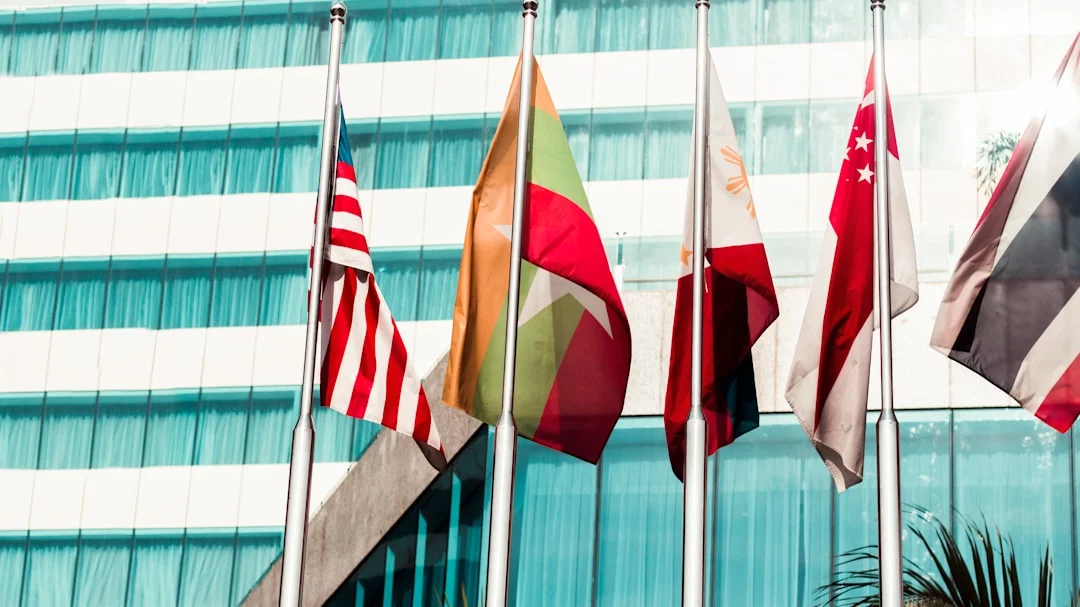
Photo by Kaung Myat Min on Unsplash