Cambridge quantum initiative (FormationQ/IonQ) Launch

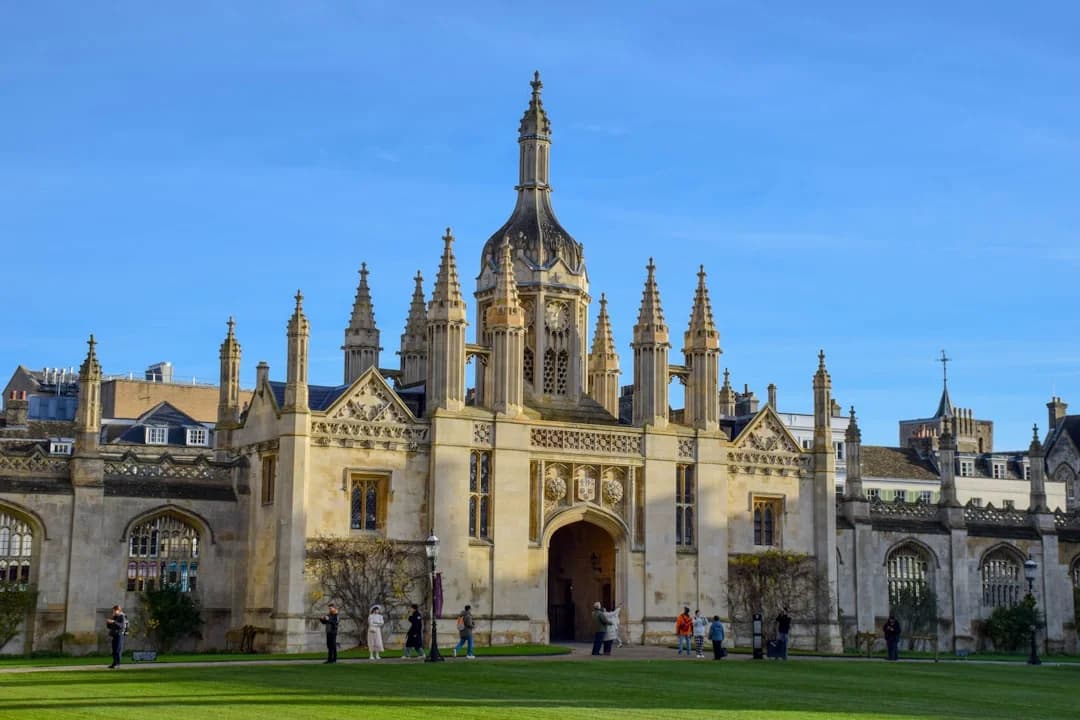
Photo by Adil Sattarov on Unsplash
The Cambridge quantum initiative (FormationQ/IonQ) has taken a high-profile step toward translating frontier quantum research into real-world applications. On February 3, 2026, the Cavendish Laboratory at the University of Cambridge announced a collaboration with FormationQ, an independent platform for quantum adoption and application, to launch a new applied quantum program. The initiative will be powered by IonQ’s trapped-ion quantum technology and supported by a philanthropic investment designed to accelerate practical deployment of quantum capabilities across science, security, medicine, and critical infrastructure. This marks a deliberate push to bridge the so-called “valley of death” between laboratory breakthroughs and market-ready quantum solutions, a goal echoed by industry observers and researchers alike. (philanthropy.cam.ac.uk)
The program, named the Quantum Technologies Accelerated Alignment Initiative, is a two-year effort designed to align cutting-edge Cambridge research with real-world use cases. A gift of £1,675,000 from FormationQ will fund not only hardware access through IonQ’s quantum platforms but also the governance, project management, and ecosystem-building required for sustained adoption. The initiative positions Cambridge as a testbed for scalable, industry-facing quantum applications while building a network of partners across academia, industry, and public-sector research. In the words of FormationQ’s leadership, the collaboration seeks to create institutional pathways and a lasting culture of quantum adoption beyond single projects. Nada Hosking, FormationQ’s founder and CEO, described the effort as a critical stride toward turning today’s discoveries into tomorrow’s practical revolutions. “Quantum’s bottleneck isn’t science—it’s the ecosystem,” she said, emphasizing the need for talent pipelines and interoperable institutions. (philanthropy.cam.ac.uk)
Opening paragraphs highlight the core players and the immediate intent: Canalizing Cambridge’s scientific leadership with FormationQ’s operational backbone and IonQ’s hardware into broader, industry-ready outcomes. The collaboration is explicitly framed as an effort to produce tangible results across three verticals and to lay the groundwork for longer-term deployment of quantum capabilities in enterprise and society. The press materials also foreground IonQ’s technology as the platform enabling these ambitious objectives, underscoring the practical emphasis of the Cambridge quantum initiative (FormationQ/IonQ). The Cavendish Laboratory’s own summary reinforces this point, noting that the initiative is designed to translate frontier quantum research into practical solutions while building an ecosystem for sustained deployment. (phy.cam.ac.uk)
Section 1: What Happened
Announcement details and participants
Date and official release
- The Cambridge quantum initiative (FormationQ/IonQ) was publicly announced on February 3, 2026, by the Cavendish Laboratory at the University of Cambridge, accompanied by FormationQ and IonQ. The Cambridge announcement confirms the program’s formal launch date and the parties involved, including details about the gift and program structure. Publication date: February 3, 2026. (philanthropy.cam.ac.uk)
Responsible institutions and roles
- University of Cambridge, Cavendish Laboratory: Hosts the collaboration and anchors the scientific leadership for the program. The Cavendish Laboratory’s leadership emphasizes the need to bridge industry and academia through coordinated research and deployment efforts. The partnership aims to leverage the Cavendish’s breadth of quantum research across information, control, devices, and materials, aligning them with real-world needs. (philanthropy.cam.ac.uk)
- FormationQ: Acts as the independent platform for quantum adoption and application, providing institutional pathways, governance, and long-term deployment support. FormationQ is described as the enabling platform and operator that will coordinate across the quantum ecosystem, building the structures needed for sustained adoption. Nada Hosking, FormationQ founder and CEO, frames the collaboration as a bridge between discovery and deployment. (philanthropy.cam.ac.uk)
- IonQ: Supplies the hardware backbone for the initiative. The press materials describe IonQ’s trapped-ion quantum systems as the technology powering the program, highlighting their state-of-the-art capabilities as the hardware foundation for Cambridge's applied projects. (philanthropy.cam.ac.uk)
Funding and program scope
- Gift amount: FormationQ committed £1,675,000 to fund the initiative, including access to IonQ’s quantum computing resources and related capabilities. The funding is described as facilitating the Quantum Technologies Accelerated Alignment Initiative, a two-year program designed to translate research into deployable solutions and to foster coordination within the broader quantum ecosystem. (philanthropy.cam.ac.uk)
Program structure and focus areas
- The Quantum Technologies Accelerated Alignment Initiative emphasizes three pillars:
- Improving how quantum systems can be used reliably outside the lab;
- Building and testing connected quantum technologies for communications and sensing;
- Preparing industry and society to work with emerging quantum capabilities.
- Each pillar will be led by Cambridge academic experts and supported by interdisciplinary teams, with a governance model intended to ensure research efforts respond to real-world use cases. This structure aims to create a project development approach that couples clearly defined challenges with collaborative execution. The initiative’s framing as a two-year applied program signals a concrete, time-bound attempt to produce tangible outcomes. (philanthropy.cam.ac.uk)
Technical backbone and hardware platform
- IonQ-powered hardware: The program explicitly leverages IonQ’s trapped-ion quantum systems, described as offering world-record gate fidelity and comprehensive connectivity. This hardware foundation is presented as essential for enabling the complex algorithms and experiments envisioned by Cambridge researchers. The emphasis on Irish fidelity and all-to-all connectivity underscores the ambition to tackle classically intractable problems with scalable quantum resources. (philanthropy.cam.ac.uk)

Leadership voices and strategic framing
- Mete Atatüre, Head of the Cavendish Laboratory, is quoted stressing that progress in quantum technologies requires continual collaboration between industry and academia. The announcement frames the Cavendish FormationQ-IonQ collaboration as a concerted effort to bring research from the lab to industry and society, with IonQ’s platform enabling practical experimentation and deployment. (philanthropy.cam.ac.uk)
- Nada Hosking, founder and CEO of FormationQ, emphasizes that adoption requires scalable talent pipelines, interoperable institutions, and shared stewardship for long-term deployment. Her remarks tie the program to a broader push to construct the “bridges” needed for real-world quantum impact. The formal gift and the partnership’s architecture are presented as cornerstone steps in shaping the quantum adoption ecosystem. (philanthropy.cam.ac.uk)
Section 2: Why It Matters
Ecosystem transformation and adoption dynamics
- The Cambridge quantum initiative (FormationQ/IonQ) is framed as a direct response to the ecosystem bottleneck in quantum technology. The official statements describe the bottleneck as less about scientific capability and more about the surrounding ecosystem—talent pipelines, governance, interoperability, and deployment pathways. This framing highlights a strategic shift from pure research toward integrated adoption—building a sustainable pipeline from university labs to commercial and governmental use cases. The quotes and program description reinforce this interpretation. (philanthropy.cam.ac.uk)

Implications for Cambridge researchers and spinouts
- By aligning Cavendish Laboratory research with FormationQ’s operating model, Cambridge creates a pathway for translating fundamental discoveries into validated prototypes, pilots, and potentially market-ready solutions. The program’s three pillars address reliability, connectivity, and deployment readiness, directly targeting the challenges researchers frequently encounter when attempting to scale beyond academic settings. The involvement of IonQ’s hardware adds a practical layer to the translation effort, offering researchers access to proven quantum platforms for testing, benchmarking, and workflow development. (philanthropy.cam.ac.uk)
Industry and workforce impact
- The collaboration foregrounds workforce readiness as a central concern, with the program designed to train and prepare a generation of quantum-literate scientists and engineers who can operate and sustain quantum-enabled systems in industry contexts. In the broader sector, this mirrors a growing emphasis on education, certification, and cross-sector collaboration to ensure that quantum technologies can be integrated into existing infrastructure and workflows. The three-pronged approach—lab-to-field reliability, networks for communication/sensing, and governance for adoption—maps onto widely discussed industry needs for interoperability and operational maturity. (philanthropy.cam.ac.uk)
Cambridge’s broader quantum strategy and benchmark context
- The Cambridge initiative sits within a broader national and regional push to accelerate quantum applications. While the Cavendish Laboratory anchors the program, it aligns with other Cambridge-affiliated ventures and initiatives seeking to translate research into practical outcomes. The partnership’s emphasis on governance and ecosystem-building complements the university’s long-standing emphasis on fundamental science while signaling a strategic preference for deployment-readiness in addition to discovery. The publicly stated rationale and program design provide a clear signal of Cambridge’s intent to shape the practical trajectory of quantum technologies. (phy.cam.ac.uk)
Global context and comparative implications
- The Cambridge quantum initiative (FormationQ/IonQ) arrives at a moment when major quantum programs and corporate collaborations are expanding globally. While not every detail is identical across programs, the Cambridge approach shares a common theme with other industry-funded translation efforts: bridging gaps between academic breakthroughs and scalable, real-world use. The involvement of IonQ—an industry leader in trapped-ion platforms—adds a significant credibility factor and positions Cambridge as a potential model for similar partnerships in other research hubs. Observers will watch how the initiative’s governance, milestones, and collaboration models influence subsequent collaborations in the quantum ecosystem. (philanthropy.cam.ac.uk)
Section 3: What’s Next
Timeline and key milestones
- 2026–2028: The two-year Quantum Technologies Accelerated Alignment Initiative will likely unfold across multiple phases, including initial scoping, pilot projects, platform benchmarking, and iterative deployment trials. While exact milestone dates beyond the program’s launch are not published in the core announcements, the two-year horizon suggests a structured sequence of pilots and evaluative checkpoints intended to demonstrate concrete, real-world utility. The program’s governance model and interdisciplinary teams will be essential to maintaining momentum and ensuring alignment with industry needs. (philanthropy.cam.ac.uk)

Hardware and platform milestones
- IonQ platform utilization: The initiative’s hardware backbone is IonQ’s trapped-ion platform, described as having high-fidelity gates and all-to-all connectivity. In practical terms, this means Cambridge researchers will have access to a mature quantum platform for running experiments that test the feasibility of proposed real-world use cases, such as materials science simulations or secure communications protocols. The emphasis on hardware maturity is intended to accelerate translation and reduce risk in early-stage deployments. (philanthropy.cam.ac.uk)
What to watch for and next steps
- Governance and collaboration models: The partnership’s structure—combining Cambridge scientific leadership with FormationQ’s institutional capabilities and IonQ’s hardware—will be watched closely by other universities and industry players seeking scalable adoption frameworks. The degree to which this model can be replicated or scaled to other institutions remains an open question, but the explicit focus on governance and ecosystem-building provides a potential blueprint for similar efforts. (phy.cam.ac.uk)
- Early outcomes and use-case validation: The program’s three pillars anticipate concrete projects that demonstrate the viability of quantum-enhanced solutions in non-lab environments. Early results—whether in numerical benchmarks, pilot deployments, or partner collaborations in industry—will shape December 2026 and beyond’s discourse around practical quantum advantage. Observers will be keen to see whether the pilot projects translate to feature-level capabilities or remain exploratory studies with limited deployment footprints. (philanthropy.cam.ac.uk)
Closing
The Cambridge quantum initiative (FormationQ/IonQ) represents a disciplined effort to move quantum research from the Cavendish Laboratory toward real-world impact. By pairing Cambridge’s scientific leadership with FormationQ’s ecosystem-building framework and IonQ’s hardware, the program aims to create a repeatable, scalable model for translating frontier quantum science into practical, deployable solutions. In a field where the gap between discovery and deployment is often cited as a critical bottleneck, this partnership signals a deliberate attempt to move beyond proofs of concept toward durable, industry-ready quantum capabilities. The coming two years will be a test of whether this combination of governance, collaboration, and technology can deliver on the promise of quantum-enabled advances in chemistry, materials science, secure communications, and beyond. As Cambridge and its partners embark on this path, readers and market observers should stay attuned to pilot results, new collaborations, and governance developments that could shape similar efforts worldwide. For ongoing coverage, Cambridge’s official announcements and FormationQ’s updates will be essential reference points as the initiative unfolds. (philanthropy.cam.ac.uk)
To stay updated on how the Cambridge quantum initiative (FormationQ/IonQ) evolves, monitor Cambridge’s Cavendish Laboratory news feeds, FormationQ's statements, and IonQ’s hardware-focused demonstrations as the two-year program progresses toward its milestones. The collaboration’s framing around industry adoption, workforce development, and governance suggests a broader horizon for quantum translation beyond this single program, potentially informing future partnerships across universities and industry.