Cambridge-open-science-2026: Open Access Push
Neutral, data-driven analysis of cambridge-open-science-2026 and its impact on research access, funding, and publishing.
 By Dominic Carr · 16 April 2026 · 12 min read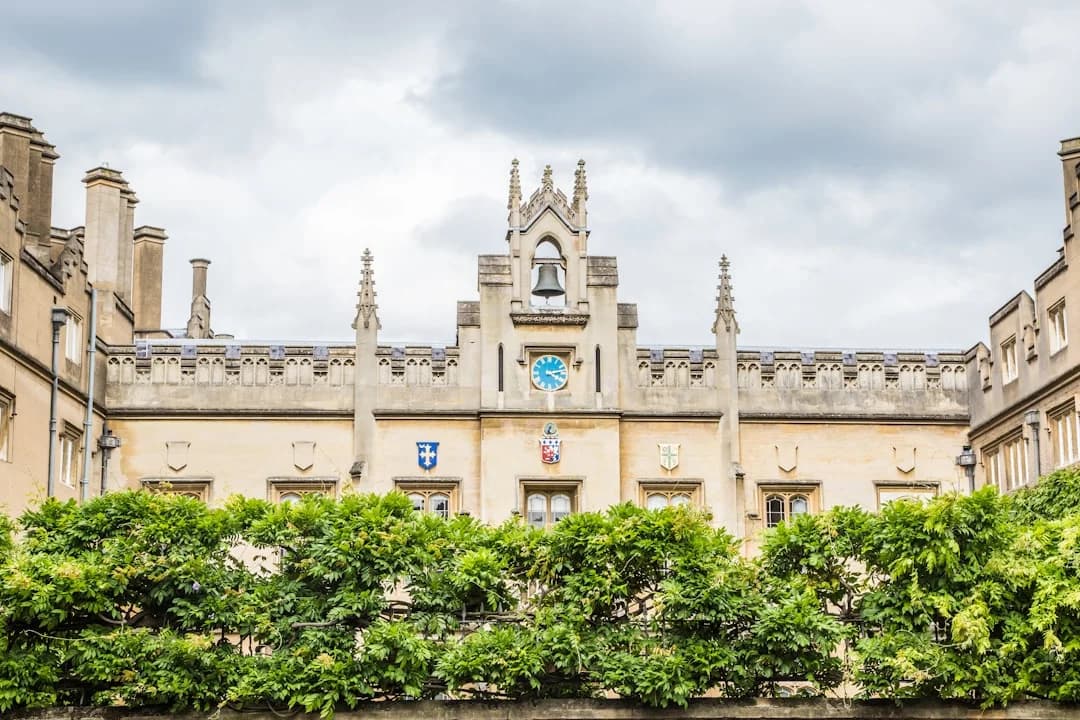
The Cambridge community faces a pivotal moment in cambridge-open-science-2026 as a series of coordinated announcements from University-affiliated publishers, libraries, and funding bodies signal a broad shift toward open access and open research practices. On today, April 16, 2026, Cambridge Review consolidates the latest verifiable developments, presenting what happened, why it matters, and what lies ahead for researchers, institutions, and market stakeholders. The goal is to provide a clear, data-driven picture of how Cambridge is shaping the open science landscape in 2026 and how those moves could influence global research ecosystems. The term cambridge-open-science-2026 is already appearing in policy briefs, funding calls, and scholarly publishing announcements as a unifying banner for a year characterized by intensified openness and shared data infrastructure. (cambridge.org)
Cambridge’s openness push in 2026 is not a single policy or grant; it’s a confluence of journal-level open access commitments, research infrastructure investments, and targeted funding programs designed to accelerate the dissemination and reproducibility of knowledge. In practical terms, cambridge-open-science-2026 translates into more journals becoming fully open access, more funding streams aimed at supporting open research practices, and a concerted effort to expand high-performance computing resources for open science projects. The practical implications are immediate for researchers who rely on rapid access to literature, for institutions balancing budgets with OA obligations, and for publishers navigating a rapidly evolving open access landscape. This article draws on official Cambridge sources and reporting from Cambridge-based programs to outline what has happened, why it matters, and what to expect next in 2026. (cambridge.org)
What Happened
Cambridge Open Access Milestones Begin to Take Shape
Cambridge publishers and university partners are accelerating their commitment to open access under the cambridge-open-science-2026 umbrella. A central signal comes from the Cambridge Open Equity Initiative, which states that from 2026, over half of its journals will be fully open access. This is framed as a strategic pivot designed to widen access to scholarly works and reduce barriers to knowledge for researchers in lower- and middle-income regions, as well as for practitioners and the general public. The initiative emphasizes that the shift to OA is not merely a status change in access but a rethinking of funding models and author-facing policies to support open dissemination. The initiative highlights that the transition will be gradual and data-driven, with ongoing monitoring of impact, author uptake, and financial sustainability. (cambridge.org)
In parallel, Cambridge’s OA momentum is reflected in the broader flip of journals to open access for 2026. Cambridge University Press and Cambridge University-based publication programs have announced that a substantial number of journals are flipping to open access in 2026, with a notable cohort of titles embracing fully OA models as part of the 2025–2026 transition. The reported figure cited by Cambridge Open Access platforms suggests that a sizable portion of Cambridge journals will operate under open access arrangements in 2026, reinforcing cambridge-open-science-2026 as a year of policy and publishing reform. While the precise list of titles and timelines is still being finalized, the direction is clear: a major portion of Cambridge’s scholarly output is moving toward OA in 2026. (cambridge.org)
Investment in Research Infrastructure Amplifies Open Science
Beyond publishing, cambridge-open-science-2026 encompasses a substantial investment in computational and data-driven infrastructure to support open science. The University of Cambridge reports a significant government funding boost to scale its AI research resources, including a £36 million investment aimed at increasing the AI Research Resource supercomputing capacity sixfold by spring 2026. This upgrade is designed to accelerate data-intensive research, enable reproducible analyses, and support open-science workflows that rely on high-performance computing. The timing is explicit: the capacity expansion is targeted for spring 2026, aligning with the broader notion that more powerful compute is essential to enabling transparent, reusable research outputs. This development is a core piece of the cambridge-open-science-2026 narrative, illustrating how openness requires robust technical infrastructure and predictable funding streams. (cam.ac.uk)
In addition to large-scale compute, Cambridge is expanding targeted funding programs to seed open research activities at the intersection of data science, AI, and interdisciplinary collaboration. For example, Cambridge’s Language Sciences Incubator Fund opened on November 27, 2025, with a funding decision anticipated in March 2026. This program supports interdisciplinary research in language sciences and demonstrates a broader institutional appetite for open, collaborative research ventures across disciplines. The timing of the incubator’s launch and subsequent decision underscores cambridge-open-science-2026 as a multi-threaded effort that blends OA publishing, data-sharing norms, and early-stage funding to foster openness from the ground up. (languagesciences.cam.ac.uk)
Open Access Momentum Aligns with Open Research Initiatives Across Cambridge
The Cambridge ecosystem is also aligning with broader open research initiatives beyond OA journals. The Cambridge University Library and related Cambridge research departments have pursued funding to examine and promote openness in humanities and social sciences—an important complement to OA book and article publishing. These efforts, while not purely OA mandates, emphasize openness as a research practice, including data sharing, transparent methods, and accessible archives. The library’s program signals Cambridge’s strategy to embed openness into the fabric of humanities research as well as STEM, supporting a comprehensive cambridge-open-science-2026 approach. (lib.cam.ac.uk)
The confluence of these actions—OA publishing commitments, the expansion of high-performance computing resources, and targeted open-research funding—reflects Cambridge’s approach to cambridge-open-science-2026 as a structured, data-informed effort to improve access, transparency, and collaboration in science and scholarship. The announcements align with public-sector openness targets and the university’s own strategic priorities for 2026 and beyond, establishing a clear year for milestone-setting and accountability in open science outcomes. As universities and publishers elsewhere grapple with OA mandates and budget pressures, Cambridge’s integrated approach offers a concrete case study in how to coordinate policy, funding, and infrastructure to advance openness at scale. (lib.cam.ac.uk)
Timeline Snapshot: Key Dates and Milestones Announced or Implied for 2026
- 2025-11-27: Language Sciences Incubator Fund opens, enabling seed funding up to £5,000 per project to support interdisciplinary open research in language sciences; a decision on proposals was announced for March 2026. This timing situates cambridge-open-science-2026 as an ongoing, rolling initiative rather than a single event. (languagesciences.cam.ac.uk)
- 2026 (spring): Cambridge’s AI Research Resource supercomputing capacity is expected to increase sixfold thanks to a £36 million government investment, providing substantially more compute power for open data analyses, reproducibility studies, and collaborative projects. The targeted milestone is spring 2026. (cam.ac.uk)
- 2026: Cambridge Open Equity Initiative aims for more than 50% of journals to be fully open access from 2026 onward, signaling a major OA threshold for Cambridge publishing programs. While the exact sequencing varies by title, the overarching goal for 2026 is explicit in the initiative’s communications. (cambridge.org)
- 2026: Additional Cambridge journals are expected to flip to open access as part of Cambridge University Press’s ongoing OA transformation, with numerous titles included in the 2025–2026 cycle. Reported numbers indicate a continuing trend toward broader OA coverage in 2026. (cambridge.org)
- 2026: Cambridge Festival and related public-facing science programs continue to expand, with 2026 programming highlighting openness and public engagement with science—often featuring discussions on open data, open methods, and open access publishing as part of the broader cambridge-open-science-2026 narrative. (cam.ac.uk)
Section 1 Summary: What happened in cambridge-open-science-2026 is not a single policy, but a coordinated set of announcements and program launches across Cambridge’s publishing, library, and research infrastructure ecosystems. The combined effect is a more open publishing environment, greater investment in open-ready computational resources, and targeted funding that supports open science practices at the researcher level, including early-career initiatives. The sources cited above provide the most direct evidence of the 2026 OA ambitions, compute upgrades, and funding signals that define this moment. (cambridge.org)
Why It Matters
Broader Accessibility and Equity Impacts

Photo by Phil Hearing on Unsplash
The shift toward cambridge-open-science-2026 is more than administrative reform; it has tangible implications for who can access scholarly work and under what terms. The Cambridge Open Equity Initiative explicitly positions OA as a pathway to broaden access for authors and readers, especially in low- and middle-income contexts. By prioritizing open access for a large share of Cambridge journals, the initiative aims to reduce subscription barriers and increase dissemination reach for high-quality research. In practice, this matters for researchers who rely on affordable or free access to literature when designing studies, teaching students, or performing literature reviews in fast-moving fields like AI, data science, and climate research. The initiative’s framework for OA also interacts with funder mandates and institutional policies, potentially reducing administrative friction for researchers who publish in Cambridge journals and enabling faster educational and policy-relevant knowledge transfer. (cambridge.org)
From an industry perspective, the OA trajectory at Cambridge contributes to a broader market shift where publishers and institutions are rethinking the economics of scholarly communication. The announced 2026 OA flips and the corresponding moves by Cambridge Press point to a market environment where open models become more common, which could influence library budgets, licensing strategies, and author-punding workflows. While open access can enhance visibility and collaboration, it also necessitates new financial models—such as article processing charges, institutional subsidies, and transformative agreements—that are under continuous evaluation by universities and publishers. The Cambridge OA momentum thus intersects with market dynamics that affect libraries, funders, authors, and service providers across the scientific publishing ecosystem. (cambridge.org)
Research Reproducibility, Collaboration, and Data Sharing
High-performance computing capacity is a critical piece of cambridge-open-science-2026. The commitment to scale AI research resources by spring 2026 is not only about speed; it enables larger-scale simulations, reproducibility checks, and transparent sharing of computational workflows. A more capable compute environment can support the storage and analysis of open data sets, while standardized pipelines and documentation improve reproducibility. The alignment of publishing openness with computing power creates a synergistic environment where researchers can publish openly, share data and code, and verify results more easily. This alignment is particularly relevant for interdisciplinary teams working at the intersection of AI, climate science, and language sciences, where data-intensive methods require robust, accessible infrastructure. The combination of OA publishing and enhanced compute resources positions Cambridge as a test bed for scalable open science practices in 2026 and beyond. (cam.ac.uk)
Implications for Early-Career Researchers and Institutions
Open science moves in 2026 affect early-career researchers in several practical ways. The Language Sciences Incubator Fund, with its November 27, 2025 opening and March 2026 decision timeline, provides a near-term example of how Cambridge is supporting new researchers who aim to collaborate across disciplines and publish openly. By funding pilot projects and encouraging cross-group collaborations, Cambridge is attempting to cultivate a generation of researchers who are comfortable with open methods, data sharing, and transparent reporting from the outset of their careers. This is important not only for scientific outcomes but also for career development, as early achievements in open science often translate into increased visibility and collaborative opportunities. (languagesciences.cam.ac.uk)
Strategic Positioning in the Open Science Landscape
Cambridge’s 2026 push also has strategic significance for the university’s broader mission within the UK and globally. The combination of OA publishing, open data, and scalable compute support positions Cambridge as a leading hub for open science practices. The OA transition is not merely about eliminating paywalls; it is part of a layered strategy to enhance knowledge diffusion, improve collaboration, and attract talent and funding to the Cambridge ecosystem. In a period when many institutions are re-evaluating their open science commitments, Cambridge’s integrated approach could influence policy discussions, funding allocations, and strategic partnerships across universities, research centers, and industry. The ongoing alignment with Cambridge Library initiatives and faculty research programs reinforces a long-term commitment to openness as a core institutional value rather than a transient trend. (lib.cam.ac.uk)
What’s Next
Short-Term Milestones to Watch (Mid-2026)
- Open Access Coverage: If cambridge-open-science-2026 follows its stated path, more than 50% of Cambridge journals are expected to be fully OA by mid-2026. Tracking the actual OA share across the Cambridge journal portfolio will be a key metric for measuring the success and pace of the OA transition. The Open Equity Initiative provides the guiding target and framework for this milestone. (cambridge.org)
- Journal Flips: The 2026 OA transformation is expected to continue with additional Cambridge journals flipping to open access. The pace and list of flips will influence researchers’ publishing options and institutional budgeting for APCs or alternative funding models. Keeping an eye on the official Cambridge Open Access pages will offer the most reliable, up-to-date lists. (cambridge.org)
- Compute Capacity Realization: The £36 million investment to scale Cambridge’s AI Research Resource is scheduled to deliver sixfold growth by spring 2026. The actual deployment milestones, test runs, and user onboarding timelines will be critical to assess how quickly the compute resources translate into open-science outcomes, reproducibility demonstrations, and new open data projects. (cam.ac.uk)
- Open Research Funding Signals: The Language Sciences Incubator Fund’s March 2026 decision will reveal how Cambridge is prioritizing cross-disciplinary openness, with potential follow-on rounds or new seed funds that emphasize open methods and shared data outputs. Expect announcements of selected projects and early results in early to mid-2026. (languagesciences.cam.ac.uk)
- Public Engagement and Education: Cambridge’s 2026 programming, including public science events and exhibitions, is likely to feature discussions on open science, transparency, and data sharing. These programs help translate policy shifts into public understanding and broad adoption among researchers and students. (cam.ac.uk)
Medium-Term Outlook (Late 2026 and Beyond)
- Open Data Infrastructures: As OA publishing grows and compute resources expand, Cambridge will likely invest more in open data repositories, interoperable standards, and cross-institutional data-sharing agreements. This could include partnerships with national or international open data initiatives, and the development of reproducible research frameworks across departments.
- Funding and Sustainability: The OA shift requires sustainable funding. Cambridge’s approach will be watched as a model for balancing OA costs with library budgets, grant funding, and institutional subsidies. Transparent reporting on cost-per-article, APC funding, and open access revenue will be key metrics to monitor.
- Global Competitive Landscape: Cambridge’s openness strategies may influence international peers, prompting other leading universities to accelerate OA policies or launch joint OA infrastructure projects. The resulting competition and collaboration could reshape scholarly communication norms and accelerate global adoption of cambridge-open-science-2026-inspired practices.
What to Watch for Next
- Policy Updates: As OA policies evolve, Cambridge will likely release further official statements detailing policy changes, funding guidelines, and performance metrics related to cambridge-open-science-2026.
- Research Outcomes: The real-world impacts of increased OA and enhanced compute will become evident in faster literature reviews, more collaboration across disciplines, and higher rates of data reuse in published studies.
- Industry Reactions: Publishers, libraries, and research funders will respond to Cambridge’s moves with new service offerings, licensing models, and OA financing strategies, shaping the broader market for open science in 2026 and beyond.
Closing
Cambridge’s 2026 push toward cambridge-open-science-2026 marks a deliberate, data-driven attempt to align publishing openness, research infrastructure, and targeted funding in a single, coherent agenda. The evidence available—from the Open Equity Initiative’s OA targets to the compute capacity expansion and the incubator-level funding for interdisciplinary work—suggests a year in which openness becomes a defining operating principle for Cambridge research and its partners. For researchers, librarians, funders, and publishers, the practical implications are immediate: more accessible literature, faster access to computational resources, and a clear pathway to building and sharing reproducible research. As Cambridge moves through 2026, readers and stakeholders should monitor the official updates from Cambridge Press, the University Library, and the university’s research centers to gauge progress against stated targets and to assess how cambridge-open-science-2026 translates into everyday research practice. The openness trend is not solely a Cambridge phenomenon; it is part of a global shift toward more transparent, collaborative science, and Cambridge’s 2026 actions will likely be watched by universities and publishers around the world as a potential blueprint for the next phase of open scholarship. (cambridge.org)

Photo by Chris Boland on Unsplash
As Cambridge continues to publish updates, analysts will look for concrete outcomes: the share of OA journals by year-end 2026, the rate of open data sharing in funded projects, the number of interdisciplinary collaborations seeded through new funds, and the real-world impact of expanded compute on research efficiency and reproducibility. For now, cambridge-open-science-2026 stands as a defined milestone—a year when openness, infrastructure, and funding converge to reshape how knowledge is created, shared, and used in the 21st century.