Cambridge Festival of Ideas 2026 Announced
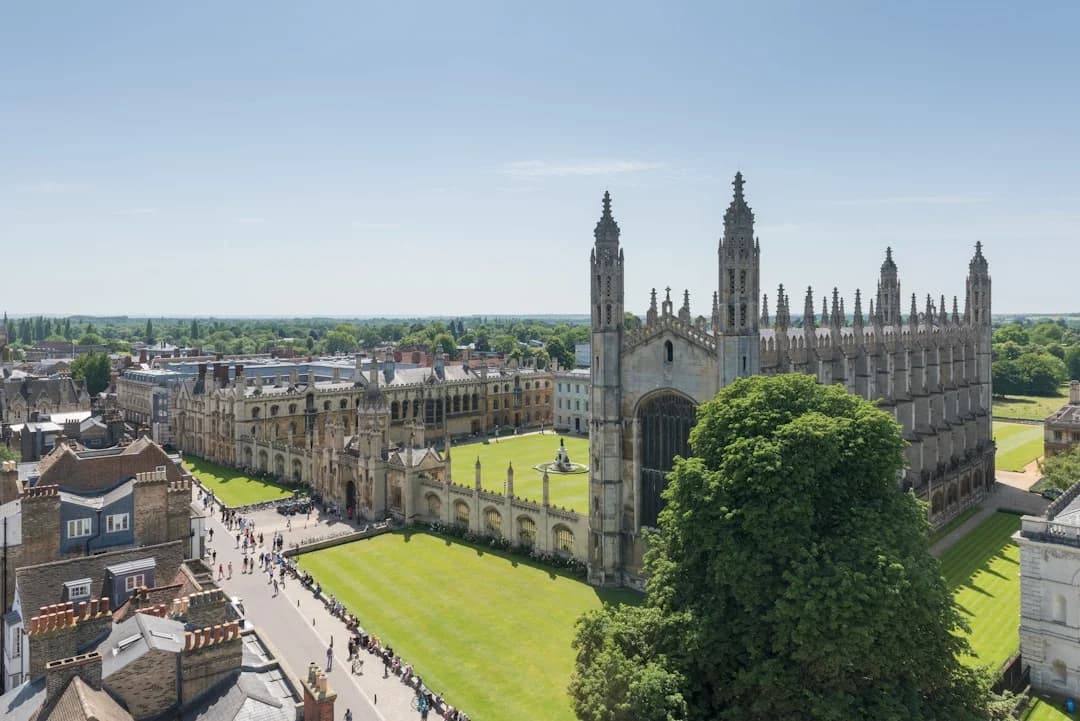
Photo by Jean-Luc Benazet on Unsplash
The Cambridge Festival of Ideas 2026 has been announced as a city-wide celebration of research, ideas, and public dialogue, with a program spanning March 16 to April 2, 2026. This year’s edition—part of Cambridge’s long-running tradition of opening the university to everyone—promises free talks, films, exhibitions, walks, and family-friendly events across multiple venues in Cambridge. The festival’s organizers emphasize that Cambridge Festival of Ideas 2026 is designed to connect communities with the university’s cutting-edge research and creativity, inviting residents and visitors to engage with topics that shape the future. The event schedule is officially set to run from March 16 through April 2, 2026, with a diverse lineup intended to be accessible and inclusive for all ages and backgrounds. (festival.cam.ac.uk)
In addition to in-person programming, the Cambridge Festival 2026 features online and on-demand components, reflecting a mixed-model approach that broadens access for audiences who cannot attend on-site events. The official Cambridge Festival site highlights a multi-venue, multi-format program that includes free talks, films, exhibitions, and family activities, underscoring the festival’s objective to bring world-class research to a broad public audience. As a city-wide initiative, the Cambridge Festival of Ideas 2026 engages not only the university’s departments and institutes but also local partners and community organizations, creating opportunities for dialogue across disciplines. The program details emphasize themes and pathways such as discovery, environment, health, and society, with the aim of presenting complex ideas in clear, engaging formats. (festival.cam.ac.uk)
The official programme—camfest 2026—provides a granular view of what attendees can expect, including talks at the Cambridge Union Debating Chamber, sessions in other campus venues, and a dedicated family weekend. The program’s homepage notes that some events are ticketed or require prior booking, while many are offered free of charge to the public. The Cambridge Union venue hosts a range of public conversations and expert-led discussions, including talks on the post-Ozempic world, energy transitions, science communication, and the ethics of technology. The festival also features a Family Weekend with hands-on activities and workshops designed to engage younger attendees and families, illustrating the festival’s commitment to broad-based participation. (festival.cam.ac.uk)
Section 1: What Happened
Major Announcement and Scope
-
The Cambridge Festival of Ideas 2026 was officially announced by the University of Cambridge as a city-wide celebration of arts, sciences, and ideas that shape our world. The festival runs from March 16 to April 2, 2026, with a program that blends online, on-demand, and in-person events. The organizers describe the festival as a platform connecting researchers and the public to explore, discuss, and debate Cambridge’s research and creative outputs. The event’s scope includes free events across multiple venues and a focus on accessibility and community engagement. (festival.cam.ac.uk)
-
The festival’s official calendar positions Cambridge Festival of Ideas 2026 within a broader tradition of public engagement in Cambridge, noting that the event spans 17 days and aims to open the university’s doors to a wide audience. This framing highlights the event’s role in strengthening public trust in academic research and inspiring future generations to pursue higher education and research careers. (festival.cam.ac.uk)
Key Venues, Formats, and Highlights
-
At the Cambridge Union, the festival presents a lineup of high-profile talks in the Debating Chamber and adjacent spaces. The programme includes sessions on obesity and post-Ozempic health, the future of breast cancer care, and explorations of truth in the 21st century. Booking is required for these events, and many are offered free to attendees. The event schedule, as listed in the official programme, places talks in the evening on specific dates (for example, late March and early April) to maximize accessibility for working professionals and students alike. (festival.cam.ac.uk)
-
The Cambridge Union Library venue also hosts sessions—such as a talk on lineage and heritage—featuring investigators and researchers sharing insights into personal journeys and broader historical questions. The Library events are part of the festival’s diverse programming, which blends science, history, and culture in a way that appeals to a broad public. (festival.cam.ac.uk)
-
The 2026 programme includes a suite of science-and-society conversations, such as:
- What is Truth? with Carol Vordman, a Cambridge alum and public figure who engages audiences in exploring epistemology and media literacy in the 21st century. This session is listed as a free event on a specified date in the programme. (festival.cam.ac.uk)
- Making Energy Choices: Heat Pumps, Solar Panels, Electric Cars, a panel discussion designed to demystify energy transitions and separate hype from reality in the UK’s cleaner, smarter energy future. This event is marked as free and scheduled for the evening on April 1. (festival.cam.ac.uk)
- The Conservation and Restoration of the World’s Coastal Ecosystems with Dr. Thomas Worthington, a session exploring biodiversity, climate resilience, and human impact on coastal zones. The event is listed as free with an evening slot on April 1. (festival.cam.ac.uk)
- The World in 2050 and Beyond with Professor Martin Rees, a renowned Cambridge cosmologist offering a forward-looking perspective on science, society, and the long-term trajectory of humanity. The talk is scheduled for an early April date with a 6 pm start and is listed as a free event. (festival.cam.ac.uk)
- FameLab East of England Final, returning to Cambridge as part of the festival’s science-communication strand, featuring finalists presenting concise, accessible explanations of their research. The event runs late on April 2 and is described as free. (festival.cam.ac.uk)
-
The festival’s family-focused weekend (28–29 March) forms a core part of the festival’s inclusivity strategy. Activities include fossil cabinet workshops, Greenland rock-exploration activities highlighting materials relevant to modern technology (like rare earth elements in EVs and wind turbines), and interactive neuroscience and child-development demonstrations. The Family Weekend is explicitly described as a key component of the Cambridge Festival 2026 programme, with multiple venues participating in hands-on activities for families. (festival.cam.ac.uk)
-
The festival’s theme areas—Discovery, Environment, Health, and Society—structure the programme and help attendees navigate cross-disciplinary content. The festival’s homepage shows a “Browse events by theme” feature, inviting audiences to explore content aligned with these broad areas, which aligns with Cambridge’s broader research strengths. (festival.cam.ac.uk)
-
In addition to venue-based talks, the Cambridge Festival 2026 emphasises online access and on-demand content, ensuring that audiences who cannot attend in person still obtain exposure to cutting-edge ideas. The festival’s multi-format approach is underscored by the program documentation and the festival’s general description of online, on-demand and in-person events. (festival.cam.ac.uk)
Timeline and Logistics
-
The official dates for Cambridge Festival of Ideas 2026 are fixed: March 16 to April 2, 2026. The festival’s organizers also note that the programme is subject to last-minute changes, with a caution that events may be updated or cancelled, so attendees should check the festival website for the latest information. This caveat is included in the programme PDF and the festival’s standard notices, reflecting a disciplined approach to event management. (festival.cam.ac.uk)
-
Booking policies vary by event. The programme consistently notes that bookings are required for all events hosted at certain venues, including the Cambridge Union Debating Chamber, and many events are free. Listeners and participants are advised to sign up early to secure seats, particularly for high-demand talks. (festival.cam.ac.uk)
-
The festival’s setup and logistics highlight partnerships with Cambridge’s cultural and research institutions, with the festival described as a collaborative endeavour that leverages the university’s public engagement mission. The About page for the Cambridge Festival notes the festival’s role in connecting communities with research and creativity, and describes the festival as spanning 17 days, reinforcing its scale and scope. (festival.cam.ac.uk)
Section 2: Why It Matters
Educational and Civic Impact
-
The Cambridge Festival of Ideas 2026 is positioned as a broad-based public education initiative designed to provide a platform for researchers and the public to engage with Cambridge’s research ecosystem. The festival’s aims emphasize equitable and inclusive audience engagement, the encouragement of higher education pursuits, and the promotion of public trust in academic research. These aims suggest a potential for meaningful civic impact by elevating scientific literacy and fostering informed public discourse on science, technology, and society. (festival.cam.ac.uk)
-
By featuring topics such as truth in the information era and the ethics of machine-influenced policy, the festival addresses timely questions at the intersection of science, technology, and society. The inclusion of talks on national and global health issues, climate and energy transitions, and the legal status of future technologies signals a deliberate effort to connect theoretical research with practical, policy-relevant concerns. The event lineup—including sessions on truth, energy, and coastal ecosystems—illustrates how Cambridge Festival of Ideas 2026 seeks to broaden public understanding of complex topics that influence daily life and long-term planning. (festival.cam.ac.uk)
Technology, Science, and Market Trends
-
The festival’s 2026 programme explicitly foregrounds technology and science, with talks that explore the societal implications of AI, genomic medicine, energy tech, and data-driven decision-making. The chairing and participation by Cambridge researchers and public-facing science communicators align with broader market trends toward increased transparency, public engagement, and accountability around emerging technologies. The “Legally coding humans, nature, and technology” session highlights a cross-cutting theme that resonates with many sectors as organizations grapple with governance and ethics in a world where legal and technological boundaries are rapidly evolving. (festival.cam.ac.uk)
-
The event’s energy-focused sessions reflect ongoing market and policy conversations about energy efficiency, smart grids, and sustainable infrastructure. The program’s emphasis on heat pumps, solar panels, and electric cars provides a practical lens on the UK’s energy transition, bridging consumer technology literacy and policy considerations. For readers tracking technology adoption and market readiness, the Cambridge Festival of Ideas 2026 offers a snapshot of how public dialogue is framing these conversations at a scholarly-public interface. (festival.cam.ac.uk)
-
The festival’s emphasis on environmental, health, and societal topics mirrors a broader trend in which technology, science, and policy converge to address urgent challenges—ranging from climate resilience to health equity. By hosting discussions at venues like the Cambridge Union and The Pitt Building, the festival creates moment-based opportunities for stakeholders, practitioners, and residents to exchange ideas, potentially informing future research directions, industry collaboration, and public-private partnerships. (festival.cam.ac.uk)
Who It Affects and Broader Context
-
The Cambridge Festival of Ideas 2026 touches a diverse audience, from school pupils and families to professionals, researchers, policymakers, and community groups. Its Family Weekend and free admission for many sessions indicate deliberate accessibility to non-academic audiences, a hallmark of Cambridge’s public-engagement ethos. The festival’s aim to engage with communities representative of local diversity reinforces this inclusive approach. (festival.cam.ac.uk)
-
Local institutions, businesses, and cultural organizations may find alignment with Cambridge Festival of Ideas 2026 to be a catalyst for community programming, collaboration with researchers, and cross-cultural exchange. The festival’s city-wide footprint and the inclusion of public-facing topics create a platform for cross-sector dialogue—an important signal for the Cambridge tech ecosystem and related industries that rely on skilled talent, informed consumers, and supportive policy environments. (festival.cam.ac.uk)
Contextual Significance in 2026
- Cambridge’s public-facing festival calendar has increasingly integrated science communication with cultural programming, reinforcing a model where research is made accessible through a mix of talks, performances, and hands-on activities. The Cambridge Festival’s official description highlights its role in presenting “the arts, sciences and ideas that shape our world,” a framing that resonates with contemporary discussions about science literacy, innovation ecosystems, and the role of public institutions in knowledge dissemination. Cambridge Festival of Ideas 2026 sits squarely within this context, emphasizing public access, inclusivity, and a broad thematic reach. (festival.cam.ac.uk)
Section 3: What’s Next
Timeline and Upcoming Milestones
- The Cambridge Festival of Ideas 2026 runs from March 16 to April 2, marking a concentrated period of public engagement with a dense calendar of talks and activities. Audiences should monitor the festival website for final updates to the programme, as the schedule is subject to change. The official dates and the downloadable programme provide the authoritative roadmap for readers planning their attendance. (festival.cam.ac.uk)
Next Steps for Readers and Practitioners
-
How to participate: With the festival’s “Book Here” and “Free” event design, readers are encouraged to sign up or reserve seats for events at venues such as the Cambridge Union and The Library. The programme clearly indicates booking requirements for on-site sessions, and many events carry no admission charge, making it accessible to a broad audience. Readers should check the festival website and the downloadable PDF for the latest booking instructions and session availability. (festival.cam.ac.uk)
-
Staying informed: The festival offers a mailing list and online updates to keep audiences informed about new additions, cancellations, and last-minute changes. Subscribing to updates is a practical step for readers who want real-time information about venue changes, speaker line-ups, and added sessions. (festival.cam.ac.uk)
-
Thematic navigation and planning: Given the spectrum of topics—from AI, ethics, truth, and health to climate and energy transition—readers can plan visits around themes aligned with their professional interests or personal curiosities. The festival’s online portal allows users to browse by theme (Discovery, Environment, Health, Society), aiding tailored scheduling for students, researchers, professionals, and curious members of the public. (festival.cam.ac.uk)
What to Watch For After the Festival
- Post-event reflections and ongoing conversations: As with prior Cambridge Festivals, segments of the 2026 programme are likely to generate follow-up discussions, articles, and potential collaborative projects across departments and community groups. While the festival itself is finite, the ideas it seed could influence future research agendas, public engagement initiatives, and cross-disciplinary partnerships within Cambridge and beyond. The university’s public engagement and communications channels typically document these outcomes in the weeks following the festival, offering readers continued coverage and context. (festival.cam.ac.uk)
Closing
The Cambridge Festival of Ideas 2026 stands out as a data-rich, agenda-setting public event that blends inquiry with accessibility. By presenting a mix of headline talks, neighborhood engagements, and family-friendly activities, the festival provides a platform for informed dialogue on AI, climate, health, and governance—topics that intersect with technology markets, policy development, and everyday life. As Cambridge continues to position itself at the nexus of research, innovation, and public discourse, Cambridge Festival of Ideas 2026 offers readers a timely lens into how communities react to and shape accelerating technological change. For readers seeking to stay in the loop, subscribing to festival updates and planning attendance around the official programme will be essential as the event unfolds from March 16 to April 2, 2026. (festival.cam.ac.uk)
Readers who want the most current details should consult the Cambridge Festival’s official programme and updates, as events can shift in the weeks leading up to the start date. The festival’s multi-venue, multi-format approach—paired with free access for many offerings—ensures broad participation and lays groundwork for ongoing conversations about technology, climate, culture, and public policy. The Cambridge Festival of Ideas 2026 thus serves as a timely barometer for how Cambridge and its audiences are engaging with fast-moving science and technology trends, while maintaining a commitment to accessibility and civic participation. (festival.cam.ac.uk)