Cambridge Festival 2026 AI and climate discourse
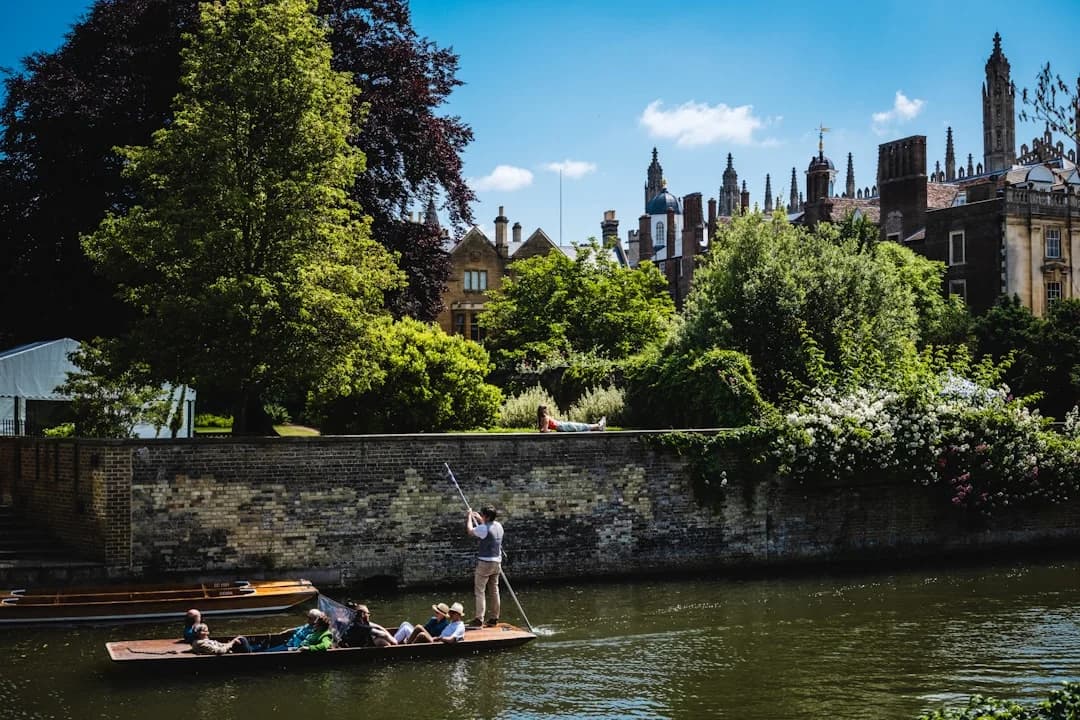
Photo by Chris Boland on Unsplash
The Cambridge Festival 2026 AI and climate discourse is shaping up to be a city-wide exploration of how artificial intelligence intersects with climate science, policy, and everyday life. The University of Cambridge and a network of partner institutions have organized a program designed to illuminate the role AI can play in climate research, policy design, and public engagement. The official programme launches on February 16, 2026, ahead of the festival window, and the festival itself runs from March 16 to April 2, 2026 across Cambridge’s campus and partner venues. The organizers emphasize a data-driven, accessible approach intended to inform public debate and professional practice alike. This development matters because it signals a sustained commitment to public-facing science communication at a moment when AI-enabled insights are increasingly shaping policy and business decisions around climate action. The Cambridge Festival 2026 AI and climate discourse is not a singular talk but a citywide sequence of events intended to connect researchers, policymakers, industry leaders, and citizens in a shared learning experience. (festival.cam.ac.uk)
Across the programme, participants will find more than 350 events, with the bulk offered free of charge. The festival’s web presence highlights a mix of talks, workshops, performances, exhibitions, walks, and hands-on activities designed to make frontier research tangible for non-specialists. This breadth supports a core objective of Cambridge Festival to demystify complex topics by pairing cutting-edge research with practical demonstrations and community engagement. The scale of the programme underscores Cambridge’s status as a hub for AI and climate science, while illustrating how universities and local institutions collaborate to broaden access to knowledge. The 350+ events figure is a benchmark that the organizers have used to describe the festival as a major, city-wide platform for dialogue about science, technology, and society. (cambridgenetwork.co.uk)
Two high-profile sessions illustrate the cross-cutting nature of the Cambridge Festival 2026 AI and climate discourse. On Wednesday, March 18, 2026, from 16:00 to 18:00, Cambridge Festival organizers will host Regulating AI for Climate and Nature in the Pavilion Room at Hughes Hall. The event brings together legal scholars, policymakers, industry practitioners, and researchers to probe whether new regulatory frameworks are needed to govern AI’s environmental impacts and how such rules might be designed. The session is part of a broader Cambridge Festival initiative aligned with Cambridge Climate Week and Green Week at Hughes Hall, and it includes a keynote from Yu-Ting Kuo, a Cambridge alum and Corporate Vice President at Microsoft who leads Agent AI development. This session embodies the festival’s aim to connect theoretical research with practical policy considerations that could influence climate action and governance. (climatehughes.org)
Another notable event is Developing AI for Science, Citizens and Society, scheduled for Saturday, March 22, 2026, from 11:00 a.m. to 5:00 p.m. at the Computer Laboratory, William Gates Building, Cambridge CB3 0FD. This open-access day showcases ai@cam’s initiative to demonstrate how AI can support science, public decision-making, and societal well-being. Attendees will encounter interactive demonstrations of AI-enabled dashboards and decision-support tools that tackle climate-relevant topics such as land-use planning, sustainable water management, and evidence-based policy design. In addition to showcasing AI’s capabilities, the event is positioned as a forum for critical discussion about where AI augments human judgment and where it may introduce new risks or biases—an emphasis consistent with the festival’s data-driven, balanced reporting approach. (festival.cam.ac.uk)
The festival’s official programme page confirms the return of Cambridge’s broader festival framework in 2026, with the festival running from March 16 to April 2 and a clear emphasis on free access to a majority of events. The Cambridge Festival’s own description frames it as a mix of online, on-demand, and in-person experiences that showcase the university’s research in real-world contexts, designed to spark curiosity across ages and backgrounds. This framing matters for readers because it situates AI and climate conversations within a broader ecosystem of science communication and public engagement that Cambridge consistently emphasizes in its outreach. (festival.cam.ac.uk)
Opening the door to public participation is a recurring theme at Cambridge Festival’s events, including a robust emphasis on transparency and scrutiny of research. The festival’s leadership has emphasized that universities carry responsibility to open knowledge to public dialogue, with a focus on decisions that affect society as a whole. This stance is complemented by the festival’s public-facing design, which includes free events, interactive formats, and opportunities for attendees to engage directly with researchers. The overall aim is to foster trust and understanding about how AI and climate science intersect with policy, economics, and daily life. (cambridgenetwork.co.uk)
Section 1: What Happened
Program Launch and Schedule
- February 16, 2026: The Cambridge Festival announces its full programme for 2026, signaling a data-driven, multi-venue lineup focused on AI and climate discourse. Tickets for many events are expected to be free, aligning with the festival’s accessibility goal. This launch date marks the formal opening of the festival’s audience-facing communications and enables the public to plan attendance across March and April. (cambridgenetwork.co.uk)
- March 16 – April 2, 2026: The festival takes place city-wide, spanning campus venues, partner institutions, and online formats. The schedule emphasizes a mix of talks, workshops, exhibitions, and performances designed to engage diverse audiences and to provide both depth and breadth in coverage of AI, climate science, policy, and society. The festival’s site highlights a curated set of themes, including Discovery, Environment, Health, and Society, with many events free to attend. (festival.cam.ac.uk)
- Notable sessions and timing: Among the headline AI/climate-focused program items are:
- Regulating AI for Climate and Nature — March 18, 2026, 16:00–18:00, Pavilion Room, Hughes Hall. This session features perspectives from law, business, policy, and research on whether new regulatory rules are needed for AI’s environmental impact, followed by a networking reception. The keynote will be delivered by Yu-Ting Kuo of Microsoft, a Cambridge alumnus and a prominent figure in Agent AI development. (climatehughes.org)
- Developing AI for Science, Citizens and Society — March 22, 2026, 11:00–17:00, Computer Laboratory, William Gates Building. The ai@cam program uses the Cambridge Festival platform to demonstrate how AI can support science, governance, and public engagement, including interactive dashboards and citizen-facing tools that illustrate climate and policy questions. The event description notes that attendees will interact with researchers about how AI can inform council decisions on climate and land use, among other topics. (festival.cam.ac.uk)
Notable Partnerships and Focus Areas
- Cambridge Festival’s broader ecosystem: The festival is anchored in the University of Cambridge’s research portfolio and its network of partner schools and institutions. The official festival page emphasizes a city-wide, inclusive approach to presenting world-class research in accessible formats. The 2026 edition reinforces this approach by combining online and on-site experiences, which is consistent with prior years’ emphasis on broad public access and cross-disciplinary dialogue. (festival.cam.ac.uk)
- Cambridge Zero and climate-related programs: The festival’s AI/climate discourse aligns with Cambridge Zero and related climate initiatives in Cambridge, underscoring the city’s ongoing investment in climate solutions and AI-enabled research. This alignment is reflected in Cambridge Zero’s own programming, including the Cambridge Climate Challenge and other climate-innovation activities that bring researchers together with industry partners and students. (zero.cam.ac.uk)
Audience Engagement and Early Reactions
- Early media coverage frames the festival as a timely platform for confronting “bold questions” at the intersection of AI and climate policy, technology ethics, and public trust. Coverage notes that the festival’s program will feature hundreds of researchers, practitioners, and public figures who will share insights and challenge assumptions about how AI can and should respond to climate challenges. This framing is important for readers who want to understand both opportunities and risks associated with AI-driven climate solutions. (cambridgenetwork.co.uk)
- A prominent voice in Cambridge Festival coverage emphasizes that the festival is designed to prompt public scrutiny and dialogue, not just to broadcast expert views. The festival’s leadership describes a space where evidence-based discussion can occur, with the aim of helping citizens, policymakers, and businesses navigate rapid technological change in a climate-conscious context. This emphasis mirrors the festival’s educational mission and its commitment to balanced, data-driven reporting. (cambridgenetwork.co.uk)
Section 2: Why It Matters
Policy Implications and Regulatory Considerations
- The Regulating AI for Climate and Nature session explicitly tackles governance questions: Do we need new rules to govern AI’s environmental footprint? If so, what should those rules look like, and who should enforce them? By bringing together legal scholars, policymakers, and industry voices, the session seeks to translate cutting-edge AI research into practical policy guidance with climate implications. The keynote by Yu-Ting Kuo adds a corporate perspective on AI development and governance in the climate domain. This session’s framing reflects a broader policy conversation underway in Cambridge and beyond about aligning AI innovation with climate resilience and sustainability goals. (climatehughes.org)
- The Cambridge Festival’s overall emphasis on open, accessible discourse is relevant to regulatory discussions. By presenting a large slate of free events and encouraging public participation, the festival helps ensure that regulatory questions are debated with input from diverse stakeholders, including students, researchers, industry partners, and local residents. This approach contributes to more informed, democratically grounded policy outcomes in an era where AI and climate policy intersect on many fronts. (festival.cam.ac.uk)
Public Understanding, Trust, and Knowledge Translation
- The festival’s data-driven, evidence-based storytelling is designed to make complex topics tangible for non-specialists. The inclusion of interactive demonstrations, citizen-facing AI dashboards, and hands-on activities allows attendees to observe how AI can be used to measure, model, and respond to climate risks. This approach aligns with the festival’s mission to open research to scrutiny and dialogue, which is essential for building trust in AI-enabled climate solutions. (festival.cam.ac.uk)
- The Cambridge Festival’s 2025 climate debates and ethics discussions provide a historical context for why 2026’s AI/climate discourse matters. In 2025, the festival hosted climate justice debates and sessions on AI ethics, illustrating the long-running emphasis on balancing innovation with social responsibility. Those efforts help set expectations for a data-driven, balanced coverage of AI’s role in climate action in 2026. Readers can expect continued engagement with questions of access, equity, and accountability. (cam.ac.uk)
Local and Global Community Impacts
- Cambridge’s AI and climate initiatives have tangible local relevance. The climate-challenge ecosystem in Cambridge (Cambridge Climate Challenge, Cambridge Zero, Cambridge Enterprise) creates opportunities for student teams and researchers to develop climate-focused AI solutions, potentially accelerating innovation pipelines from lab to market. The Cambridge Climate Challenge, with prizes and mentorship, is one example of how the city’s institutions are translating research into practical outcomes that can inform policy and industry practice. (zero.cam.ac.uk)
- The festival’s cross-institutional approach also strengthens Cambridge’s international profile as a hub for AI and climate research. By coordinating events across universities, colleges, and city venues, Cambridge positions itself to attract visiting researchers, industry partners, and media attention focused on AI-driven climate solutions—an effect that can influence global conversations about AI governance, climate adaptation, and science communication. (festival.cam.ac.uk)
Economic, Educational, and Social Considerations
- For students and early-career researchers, the Cambridge Festival provides exposure to frontier AI and climate topics beyond the classroom. Sessions like Developing AI for Science, Citizens and Society offer practical insights into how AI can be studied and deployed responsibly, while also inviting critique of potential biases, data gaps, and inequities that may accompany AI-enabled climate action. This aligns with Cambridge’s broader emphasis on responsible innovation and public accountability in research. (festival.cam.ac.uk)
- Local businesses, NGOs, and public sector organizations stand to benefit from the festival’s emphasis on collaboration and knowledge exchange. By highlighting how AI tools can inform climate policy, urban planning, disaster risk reduction, and sustainability initiatives, the festival creates opportunities for partnerships, pilot programs, and community-driven innovation. The event’s public-access design increases the likelihood that non-academic stakeholders will engage, learn, and participate in the discourse. (festival.cam.ac.uk)
Expert Voices and Analysis
- The Cambridge Festival’s leadership and partner organizations have underscored the importance of public discourse around AI and climate issues. The festival manager’s reflection on the 2026 edition underscores the event’s mission to foster critical thinking, cross-disciplinary dialogue, and action-oriented learning grounded in research and lived experience. This framing matters for readers who want balanced, evidence-based journalism that connects research outcomes to real-world implications. (cambridgenetwork.co.uk)
Section 3: What’s Next
Timelines, Milestones, and Ongoing Programming
- February 16, 2026: Full programme launch. This date marks the formal opening of public access to the Cambridge Festival’s AI/climate discourse lineup, enabling attendees to select sessions most relevant to their interests and professional needs. The emphasis on a complete programme release signals a commitment to transparency and broad participation. (cambridgenetwork.co.uk)
- March 18–22, 2026: A pair of flagship events—Regulating AI for Climate and Nature (March 18) and Developing AI for Science, Citizens and Society (March 22)—provide a cross-cutting view of policy, ethics, technology, and public engagement. These sessions emphasize governance questions, quality of evidence, and the social implications of AI-enabled climate solutions, aligning with Cambridge’s climate and AI research ecosystem. (climatehughes.org)
- March 16 – April 2, 2026: The festival’s main window, during which hundreds of events will unfold across Cambridge and online. Readers will want to monitor the official Cambridge Festival site for updates to the schedule, as more sessions and guest speakers may be added in the run-up to the festival. The scale and schedule will require ongoing monitoring for the latest changes. (festival.cam.ac.uk)
- Early May 2026 and beyond: While the primary festival window ends in early April, Cambridge’s climate- and AI-focused programs—such as the Cambridge Climate Challenge and related AI for Climate & Nature initiatives—continue after the festival through ongoing workshops, competitions, and collaborative opportunities. Those programs reflect Cambridge’s longer-term strategy to translate festival ideas into sustained action and entrepreneurship. (zero.cam.ac.uk)
What to Watch For and How to Participate
- Audience expansion and accessibility: The Cambridge Festival consistently emphasizes free access to events and broad public engagement. The continued focus on accessibility is a signal that readers can expect more opportunities to engage with AI/climate discourse beyond traditional academic audiences. This approach also supports local schools, community groups, and lifelong learners who are increasingly participating in science communication efforts. (cambridgenetwork.co.uk)
- Technological and policy intersections: Expect further sessions exploring how AI tools can augment climate science, forecasting, and decision-making, alongside discussions about governance, ethics, and equity. The Regulating AI for Climate and Nature session exemplifies the type of dialogue that could shape future policy, industry standards, and research practices. The ongoing participation of major technology players in Cambridge events will likely amplify these conversations and spur cross-sector collaboration. (climatehughes.org)
What Cambridge Review Readers Should Do Next
- Stay informed with official updates: The Cambridge Festival page remains the authoritative source for schedules, speaker lists, and ticketing information. Subscribing to updates ensures readers have the latest details on sessions that intersect AI and climate discourse. (festival.cam.ac.uk)
- Explore complementary programs in Cambridge: Given the broader ecosystem of climate and AI initiatives in Cambridge, readers should monitor Cambridge Zero, Cambridge Enterprise, and related programs such as the Cambridge Climate Challenge for opportunities to participate, compete, and collaborate. These programs offer practical avenues to translate festival insights into real-world impact. (zero.cam.ac.uk)
- Consider regional and international context: As Cambridge hosts these events, other universities, think tanks, and industry groups are likely to host parallel activities that explore AI and climate topics. Readers may benefit from cross-referencing Cambridge Festival content with related events in Cambridge and beyond to gain a more complete view of the field’s trajectory in 2026. (cam.ac.uk)
Quotations and expert perspectives
- The Cambridge Festival’s leadership emphasizes a culture of public scrutiny and inclusive dialogue. As festival manager David Cain noted in coverage, the 2026 edition is shaped by a belief that “truth, progress, democracy and even expertise are under real strain,” and that universities carry a responsibility to open research to public scrutiny and debate. This perspective frames the festival as a platform for rigorous, evidence-based discussion that is accessible to a broad audience. (cambridgenetwork.co.uk)
- In the Regulating AI for Climate and Nature session, keynote speaker Yu-Ting Kuo—the Microsoft executive leading Agent AI development—will bring a corporate perspective to regulatory questions at the intersection of AI and climate action. The inclusion of industry voices underscores the festival’s goal of bridging academic research with policy and practice. (climatehughes.org)
Closing The Cambridge Festival 2026 AI and climate discourse stands as a landmark event for Cambridge and the broader science-adjacent community, explicitly linking AI research with climate science, governance, and public engagement. With more than 350 events, a mix of online and in-person formats, and sessions that directly address policy, ethics, and practical applications, the festival offers a comprehensive view of where AI and climate discourse stand today and where they may head next. The festival’s data-driven, accessible approach aligns with Cambridge’s reputation for rigorous research communication and its commitment to informing public discourse on critical issues. To stay informed, readers should monitor the official Cambridge Festival site for updates, sign up for updates, and consider linking festival content with Cambridge Zero and Cambridge Enterprise programs to explore opportunities for collaboration and innovation in AI-driven climate solutions. (festival.cam.ac.uk)