Cambridge Dawn AI supercomputer upgrade 2026 Boosts Compute
Neutral, data-driven analysis of the Cambridge Dawn AI supercomputer upgrade 2026 and its implications for AI research, industry, and policy.
 By Fiona Galloway · 3 March 2026 · 11 min read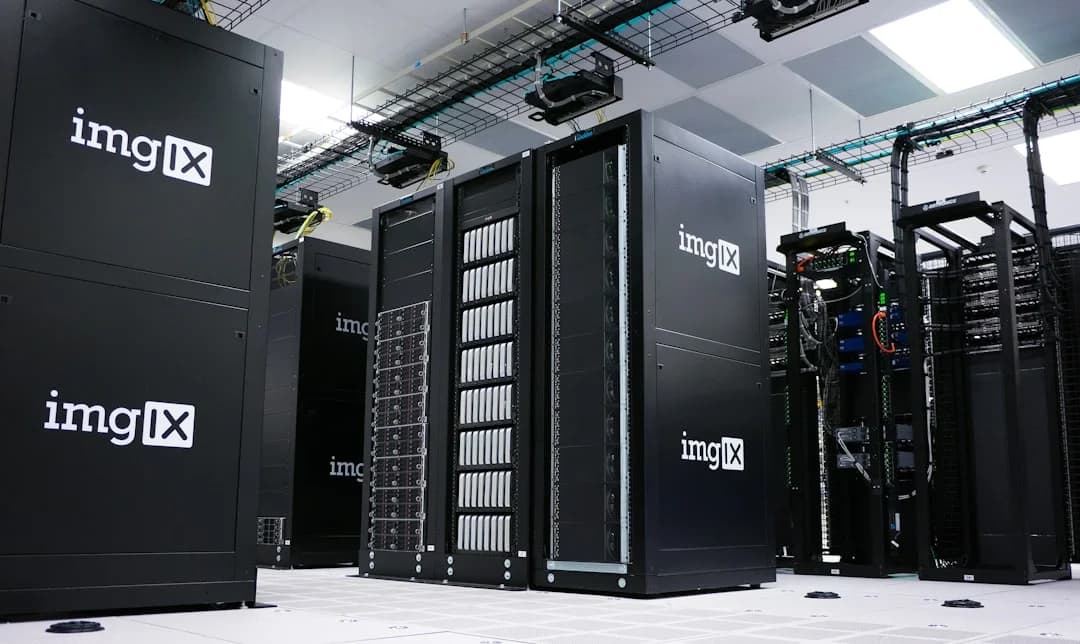
Cambridge is set to amplify one of the UK’s most powerful AI-focused computing resources. On January 26, 2026, the government announced a £36 million investment to boost the Cambridge DAWN supercomputer sixfold, with the upgrade slated to become operational by Spring 2026. The news places Cambridge at the center of a national push to scale sovereign AI compute capacity, accelerating research timelines and enabling broader access for researchers and startups alike. This development is tied to the AI Research Resource program, which aims to democratize access to high-end AI infrastructure and reduce reliance on external cloud providers for critical workloads. The Cambridge Dawn AI supercomputer upgrade 2026 is being framed as a concrete link between national policy, university research, and industry collaboration, underscoring the government’s commitment to an AI-enabled public sector and innovation economy. (gov.uk)
The upgrade represents more than a hardware refresh. The sixfold compute boost will bring a substantial increase in throughput for AI training and inference, enabling larger models and bigger datasets to be processed at scale. The initiative makes more cutting-edge AI chips available free of charge to UK researchers and startups, expanding the practical accessibility of top-tier compute resources that were previously out of reach for many entities. The move is designed to accelerate breakthroughs in healthcare, climate modelling, public services, and other mission-critical areas, while also supporting the UK’s broader aim to build a competitive AI economy. The DAWN system is already a foundational tool for dozens of ongoing projects; the upgrade is expected to unlock hundreds more. (gov.uk)
In the immediate wake of the announcement, observers note that the upgrade aligns Cambridge’s capabilities with a broader national strategy to reach “exascale-like” AI readiness through a staged, affordable investment path. The government frames this as a practical investment in human capital and institutional collaboration, rather than a single mega-project. Cambridge researchers and industry partners welcomed the news, emphasizing both scientific potential and the importance of keeping innovation within the UK research ecosystem. The upgrade’s timing — with implementation beginning in early 2026 and full operation anticipated by spring — is intended to ensure researchers can begin leveraging enhanced capabilities within the current academic year. As one Cambridge official underscored, this is a pivotal moment for turning AI research into tangible public benefits. (gov.uk)
Section 1: What Happened
Announcement details
The government’s £36 million investment
In a formal announcement on January 26, 2026, the Department for Science, Innovation and Technology (DSIT) and Parliament member Kanishka Narayan disclosed a £36 million investment intended to boost Cambridge’s AI-focused supercomputing capacity by six times. The government described the plan as part of the AI Research Resource (AIRR) program, which aims to increase sovereign access to high-performance computing for UK researchers and startups. The press materials emphasize that the upgrade will fundamentally expand the DAWN system’s horsepower and accelerate breakthroughs in health, climate science, and public sector innovation. The official press release explicitly notes the sixfold power boost and the timetable to operational readiness by Spring 2026. (gov.uk)
Cambridge and AIRR: a national compute backbone
University communications and government summaries highlight that the upgrade is a keystone of the AIRR initiative, designed to provide free access to advanced AI compute for eligible users across academia and industry. Cambridge’s own materials note that the DAWN system already supports hundreds of projects and that the expanded capacity will sustain ongoing work while enabling new, more ambitious research programs. By integrating with AIRR, the upgraded DAWN system will connect researchers with cutting-edge hardware, software stacks, and large-scale data resources that underpin modern AI R&D. (cam.ac.uk)
Technical scope: GPUs, platform, and partnerships
The upgrade is described as replacing or augmenting a portion of DAWN’s GPU fleet with AMD Instinct MI355X accelerators, leveraging AMD’s CDNA 3 architecture for large-scale transformer workloads and deep learning. Dell Technologies is identified as the primary hardware platform supplier, ensuring a scalable and reliable compute environment for continuous research activity. The combination of MI355X GPUs and a Dell-based infrastructure is expected to raise peak performance, improve energy efficiency per operation, and support more simultaneous user jobs. This configuration and collaboration underpin the stated sixfold increase in practical AI compute capacity. The announcements also emphasize sustained access to this upgraded capability for UK researchers and startups. (gov.uk)
Timeline and milestones
Start date and rollout

Photo by ZENG YILI on Unsplash
Officials indicated that the upgrade would be implemented over the first half of 2026, with the enhanced capabilities available to researchers by Spring 2026. The exact launch window is described in government communications as “as early as Spring 2026,” reflecting a phased deployment that prioritizes minimal disruption to ongoing research projects while ramping up capacity. The timeline aligns with broader UK AI strategy milestones and the AIRR program’s goals of expanding domestic sovereignty in AI compute. (gov.uk)
Milestones and user access
A core milestone is the expansion of access levels under AIRR, enabling more UK researchers and startups to run large-scale AI experiments at no direct compute cost, constrained by program policies. The government and Cambridge sources emphasize that the upgraded DAWN system will be a national resource, with expanded capacity designed to handle high-throughput workloads, longer training cycles, and more complex data pipelines. The expected outcomes include faster development cycles for health tech, climate research, and public-service tools. (gov.uk)
Integration with broader UK AI initiatives
Beyond the immediate DAWN upgrade, the announcements situate the Cambridge system within a wider national narrative about AI sovereignty and infrastructure modernization. The government has highlighted plans to scale compute capacity across the UK through investments and partnerships, positioning Cambridge as a flagship site for a broader ecosystem that includes industry collaborations and research consortia. This alignment with national policy is reinforced by related coverage on government channels and university communications. (gov.uk)
Technical specifics
Hardware and architecture
The upgrade features AMD Instinct MI355X accelerators, integrated within a Dell HPC platform. The MI355X GPUs are designed for large-scale AI workloads, including transformer-based models, with performance and energy efficiency advantages over prior generations. The CDNA 3 architecture underpins these accelerators, enabling higher throughput for AI training and inference tasks. The Dell platform is intended to deliver scalable compute nodes, robust interconnects, and reliable system administration to support a growing user base. These hardware choices reflect a strategic balance between performance, power efficiency, and total cost of ownership for a national research resource. (gov.uk)
Software stack and user access
Public materials from Cambridge and government sources emphasize the availability of a comprehensive software stack to accompany the hardware upgrade. This includes ecosystem tooling for researchers, integration with AIRR’s governance framework, and support for a broad set of AI workloads—from model training to deployment in experimental environments. The emphasis on a robust software environment is intended to reduce friction for institutions and startups that need to scale AI experiments quickly and responsibly. (cam.ac.uk)
Expected capacity increase and impact on workloads
Officials project a sixfold increase in compute capability, translating into the ability to train larger models faster, run more complex simulations, and accelerate data-intensive AI research cycles. The expanded capacity is expected to reduce queue times, shorten time-to-insight for projects spanning healthcare, climate science, public services, and beyond, and enable more ambitious collaborations among universities, hospitals, and industry partners. The DAWN upgrade is positioned as a tangible driver of rapid experimentation and translational research within the UK’s science base. (gov.uk)
Section 2: Why It Matters
Impact on research and science
Accelerating medical and healthcare AI
Photo by Possessed Photography on Unsplash
Analysts and Cambridge researchers point to potential gains in healthcare AI, including faster development of diagnostic tools, more accurate disease detection, and accelerated drug discovery workflows. The DAWN upgrade is expected to enable researchers to train and validate models on larger patient datasets, accelerating the translation of AI innovations into clinical practice. The government and university messaging highlight examples such as tools for early disease detection and improved public health outcomes, with the promise of clinically meaningful benefits across NHS pathways. (cam.ac.uk)
Climate, environment, and resilience
Enhanced compute capacity on DAWN will support more detailed climate modelling and environmental research, improving forecasts and enabling scenario analysis at higher resolution. This capacity is relevant for regional planning, disaster preparedness, and climate-resilience planning for communities exposed to extreme weather. Cambridge and government communications stress that the upgrade will empower researchers to run high-fidelity simulations and to explore complex, data-rich models that were previously impractical at scale. (cam.ac.uk)
Public sector and policy tools
The AIRR program’s emphasis on providing free or low-cost access to powerful AI compute is framed as a mechanism to modernize public services and expand evidence-based policy tools. Proponents argue that faster model development can improve public health screening, administrative efficiency, and service delivery, while also enabling more rigorous evaluation of public sector interventions. The government’s language highlights practical outcomes, including enhanced disease surveillance, faster service delivery, and better climate risk management. (gov.uk)
Economic and strategic implications
UK AI competitiveness and sovereignty
In a policy context, the upgrade is portrayed as a strategic move to strengthen the UK’s position in AI research and industry. By increasing sovereign compute capacity and reducing the need to rely on overseas cloud providers for core workloads, the government aims to attract talent, stimulate startups, and fuel collaborations across academia and industry. Financially, the £36 million investment represents a targeted, time-bound infusion intended to yield outsized research output and demonstrable public-good benefits. Analysts note that this approach aligns with broader European and global debates about AI infrastructure, national resilience, and domestic capability in high-performance computing. (gov.uk)
Partnerships and ecosystem effects
Dell’s hardware platform and AMD’s MI355X accelerators reflect a public-private collaboration that is designed to spur a broader ecosystem of UK AI software developers, startups, and research groups. The arrangement signals a model whereby premier hardware is paired with local software stacks and governance frameworks to maximize research productivity and knowledge transfer. Observers expect this to catalyze new projects, attract investment, and create spillover benefits for related sectors, including healthcare tech, climate analytics, and government technology modernization. (gov.uk)
Context and background
National strategy scaffolding
Photo by Kevin Ache on Unsplash
The Cambridge upgrade sits within a wider national strategy to expand AI compute capacity and to position the UK as a major hub for AI innovation. Commentary from policy and financial outlets underscores a push toward a more self-reliant AI infrastructure and a structured pathway to scale compute capacity in a financially sustainable way. The Financial Times and government communications place the Cambridge DAWN upgrade as a cornerstone of this broader plan, with anticipated long-term effects on research throughput, industry competitiveness, and public service modernization. (ft.com)
Global context
While Cambridge’s upgrade is noteworthy domestically, it also fits into a global competition for AI compute leadership. The emphasis on transformer-friendly GPUs, scalable data processing, and international partnerships reflects common industry patterns as nations invest in flagship AI accelerators and national compute backbones. This context matters for researchers who must navigate evolving access models, licensing terms, and collaboration opportunities across borders. (gov.uk)
Section 3: What’s Next
Timeline and future milestones
Near-term (Spring 2026)
With the upgrade slated to be operational by Spring 2026, readers should expect an initial ramp period during which usage data will be gathered, workloads will be validated, and access protocols will be refined. Institutional partners will begin migrating experiments onto the upgraded DAWN infrastructure, and early outputs are anticipated in ongoing projects spanning health, climate, and public services. Observers will watch for metrics such as user uptake, project count, and early performance indicators to assess the upgrade’s immediate impact. (gov.uk)
Medium term (2026–2027)
Beyond spring activation, the DAWN upgrade is positioned to scale with AIRR governance, enabling more institutions to participate in large-scale AI research. The strategic objective is to sustain growth in research output, foster industry-academic collaborations, and demonstrate tangible public-value outcomes from AI-driven innovations. This period will likely see expanded case studies, more collaborative grant opportunities, and increased visibility for UK-based AI research on the world stage. (cam.ac.uk)
Long-term implications and national plans
Looking further out, the upgrade is framed as a stepping stone toward broader national compute capacity expansion. Analysts and policymakers anticipate ongoing investments and potential new buildouts that align with evolving AI workloads and the needs of public sector applications. The Financial Times coverage suggests that national planning for sovereign AI infrastructure remains a central priority, with a multi-year horizon that includes both hardware refresh cycles and software-stack enhancements. Stakeholders will be watching for updates on additional AIRR milestones, funding rounds, and policy adjustments that shape how Cambridge’s DAWN system fits into the UK’s long-term AI roadmap. (ft.com)
What readers should watch for
- Usage metrics: project counts, active users, and throughput improvements on the upgraded DAWN system.
- Research outcomes: new publications, chip-scale innovations, and clinical or environmental advancements enabled by the sixfold compute boost.
- Access and equity: how AIRR expands opportunities for startups and smaller institutions to leverage top-tier AI compute.
- Public sector tools: measurable improvements in healthcare, climate resilience, and citizen services driven by AI-enabled analyses.
Closing
The Cambridge Dawn AI supercomputer upgrade 2026 marks a decisive step in the UK’s AI compute story. By coupling a substantial government investment with AMD’s MI355X accelerators and a Dell-based HPC platform, the upgrade aims to deliver a sixfold boost in capacity while broadening access to researchers and startups through the AIRR framework. The immediate focus is on accelerating health research, climate modelling, and public-service innovations, but the implications run much deeper — shaping UK competitiveness in AI and providing a practical, scalable model for how public resources can catalyze scientific breakthroughs.
As Spring 2026 approaches, stakeholders across academia, industry, and policymakers will be watching for early indicators of impact: faster model cycles, more rapid experimentation, and a measurable uptick in collaborative projects stemming from DAWN’s expanded capabilities. The broader narrative — a national, data-driven approach to AI infrastructure — suggests that Cambridge’s upgrade will serve as both a catalyst for discovery and a proving ground for governance frameworks that ensure AI development benefits are widely shared. For readers who want to stay informed, Cambridge’s official updates, DSIT communications, and AIRR program briefings will be the most reliable sources of forthcoming milestones and outcomes. (gov.uk)