Cambridge black hole EHT moving image Campaign

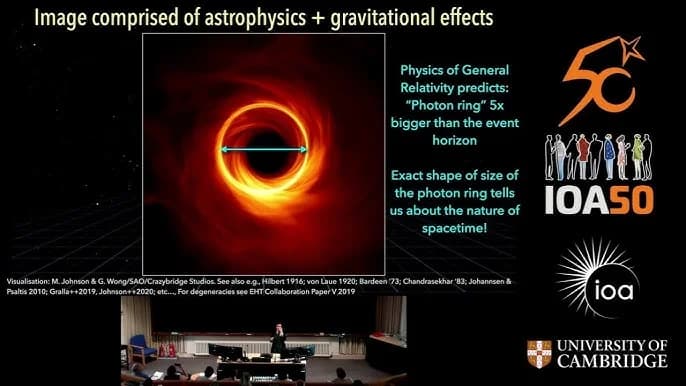
In a move that signals a new era in black hole science, a Cambridge-backed initiative tied to the Event Horizon Telescope (EHT) is moving ahead with a high-stakes plan to produce the Cambridge black hole EHT moving image—a time-resolved sequence that could become the first moving picture of a supermassive black hole in action. The project, announced ahead of an intensive observing window scheduled for March and April 2026, centers on the black hole at the heart of the galaxy Messier 87 (M87*). If successful, the campaign would stitch together dozens of snapshots into a cinematic narrative that traces how matter dances near the event horizon, how magnetic fields choreograph the flow of plasma, and how jets emerge from the black hole’s vicinity. This is more than a spectacle; it is a data-driven probe into spin, accretion, and jet-launching mechanisms that have long eluded precise measurement. Cambridge researchers, led in part by Sera Markoff—recently appointed Plumian professor and a founding member of the EHT collaboration—are positioned at the center of this ambitious effort, which a major outlet described as potentially accelerating scientific progress by an entire order of magnitude. (theguardian.com)
The plan to capture a moving image of M87* rests on a tightly choreographed, multi-national observing campaign, with data streams collected across the EHT’s planet-scale network of radio telescopes. Observations are planned for roughly March and April 2026, with imagery intended to be produced on a cadence of days rather than weeks. In practice, this means a sequence of high-resolution pictures taken every few days and eventually assembled into the first time-resolved chronicle of a black hole in action. The ambition has drawn wide attention within the astrophysical community because it would enable a direct view of dynamical processes in near-horizon physics—something the earlier, still images could only hint at. The campaign’s organizers emphasize that the moving image would help quantify how fast M87* spins and how its jet is launched, providing a pivotal test of theoretical models that describe black hole physics and the influence of such extreme objects on their host galaxies. (theguardian.com)
As the world awaits the M87* movie, the plan also highlights the practical realities of modern big-telescope science. The Guardian notes that the data produced during the observing window will be so large that it cannot be shipped digitally in real time; instead, hard drives must be physically transported to processing centers in Germany and the United States for analysis. This logistical challenge adds a layer of complexity to the Cambridge black hole EHT moving image effort, underscoring the teamwork required across institutions, countries, and continents to turn raw measurements into a coherent moving narrative. The same report outlines the role of Cambridge’s Sera Markoff, whose leadership in the field and position within the EHT’s governance framework anchors the project. The time-locked cadence of every few days, the reliance on a global data-sharing and processing pipeline, and the careful coordination of telescope time all point to a milestone that sits at the intersection of science, engineering, and international collaboration. (theguardian.com)
Section 1: What Happened
Campaign Details
A bold observatory blueprint for a moving image of M87*
The core development announced publicly in January 2026 centers on producing the first moving image of a black hole’s immediate environment by leveraging the EHT’s global baselines. The objective is straightforward in description but demanding in execution: capture a sequence of horizon-scale observations of M87* during a defined spring window and assemble them into an evolving film, rather than a single still frame. This concept—turning snapshot data into a time-ordered motion picture—has been described by Cambridge’s own Sera Markoff as a groundbreaking approach that could markedly accelerate our understanding of black hole physics. The Guardian’s report makes clear that this Cambridge black hole EHT moving image effort is designed to reveal the temporal evolution of the accretion flow and jet-base region on timescales of days, not years or millennia. The campaign is shaped by a schedule that calls for repeated observations across the M87* system, enabling scientists to map changes in brightness, polarization, and jet morphology with unprecedented cadence. (theguardian.com)
Timeline and cadence: March–April 2026 as the pivotal window
Observers affiliated with the EHT will orient the telescope array to M87* across a series of sessions in March and April 2026. The plan envisions imaging roughly every three days, allowing the team to stitch together a coherent motion portraying the dynamics of the accretion disk and the jet’s base. The precise dates for the campaign—while broadly set for the spring—are framed by the Earth’s rotation and the availability of the global telescope network, which means a few days of variance in the exact observing slots. The Cambridge element of the project is anchored by Markoff’s leadership, but the endeavor remains a collaborative, cross-institutional enterprise whose success depends on the smooth synchronization of dozens of facilities around the world. The Guardian’s coverage emphasizes that this is not merely an observational stunt; it is a carefully designed scientific program to extract quantitative constraints on spin and jet-launch physics from time-resolved data. (theguardian.com)
Data handling: a physical-adjacent pipeline for the world’s largest data troves
A defining logistical feature of the Cambridge black hole EHT moving image effort is the data-management challenge. The article underscores that the raw data volumes are so large that digital transmission is impractical; instead, the team relies on shipping hard drives to centralized processing centers for calibration, imaging, and analysis. This reality shapes the project’s planning, from data curation and transfer logistics to the architecture of processing pipelines that must accommodate terabytes and petabytes of information. The story notes that processing centers in Germany and the United States are central to turning the raw datasets into a sequence of frames that can be sequenced into a moving image of M87*. These operational details—data volume, physical transfer, cross-continental coordination—are as consequential to the Cambridge black hole EHT moving image project as the telescopic observations themselves. (theguardian.com)
The Cambridge role and leadership
At the heart of the Cambridge involvement is Sera Markoff, newly appointed as Plumian professor at the University of Cambridge and a founder member of the EHT collaboration. The Guardian highlights her as a leading voice in explaining why the moving-image approach matters, including the potential to shed light on the black hole’s spin rate and jet-launch physics. The context provided by the report situates Cambridge not merely as a participant but as a driver of the project’s scientific agenda and narrative framing. This leadership role adds weight to Cambridge’s ongoing contribution to the EHT, including the institution’s historical ties to the original M87* image release and to the broader pursuit of near-horizon physics. (theguardian.com)
Key People and Institutions
The EHT collaboration in 2026

The Event Horizon Telescope remains a collaboration of dozens of institutions and facilities worldwide, coordinated to operate as an earth-sized radio observatory. The plan to produce a Cambridge black hole EHT moving image is an extension of the EHT’s capability to synchronize multi-site observations, combine data streams, and produce high-resolution representations of the black hole shadow and its surrounding accretion structure. The EHT’s long history—culminating in the 2019 first image of M87* and subsequent polarimetric and multi-wavelength studies—provides the foundation for this next step in time-resolved astrophysics. The official EHT materials describe how the collaboration brings together telescopes across continents to observe at 1.3-millimeter wavelengths and to reconstruct images from interferometric data, a process that is essential groundwork for any moving image endeavor. (cfa.harvard.edu)
Cambridge’s broader context
The Cambridge connection to the project is not only about leadership in a single campaign; it signals Cambridge’s continuing engagement with frontier astrophysical research and big-data science. The university has been a consistent hub for black hole studies through partners like the Kavli Institute for Cosmology (KICC Cambridge) and associated research groups. The Cambridge angle to the moving-image project is grounded in a track record of contributing to EHT science, including theoretical modeling, data analysis techniques, and cross-disciplinary collaboration that links astrophysics with information science and engineering. While the Guardian’s piece provides the most direct articulation of Cambridge’s role in the specific Cambridge black hole EHT moving image initiative, the broader Cambridge research ecosystem provides a fertile backdrop for this kind of data-centric astronomical project. (ucl.ac.uk)
Section 2: Why It Matters
Scientific Significance
Time-resolved black hole physics and the next frontier
If the Cambridge black hole EHT moving image campaign achieves its aims, researchers will gain access to a dynamic view of M87* at horizon-scale resolutions. Time-resolved data can reveal how the innermost accretion flow responds to fluctuations in magnetohydrodynamic conditions and how the jet-launch region evolves in real time. The move from one-shot imagery to time sequences allows investigators to test how quickly the shadow and bright-ring features shift, how polarization vectors rearrange with looped magnetic fields, and how relativistic effects imprint on the observed brightness asymmetry as matter streams along the jet base. This shift matters because it advances the study of strong-field gravity and plasma physics in regimes that cannot be reproduced on Earth. The Guardian emphasizes that such a movie campaign could cut through long-standing questions about spin rates and jet formation—areas where models have been robust in theory but elusive in observational constraint. (theguardian.com)
A new data paradigm for astronomy
Beyond the specifics of M87*, the Cambridge black hole EHT moving image project is emblematic of a broader trend in astronomy: the creation of time-resolved data products from planet-scale, multi-observatory campaigns. The EHT’s data streams—already among the most demanding in observational astronomy—are pushing the limits of data handling, storage, and processing. The moving-image objective adds an extra layer of complexity, requiring not only precise calibration across multiple epochs but also sophisticated interpolation, motion estimation, and visualization techniques to present a coherent narrative of physical processes at a scale governed by general relativity. This development is likely to influence how future high-resolution projects—whether in radio astronomy, X-ray spectroscopy, or gravitational-wave counterparts—structure data pipelines and public-facing outputs. The Cambridge black hole EHT moving image initiative thus sits at the intersection of scientific curiosity and engineering innovation, signaling a potential shift in how scientific results are communicated and consumed by researchers and the public alike. (theguardian.com)
Broader Impact: Cambridge and the UK’s Research Ecosystem
Elevating Cambridge’s global research profile

Cambridge’s association with the EHT’s moving-image push strengthens the university’s standing in the international astronomy community. The project underscores Cambridge’s leadership in multi-disciplinary science—combining astrophysics, data science, and engineering to tackle complex, data-intensive questions about the universe. It also highlights the value of interdisciplinary collaboration that Cambridge has long pursued, aligning with the university’s broader strategy to connect foundational research with real-world data challenges and advanced computational methods. While the immediate scientific payoff is measured in constraints on black hole spin and jet mechanisms, the longer-term benefit includes training a new generation of researchers who can work across borders, disciplines, and large-scale data infrastructures. (theguardian.com)
Public engagement and the narrative of science
The Cambridge black hole EHT moving image project also has implications for science communication. A moving image of a black hole would provide an accessible, visceral demonstration of relativistic physics in action, potentially broadening public understanding of these extreme environments. The narrative thread—watching a black hole’s environment evolve over days—could serve as a powerful educational tool, demystifying complex concepts and illustrating the realities of data-driven discovery. Cambridge’s leadership in this space could help shape how European universities contribute to global science storytelling, balancing rigorous analysis with transparent disclosure of methods, uncertainties, and timelines. The Guardian’s coverage frames this as not just a scientific milestone but a demonstration of how careful, collaborative science can reshape public perception of black holes as both enigmatic and insightful cosmic laboratories. (theguardian.com)
Industry and Technology Impacts
Pushing the boundaries of big-data pipelines and logistics
The data-handling realities described for the Cambridge black hole EHT moving image project spotlight an industry-relevant challenge: moving, storing, and processing petabyte-scale scientific data. The fact that physical media will be used to shuttle data between tracking stations, processing centers in Germany, and the United States places a premium on reliable logistics, data integrity, and compression strategies that preserve scientific value. This is a real-world problem with implications for other fields that rely on distributed sensors, real-time analysis, and cross-border workflows. The Cambridge black hole EHT moving image initiative, therefore, could serve as a case study in how to design end-to-end data ecosystems that meet the exacting demands of time-resolved, high-resolution astronomical imaging. (theguardian.com)
Implications for national research funding and collaboration
A project of this scale—and with the Cambridge leadership that underpins it—could influence how research funding bodies evaluate and support international, multi-institution collaboration. The Cambridge black hole EHT moving image campaign illustrates the value of long-term, cross-border partnerships that combine observational astronomy with cutting-edge data processing, high-bandwidth transfer strategies, and coordinated public communication. While public visibility is important, the underlying rationale remains rigorous scientific output: more precise measurements of spin, magnetic field configurations, and jet-launch physics. Funding agencies may take note of the model where university leadership, in partnership with a global collaboration, translates a bold concept into a time-bound, impact-oriented program. (theguardian.com)
Section 3: What’s Next
Immediate Milestones
March–April 2026 observing window

The immediate next milestone for the Cambridge black hole EHT moving image project is the March–April 2026 observing window. This period marks the active data-collection phase that would feed into the moving-image sequence. Observations are expected to yield a succession of high-resolution frames spanning days, allowing researchers to reconstruct the evolution of the accretion flow near M87* and to track the jet-base region as it responds to changing conditions near the event horizon. The process will require careful calibration and cross-correlation across the entire EHT network to ensure that the resulting frames align in a physically meaningful way, a nontrivial challenge given the differences in telescope configurations, atmospheric conditions, and data transfer logistics across multiple continents. The Guardian’s reporting underscores the time-sensitive and resource-intensive nature of this campaign, which will rely on meticulous coordination to produce a coherent moving image. (theguardian.com)
Data curation, analysis, and preliminary frame release
Following the observing campaign, the data will undergo processing to produce frames suitable for assembling the moving image. This step will include calibration, imaging, deconvolution, and polarimetric analysis to extract the physical parameters that best describe the environment around M87*. While early results might be released in stages for scientific scrutiny, the public-facing moving image would likely emerge after a deliberate period of validation and cross-institution review. It’s important to note that the public release timeline will be shaped by data-processing timelines and the need to ensure robust, reproducible results. The technical architecture—how to transform millions of measurements into temporally coherent frames—will be as important as the scientific findings themselves, and Cambridge’s role in shaping these methods will be keenly watched by researchers and industry observers. (theguardian.com)
Longer-Term Outlook
What the Cambridge black hole EHT moving image could unlock
If successful, the Cambridge black hole EHT moving image would inaugurate a new era in observational astrophysics: time-resolved imaging of extreme gravity phenomena and magnetized plasma flows in real time. The potential to quantify spin rates, map polarization patterns, and trace jet-launching sites with day-to-day cadence would provide a direct experimental test bed for general relativity in the strong-field regime. It would also create a rich dataset for validating and refining numerical simulations of accretion and jet formation, enabling theorists and computational astrophysicists to calibrate their models against sequences that capture dynamical evolution rather than static snapshots. The broader impact of such a dataset would extend beyond M87*, offering a framework for studying time-variable phenomena in other nearby supermassive black holes as observational capabilities continue to improve. (theguardian.com)
What to watch for: early indicators and potential discoveries
As the campaign unfolds, several indicators will signal progress beyond the cinematic objective. First, improvements in temporal resolution of the bright ring and polarization vectors could reveal how magnetic fields reconfigure in response to accretion-rate fluctuations. Second, measured shifts in the brightness peak around the ring might illuminate how relativistic beaming shapes observed emission, offering empirical constraints on the geometry of the inner accretion flow. Third, correlations between polarization changes and jet-base activity could provide direct clues about the magnetically driven processes that seed jet formation. Any deviations from existing models would likely spark renewed theoretical activity, inviting cross-disciplinary collaborations that involve Cambridge’s astrophysics community in concert with global EHT partners. The Cambridge black hole EHT moving image project, in this scenario, would serve as a catalyst for a broader scientific dialogue about the nature of black holes, their environments, and the ways in which time-domain astronomy enhances our understanding of the universe. (theguardian.com)
Closing
The Cambridge black hole EHT moving image initiative represents more than a single experiment; it embodies a coordinated approach to modern astronomy that blends observational prowess, data science, and international cooperation. By turning a theoretical construct—the dynamic behavior of a black hole’s shadow and jet—into an immersive moving image, Cambridge and its collaborators are aiming to translate the most extreme physics in the universe into a narrative that researchers and the public can grasp. The coming spring season will be a crucible for these ideas, testing not only the capabilities of the EHT network but also the robustness of time-resolved imaging as a scientific paradigm. As Cambridge leads the way, the world will watch closely to see whether the Cambridge black hole EHT moving image succeeds in delivering the era-defining chronicle that many in the field have anticipated for years. In the weeks and months ahead, updates will roll out as data are processed, validated, and integrated into a moving portrait of one of the cosmos’s most enigmatic engines. For readers and researchers following the field, this is a moment to track, as the evolution of black hole science enters a new, cinematic phase. (theguardian.com)
To stay updated on the Cambridge black hole EHT moving image, follow EHT communications from partner institutions and Cambridge’s own astronomy department communications, as well as independent science journalism covering the March–April 2026 campaign window. The evolving story will likely feature more detailed timelines, data-release plans, and technical demonstrations as the project progresses, and Cambridge’s leadership will be a constant thread through those developments.