Cambridge Biosecurity Governance in Biotech Research 2026

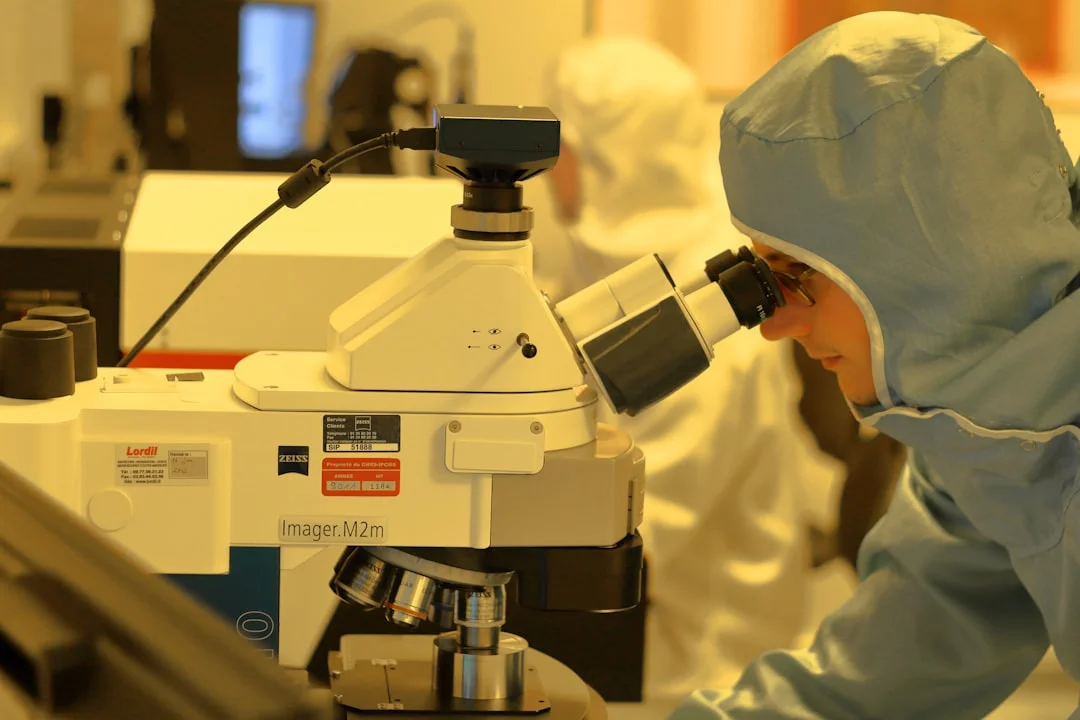
In 2026, Cambridge’s bioscience ecosystem is intensifying its focus on biosecurity governance within biotech research. The Cambridge Biosecurity Hub, a key node in Cambridge’s biosecurity network, organized a high-profile AI × Biosecurity Symposium on March 16, 2026 at the Cambridge Union in Cambridge, United Kingdom. The event drew close to 100 attendees, featured six expert speakers, and showcased 15 research posters from the ERA Cambridge AIxBio Fellows. The gathering underscored a practical, policy-relevant shift: researchers, policymakers, and industry players are aligning on how to advance biotech innovation while managing dual‑use risks and governance challenges in real time. This development sits at the confluence of Cambridge’s renowned biotech cluster and a broader, global conversation about biosecurity governance in biotech research 2026. (uk.linkedin.com)
Beyond the symposium, Cambridge’s institutional activities in 2026 reflect a broader, data-driven push to formalize governance structures around biosafety, ethics, and responsible innovation. The Cambridge Biosecurity Hub’s ongoing programming—paired with Cambridge University’s governance and compliance initiatives—signals a growing expectation that biotech research in Cambridge will be conducted under clearer risk assessment, more rigorous oversight, and stronger education in governance. The University’s governance and compliance vacancies posted in spring 2026, including roles such as Governance Coordinator and Senior Executive Assistant, illustrate a tangible investment in governance capacity to manage research integrity, risk, and compliance at scale. These developments occur alongside multidisciplinary training initiatives and government‑backed funding programs that place Cambridge at the heart of the UK’s biosecurity governance effort. (cam.ac.uk)
This report—crafted in the neutral, data‑driven style of Cambridge Review—analyzes what happened, why it matters, and what’s next for Cambridge biosecurity governance in biotech research 2026. By weaving together event coverage, institutional programming, and the broader policy context, the piece aims to provide readers with a clear, evidence-based view of how Cambridge is shaping governance for biotechnology in a way that balances innovation with safety and security considerations.
What Happened
Cambridge Biosecurity Hub’s 2026 AI × Biosecurity Initiative
In early 2026, Cambridge Biosecurity Hub (CBH) amplified its role as a convener and accelerator of governance-focused dialogue at the intersection of artificial intelligence and biotechnology. The AI × Biosecurity Symposium, held March 16, 2026, brought together researchers, industry experts, and policymakers to explore how rapid AI-enabled advances in biotech create new governance and biosafety challenges. According to CBH’s communications and public reporting, the event drew nearly 100 attendees, with six expert speakers and 15 research posters presented by ERA Cambridge AI×Bio Fellows. The program highlighted practical governance questions—data sharing, dual-use risk assessment, AI-driven discovery safety, and the responsible translation of research into clinical or commercial use. This event illustrated Cambridge’s commitment to translating governance theory into observable practice, a key signal for stakeholders across academia, biotech startups, and established life sciences companies. (uk.linkedin.com)
The symposium also underscored the translational pipeline between Cambridge’s academic work and its biotech ecosystem. By foregrounding AI’s role in both enabling discoveries and introducing new risk vectors, the event mirrored a global trend: governance frameworks must evolve in step with technology, not as an afterthought. CBH’s public materials describe ongoing work at this interface, including workshops, policy briefs, and collaborative initiatives designed to inform both researchers and funders about best practices in biosecurity governance in biotech research 2026. While the event itself is a snapshot, it reflects a longer arc of governance maturation within Cambridge’s research community. (cambiohub.org)
Ongoing Education, Fellowships, and Training Programs
Cambridge’s governance emphasis is further evident in its education and training offerings. The Pandemic Prevention Fellowship at Cambridge Biosecurity Hub—an intensive seven‑week program for researchers and policymakers—has become a recurring feature, with the next cohort anticipated to follow the autumn 2025 cycle. This program emphasizes the dual-use risk landscape, risk communication, and governance skills essential for leadership in biosecurity. The continuation of this fellowship program signals Cambridge’s sustained investment in building capacity to anticipate and mitigate dual-use risks in biotech research. (cambiohub.org)
In parallel, Cambridge’s biological sciences community has seen new doctoral training initiatives designed to prepare researchers for leadership in transformative pharmaceutical technologies. The BBSRC Industrial Landscape Award in Transformative Technologies for Pharmaceutical Science (TTPS) will fund three cohorts of eight doctoral students each year from 2026 to 2028, with a distinctive emphasis on data-centric approaches, computational modeling, and the regulatory and governance dimensions of biotech innovation. While TTPS is primarily framed as a technical and business training program, its governance components—ethical oversight, risk management, and regulatory literacy—are integral to ensuring responsible research and innovation. This program reflects Cambridge’s strategic alignment of cutting-edge science with governance readiness, a crucial element of Cambridge biosecurity governance in biotech research 2026. (bio.cam.ac.uk)
Cambridge University Governance and Compliance Investments
The institutional governance landscape in Cambridge continued to evolve in 2026. The University of Cambridge maintains a Governance and Compliance Division, which posted several governance‑oriented vacancies in spring 2026, signaling a deliberate expansion of capacity to oversee research governance, compliance, and integrity across departments. The presence of such roles—together with the University’s broader governance resources—supports a more formalized, systematic approach to research governance and biosafety oversight across the institution. These staffing signals align with the university’s ongoing governance activities and the need to support robust oversight as Cambridge increasingly engages in ambitious biotech and bioscience programs. (cam.ac.uk)
Additionally, Cambridge University’s internal governance reportage and annual reporting materials through the Cambridge University Reporter in early 2026 offer a window into how governance structures are being formalized and updated as the university scales its research enterprise. While the Reporter documents cover a wide range of governance topics, they collectively illustrate a stable, process-oriented approach to governance that underpins Cambridge biosecurity governance in biotech research 2026. These documents underscore the university’s structured, institutional approach to oversight as the bioscience ecosystem expands. (admin.cam.ac.uk)
Why It Matters
Strengthening Biosafety, Biosecurity, and Dual-Use Oversight

The Cambridge ecosystem’s governance activities reflect a broader, international emphasis on balancing openness in science with safety and security. The Cambridge Core article Understanding biosafety practitioner perspectives, published online in December 2025, situates Cambridge within a global discourse about the oversight of dual-use research of concern (DURC) and pathogens with enhanced pandemic potential. The article discusses the 2024 DURC/PEPP policy and its mixed reception, highlighting how governance frameworks at research institutions must navigate policy complexity, implementation challenges, and the risk of research migration to less-regulated spaces. This context helps explain why Cambridge is intensifying governance training and oversight mechanisms in biotech research 2026. (cambridge.org)
At Cambridge, the practical implications are clear: researchers must operate within robust oversight regimes that evaluate dual-use risks, ensure responsible data practices, and align with institutional and national biosafety standards. The results are not just compliance metrics; they influence how researchers design experiments, share data, and translate findings into therapies or diagnostics. In a competitive bioscience landscape, clear governance reduces risk, builds trust with regulators and funders, and supports sustainable innovation. The Cambridge‑focused governance activities are a microcosm of this global trend. (cambridge.org)
Economic and Regional Impacts: Cambridge as a Biotech Growth Engine
Cambridge’s governance improvements are inseparable from the region’s biotech growth trajectory. Cambridge’s university and industry ecosystem have produced a remarkable track record of spinouts and translational research, with spinout investment rising significantly in recent years. The University’s news coverage in 2026 highlighted ongoing investment and policy initiatives designed to sustain Cambridge’s role as a European biotech hub. The alignment of governance capacity with a thriving biotech economy helps mitigate risk while ensuring that Cambridge remains an attractive home for researchers, startups, and established firms seeking to innovate responsibly. This alignment between governance and growth is a strategic asset for Cambridge’s biotech ecosystem. (cam.ac.uk)
Global governance dialogues around biosecurity risk are also shaping Cambridge’s approach. For example, policy discussions at EU and UK levels, and the broader science policy landscape, influence how Cambridge structures oversight, training, and governance reporting. While Cambridge-specific policies are developed in a UK context, the city and university collaborate with national and international partners to harmonize risk assessment frameworks, data governance, and ethical governance in biotech research 2026. The Cambridge ecosystem’s emphasis on governance education and practical oversight positions it well to participate in these global governance conversations. (bio.cam.ac.uk)
The Learning Curve: Education, Training, and Culture
A central implication of Cambridge’s governance push is cultural: researchers, students, and affiliated staff increasingly view governance not as a hurdle but as a core competency for responsible innovation. The TTPS program’s emphasis on both technical and governance literacy, together with CBH’s fellowship models and the CBH’s ongoing event programming, reflects a maturation of governance thinking within the research culture. This cultural shift—anchored by formal training, governance roles, and open dialogue about risks and benefits—helps ensure that Cambridge biosecurity governance in biotech research 2026 translates into everyday practice in laboratories, clinics, and startups. (bio.cam.ac.uk)
Global Context and Cambridge’s Position
Cambridge’s efforts sit within a broader global trend toward more sophisticated governance of biotechnology, including dual-use risk management, data governance, and responsible innovation frameworks. The Cambridge approach—combining public events, training programs, governance staffing, and formal oversight mechanisms—serves as a model for other research hubs seeking to harmonize rapid scientific progress with appropriate safeguards. The Cambridge‑led conversations around governance also intersect with policy developments in other regions, underscoring the importance of cross-border coordination and shared standards in biosecurity governance in biotech research 2026. (cambridge.org)
What's Next
Near-Term Milestones in 2026–27
Looking ahead, Cambridge’s governance trajectory is likely to feature a combination of program expansions, policy refinements, and continued dialogue across academia, industry, and government partners. The TTPS program is planned to run cohorts from 2026 to 2028, expanding Cambridge’s training footprint for leaders in transformative pharmaceutical technologies. This expansion will likely influence governance education across Cambridge and potentially inform collaborative programs with external partners, including other universities and industry players. Readers should expect further announcements about TTPS participant cohorts, project collaborations, and related governance content in Cambridge outlets in 2026–27. (bio.cam.ac.uk)
CBH’s ongoing programming—such as the Pandemic Prevention Fellowship and AI × Biosecurity activities—will likely continue to produce outputs that shape policy and practice. Expect additional symposia, policy briefs, and joint events with the Cambridge biosecurity community to address emergent challenges in AI-enabled biotech, data governance, and risk management. These activities will provide ongoing signals about Cambridge’s governance priorities and how they evolve in response to technological advances and policy developments. (cambiohub.org)
What to Watch For and How to Stay Informed
Readers should monitor several channels to stay updated on Cambridge biosecurity governance in biotech research 2026:
- Cambridge Biosecurity Hub announcements and event calendars for new symposia, fellowships, and policy discussions.
- University of Cambridge Governance and Compliance communications and the Cambridge University Reporter for updates on governance structures, policy changes, and staffing.
- Cambridge bioscience school pages and partner centers (e.g., School of Biological Sciences, Cambridge Judge Business School) for training program announcements and governance-related initiatives.
- Policy analysis and academic perspectives on DURC/DURC-like frameworks and dual-use risk governance, to contextualize Cambridge’s actions within the global policy environment.
Examples of relevant sources include CBH event reports and fellowship pages, the TTPS doctoral training program documentation, and governance updates published by the University of Cambridge and its faculties. These sources collectively shape a forward-looking picture of how Cambridge plans to maintain its leadership in responsible biotech innovation under robust governance 2026. (cambiohub.org)
Closing
Cambridge’s approach to biosecurity governance in biotech research 2026 reflects a deliberate, evidence-based adaptation to a rapidly evolving scientific landscape. By combining high-profile events like the AI × Biosecurity Symposium, structured training programs, and formal governance capacity building within the university, Cambridge is building a resilient framework for responsible innovation. The collaboration among researchers, educators, funders, and policymakers in Cambridge signals a broader trend toward governance that is proactive, transparent, and integrated into the day-to-day practice of biotech research. As this governance architecture matures, Cambridge will continue to provide a practical model for how world-class bioscience communities can advance science while safeguarding public health and security.

Photo by Phil Hearing on Unsplash
To stay updated, readers can follow Cambridge Biosecurity Hub activities and Cambridge University governance announcements, as well as related policy analyses in Cambridge’s academic and policy circles. The goal is to ensure Cambridge biosecurity governance in biotech research 2026 remains a living, adaptive system—one that supports innovation without compromising safety or societal trust.