Cambridge AI Research Resource sixfold funding 2026

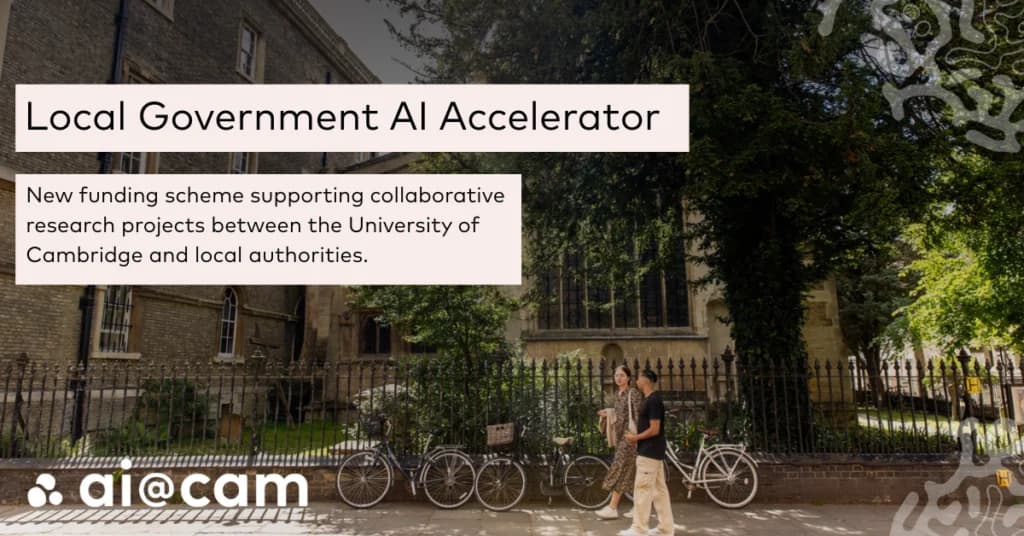
Cambridge Review opens today with breaking news from the University of Cambridge and the UK government: a major funding package to expand the Cambridge AI Research Resource, a milestone that will sixfold the institute’s AI compute capacity by spring 2026. The details, laid out in a January 2026 university release, confirm a £36 million investment designed to accelerate AI-enabled science across healthcare, climate, and public services. The announcement highlights a national push to widen access to cutting-edge AI chips and high-performance computing for UK researchers and startups, positioning Cambridge at the center of a growing corridor for science and technology along the Oxford–Cambridge axis. This development matters because it directly expands compute resources that underpin a wide range of AI-driven research, from disease modelling to environmental forecasting, with potential downstream effects on innovation ecosystems across the country. The news was published on January 26, 2026, and the funding is slated to unfold with an implementation timeline that anticipates impact as early as spring 2026. (cam.ac.uk)
The Cambridge project sits at the intersection of national strategy and university-driven innovation. Government and university officials describe the upgrade as a decisive step in increasing domestic AI capacity and ensuring researchers have the power to translate breakthroughs into tangible public benefits. As Cambridge’s Pro-Vice-Chancellor for Research, Professor Sir John Aston, put it, the investment marks an important milestone for the UK’s AI Research Resource, expanding the power of Cambridge’s supercomputer and strengthening the national computing ecosystem. The government’s AI minister, Kanishka Narayan, framed the package as a reply to a long-standing issue: access to robust compute power has often held back ambitious researchers and startups. The collaboration with industry partners, including hardware providers, is also framed as essential to delivering practical tools that can improve public services. Readers should expect a broad set of consequences—from faster disease detection to improved climate modelling—driven by the planned sixfold expansion. (cam.ac.uk)
As Cambridge Review reports, the immediate actions tied to the Cambridge AI Research Resource sixfold funding 2026 include the deployment of additional AI chips and an expanded compute fabric, with early benefits anticipated in public health analytics and civic services. The university’s release notes that the upgrade will be operational by spring 2026, with the goal of enabling more projects to leverage AI in real time. The added capacity is expected to support hundreds of ongoing and new initiatives, including cancer vaccine research through AI-assisted modelling and climate resilience studies through enhanced simulation. The information released to the public indicates that the sixfold capacity increase is a deliberate calibrator for both research speed and scale, aligning with national priorities for AI-enabled science. The Cambridge AIRR expansion is also positioned within a broader UKRI-driven framework that is already funding AI for science through compute opportunities and targeted research programmes. (cam.ac.uk)
What Happened Funding details and official announcement
- The University of Cambridge confirmed a £36 million government investment aimed at increasing the AI Research Resource’s supercomputing capacity at Cambridge by sixfold, with implementation to begin and deliver benefits by spring 2026. This aligns with a wider government push to boost AI R&D capacity and ensure homegrown capabilities can compete on the global stage. The official notice emphasizes that more AI chips will be made freely available to UK researchers and startups as part of the enhanced compute ecosystem. The sixfold expansion is a headline achievement, signaling a dramatic scale-up in compute power for AI-enabled research. The announcement also underscores a collaboration framework involving industry partners to ensure access to state-of-the-art hardware. Published January 26, 2026, the piece positions the Cambridge upgrade as a flagship component of the UK’s AI infrastructure strategy. (cam.ac.uk)
Timeline and implementation plan
- The release indicates that the new capacity is expected to come online in stages, with the earliest benefits appearing in spring 2026. The timeline is designed to support a ramp-up across multiple research domains, including health analytics, environmental modelling, and data-driven discovery. Cambridge officials stressed that the augmented compute resource will enable researchers to run larger-scale simulations and more complex AI workflows, reducing cycle times from weeks to days in some cases. The schedule follows a structured deployment plan that integrates new hardware, software environments, and access protocols to ensure researchers can begin applying the enhanced resources promptly. In short, the timeline for Cambridge AI Research Resource sixfold funding 2026 is intentionally aggressive to accelerate early results while maintaining rigorous oversight of access and performance. (cam.ac.uk)
Scope of compute resources and access
- The initiative expands not only raw compute capacity but also the ecosystem around it, including access to newer AI chips and streamlined access for UK researchers and startups. The aim is to democratize high-performance AI resources, reducing friction for researchers who lack private sector scale, and to accelerate the translation of AI insights into practical applications. The university notes that hundreds of projects have already benefited from the AIRR, and the expansion will broaden opportunities for AI-driven breakthroughs across disciplines. The government press materials framed this as a national capability upgrade, with Cambridge positioned as a leading interface for translating compute into science and public value. (cam.ac.uk)
Why It Matters Impact on UK AI research capacity
- The Cambridge AI Research Resource sixfold funding 2026 is framed as a national infrastructure decision with outsized implications for the UK AI ecosystem. By expanding compute access and capacity, the government aims to unlock faster discovery cycles, enabling researchers to test hypotheses, run more diverse experiments, and iterate models at scale. The immediate consequence is a potential acceleration of scientific output and technology transfer from academia into industry, startup ecosystems, and public services. The Cambridge release notes that this upgrade will help researchers and clinicians develop AI-powered tools earlier in the pipeline, potentially shortening time-to-impact for pressing health challenges and climate-related modelling. The broad intent is to spur innovation, attract talent, and reinforce the UK’s standing in global AI research. (cam.ac.uk)
Implications for healthcare, climate, and industry
- The expanded AI compute capacity is expected to affect several high-priority domains. In healthcare, AI-assisted diagnostics and personalised medicine could move more quickly from exploratory studies to clinically validated tools. In climate science, larger-scale simulations and data assimilation could improve predictive accuracy and enable more robust scenario planning for extreme weather events. For industry, greater compute availability may accelerate AI-driven product development, optimization, and risk analysis across sectors such as energy, manufacturing, and logistics. The government’s framing emphasizes public benefits, including faster disease detection, smarter public services, and enhanced resilience to climate risk, as well as potential economic gains from a more competitive AI research environment. While these outcomes are plausible, they will require careful measurement and ongoing scrutiny to separate signal from noise and to ensure access remains equitable. The official statements from Cambridge and the UK government provide the backbone for these expectations. (cam.ac.uk)
Broader context and comparisons
- Cambridge’s upgrade sits within a broader context of UK R&D funding and international AI infrastructure investments. The government’s emphasis on AI compute aligns with other national initiatives described in related Cambridge and government communications, including airings of compute access opportunities and collaborations with AI researchers across disciplines. For readers seeking a wider frame, Cambridge’s own compute opportunities for AI for Science, as part of the AIRR program, illustrate how compute access is being structured around strategic research priorities and collaborations with national authorities. The Cambridge Centre for Data-Driven Discovery notes that the AIRR compute calls are designed to support AI-centred scientific research in priority domains, reflecting a policy emphasis on scalable, data-intensive science. These linked programs provide important context for understanding the Cambridge AI Research Resource sixfold funding 2026 as part of a larger ecosystem rather than a standalone upgrade. (c2d3.cam.ac.uk)
Who benefits and who may be watching
- The expansion is likely to benefit researchers at Cambridge and partner institutions, as well as UK startups that rely on high-performance AI compute to prototype and scale new solutions. The government’s framing mentions access to free AI chips for UK researchers and startups, a policy element designed to stimulate early-stage experimentation and reduce capital expenditure barriers. Critics and observers may watch for how access is allocated, potential bottlenecks in scheduling, and whether equity in access is maintained as demand grows. In addition, policymakers and industry leaders will likely monitor the integration of this resource with other AI initiatives—both domestically and internationally—to gauge how Cambridge’s capabilities contribute to a cohesive national AI strategy. The official communications emphasize tangible public-value outcomes, but independent assessment will be essential to validate impact and ensure accountability. (cam.ac.uk)
What’s Next Upcoming milestones and spring 2026 deployment
- The next major milestones center on deploying the expanded compute resources in the spring of 2026 and establishing new access pathways for researchers. The timeline suggests a phased rollout, with performance metrics and user feedback informing subsequent iterations. Cambridge and government representatives have signaled ongoing communications about capacity planning, security, and governance to prevent misuse and to optimize the benefit-to-cost ratio of the resource. For readers, the critical near-term signal is that the spring 2026 window will likely see measurable improvements in project throughput and the ability for researchers to scale AI experiments more rapidly. The press materials emphasize public-benefit use cases, including health analytics and climate modelling, as demonstrating concrete value in the near term. (cam.ac.uk)
Next steps for researchers and institutions
- Researchers and institutions should prepare for enhanced access by aligning their project proposals with the AIRR compute opportunities and related Cambridge channels. The AI for Science compute opportunities and Cambridge’s broader AI research funding ecosystem offer pathways to leverage the upgraded AIRR capacity. The aim is to connect researchers with the right compute resources early in the project lifecycle, ensuring that the sixfold funding translates into actionable results rather than unused capacity. Given the complex demand for high-performance AI compute, stakeholders will likely want clear guidelines on eligibility, access queues, software environments, and data governance. Cambridge’s published notice and related AI ecosystem programs provide the baseline for how to engage with the expanded AIRR and to monitor the effectiveness of Cambridge AI Research Resource sixfold funding 2026 in practice. (c2d3.cam.ac.uk)
What to watch for in 2026 and beyond
- In 2026 and beyond, observers should watch for several indicators of the program’s success: (1) utilization rates across key research domains, (2) time-to-result improvements for AI-driven studies, (3) the extent of collaboration with industry and startups, and (4) outcomes in public services and clinical tools that reach pilot or deployment stages. Independent assessments of access fairness and impact will be essential to validate the policy’s equity objectives. The Cambridge announcement positions the upgrade as a platform for sustained innovation—an enjeu that will unfold over multiple quarters as projects ramp up and new partnerships mature. This lens helps readers understand Cambridge AI Research Resource sixfold funding 2026 not as a single event but as a long-run investment in the country’s AI-enabled science trajectories. (cam.ac.uk)
Closing
- The Cambridge AI Research Resource sixfold funding 2026 marks a pivotal moment for UK AI infrastructure and scientific research capacity. By expanding compute power and aligning access with national priorities, the initiative aims to accelerate discovery and practical applications in health, climate, and beyond. Cambridge’s role as a hub for AI-enabled science is reinforced by this investment, which signals a commitment to translating research into public value through scalable technology platforms. For readers seeking ongoing updates, Cambridge’s official channels and the government press releases provide the primary sources of forthcoming milestone announcements, as well as opportunities to engage with AIRR compute opportunities and related funding calls. The broader implication for the technology market is a clearer signal that high-performance AI compute will be more widely accessible to researchers and startups, potentially shortening the distance between theoretical breakthroughs and real-world impact. Stay tuned for subsequent reports detailing deployment progress, user experiences, and measured outcomes from the Cambridge AI Research Resource sixfold funding 2026. (cam.ac.uk)
References and data notes
- Government funding boost for Cambridge supercomputer, University of Cambridge News, Published 26 Jan 2026. Key data points include a £36 million investment to increase the AI Research Resource sixfold by spring 2026 and early deployment of additional AI compute capabilities. The article also contains direct quotes from Professor Sir John Aston and UK AI Minister Kanishka Narayan. (cam.ac.uk)
- AI Research Resource Compute Opportunity: AI for Science, Cambridge Centre for Data-Driven Discovery, which outlines AIRR compute opportunities and the policy context for compute access to AI-enabled research. This source helps frame the broader ecosystem into which the Cambridge upgrade fits. (c2d3.cam.ac.uk)
- Additional context on Cambridge AI and local government AI innovation funding, Cambridge AI (ai.cam.ac.uk) and related university announcements, which provide background on Cambridge’s ongoing AI strategy and its funding mechanisms. (ai.cam.ac.uk)