Cambridge AI governance UN panel: UK leads global governance
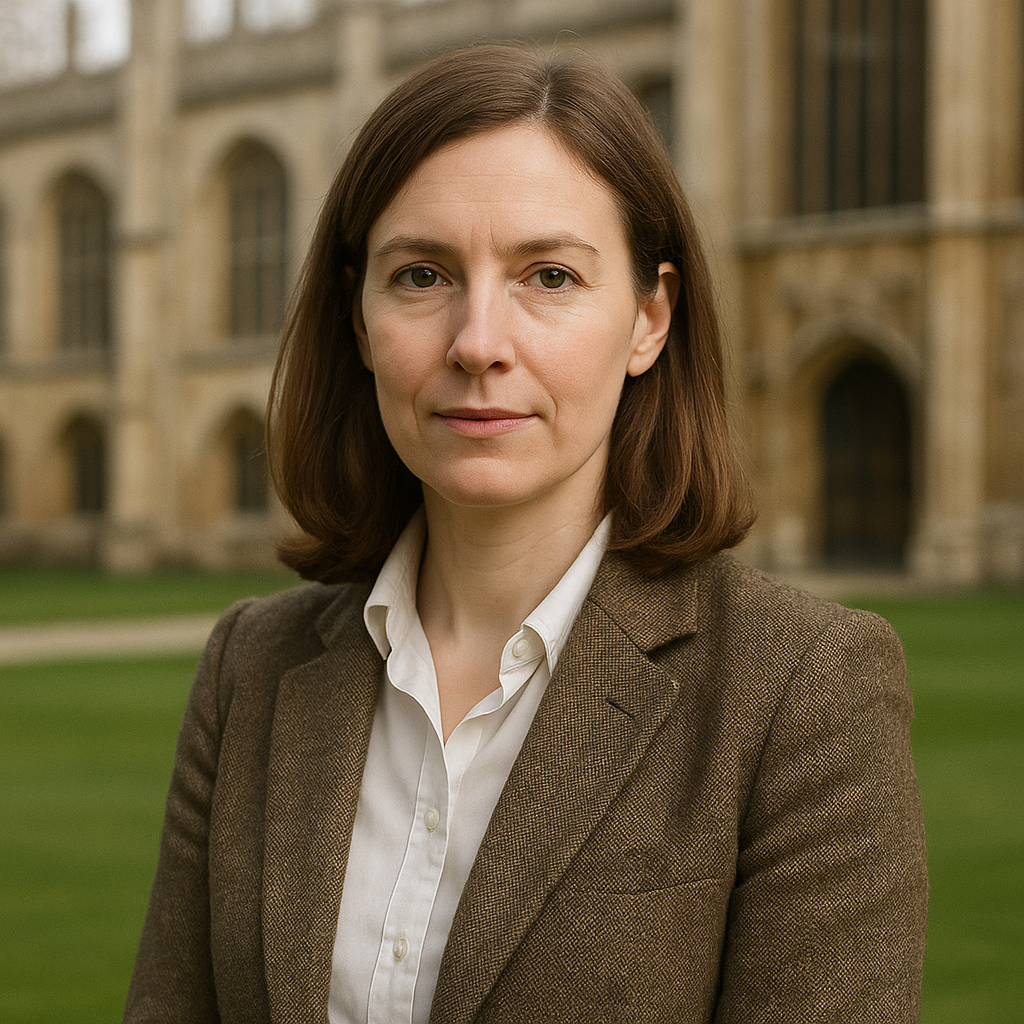

Photo by David Xeli on Unsplash
An important development in the global AI governance landscape emerged this week as a Cambridge-based academic joined the United Nations’ efforts to shape how artificial intelligence is studied and managed worldwide. The University of Cambridge announced that Professor Anna Korhonen, a leading figure in natural language processing, has been appointed to the United Nations’ Independent International Scientific Panel on Artificial Intelligence (IISP-AI). The panel, formed to bring rigorous, evidence-based science to bear on AI opportunities, risks, and impacts, now counts 40 members from across the globe. This appointment marks a notable moment for Cambridge in the arena of Cambridge AI governance UN panel participation, signaling a closer link between UK research leadership and international AI policy discourse. Korhonen’s work and Cambridge’s institutional roles place the university at the center of a developing, multilateral approach to AI governance. The news was published by the University of Cambridge on February 13, 2026, and underscores Cambridge’s broader engagement with AI policy through institutes and labs designed to translate research into global governance discussions. “I am honoured to be appointed to this panel, which serves as the first global scientific body on Artificial Intelligence,” Korhonen said, highlighting the alignment between her research on responsible, human-centered AI and global development objectives. (cam.ac.uk)
The IISP-AI, as described by the United Nations, is intended to deliver annual, evidence-based scientific assessments on AI’s opportunities, risks, and societal impacts and to present these findings at the UN Global Dialogue on AI Governance. The panel’s creation follows a UN General Assembly resolution and a period of global consultation aimed at bringing together diverse voices from academia, industry, and civil society. The appointment of Korhonen, along with the other 39 panelists, reflects a broader push to elevate scientific expertise within international AI governance, rather than leaving policy to market forces alone. The IISP-AI is designed to serve as an independent, multidisciplinary “early-warning system” and knowledge engine, with a mandate to inform global dialogue and policy with robust, peer-reviewed assessments. The panel’s establishment was formally authorized by the UN through a resolution process in 2025, and member appointments were finalized for a term beginning in 2026. This development situates Cambridge within a global framework for AI governance and provides concrete evidence of the UK’s involvement in shaping international norms for AI. (un.org)
Korhonen’s own remarks emphasize both her personal motivation and the wider significance of the Cambridge AI governance UN panel appointment. “I am honoured to be appointed to this panel, which serves as the first global scientific body on Artificial Intelligence,” she said, noting that the appointment aligns with her research on responsible, human-centered AI and its application to sustainable development. She added that she looks forward to taking up her place on the panel at its first meeting. Cambridge’s leadership echoed her sentiment, with Professor Sir John Aston praising the appointment as a recognition of Cambridge’s strength in AI research and its potential to benefit UK and global science communities. This moment, captured in Cambridge’s official release, underscores the university’s strategic emphasis on human-centered AI and its broader implications for policy and society. (cam.ac.uk)
Section 1: What Happened
Appointment of a Cambridge academic to the UN AI panel
Anna Korhonen, a Professor of Natural Language Processing at the University of Cambridge, has been named to the Independent International Scientific Panel on Artificial Intelligence (IISP-AI). The Cambridge release confirms that Korhonen will join a panel of 40 members from around the world, drawn from academia, government, industry, and civil society. The IISP-AI is charged with generating annual, evidence-based assessments of AI’s opportunities, risks, and societal impacts, with findings to be presented at the UN Global Dialogue on AI Governance. The panel’s structure and purpose reflect a deliberate shift toward a globally coordinated, science-led governance framework for AI, designed to inform policy rather than prescribe it. Cambridge’s announcement positions Korhonen as a representative of UK research excellence in a globally distributed science-and-policy platform. (cam.ac.uk)
The panel's mandate, scope, and first meeting
The IISP-AI is described by the UN as the world’s first global, scientific body dedicated exclusively to AI. Its duties include producing an annual scientific report that synthesizes opportunities, risks, and societal impacts, and presenting these assessments at the Global Dialogue on AI Governance. The panel’s work will be complemented by thematic briefs and regular updates to the General Assembly, with its membership reflecting geographic and disciplinary diversity. The UN’s open-call process, which culminated in a 40-member slate, was designed to ensure a broad range of AI expertise—from foundation models and machine learning to safety, ethics, and societal implications. The panel is set to begin its three-year term in 2026, underscoring a new phase of international AI governance anchored in scientific evidence. (un.org)

Cambridge roles and leadership within AI policy circles
Korhonen is based in Cambridge’s School of Arts and Humanities, where she also serves as Co-Director of the Institute for Technology and Humanity (ITH) and Director of the Centre for Human-Inspired Artificial Intelligence (CHIA). She is additionally the Co-Director of the Language Technology Lab (LTL) in the Department of Theoretical and Applied Linguistics and a Senior Research Fellow at Churchill College. These roles place her at the nexus of language technology, AI ethics, and human-centered AI design—a positioning Cambridge highlights as directly relevant to the IISP-AI’s aims. The university’s release notes that her appointment aligns with Cambridge’s broader strategic emphasis on responsible AI and sustainable development. (cam.ac.uk)
Section 2: Why It Matters
Global AI governance gains scientific authority
The formal establishment of the Independent International Scientific Panel on AI and its inclusion of a Cambridge scholar signals a maturation of AI governance beyond ad hoc policy debates. The UN framework explicitly emphasizes that the panel’s work will be grounded in scientific assessment, with annual reports designed to inform the Global Dialogue on AI Governance and related international processes. This approach helps bridge gaps between cutting-edge AI research and policymaking, enabling governments and stakeholders to respond to evolving technologies with evidence-based guidance. The combination of rigorous scientific input and a multistakeholder governance architecture aligns with broader international calls for responsible AI stewardship and more transparent, accountable AI development. Cambridge’s involvement through Korhonen highlights the role national research ecosystems can play in shaping global norms. (un.org)

Cambridge and the UK: a hub for AI policy influence
Cambridge has a longstanding record of coupling high-impact AI research with policy-oriented engagement. The university’s AI-related programs, including the AI & Geopolitics Project and related digital policy initiatives, underscore a commitment to translating technical advances into governance-informed practice. The Cambridge release notes Korhonen’s appointment as part of a broader pattern in which Cambridge researchers contribute to international policy discussions, a dynamic that could strengthen the UK’s voice in global AI governance. Cambridge’s own policy activities, such as policy dialogues hosted by the Cambridge Industrial Innovation Policy (CIIP) and public policy-oriented events, reflect a vibrant ecosystem that connects scholarly work to regulatory and governance challenges. This ecosystem is precisely the kind of environment that the IISP-AI framework seeks to complement at the international level. (cam.ac.uk)
Broader policy context and global implications
The UN’s move to establish the IISP-AI forms part of a broader wave of AI governance initiatives worldwide. Diverse analyses from think tanks and policy institutes emphasize that AI governance must balance rapid innovation with safeguards for risk, fairness, and human rights. Notable discussions have focused on establishing a global dialogue among states, industry, and civil society, while ensuring transparency and inclusivity in decision-making. While initial coverage and reaction vary by country, the overarching trend is toward more formalized, science-informed governance structures that can operate across borders and policy domains. Cambridge’s role in this space, through Korhonen’s appointment and Cambridge’s policy-oriented activities, situates the university at a strategic intersection of academic excellence and international governance. (chathamhouse.org)

Section 3: What’s Next
Timeline and upcoming milestones for the panel
The UN’s Open Call for Candidates for the IISP-AI led to a curated list of 40 members, who will serve in their personal capacities for a three-year term beginning in 2026. The selection and appointment process, along with the mandate to deliver annual scientific assessments, positions the panel to influence how AI governance is framed in international deliberations. The panel’s first meetings and the schedule for its initial reports are anticipated to unfold during 2026, with filings and thematic briefs following the panel’s initial findings. The appointment of Korhonen, as part of the 40-person body, underscores the global and interdisciplinary nature of the panel—an emphasis that Cambridge’s announcement highlights through Korhonen’s leadership roles in AI research and policy-relevant work at Cambridge. For additional context, U.S. and other geopolitical perspectives during the UN approval process provided a reminder that AI governance is a contested space, with debates about jurisdiction, equity, and influence shaping how panel work is perceived and implemented. (un.org)
What readers should watch for at the UN Global Dialogue on AI Governance
As the IISP-AI begins its work, observers should monitor how its annual reports are framed, what kinds of evidence are prioritized, and how the panel’s insights are translated into practical policy guidance for member states. The UN’s own materials emphasize that the panel’s outputs will inform the Global Dialogue on AI Governance and broader deliberations within the General Assembly. This mechanism—scientific assessments feeding into multilateral dialogue—offers readers a window into how international governance can be anchored in rigorous research rather than solely political negotiation. Cambridge’s involvement through Korhonen may signal opportunities for collaborative research, joint policy briefs, and even field-facing case studies that connect Cambridge’s linguistic and AI research to real-world governance challenges. (un.org)
Implications for Cambridge scholars and the broader research community
Korhonen’s appointment could catalyze new lines of inquiry at Cambridge that align with IISP-AI’s mandate, including interdisciplinary studies on AI safety, ethical design, and human-centered AI. Cambridge’s institutional structure—ITH, CHIA, and LTL—supports such cross-disciplinary work, potentially expanding opportunities for joint research, graduate training, and collaboration with policymakers. The university’s public-facing commitment to AI governance and policy dialogues, as seen in events and policy discussions, suggests that Korhonen’s role on the UN panel will likely dovetail with ongoing Cambridge initiatives aimed at turning technical insights into governance-ready knowledge. Readers and researchers should expect furtherCambridge-wide announcements about policy-relevant AI projects and potential collaborations that connect Cambridge’s core strengths in NLP and AI with global governance imperatives. (cam.ac.uk)
What’s next for the Cambridge Review readership
For readers of Cambridge Review, this development provides a timely case study in how leading research universities contribute to international governance of transformative technologies. The Cambridge announcement, complemented by UN materials, offers a dual lens: (1) academic leadership shaping the science backbone of AI governance, and (2) institutional channels that translate that science into policy-relevant outputs. As the IISP-AI advances its program, Cambridge Review will track subsequent reports, policy briefs, and public-facing analyses that shed light on AI governance dynamics, especially at the intersection of language technologies, ethics, and global policy. Stay tuned for follow-up coverage on Korhonen’s work on the IISP-AI, Cambridge’s AI governance research clusters, and how the UK’s research ecosystem contributes to global governance conversations. (cam.ac.uk)
Closing
The Cambridge AI governance UN panel appointment signals a meaningful alignment between Cambridge’s research strengths and the United Nations’ move toward a globally coordinated, science-driven AI governance framework. Anna Korhonen’s selection to the IISP-AI underscores Cambridge’s role as a hub for responsible AI research and policy-relevant inquiry, with potential implications for how AI’s opportunities and risks are assessed on the world stage. As global governance efforts progress, readers should expect ongoing updates on the panel’s reports, the Global Dialogue on AI Governance, and Cambridge’s continued engagement with policy-relevant AI research. The next several months will be telling as the IISP-AI begins its work, and Cambridge Review will continue to monitor the development closely, offering data-driven analysis and clear explanations of what these global governance efforts mean for researchers, policymakers, and the public.
Stay informed: follow UN updates on the Independent International Scientific Panel on AI and Cambridge’s official news for the latest about Anna Korhonen’s role and related policy activities.