AI science entrepreneurship Cambridge 2026 Bootcamp

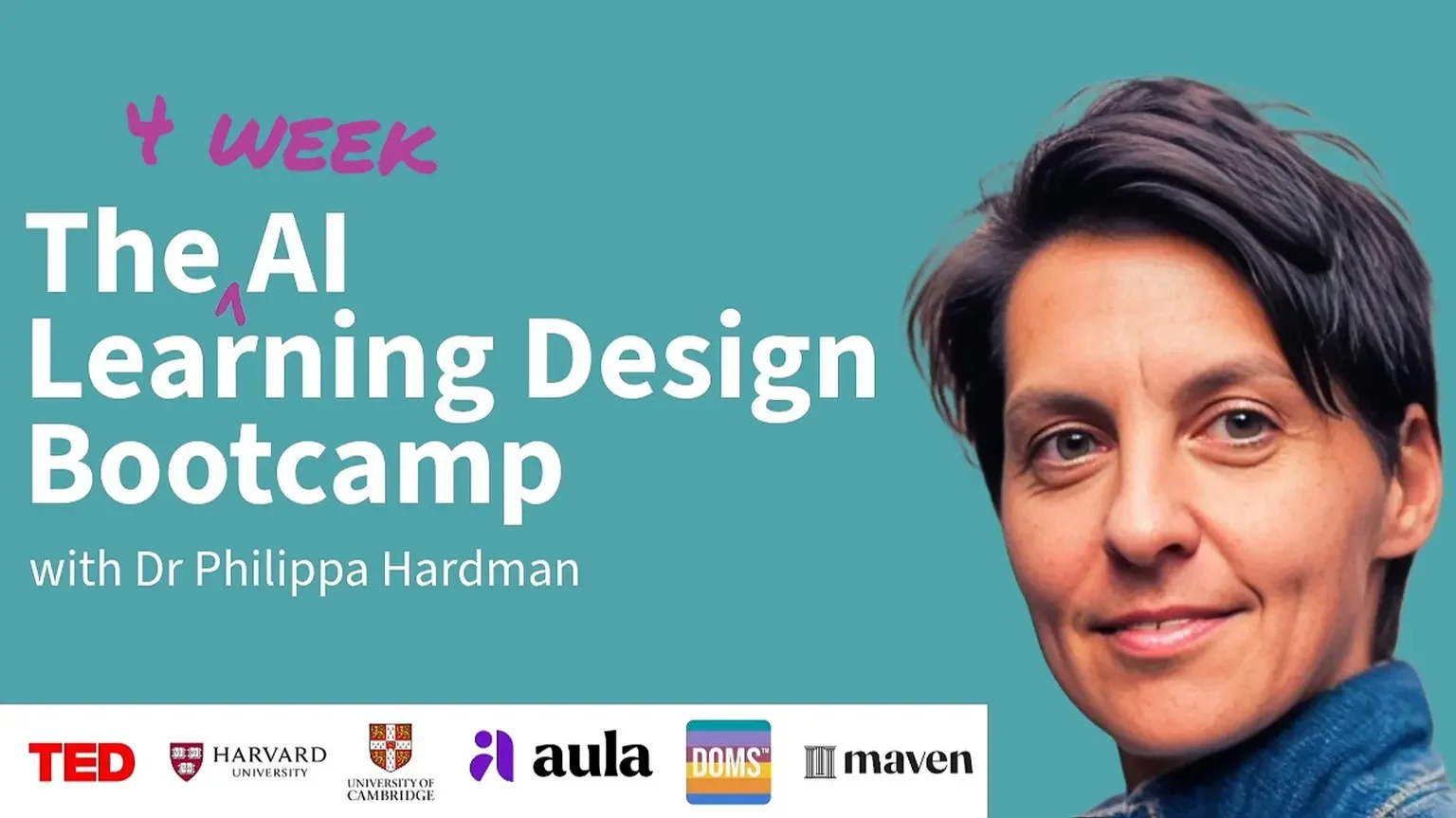
The Cambridge ecosystem is rapidly evolving at the intersection of AI and science, and 2026 offers a pivotal moment for researchers who want to move ideas from lab benches to market impact. This guide focuses on how to approach AI science entrepreneurship in Cambridge in 2026 with a practical, data-informed path. It draws on Cambridge’s active AI and science entrepreneurship programs, including ai@cam’s AI Sciencepreneurship initiatives and the broader ELIAS alliance, to help readers translate cutting-edge AI into science-driven ventures. Cambridge is already recognized as a major hub for AI in science, with a thriving ecosystem that includes formal training, incubation networks, and access to venture support. This guide lays out concrete steps, tools, and milestones to help you navigate this landscape effectively. Cambridge’s unique combination of university research strength and industry collaboration creates a fertile ground for science-forward AI ventures in 2026 and beyond. According to ai@cam, Cambridge hosts a large, knowledge-intensive business base and is actively positioning itself as a growth zone for AI in science, supported by local programs and partnerships. (ai.cam.ac.uk)
This guide is designed for researchers, postdocs, and early-stage founders who want to build AI-driven solutions that, at their core, advance scientific inquiry or address real-world science problems. It emphasizes practical steps, balanced perspectives, and a clear progression from idea to venture, all within Cambridge’s distinctive innovation landscape. The bootcamp model and related ecosystem initiatives offer structured pathways to validate ideas, access mentors, and connect with local investors and accelerators. For example, Cambridge’s ai@cam initiative has run multiple sciencepreneurship programs, including a highly practical two-day bootcamp designed to accelerate AI-for-science ventures, with details and deadlines published by Cambridge in early 2026. (ai.cam.ac.uk)
Prerequisites & Setup
Before you start translating AI for science into a venture, assemble the inputs that increase your likelihood of success and align with Cambridge’s current ecosystem. You’ll need a blend of domain clarity, technical readiness, and access to local networks that can validate and accelerate your idea.
Foundational Knowledge
- A clear research problem: Be ready to articulate a specific scientific domain where AI can meaningfully advance discovery or application (e.g., healthcare, genomics, materials science).
- Core AI competency: At minimum, familiarity with modern machine learning concepts relevant to your domain (foundation models, data handling, model evaluation). Cambridge’s AI-science ecosystem emphasizes practical AI for science, including training opportunities through Accelerate Science and related programs. (ai.cam.ac.uk)
- Comfort with experimentation: Science entrepreneurship in Cambridge blends rigorous validation with iteration. Expect to move between lab-style testing and product prototyping as you frame your MVP.
Tools, Accounts, and Access
- Collaboration workspace: A shared project space (e.g., Slack or Teams channel) for your team, advisors, and mentors; a lightweight knowledge base (Notion, Notion-like wiki) to track experiments, decisions, and learnings.
- Data governance and security: Establish data-handling policies, especially if you’re working with sensitive biological, clinical, or proprietary data. Cambridge programs emphasize responsible AI in science and data governance throughout the development cycle. (ai.cam.ac.uk)
- Versioned development: Source control (Git) with clear branching for experiments, plus a lightweight CI/CD plan for software artifacts if you’re delivering a software tool or platform.
- Access to Cambridge networks: Enroll in Cambridge-aligned incubator and training resources such as the AI for science programs and ELIAS-enabled activities to tap mentors, founders, and investors. (ai.cam.ac.uk)
Local Resources and Programs
- Join the AI and science entrepreneurship community: Cambridge hosts a dedicated node under the ELIAS alliance that connects academic researchers with startups, mentors, and industry partners. This network is designed to accelerate science-driven AI ventures and provide structured pathways for training and mentorship. (ai.cam.ac.uk)
- Explore Cambridge’s incubation and accelerator options: The Cambridge ecosystem includes programs and pathways that help researchers progress from idea to market, including opportunities after bootcamps and other training events. Cambridge’s ecosystem is positioned as a key hub for AI-enabled science ventures in 2026. (ai.cam.ac.uk)
Step-by-Step Instructions
The core of this guide is a practical, stepwise approach you can apply to turn an AI-for-science idea into a venture within Cambridge’s thriving ecosystem. Each step focuses on concrete actions, the rationale behind them, expected outcomes, and pitfalls to avoid.

Step 1: Define the AI-for-Science Problem
- What to do: Articulate a single, concrete scientific problem where AI could meaningfully improve discovery, prediction, optimization, or decision-making.
- Why it matters: A well-scoped problem reduces scope creep, makes data requirements clearer, and aligns your concept with Cambridge’s emphasis on AI for science. Cambridge’s AI science initiatives stress practical feasibility and alignment with real scientific needs. (ai.cam.ac.uk)
- Expected outcome: A one-page problem statement that specifies the science domain, the AI approach, and the anticipated impact.
- Common pitfalls to avoid: Scoping too broad a problem; choosing a problem with no access to necessary data or domain experts; underestimating regulatory or ethical considerations.
Step 2: Validate the Problem with the Cambridge Ecosystem
- What to do: Engage with mentors from Cambridge’s AI-for-science programs, attend relevant events, and seek early feedback on problem framing, data availability, and potential impact.
- Why it matters: Cambridge’s ecosystem emphasizes practical validation and mentorship through initiatives like the AI Sciencepreneurship program and ELIAS node, which help researchers validate ideas with real-world advisors. (ai.cam.ac.uk)
- Expected outcome: A concise validation memo capturing expert feedback, potential collaborators, and a revised problem statement if needed.
- Common pitfalls to avoid: Relying on internal assumptions without external validation; missing key stakeholders who can provide domain insight.
Step 3: Sketch a Science-First AI Concept
- What to do: Draft a high-level concept that couples the scientific problem with an AI-enabled solution, focusing on how data flows, the AI method, and the expected scientific outcome.
- Why it matters: A science-first framing helps differentiate your approach from generic AI products and aligns with Cambridge’s emphasis on translating AI for science into practice. The ai@cam framework highlights bridging AI innovation with scientific impact. (ai.cam.ac.uk)
- Expected outcome: A concept brief (1–2 pages) describing the AI approach, data requirements, success metrics, and a rough product outline.
- Common pitfalls to avoid: Overemphasizing algorithmic complexity at the expense of scientific utility; under-specifying data governance.
Step 4: Build a Data Plan and Privacy Review
- What to do: Define data sources, access rights, data quality requirements, and privacy/compliance considerations. Create a data map showing how data will move from collection to model training and evaluation.
- Why it matters: Data quality and governance are foundational in AI-for-science ventures, especially in regulated or sensitive domains. Cambridge programs emphasize responsible AI and data practices in science ventures. (ai.cam.ac.uk)
- Expected outcome: A data plan with data sources, governance rules, security measures, and a preliminary data lifecycle diagram.
- Common pitfalls to avoid: Underestimating data cleaning needs; assuming data is readily shareable without governance checks.
Step 5: Assemble a Founding Team and Roles
- What to do: Identify core roles (e.g., AI/ML lead, domain science lead, regulatory/compliance liaison, product/market lead) and recruit co-founders or early collaborators with complementary strengths.
- Why it matters: A balanced team accelerates product development, mitigates risk, and fits Cambridge’s ecosystem where cross-disciplinary collaboration is common in science entrepreneurship. After the initial bootcamp, Cambridge programs connect founders with mentors and potential co-founders. (ai.cam.ac.uk)
- Expected outcome: A team charter and a brief run-rate plan showing responsibilities, decision rights, and projected collaboration cadence.
- Common pitfalls to avoid: Hiring for the wrong skill mix or neglecting domain expertise; unclear ownership of scientific vs. product decisions.
Step 6: Create a Minimum Viable Product and Validation Plan
- What to do: Build a lightweight MVP (software, platform, or process) that demonstrates AI-driven value on a real scientific use-case. Define a validation plan with scientific and product milestones.
- Why it matters: A tangible MVP accelerates learning, helps secure stakeholder buy-in, and aligns with Cambridge’s emphasis on pragmatic entrepreneurship and incubation pathways. The bootcamp model includes practical workshops and pitch development to support this stage. (ai.cam.ac.uk)
- Expected outcome: An MVP that showcases a working pipeline or prototype, plus a validation plan with explicit success criteria and timelines.
- Common pitfalls to avoid: Overbuilding the MVP; failing to collect feedback from scientists or end-users; neglecting scalability or data-quality constraints.
Step 7: Develop a Regulatory and Ethics Plan
- What to do: Identify regulatory requirements, ethical considerations, and risk controls relevant to your science domain. Draft a compliance blueprint and risk register.
- Why it matters: AI for science often touches regulated areas (e.g., healthcare, clinical data, environmental sensors). Cambridge programs emphasize responsible AI and governance to ensure credible, sustainable ventures. (ai.cam.ac.uk)
- Expected outcome: A risk-register and a regulatory-compliance plan integrated into the MVP development timeline.
- Common pitfalls to avoid: Assuming regulatory clearance will be fast or that ethics considerations can be deferred; underestimating the need for data provenance and auditability.
Step 8: Plan Go-To-Market Within Cambridge Networks
- What to do: Map a route to customers, collaborators, and early adopters through Cambridge channels: university labs, industry partners, incubators, and local venture networks. Identify target customers, pricing hypotheses, and engagement tactics.
- Why it matters: Cambridge’s ecosystem provides access to labs, clinicians, researchers, VCs, and accelerators, making it feasible to pilot and adjust early product-market fit. Cambridge’s ecosystem includes pathways such as Founders at Cambridge and DeepTech Labs, and is connected via ELIAS to broader European networks. (ai.cam.ac.uk)
- Expected outcome: A go-to-market plan tailored to Cambridge-based customers and partners, with a pilot plan and a set of early adopters.
- Common pitfalls to avoid: Overreliance on academic partnerships without validating customer demand; mispricing or misreading the scientific user’s needs.
Troubleshooting & Tips
Even with a solid plan, you’ll encounter hurdles. The Cambridge AI-for-science landscape offers rich support, but success depends on anticipating common issues and leveraging available resources effectively.
Data Access and Cooperation Hurdles
- Issue: Difficulty obtaining high-quality, domain-relevant data due to privacy, ownership, or institutional barriers.
- Solutions: Leverage Cambridge’s research networks and data-sharing frameworks, participate in AI-for-science programs, and seek ethics/compliance guidance early. Cambridge’s ecosystem emphasizes structured data governance and collaboration with academic partners to enable responsible AI. (ai.cam.ac.uk)
- Pro tips: Propose collaborative data-sharing pilots with labs that have aligned scientific goals; document consent, provenance, and usage restrictions from day one.
Talent and Team Alignment Challenges
- Issue: Misalignment between scientists, engineers, and business-minded founders can slow progress.
- Solutions: Use structured team charters, establish decision rights, and schedule regular cross-disciplinary reviews. The Cambridge bootcamp model explicitly emphasizes bridging technical and entrepreneurial skill sets, which informs how you structure ongoing collaboration. (ai.cam.ac.uk)
- Pro tips: Create short weekly sprints that pair a scientist with an AI practitioner to ensure ongoing scientific relevance of developed features.
Funding and Resource Gaps
- Issue: Early-stage funding can be uncertain, and access to Cambridge-specific accelerators may require strategic timing.
- Solutions: Align with Cambridge’s incubation pathways (Founders at Cambridge, DeepTech Labs) and pursue ELIAS-aligned support for training and mentorship. Understanding these pathways can help you plan funding milestones and milestones for product validation. (ai.cam.ac.uk)
- Pro tips: Prepare a 12-week sprint plan with clear milestones that match the timelines of Cambridge programs (including application deadlines and bootcamp dates). The 2026 bootcamp schedule and deadlines can serve as a concrete milestone anchor. (ai.cam.ac.uk)
Product-Market Fit Gaps in a Specialized Domain
- Issue: The scientific user base might have unique needs that your MVP doesn’t yet meet.
- Solutions: Maintain a customer-first feedback loop with scientists, clinicians, or domain specialists; iterate on your MVP with real users in Cambridge labs or partner sites. Leverage Cambridge’s incubation networks to access mentors who understand both science and product development. (ai.cam.ac.uk)
- Pro tips: Build a lightweight experimentation framework to test hypotheses quickly, and document outcomes to inform subsequent iterations and investor pitches.
Next Steps
After you complete this guide’s initial steps, you’ll be positioned to deepen your AI-for-science venture within Cambridge’s ecosystem and pursue more advanced, scalable pathways.
Expand Partnerships and Mentorship
- What to do: Formalize relationships with Cambridge-based labs, clinicians, and industry partners. Seek ongoing mentorship from figures connected to the ELIAS alliance and Cambridge Innovation Capital.
- Why it matters: Ongoing mentorship and industry connections can unlock access to critical data, pilot opportunities, and early customers, accelerating learning and validation. The ELIAS node is designed to connect sciencepreneurs to technical support and infrastructure, as well as to a broader innovation network. (ai.cam.ac.uk)
- Expected outcome: A partner-map with commitments, pilot opportunities, and scheduled mentorship meetings.
Prepare for Advanced Programs and Scale
- What to do: Prepare pitches and demonstrations for advanced Cambridge programs and potential investors; plan for larger pilots, regulatory clearance, and product scaling.
- Why it matters: Cambridge offers structured growth pathways, including accelerator programs and post-bootcamp opportunities that help science-focused AI ventures scale. The bootcamp itself is part of a broader Cambridge ecosystem designed to accelerate commercialization of AI-for-science innovations. (ai.cam.ac.uk)
- Expected outcome: A roadmap for reaching Founders at Cambridge, DeepTech Labs, and other Cambridge-wide opportunities, plus an updated investor target list.
Related Resources and Continuing Education
- What to do: Stay engaged with ongoing AI-for-science events, blogs, and training programs, and participate in networks like the Cambridge AI for science initiatives.
- Why it matters: The Cambridge ecosystem continues to evolve, with new events, training, and collaboration opportunities that can support continued growth and knowledge sharing. Cambridge’s AI science programs maintain active communications and updated opportunities. (ai.cam.ac.uk)
- Expected outcome: A personal learning plan and calendar of events for the next 12–24 months.
Closing
By following this practical, step-by-step guide, you can translate AI-driven scientific ideas into ventures that leverage Cambridge’s renowned ecosystem for research, incubation, and funding. The combination of targeted AI-for-science training, mentorship through the ELIAS network, and Cambridge’s robust innovation infrastructure provides a unique opportunity for researchers to become successful AI science entrepreneurs in Cambridge 2026. Stay informed about upcoming bootcamps, mentorship programs, and partnership opportunities, and actively engage with Cambridge’s growing community of science-focused AI startups. The most successful founders in this space blend scientific rigor with entrepreneurial discipline, building ventures that advance knowledge while delivering real-world impact. As you pursue this path, you’ll join a vibrant, data-driven community of practitioners who are reshaping what it means to translate science into meaningful technology.
If you’re ready to take the next step, start by drafting your one-page problem statement and locating a potential lab partner or advisor in Cambridge. Use the ai@cam resources to align your idea with the Cambridge ELIAS alliance and the region’s broader AI-for-science initiatives. The journey from lab bench to market is challenging, but Cambridge has a rich toolkit of programs and people to help you succeed in AI science entrepreneurship Cambridge 2026. (ai.cam.ac.uk)