AI Ethics in Climate Modelling UK Universities 2026

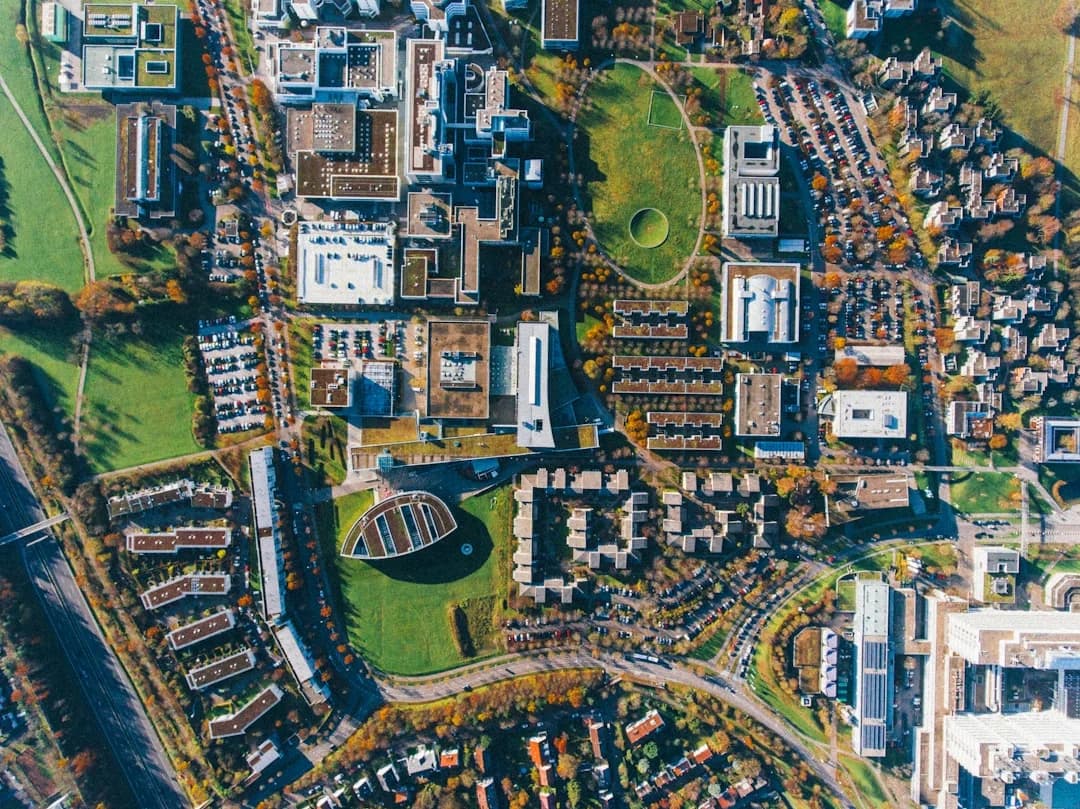
Photo by Max Böttinger on Unsplash
The year 2026 is shaping up as a watershed moment for AI-driven climate modelling in the United Kingdom, with a clear emphasis on ethics, governance, and transparency across leading universities. In January, the government announced a substantial investment to expand the AI Research Resource (AIRR) by boosting Cambridge’s DAWN supercomputer—effectively expanding AI compute power for research teams across the country. This push comes as UK universities confront pressing questions about how AI tools should be developed, tested, and deployed to model climate futures with the rigor and accountability readers expect from Cambridge Review. The unfolding developments are being watched closely by researchers, policymakers, and industry partners who are balancing rapid technological capability with safeguards that protect public trust and ensure responsible innovation. This report examines AI ethics in climate modelling UK universities 2026, focusing on governance, compute access, and the broader implications for public policy, research integrity, and university collaboration. The overarching question is how UK higher education can stay at the cutting edge of climate science while maintaining robust ethical guardrails that withstand external scrutiny and evolving regulatory expectations. (gov.uk)
As part of the broader UK strategy to advance AI responsibly, Cambridge and its partner universities are navigating a policy environment that prizes governance, safety, and openness. The UK’s AI strategy—highlighted by UKRI and DSIT—signals a coordinated approach to scale compute capacity, fund AI-enabled science, and incorporate ethics into research design. The government’s January 2026 announcement situates DAWN at the center of this strategy, offering researchers free access to cutting-edge hardware and a pipeline for responsible AI-enabled climate modelling that can be verified and audited by external researchers. The emphasis on safeguards for responsible innovation is not incidental; it reflects a deliberate effort to align national AI ambitions with climate science needs, ensuring that models used to predict weather patterns or inform infrastructure decisions are interpretable, reproducible, and ethically grounded. In short, AI ethics in climate modelling UK universities 2026 is becoming a defining test case for how public institutions integrate governance into technical excellence. (gov.uk)
A key signal from Cambridge’s ecosystem is the growing prominence of climate and AI governance events within the Cambridge Festival and Cambridge Zero initiatives. The Cambridge Festival 2026 program signals a public-facing commitment to questions around AI’s role in climate science, including sessions that examine the environmental footprint of AI and the societal implications of climate modelling technologies. The festival, which runs from March 16 to April 2, 2026, features more than 350 events, including discussions that directly tackle the balance of innovation and responsibility in climate modelling. The event line-up underscores the university’s strategy to broaden engagement with policy makers, industry, and the public on how AI tools are developed, tested, and applied in climate contexts. This aligns with broader university efforts to publish accessible, evidence-based insights on AI ethics in climate modelling UK universities 2026 and to provide clear avenues for public accountability. (festival.cam.ac.uk)
Opening: two to three paragraphs that set the scene
-
The January 2026 government investment and the AIRR expansion are the news anchor for AI-enabled climate modelling in the UK. The initiative will increase the DAWN supercomputer’s power sixfold by spring 2026, expanding access to AMD MI355X GPUs and other advanced hardware to UK researchers and startups. This not only accelerates climate simulations but also raises important questions about the governance and ethics of large-scale AI in a domain with direct societal impact. The immediate practical effect is a faster, more capable platform for researchers to explore climate scenarios, downscale projections, and test policy options, while maintaining rigorous ethical standards around data use, model transparency, and accountability. The news is complemented by the presence of AIRR assets at Cambridge and Bristol (DAWN and Isambard-AI), which together form a national compute backbone for AI-enabled science. (gov.uk)
-
In parallel, Cambridge and partner institutions are actively engaging with the ethics and policy dimensions of AI in climate contexts. Cambridge Zero’s “Regulating AI for Climate and Nature” event on March 18, 2026—part of Cambridge Climate Week—brought together legal scholars, policymakers, and researchers to discuss how governance structures can respond to AI-driven environmental impacts while enabling legitimate scientific and societal benefits. The panel emphasized the need for policy design that can adapt to evolving AI capabilities without stifling innovation. This event illustrates the practical intersection of ethics, climate science, and regulatory frameworks in UK universities, reinforcing the editorial stance of Cambridge Review to present data-driven, balanced coverage of technology and market trends. (zero.cam.ac.uk)
-
The Cambridge Festival narrative reinforces the public-facing emphasis on climate modelling and AI. The festival’s climate-relevant programming includes sessions that examine AI’s environmental footprint and how climate strategies can be grounded in rigorous scientific evidence and public accountability. The festival’s official release confirms dates and program scope, providing a backdrop for readers to understand how universities are operationalizing ethical considerations in climate modelling through public events, cross-institutional collaboration, and transparent communication with citizens. This broader cultural context complements the technical and policy developments described above, illustrating how universities are embedding AI ethics into the fabric of climate science discourse. (festival.cam.ac.uk)
Section 1: What Happened
Major Funding Announcement and Scope
Government investment in Cambridge's AI compute

Photo by Markus Winkler on Unsplash
- The UK government announced a £36 million investment to increase the DAWN supercomputer’s capacity at the University of Cambridge by six times, with effects expected by spring 2026. The press release emphasizes that the upgrade will provide free access to cutting-edge AI chips for UK researchers and startups, expanding the scope of climate modelling, healthcare AI, and other data-intensive research areas. The funding is described as part of a broader effort to scale AIRR and strengthen the UK’s national compute infrastructure. The announcement explicitly ties this upgrade to the AI Opportunities Action Plan and to AIRR’s mission to serve public researchers and industry partners. The timing places the upgrade to take effect as early as spring 2026, enabling researchers to tackle larger datasets and more complex climate simulations. (gov.uk)
AIRR structure and partner institutions
-
AIRR comprises high-performance computing assets designed to accelerate AI-enabled science, including DAWN at Cambridge and Isambard-AI at the University of Bristol. The AIRR Compute Opportunity document clarifies that the program launched in mid-2025 and will roll out structured calls offering substantial GPU hours (200,000 to 1,000,000 GPU hours) to approved projects. Applicants must be UK-based and aligned with priority AI-for-science domains; the program also requires consideration of ethical or responsible research and innovation in project proposals. The first call is a concrete signal of how governance and ethics are integrated into funding criteria at scale, reinforcing the idea that AI ethics in climate modelling UK universities 2026 is not a peripheral topic but a gating factor in access to compute. The process includes deadlines and a clear audit trail for project outcomes. (gov.uk)
-
The government’s press materials highlight the broader national significance of AIRR, noting that the program aims to expand compute capacity twentyfold by 2030 and that DAWN’s upgrade is part of a nationwide effort to democratize access to AI-grade compute for researchers, SMEs, and startups. The public sector emphasis is clear: more compute should translate into more rigorous science, more transparent modelling, and greater opportunities for evidence-based policy. The press materials also point to industry partnerships with technology providers (Dell, AMD) to integrate cutting-edge accelerators into Cambridge’s existing DAWN architecture, illustrating how public investment is intended to catalyze both scientific progress and responsible innovation. (gov.uk)
Timeline and key milestones
- Timeline anchors include the January 26, 2026, government announcement of the £36 million DAWN upgrade; the anticipated spring 2026 activation of the enhanced compute capacity; and the ongoing AIRR calls and governance processes that began in late 2025. The AIRR framework stipulates that future opportunities and compute access will be published through the UKRI Funding Finder and AIRR portals, with deadlines for proposals and explicit references to ethical and responsible research considerations. Cambridge and Bristol’s AI compute assets are positioned as the backbone for public research and industry collaboration in climate sciences, energy, and health. These milestones mark concrete progress in the integration of AI into climate modelling within UK universities while foregrounding ethical governance as an integral, trackable element of the investment. (gov.uk)
Institutions and roles
- Cambridge is the primary national beneficiary of the DAWN upgrade and AIRR expansion, while Bristol’s Isambard-AI serves as a complementary node within the AIRR network. Together, these compute resources enable climate scientists and modelers to run larger ensembles, integrate multi-modal climate data, and explore uncertainty quantification at scale. The cooperation across Cambridge and Bristol—backed by UKRI and DSIT—reflects a national strategy to align compute capacity with strategic science priorities, including climate resilience and climate modelling. As part of this alignment, Cambridge’s leadership in climate research and governance ensures that ethical considerations—ranging from data provenance to model interpretability and bias mitigation—are baked into the research pipeline from the outset. (gov.uk)
Section 2: Why It Matters
Governance, Transparency, and Public Trust in AI-Driven Climate Modelling
The ethics of scale: how compute access intersects with climate modelling integrity

Photo by Markus Winkler on Unsplash
-
The scale-up of compute resources is a powerful enabler for climate modelling, enabling more complex models, larger data streams, and more robust ensemble forecasts. But scale without governance can amplify risks associated with data quality, model transparency, and the potential for misinterpretation or misapplication of results. In this context, UKRI’s AIRR framework explicitly includes ethical or responsible research and innovation considerations as part of its evaluation criteria, signaling that ethics will influence which projects receive access to the new compute. This is a meaningful signal for universities seeking to balance ambition with accountability, particularly in climate science where model outputs can influence critical infrastructure decisions and policy. The emphasis on responsible AI and research practices aligns with broader UK AI governance initiatives and international best practices in climate modelling ethics. (gov.uk)
-
The Cambridge AI climate governance conversation has gained new momentum through events like Regulating AI for Climate and Nature. The forum’s framing notes that policy measures must respond to AI’s environmental impacts while allowing researchers to leverage AI tools for essential scientific work. The event’s program underscores the need for regulatory clarity, risk mitigation, and pathways for public accountability—especially given AI's potential to affect climate risk assessments, disaster preparedness, and resource management. The conversation is not just about restricting AI; it is about designing governance mechanisms that keep pace with technology while preserving scientific credibility and public trust. (zero.cam.ac.uk)
-
Cambridge Festival’s programming reinforces that ethical and societal considerations are not add-ons but central to climate modelling discourse. The festival’s focus on “climate repair” and the environmental costs of AI demonstrates a cultural shift toward integrating ethics and sustainability into AI-driven climate science as a standard part of research communication. By publicly debating these issues, UK universities are building a more informed and engaged audience for AI-enabled climate modelling—an essential step in fostering trust and legitimacy for model-driven decision-making in public policy and industry. (festival.cam.ac.uk)
Who is affected and how: researchers, policy makers, and the public
-
Researchers in UK universities are the primary beneficiaries of AIRR, with expanded compute access enabling more ambitious climate modelling projects, including ensemble runs, multi-model comparisons, and real-time data assimilation. For researchers, the ethical dimension translates into explicit checklists and review processes that address data governance, model interpretability, reproducibility, and potential societal impacts. The AIRR framework’s emphasis on ethics means that researchers must articulate how their projects comply with responsible AI principles, ensuring that outputs are robust, auditable, and responsibly communicated to stakeholders. This is especially important in climate modelling, where model outputs can drive expensive policies, investments, and adaptation strategies. (gov.uk)
-
Policy makers gain access to more timely and credible climate projections, derived from larger, more sophisticated AI models. The government’s approach to scaling compute with governance aligns with the need for transparent, auditable modelling that can inform infrastructure planning, hazard mitigation, and long-term climate adaptation strategies. The public sector emphasis within AIRR also serves to reduce vendor lock-in risk and promote public accountability, ensuring that advances in AI-enabled climate modelling translate into tangible public goods while maintaining rigorous oversight. (gov.uk)
-
The public benefits from ethical, transparent modelling processes that produce credible forecasts and risk assessments. By embedding ethics within the funding and deployment pipeline, UK universities aim to minimize biases, misinterpretations, and misuses of climate data. The Cambridge Zero and Cambridge Festival programs illustrate how universities are communicating ethical considerations to the public, not simply leaving them to internal committees. This transparency is a cornerstone of maintaining public trust when climate models influence everyday life—from flood risk planning to energy system design. (zero.cam.ac.uk)
How UK universities position themselves on AI governance and climate science
- The government’s AI strategy and UKRI's AI-focused funding initiatives signal a national intent to lead in responsible AI for science. By situating the Cambridge DAWN expansion within the AIRR framework, policymakers are not just subsidizing faster computation; they are building an ecosystem that emphasizes ethical research design, governance, and accountability in high-stakes climate research. Cambridge’s leadership in climate science, combined with the governance discussions highlighted by Cambridge Zero, positions UK universities to influence international norms around AI ethics in climate modelling. In practice, this means more explicit governance reviews, more transparent documentation of data sources and model assumptions, and more structured collaboration with external policymakers and civil society. (gov.uk)
Section 3: What’s Next
Timeline, Next Steps, and What to Watch For
Near-term milestones

Photo by Leiada Krözjhen on Unsplash
-
Spring 2026 marks the first major milestone: the upgrade of the DAWN supercomputer is expected to come online and begin delivering sixfold more power for AI-driven climate modelling. This will be accompanied by a ramp-up in AIRR compute access and the deployment of AMD MI355X GPUs, enabling researchers to run larger climate ensembles and more complex downscaling experiments. The immediate effects will be visible in modelling studies that require high-resolution simulations, improved data assimilation, and more robust uncertainty analyses. The government’s press materials emphasize that these upgrades will enhance climate resilience by enabling faster, more accurate modelling outputs that can support public service delivery and hazard preparedness. (gov.uk)
-
The AIRR program’s first structured calls, offering hundreds of thousands to millions of GPU hours, are scheduled to continue in 2025–2026, with ongoing opportunities published through the UKRI Funding Finder and AIRR portals. Projects submitted under these calls are expected to undergo a rigorous evaluation process that includes ethical and responsible research considerations, ensuring alignment with governance expectations for climate-related AI research. The deadline for the first AIRR opportunity (as announced in late 2025) demonstrates a clear cadence for project proposals and a transparent path to compute access. (gov.uk)
Medium-term governance and policy developments
-
The Cambridge ethical governance conversation around AI for climate and nature suggests that UK universities will increasingly formalize governance mechanisms for climate AI. Expect more explicit guidelines on data provenance, model interpretability, and risk communication across institutional review processes and research governance offices. The March 2026 event indicates a broader policy dialogue that could feed into university-level codes of conduct, ethics review templates, and cross-institutional data-sharing agreements that incorporate public-interest considerations for climate modelling. As Cambridge and other universities expand their climate AI activities, their governance frameworks are likely to become reference points for researchers in other disciplines facing similar ethical questions. (zero.cam.ac.uk)
-
The Cambridge Festival’s climate and AI programming suggests ongoing public-facing scrutiny of AI’s environmental footprint and governance implications. In 2026, we can anticipate more high-profile dialogues, white papers, and possibly policy briefs from Cambridge and partner institutions that translate technical findings into accessible guidance for policymakers, industry partners, and the public. These activities are essential to ensuring that public trust grows in step with AI capabilities used in climate modelling. The festival’s coverage and the public-facing nature of the events point to a normalization of ethical considerations as a routine aspect of climate science communication. (festival.cam.ac.uk)
What to watch for beyond Cambridge
- The UKRI AI strategy and related compute roadmaps indicate that the UK will continue investing in AI-enabled science, with a focus on governance and safety. Observers should watch for:
- Additional AIRR compute calls and new national compute nodes beyond DAWN and Isambard-AI.
- Clarifications on governance standards for climate modelling, including model validation, reproducibility requirements, and data-sharing norms.
- Cross-institutional collaborations that test AI-assisted climate models in real-world decision contexts, including infrastructure planning, flood risk analysis, and energy system optimisation.
- International engagement and alignment with global AI ethics norms, ensuring UK practice remains compatible with evolving frameworks such as the EU AI Act and UNESCO AI ethics recommendations.
Closing: the news, context, and the road ahead The convergence of large-scale AI compute, rigorous governance conversations, and public-facing discourse on climate modelling ethics marks 2026 as a pivotal year for AI ethics in climate modelling UK universities 2026. The DAWN upgrade at Cambridge, backed by £36 million from the government, is not merely a hardware story; it is a test case for how universities can scale AI-enabled climate science while embedding robust ethical safeguards. The AIRR framework, Isambard-AI in Bristol, and the Cambridge-Bristol compute backbone together create a national platform for climate modelling that aspires to transparency, reproducibility, and public accountability. This is the moment for UK universities to demonstrate that rapid scientific progress and responsible innovation are not mutually exclusive but mutually reinforcing.
The Cambridge ecological and policy ecosystem—through Cambridge Zero, the Cambridge Festival, and the evolving governance conversations around AI for climate and nature—offers a blueprint for how to integrate ethics into day-to-day research practice without slowing discovery. While the path to fully codified, universal ethics standards for AI in climate science remains a work in progress, the public documentation, the published calls for ethical consideration in AIRR proposals, and the high-profile events in Cambridge signal credible progress. In 2026, AI ethics in climate modelling UK universities are increasingly seen not as a constraint on innovation but as a practical framework that guides responsible, reliable, and responsive climate science. For researchers, policymakers, and the public, the coming months will reveal how this framework translates into verifiable results, transparent methodologies, and clearer lines of accountability in a field where climate predictions influence real-world decisions.
To stay updated on AI ethics in climate modelling UK universities 2026, readers can follow Cambridge Zero’s event notices, UKRI’s AI strategy updates, and Cambridge Festival programming, all of which provide ongoing context for how ethical governance is being woven into climate science at UK universities. The pages and events cited herein—ranging from the DAWN upgrade and AIRR calls to March 18 panel discussions and Cambridge Festival releases—offer a running thread through which the public can track progress, critique governance, and engage with the science as it unfolds. (gov.uk)