AI Archaeology & Digital Heritage: Cambridge Unveils ArCH
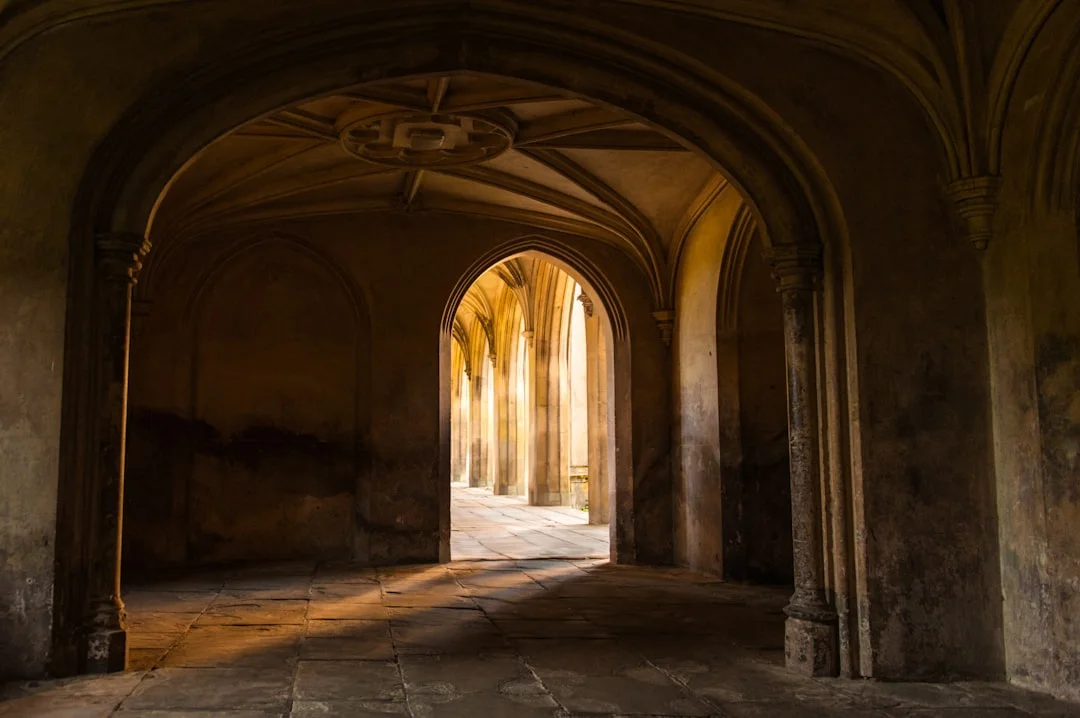
Photo by Danny Lines on Unsplash
The Cambridge University Library will host a landmark event that places AI-driven archaeology and digital heritage squarely in the spotlight of public cultural practice. On March 16, 2026, Cambridge’s Gillespie Centre at Clare College will welcome researchers, curators, data scientists, and policy observers for the AI for Cultural Heritage Hub Conference (ArCH), a proof‑of‑concept workspace designed to democratize access to AI tools for heritage data while enforcing governance and privacy protections. The event will be available in person and online via Zoom, with a full day of demonstrations, panel discussions, and live testing of six curated case studies across Cambridge’s GLAM network. This launch marks a deliberate step toward turning cutting-edge AI into practical, responsible support for cultural preservation and public access. (Cambridge University Library official event page; Cambridge Review reporting) (lib.cam.ac.uk)
Cambridge's ArCH initiative has arrived at a timely moment in the broader UK and global context, where museums, libraries, and archives are exploring how AI can accelerate digitization, transcription, object reconstruction, and data interoperability without eroding governance or scholarly rigor. The conference will showcase a prototype environment that non-technical practitioners can use to analyze culture-heritage data securely, with the aim of delivering tangible improvements in discoverability and interpretation. The project is funded through ai@cam and the Accelerate Programme for Scientific Discovery, with additional support from Schmidt Sciences, underscoring a public‑private collaboration model that Cambridge intends to replicate across the GLAM sector. (Cambridge Review coverage; Cambridge Library materials) (cambridgereview.uk)
This initiative sits within a broader national AI infrastructure push that Cambridge is well positioned to leverage. The Cambridge review and university communications frame ArCH as part of a wider strategy to scale AI‑enabled research and public‑facing services, including high‑performance compute upgrades and governance innovations designed to ensure reproducible, auditable workflows. As Cambridge highlights, these compute and governance investments—such as the Dawn supercomputer program and related AI resource upgrades—help provide the technical backbone necessary for reliable, scalable digital heritage work. The implication for cultural heritage is clear: AI is no longer a speculative tool but a resource with structured workflows, demonstrable case studies, and governance controls that institutions can adopt to improve access, accuracy, and safeguarding of sensitive materials. (Cambridge Review reporting; Cambridge Library materials; university press communications) (cambridgereview.uk)
Beyond Cambridge, national and international conversations about AI in archaeology and heritage are intensifying. A notable example is the Vindolanda climate resilience and AI pilot, a UNESCO‑related initiative that has drawn media attention in January 2026 for testing predictive AI tools at a UNESCO World Heritage Site. The Vindolanda pilot demonstrates how AI can help prioritize protection and conservation decisions under climate pressure, illustrating both the promise and the governance questions that ArCH seeks to address within a university‑led ecosystem. ITV and UNESCO coverage highlight that these approaches are moving from pilot projects to broader discussions about how AI can support on‑the‑ground heritage protection and public engagement. (UNESCO in the UK coverage; ITV coverage) (unesco.org.uk)
Opening with the news: Cambridge announces a structured, data‑driven path to AI‑powered heritage work, linking classroom‑level AI development with hands‑on heritage practice. The ArCH hub aims to unify Cambridge’s dispersed GLAM strengths into a single, secure environment where curators, archivists, researchers, and technologists can collaborate to address long‑standing digitization challenges. In short, AI‑driven archaeology and digital heritage are being operationalized through a real‑world, cross‑institution program that prioritizes governance, reproducibility, and public value. (Cambridge Library pages; ArCH project page) (lib.cam.ac.uk)
Section 1: What Happened
Announcement and scope
The March 16, 2026 conference is the centerpiece of ArCH’s launch. Cambridge University Library convenes this event to introduce ArCH as a prototype workspace designed to empower practitioners and academics to analyze culture‑heritage data securely with AI tools. The event is free to attend in person or online, but in‑person spaces are limited and require advance registration; the in‑person deadline was set for March 8, 2026. The conference format emphasizes data governance, privacy safeguards, and practical demonstrations of six case studies that illustrate how secure AI workflows can enhance the analysis of digitized records, manuscripts, and other heritage data. (Cambridge University Library event page; Cambridge Review coverage) (lib.cam.ac.uk)
Timetable and key facts
The main conference runs from 10:00 to 17:30 GMT at the Gillespie Centre, Clare College, with an online option to broaden participation. A Hands on with the Hub session is planned for March 20, 2026, in the Cambridge University Library’s Milstein Room, offering participants a guided, drop‑in opportunity to apply ArCH workflows to their own data or provided datasets. Registration for Hands on with the Hub is limited to those who attended the main conference and is designed to democratize practical AI heritage work while maintaining controlled governance. The six case studies span digitization, reconstruction, and knowledge integration, designed to test AI transcription, computer vision, and language‑and‑artifact data fusion in authentic heritage contexts. (Cambridge Review articles; ArCH project materials) (lib.cam.ac.uk)
Organizers, leadership, and funding
ArCH is an interdisciplinary effort led by the Cambridge University Library Research Institute, with collaboration from the Department of Mathematics and Theoretical Physics and the Collections, Connections, Communities Strategic Research Initiative. Funding for ArCH comes from ai@cam and the Accelerate Programme for Scientific Discovery, complemented by Schmidt Sciences. This governance and funding structure signals Cambridge’s intent to build a scalable, reproducible model for AI‑enabled cultural heritage that can be shared with other GLAM institutions. Attendees and readers can expect governance documentation, technical updates, and community engagement as the project progresses beyond the initial six‑case study phase. (ArCH page; Cambridge Review coverage) (lib.cam.ac.uk)
Six case studies: the heart of ArCH’s testbed
The ArCH framework rests on six case studies designed to address three core cultural‑heritage challenges. Case Study 1 focuses on unlocking inaccessible data by converting analogue card catalogue records into online, machine‑readable formats. Cases 2 and 3 tackle historical handwritten biodiversity records from the University Museum of Zoology and specimen labels from the University Herbarium, turning handwritten notes into structured data to support biological research. Case Study 4 tests AI‑assisted reconstruction of the Papyrus of Ramose at the Fitzwilliam Museum Cambridge; Case Study 5 analyzes a Nahuatl‑Latin lectionary in Cambridge’s Bible Society Collection to explore machine learning for text and symbol interpretation. Case Study 6 investigates integrating expert cultural knowledge into AI through language variants and artifact‑specific data to train small, bespoke models that reflect practitioner insight and community knowledge. Together, the six cases test transcription, data structuring, object reconstruction, and knowledge integration within authentic heritage workflows. (ArCH project page; Cambridge Review coverage) (lib.cam.ac.uk)
Why these cases matter in practice
The six‑case design is deliberately pragmatic: it demonstrates how AI can accelerate the digitization and indexing of large heritage corpora while preserving sensitive data governance and ensuring interpretability for non‑technical staff. By prioritizing non‑destructive analysis and user‑friendly interfaces, ArCH aims to broaden participation in heritage data projects beyond AI specialists to include curators, conservators, archivists, and researchers who have long relied on traditional workflows. This democratization is central to ArCH’s mission and aligns with broader cultural heritage trends toward openness, while maintaining rigorous governance that protects privacy, provenance, and scholarly integrity. (Cambridge Review sections on democratizing access; ArCH governance notes) (cambridgereview.uk)
What’s Next
Immediate milestones and upcoming activities
The March 16 conference is followed by the March 20 Hands on with the Hub session, both designed to extend the initial findings and to begin translating the six case studies into practical workflows that other GLAM institutions could adapt. Ongoing updates are expected through ArCH blogs, project reports, and official Cambridge Library channels, with documentation on data governance, machine‑readable formats, and reproducible methods released as the initiative progresses. The registration window for in‑person attendance closed on March 8, 2026, underscoring the importance of early engagement for participants seeking hands‑on opportunities. (Cambridge University Library page; Cambridge Review coverage) (lib.cam.ac.uk)
Longer‑term implications for Cambridge and the GLAM sector
If ArCH demonstrates tangible improvements in data accessibility, transcription accuracy, and artifact understanding, Cambridge could become a blueprint for GLAM institutions seeking responsible, scalable AI workflows. The project’s governance emphasis and its six case studies position ArCH as a potential model for cross‑institution collaboration, reproducible AI pipelines, and public engagement that can be scaled to national and international contexts. The broader ecosystem—comprising Cambridge’s AI compute investments and the national AIRR framework—could create a virtuous cycle: more data to train models, better tools for curators, expanded public access to heritage materials, and new research capabilities for scholars. (Cambridge Review analysis; ArCH pages) (cambridgereview.uk)
Next steps for stakeholders and readers
For GLAM professionals, academics, and data scientists, the ArCH program offers concrete paths to participate in the early stages of AI‑enabled cultural heritage work. In addition to the March events, stakeholders can follow project updates, join the ArCH mailing list, and monitor related Cambridge blogs for technical documentation and case study results. The ArCH team also points readers to blog posts by project leads and to demonstrations that outline how secure AI workflows can be integrated into everyday heritage practice, from cataloging to interpretation. (ArCH pages; Cambridge Review closing) (lib.cam.ac.uk)
Closing
The AI for Cultural Heritage Hub represents a careful, data‑driven approach to a long‑standing question: how can AI be used to illuminate humanity’s cultural memory while preserving trust, privacy, and scholarly rigor? By laying out a structured hub, a clear timeline, and six concrete case studies, Cambridge is testing a model that could reshape how libraries, museums, and archives approach AI in cultural heritage. As the ArCH program unfolds through its March events and subsequent project updates, readers can expect ongoing visibility into governance practices, reproducible workflows, and opportunities to engage with a technology that promises to accelerate discovery without compromising the integrity of heritage data. For those seeking updates, Cambridge Library channels and ai@cam communications will be key sources as ArCH progresses toward broader deployment and adoption across the GLAM sector. (Cambridge Review closing) (cambridgereview.uk)