2nd Cambridge Human Organoid Symposium 2026 Recap

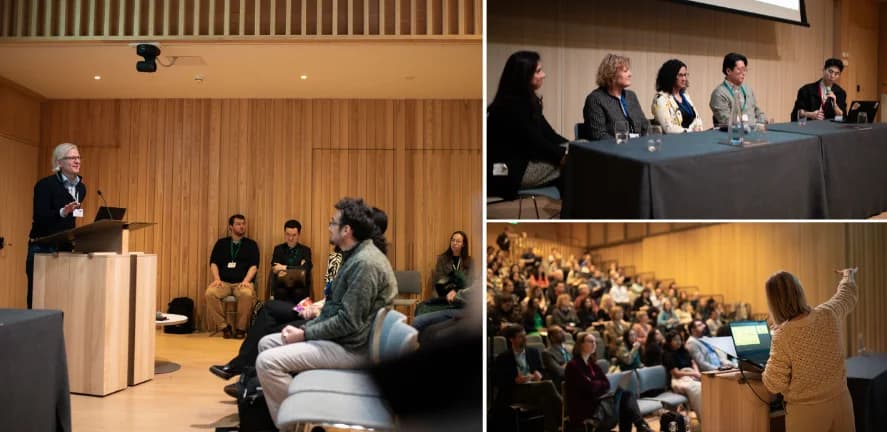
The 2nd Cambridge Human Organoid Symposium 2026 assembled a national audience of researchers, industry professionals, and policy experts to take stock of where human organoid science stands and where it is headed next. The mood was professional and data-driven, yet energizing, with a palpable momentum as teams presented recent advances in organoid models, disease modeling, and translational pathways. For readers who missed the live event, the CHOS 2026 recap below distills the most impactful moments, the key themes, and the practical implications for both academia and industry. This year’s gathering, hosted at Magdalene College in Cambridge, underscored how organoid technologies are moving from laboratory prototypes toward closer-to-clinic applications, while stressing the need for collaboration, standardization, and clear translational routes. The event, framed as a national one-day forum, highlighted emerging talent, reinforced ongoing industry-academia dialogues, and signaled a continuing, high-level commitment to advancing human organoid science across sectors. The formal program details, including the 09:00–17:00 timetable and Magdalene College as the venue, anchored the day in a traditional academic setting while hosting rapid-fire talks and industry flash sessions designed to expedite knowledge transfer. (stemcells.cam.ac.uk)
The opening remarks from the Zilbauer Group framed CHOS 2026 as a continuation and expansion of last year’s momentum, positioning it as a national platform for showcasing cutting-edge organoid research and fostering cross‑sector collaboration. The location and schedule were confirmed as Magdalene College, Cripps Court, Cambridge, with a program designed to balance established researchers’ updates, early-career talks, and rapid industry perspectives. Attendees were invited to submit abstracts and compete for best presentation recognition, underscoring the event’s role in talent development and knowledge exchange. As organizers noted in the event materials, the symposium serves as a focal point for both scientific discovery and practical translation, a balance that has become increasingly central to the organoid field. The event also demonstrated Cambridge’s broader ecosystem for organoid innovation, which links to related conferences and venues in the region that support a robust NAM (New Approach Methodologies) community. (onlinesales.admin.cam.ac.uk)
Opening quotes from organizers reinforced the significance of CHOS 2026 as a national gathering. In advance of the day, the Zilbauer Group welcomed participants with a sense of anticipation for the program’s emphasis on both high-impact science and practical collaboration. The CHOS framing—“a national one-day event bringing together researchers and industry professionals at the forefront of human organoid science”—set expectations for a data-rich, dialogue-driven agenda that would be accessible to a broad audience, including students, researchers, industry professionals, clinicians, and policymakers. This emphasis on inclusivity and practical relevance helped shape the conference’s tone and content. The event program highlighted four core pillars: Research Highlights from Leading Investigators, Emerging Talent Presentations, Industry Flash Talks, and Networking Opportunities. (stemcells.cam.ac.uk)
Section 1: Event Highlights
Research Highlights from Leading Investigators
The CHOS 2026 program opened with a focus on research highlights from leading investigators, a core pillar designed to showcase the latest advances in organoid models and their applications in human biology and disease. Talks covered a spectrum of organ systems and modelling approaches, with emphasis on how organoids can recapitulate key tissue features and disease processes. Organizers stressed that these sessions are not only about novelty but about reproducibility and translational relevance—an explicit acknowledgment of the field’s move toward more standardized, comparable models. The program’s emphasis on cutting-edge science positioned the symposium as a bellwether for what is clinically translatable within organoid systems. (stemcells.cam.ac.uk)
Emerging Talent Presentations
A distinguishing feature of CHOS 2026 was the Emerging Talent strand, which featured concise talks from PhD students and postdoctoral researchers. This focus on early-career researchers signals a community investing in the next generation of organoid scientists and practitioners. Emerging Talent Presentations provided a platform for novel approaches, from novel culture conditions to new readouts and analytical frameworks, illustrating the breadth of ideas converging in Cambridge’s organoid scene. The emphasis on early-career researchers aligns with the event’s broader commitment to talent development and cross-pollination between academia and industry. (stemcells.cam.ac.uk)

Industry Flash Talks
CHOS 2026 incorporated Industry Flash Talks, a rapid-format session designed to deliver translational insights from industry players, startups, and translational research programs. These talks offered concise, practice-oriented perspectives on how organoid models are being leveraged for drug discovery, disease modelling, and therapeutic development. The presence of industry flash content underscores a growing trend: the organoid field is increasingly oriented toward practical outcomes, including partner-science initiatives, collaboration on scale-up, and discussions about regulatory and quality standards that could accelerate clinical translation. (stemcells.cam.ac.uk)
Networking Opportunities
Networking took a central role in CHOS 2026, reflecting the event’s design to maximize connections across breaks, structured sessions, and informal discussions. The importance of networking is not merely social; it’s a catalyst for collaborations that can accelerate project timelines, align industry needs with academic capabilities, and foster standardization efforts across laboratories and platforms. The event’s location at Magdalene College and its one-day format created a focused environment conducive to meaningful conversations and immediate follow-up. (stemcells.cam.ac.uk)

Abstract submission and competition for best presentation were highlighted as a key feature, offering a tangible incentive for researchers to distill and share their latest results succinctly. The CHOS 2026 materials noted that selected speakers would receive free registration and that a prize would be awarded for the best presentation, signaling a merit-based approach to recognizing standout work. This mechanism helps surface high-quality science while encouraging broader participation from students and early-career researchers. (onlinesales.admin.cam.ac.uk)
Section 2: Key Takeaways
Standardization and Cross-Sector Collaboration
One of the clearest through-lines from CHOS 2026 is the ongoing push for standardization in organoid research and for stronger collaboration across academia and industry. The program’s emphasis on Research Highlights and Emerging Talent, paired with Industry Flash Talks, highlights a broad consensus that progress in the organoid field depends on reproducible methods, shared datasets, and meaningful translational pathways. The 1st Cambridge Human Organoid Symposium framed these questions as central concerns, emphasizing standardization and policy considerations. The continuity between CHOS 2025 and 2026 underscores a sustained commitment to tackling these challenges collectively. As Cambridge Stem Cell Institute notes from its CHOS-related coverage, momentum and collaboration between academic researchers and industry partners are particularly significant signals for the field’s trajectory. This suggests that the Cambridge ecosystem views standardization and cross-sector partnerships as essential to moving organoid science from the lab bench to real-world impact. (stemcells.cam.ac.uk)
Translational Potential and Industry Engagement
The inclusion of Industry Flash Talks is a substantive indicator that CHOS 2026 is aligning more squarely with translational goals. Attendees heard rapid-fire accounts of how organoid models feed into drug discovery pipelines, disease modelling, and early-stage translational programs. The Cambridge program materials describe sessions designed to deliver translational insights and commercial perspectives, reflecting a market-oriented dimension to the symposium. This emphasis—paired with the overall atmosphere of constructive exchanges between academia and industry—suggests a market dynamic where organoid technologies are increasingly viewed as enabling tools for more predictive biology, improved patient stratification, and accelerated therapeutic development. The Zilbauer Group’s framing of CHOS as a platform for collaboration and translation supports this reading of the market and technology landscape. (stemcells.cam.ac.uk)
Talent Development and Diversity of Work
Emerging Talent Presentations highlighted Cambridge’s strength as a hub for young researchers exploring diverse organoid applications. The emphasis on early-career researchers signals a growing pipeline of talent capable of sustaining innovation in organoid biology and its interfaces with bioengineering, imaging, computational biology, and clinical translation. This talent development aspect matters for market dynamics because it helps ensure a steady flow of new ideas, methods, and problem-solving approaches that can be commercialized or translated into clinical research programs. The CHOS 2026 program’s structure—coupled with abstracts and best-presentation awards—reinforces a culture of rigorous communication, peer feedback, and competitive excellence that benefits the broader ecosystem. (stemcells.cam.ac.uk)
Ecosystem and Cambridge’s NAM Landscape
The CHOS 2026 storyline sits inside a broader Cambridge NAM ecosystem that includes WORD+ (World Organoid and Organ-on-a-chip Research Day) and related events. The Cambridge community’s calendar reflects a tightly coupled series of gatherings that connect foundational organoid research with platform technologies, translational science, and industry engagement. WORD+ 2026 and related events have been repeatedly highlighted in Cambridge science and industry circles as critical venues for showcasing organoid platforms and their applications. This interconnected event series signals not only scientific momentum but also a mature market environment where conferences, demonstrations, and industry partnerships reinforce one another. (ubs.admin.cam.ac.uk)
What the Data Suggests for 2026 and Beyond
With CHOS 2026 following the success of the prior year and aligning closely with Cambridge’s broader organoid ecosystem, several implications emerge for readers tracking technology and market trends in this space. First, there is a clear emphasis on translating organoid research into practical contexts—drug discovery, disease modelling, and translational platforms—supported by a mix of academic talks and industry perspectives. Second, the field is increasingly anchored by collaborative networks that include academic labs, clinical researchers, biotechnology vendors, and larger pharmaceutical players. Third, there is strong interest in nurturing talent and diversifying the kinds of organoid systems and readouts that researchers employ, which bodes well for a broader range of disease models and therapeutic insights. Taken together, these signals point to a marketplace where organoid technologies are becoming more integrated into translational pipelines, with Cambridge as a focal point for both science and industry engagement. (stemcells.cam.ac.uk)
Section 3: Notable Quotes & Moments
The Zilbauer Group are excited to welcome you to the 2nd Cambridge Human Organoid Symposium (CHOS), a national one-day event bringing together researchers and industry professionals at the forefront of human organoid technologies. Building on the success of last year’s symposium, CHOS 2026 will highlight cutting-edge science, showcase emerging talent, and foster collaboration between academic and industry communities. (stemcells.cam.ac.uk)
The Cambridge Human Organoid Symposium was truly inspiring—excellent attendance, vibrant discussion, and a real sense of momentum. Particularly exciting were the constructive exchanges between academic researchers and industry partners, which signal a bright future for human organoid science and its translational potential. A huge thank you to Ellie, Federica, Claire, Komal, and Jaesub for organising such an outstanding event—and a special thanks to Alice and the TIF team for so effectively connecting our work with the wider industry landscape. (stemcells.cam.ac.uk)
The first quote captures the organizers’ framing of CHOS as an event that unites scientists and industry, while the second reflects a retrospective assessment of momentum and collaboration that Cambridge leaders have consistently highlighted as essential to advancing organoid science. Together, these voices illustrate a sector that values both rigorous science and practical pathways to translation. (stemcells.cam.ac.uk)
Section 4: What It Means
Implications for the Organism and Market Landscape
CHOS 2026 reinforces a market and technology narrative in which organoid models are increasingly integrated into translational research programs. The combination of high-quality Research Highlights, Emerging Talent, and Industry Flash Talks suggests a growing appetite for datasets, methodologies, and collaboration agreements that accelerate decision-making in drug discovery and disease modelling. The event’s location within Cambridge’s NAM ecosystem—alongside WORD+ and related events—points to a regional concentration of capabilities in organoid culture, high-content analytics, and platform technologies that enable scalable deployment. This regional concentration matters for readers tracking who’s investing in organoid capabilities, what kinds of collaborations are likely to emerge, and how regulatory and standardization conversations might progress as more models move toward clinical relevance. (stemcells.cam.ac.uk)
Looking Ahead: Next Year and Beyond
As CHOS continues into its next edition, expect a continued emphasis on standardization, multi-institution collaboration, and closer ties to industry. The event’s structure—integrating established investigators with emerging talent and a rapid-fire industry segment—offers a blueprint for how to balance rigor with practical agility. For readers and stakeholders, the takeaway is clear: sustained investment in shared platforms, cross-disciplinary training, and translational partnerships will be pivotal for turning organoid innovations into tangible therapies and diagnostics. The Cambridge ecosystem’s integrated event calendar, including WORD+ and related programs, will likely amplify those dynamics in the near term, shaping the market’s expectations for collaboration speed, data accessibility, and regulatory-readiness of organoid-based models. (stemcells.cam.ac.uk)
Closing
Overall, the 2nd Cambridge Human Organoid Symposium 2026 reinforced a data-driven, action-oriented view of organoid science. Attendees left with a sense of momentum, a clearer view of translational pathways, and a shared commitment to mentoring the next generation of researchers while strengthening industry collaborations. Cambridge’s NAM ecosystem continues to position organoid technology as a central pillar of biomedical innovation, not just a niche research area. As CHOS 2026 closes, the field appears poised for further growth, more standardized methods, and more dynamic partnerships that will accelerate the journey from lab bench to bedside. If 2025 laid the groundwork, 2026 demonstrated the practical, market-facing momentum needed to propel organoid science toward broader clinical impact in the years ahead. The community now looks toward CHOS 2027 with expectations of deeper collaborations, expanded talent pipelines, and more explicit translational roadmaps that connect researchers, clinicians, and industry players in a shared mission to improve human health. (stemcells.cam.ac.uk)