TRIMTECH Therapeutics Opens New Campus in Babraham
TRIMTECH Therapeutics has relocated to the Babraham Research Campus, marking a significant step in its growth and research capabilities, particularly…
 By Dominic Carr · 30 August 2026 · 11 min read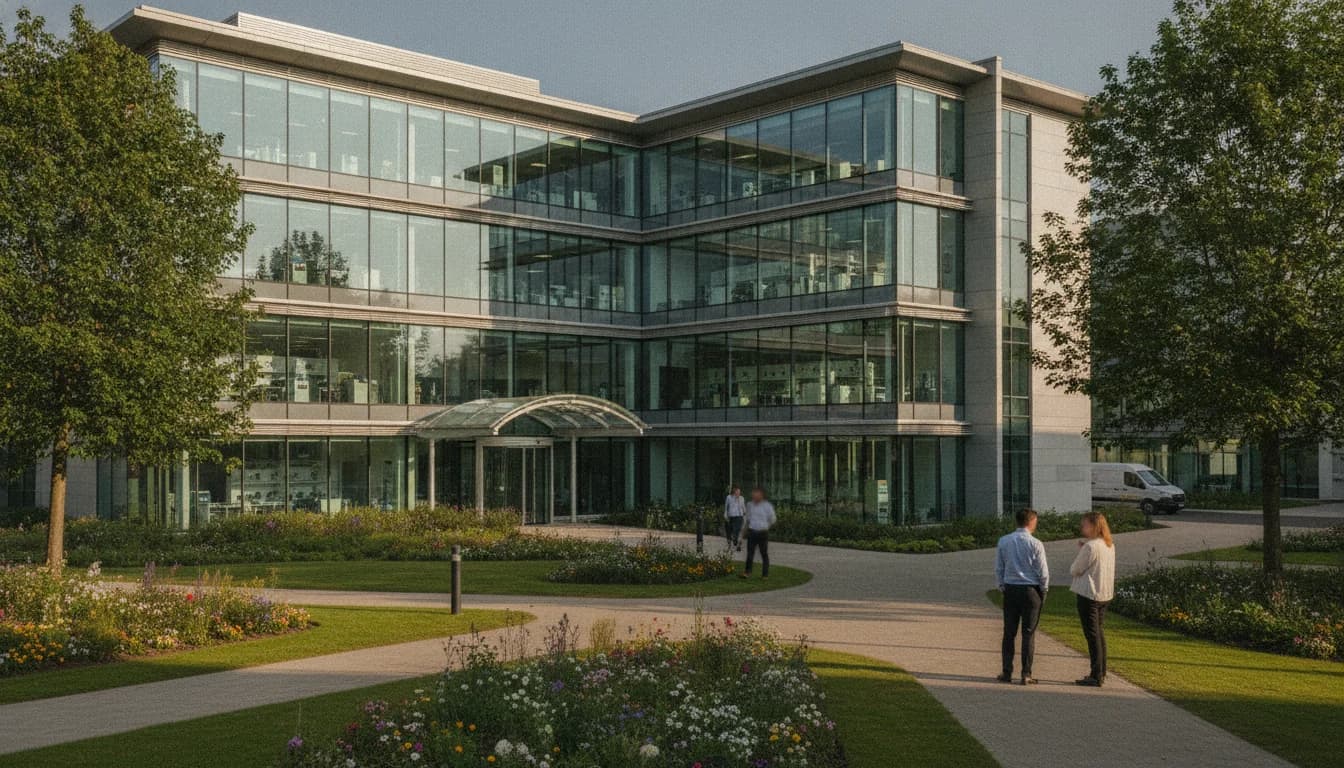
The Cambridge biotech scene welcomed a notable milestone with TRIMTECH Therapeutics announcing its relocation to the Babraham Research Campus as part of a broader scaling effort. The move, disclosed on May 18, 2026, signals a new chapter for a company built on two decades of academic collaboration around the TRIM21 E3 ligase and its TRIMTAC and TRIMGLUE degraders. The Babraham campus offers enhanced research infrastructure and proximity to one of the world’s most active life sciences clusters, reinforcing Cambridge’s reputation as a hub for translational biotech. In March 2025, TRIMTECH Therapeutics secured $31 million in seed funding, Cambridge Enterprise reports. This funding laid the groundwork for subsequent expansion and the ability to advance a growing pipeline focused on neurodegenerative and inflammatory disorders. Cambridge Enterprise highlighted that the seed round was led by Cambridge Innovation Capital and the Dementia Discovery Fund, with participation from SV Health Investors’ Dementia Discovery Fund, M Ventures, Pfizer Ventures, and others. This early investment helped underpin the company’s ability to pursue CNS-penetrant degraders built around TRIMTAC and TRIMGLUE technologies, now moving into a larger scale environment at Babraham.
The relocation marks more than a line on a map; it represents a strategic shift in TRIMTECH’s growth trajectory and a test of how Cambridge’s research ecosystems can accelerate translation from discovery to clinic. The Milner Therapeutics Institute first reported the move, with the official update published on May 18, 2026, detailing TRIMTECH’s transition from the Milner Bio-incubator to Babraham Research Campus. The announcement situates TRIMTECH’s narrative within Cambridge’s broader pipeline: academic discovery at the LMB and UK Dementia Research Institute, translational support at Milner, and now a scale-up phase at Babraham. According to the Milner piece, the move underscores the city’s capacity to support a company advancing from early-stage collaboration to independent, larger-scale research operations. The Milner update also emphasizes TRIMTECH’s focus on neurodegenerative and inflammatory diseases, highlighting how the company’s approach—combining TRIM21-based degradation strategies with small-molecule degraders—addresses a persistent medical need. (milner.cam.ac.uk)
What happened
Timeline of key events
Founding and early research foundations
TRIMTECH Therapeutics traces its roots to decades of academic work around TRIM21 and intracellular protein degradation. A Cambridge Enterprise case study notes the company’s origin in this ecosystem and the collaboration between academia and industry that underpins its technology platform. The company’s scientific approach centers on targeted protein degradation to remove disease-associated protein aggregates while preserving healthy protein versions, an approach that leverages the TRIM21 ubiquitin ligase to selectively degrade pathological protein complexes. The Cambridge Enterprise case study presents the seed round as a critical inflection point in TRIMTECH’s commercialization journey, establishing a financial runway for pipeline advancement and early clinical translation. This background is important for understanding why the Babraham move is positioned as a scaling milestone within Cambridge’s biotech network. (enterprise.cam.ac.uk)
Expansion to Babraham Research Campus
May 18, 2026 marks the formal milestone when TRIMTECH Therapeutics announced its expansion from the Milner Bio-incubator to Babraham Research Campus. The Milner Therapeutics Institute published the update, underscoring the company’s progression beyond Milner’s facilities and into a campus setting that hosts a community of startups and scale-ups. The article frames the relocation as a continuation of Cambridge’s integrated pipeline—from early discovery to translational support to scale-up space—demonstrating how the city’s ecosystem supports rapid progression for promising biotech ventures. The transportation of TRIMTECH’s operations to Babraham signals a commitment to expanded lab capacity, larger teams, and closer proximity to other companies and collaborators on the Babraham campus. (milner.cam.ac.uk)
The physical footprint and location details
GOV.UK’s company information confirms TRIMTECH Therapeutics Limited maintains a registered address at Suite D, Building 960, Babraham Research Campus, Cambridge CB22 3FH, reflecting the company’s formal presence at the Babraham site. This address provides a concrete anchor for the announced relocation, helping external partners, investors, and potential collaborators locate the company as it scales within a premier life sciences cluster. The Babraham campus is part of a broader Cambridge Research Campus ecosystem that includes adjacent facilities and an array of biotechnology entities. This proximity is often highlighted as a strategic advantage for collaboration, access to shared resources, and opportunities for joint projects with nearby academic and industry players. (find-and-update.company-information.service.gov.uk)
Seed funding and investor backdrop
As part of TRIMTECH’s broader fundraising narrative, Cambridge Enterprise’s case study confirms that the seed round secured in March 2025 totaled $31 million (£25 million). The round was led by Cambridge Innovation Capital and SV Health Investors’ Dementia Discovery Fund, with participation from M Ventures, Pfizer Ventures, and other investors. This disciplined, multi-institutional backing helped TRIMTECH assemble a portfolio focused on CNS-penetrant therapeutics and targeted protein degradation platforms—TRIMTAC and TRIMGLUE—that underpin the company’s strategy at scale. The Cambridge Enterprise account also notes ongoing support for TRIMTECH’s commercial pathway, underscoring the enduring role of Cambridge-based investors and the university ecosystem in the company’s development. (enterprise.cam.ac.uk)
What the official communications say
The Milner article’s framing highlights TRIMTECH’s move as an inflection point in its journey: moving from Milner’s bio-incubator to a dedicated space at Babraham, aligning with Cambridge’s cluster of biotech activity and enabling a broader research program and team growth. The piece also emphasizes the importance of being embedded in a scientific and industrial network that includes Cambridge Biomedical Campus partners, empowering collaboration with academia, biotech, and pharma players. The Cambridge Enterprise case study complements this by providing context on the seed funding’s scale and the investors involved, reinforcing the story of a Cambridge spinout transitioning to a more expansive growth phase. Together, the sources confirm a clear timeline: incorporation and early development, seed funding in 2025, bifurcated growth through Milner, and an eventual move to Babraham in 2026. (milner.cam.ac.uk)
How the move is framed within the Cambridge ecosystem
Industry stakeholders view the TRIMTECH Babraham Campus Opening as an example of Cambridge’s ability to move a high-potential science company from a university-affiliated incubator to a dedicated research campus. The Milner Institute’s coverage emphasizes that the ecosystem supports a continuous pipeline: discovery and early development in university settings, translational momentum at Milner, and scale-up capacity at Babraham. The Cambridge Enterprise case study is consistent with that view, illustrating how the university’s venture ecosystem can sustain a growing portfolio through varied funding rounds and strategic partnerships, all within a relatively compact geographic corridor. The combined narratives suggest that the Babraham move is both a physical relocation and a signal of maturation for TRIMTECH’s technology platform. (milner.cam.ac.uk)
Why it matters
Strategic significance for Cambridge’s biotech cluster
The TRIMTECH Babraham Campus Opening aligns with a broader pattern in Cambridge where venture-backed biotech companies evolve from early-stage incubators to larger campuses within the Babraham area and surrounding biotech hubs. This pattern is underscored by Milner’s public reporting of TRIMTECH’s transition and by Cambridge Enterprise’s documentation of seed funding and ongoing commercialization support. The combination of an expanded physical footprint, access to shared infrastructure, and proximity to other biotech entities creates opportunities for faster collaboration, joint research efforts, and potential partnerships with larger pharma players. The move also reinforces the narrative of Cambridge as a place where academic discoveries can be translated into clinical-stage programs through a coordinated network of support facilities and investors. (milner.cam.ac.uk)
Implications for TRIMTECH’s pipeline and market positioning
TRIMTECH’s technology—centered on TRIM21-based targeted protein degradation with its TRIMTAC and TRIMGLUE platforms—has long been positioned to address neurodegenerative and inflammatory diseases characterized by protein aggregates. The March 2025 seed funding round, described by Cambridge Enterprise, provides a funding backdrop that supports pipeline advancement and scale-up, while the May 2026 Babraham relocation enables more expansive research activities and greater operational capacity. The Cambridge Enterprise overview notes the CNS-penetrant focus of the therapeutics, underscoring a potential addressable patient population and a competitive positioning among early-stage degraders. The Babraham campus environment could help accelerate the translation of preclinical insights into scalable discovery and development workflows, particularly given Babraham’s ecosystem of biotech startups and research facilities. (enterprise.cam.ac.uk)
Stakeholders and broader ecosystem reactions
Investors, University of Cambridge entities, and campus partners are watching TRIMTECH’s Babraham Campus Opening as a test case for how spinouts can leverage a multi-institutional ecosystem to scale. Cambridge Innovation Capital and SV Health Investors’ involvement in the seed round, as documented by Cambridge Enterprise, signals strong institutional confidence in the company’s approach and potential. For Babraham Research Campus, the addition of a fast-growing, research-focused company adds to the campus’s roster and can strengthen the community’s ability to attract collaborations with larger pharma and biotech players. The collaboration dynamics among academia, venture funds, and translational facilities are central to sustaining momentum for Cambridge’s life sciences cluster. (enterprise.cam.ac.uk)
Broader context: Cambridge’s role in biotech innovation
Cambridge’s prominence in life sciences is shaped by a continuous thread of collaboration between universities, incubators, and industry players. TRIMTECH’s trajectory—from incorporation to seed funding to a strategic relocation—fits within a pattern described by Cambridge Enterprise and Milner: a thriving environment where early discovery can flow into translational support and scale-up capacity. The combination of academic leadership, venture capital, and dedicated research campuses creates a framework that can shorten the path from bench to bedside, particularly for disease targets with high unmet need, such as neurodegenerative conditions. The TRIMTECH Babraham Campus Opening thus serves as a concrete example of how Cambridge’s ecosystem can sustain growth and maintain a pipeline-ready posture for innovative therapeutics. (enterprise.cam.ac.uk)
What’s next
Timeline and next steps for TRIMTECH
- Immediate post-move integration: The company will likely focus on establishing the expanded Babraham space, onboarding new team members, and aligning with Babraham Research Campus facilities and services to support expanded research activities. The Milner update frames the move as a natural progression toward a larger scale of operations that maintains a strong connection to Cambridge’s biotech community. Expect an initial period of onboarding, equipment installation, and the ramping up of collaborative initiatives with nearby campuses and partner institutions. (milner.cam.ac.uk)
- Pipeline advancement: With the seed funding secured in 2025 and the move to Babraham, TRIMTECH is positioned to push its TRIMTAC and TRIMGLUE programs further along the preclinical and translational path. Cambridge Enterprise’s documentation of the seed round underscores ongoing investor confidence in the company’s CNS-penetrant degraders, a signal that could translate into future partnerships or collaborations as programs mature. While specifics of upcoming milestones are not disclosed in the sources, the combination of capital and scale-up space typically accompanies milestones such as target engagement data, biomarker development, and early safety evaluations. (enterprise.cam.ac.uk)
- Investor and ecosystem activities: As the company expands, it is expected to engage with local and international investors, potential collaborations with pharma, and additional translational programs that benefit from Babraham’s ecosystem. The Milner article emphasizes the broader Cambridge pipeline approach, suggesting that TRIMTECH’s growth will be observed alongside other campus initiatives and published updates from partner institutions. The ecosystem context suggests ongoing outreach, partnership development, and potential funding rounds aligned with program milestones. (milner.cam.ac.uk)
What to watch for in the near term
- Facility and personnel updates: Look for announcements about lab space utilization, new hires, and the expansion of teams at Babraham that align with broader program goals in neurodegenerative and inflammatory diseases.
- Collaboration announcements: Early-stage biotech campuses frequently serve as hubs for collaboration. Expect potential partnerships with academic labs, contract research organizations, and possibly pharma players seeking to leverage TRIMTECH’s TRIMTAC/TRIMGLUE platform.
- Milestone releases: As programs advance, TRIMTECH may release preclinical data, new collaborations, or strategic updates on the pipeline. These releases often accompany investor days or campus events at Babraham or Cambridge-based venues.
- Community engagement: Given Babraham’s emphasis on live labs and campus-wide collaboration, TRIMTECH could participate in campus events, symposiums, or joint research initiatives that highlight translational progress and ecosystem value.
What TRIMTECH’s move means for stakeholders
For investors, the Babraham Campus Opening signals continued confidence in the company’s clinical and translational trajectory, with an emphasis on scale-up readiness and efficient collaboration channels. For Cambridge, the relocation reinforces the city’s ability to attract and retain high-potential biotech ventures, expanding the cluster’s job creation, research output, and industry partnerships. For the broader biotech sector, TRIMTECH’s shift to a larger campus reinforces a model in which academic innovation, seed-stage funding, and scale-up infrastructure converge to accelerate therapeutic development. As with all such moves, the ultimate test will be the translation of early-stage science into safe and effective therapies that can reach patients, a result that will require continued disciplined execution across research, development, and collaboration.
What’s next: Next steps and timeline watchpoints
- The first 12–18 months post-move are typically focused on facility optimization, team onboarding, and establishing collaborations that can accelerate program timelines. Observers will want to watch for any updates about lab expansions, equipment integration, and recruitment milestones.
- Expect occasional updates on the TRIMTAC and TRIMGLUE program progress, regulatory interactions, and potential partnerships or licensing discussions. Such developments would be closely watched by Cambridge Enterprise, Milner Institute, and other ecosystem participants, given the company’s trajectory and the ecosystem’s emphasis on translational success.
Closing
TRIMTECH Therapeutics’ Babraham Campus Opening represents more than a strategic relocation. It is a signal of maturation for a Cambridge spinout that began in the cradle of academic discovery and has moved through seed funding and translational support to a scale-up phase within one of the world’s most vibrant biotech corridors. The move connects research strength with industrial capability, situating TRIMTECH in a community designed to accelerate the journey from discovery to clinic. For readers seeking ongoing coverage, updates will likely surface through Cambridge Enterprise, Milner Therapeutics Institute, and Babraham Research Campus channels as TRIMTECH continues to advance its portfolio and expand its collaborations.
As this story unfolds, Cambridge Review will continue to track TRIMTECH’s progress and its broader implications for the region’s biotech economy. Readers are encouraged to monitor official company announcements, Cambridge Enterprise communications, and campus updates for the latest milestones and data.
If you’d like to stay informed, subscribe to Cambridge Review’s science and technology briefing and follow official TRIMTECH Therapeutics channels for primary-source updates on the Babraham campus development and the company’s ongoing pipeline progress. For a broader view, Cambridge Enterprise and Milner Therapeutics Institute provide independent perspectives on how spinouts transition from university-backed spaces to mixed-use campuses that fuel next-stage growth. (enterprise.cam.ac.uk)