Cambridge Water Reuse System Under Regulatory Spotlight
Explore a data-driven update on Cambridge's water reuse system developments, regulatory hurdles faced, and its significant market implications.
 By Harriet Lockwood · 28 August 2026 · 12 min read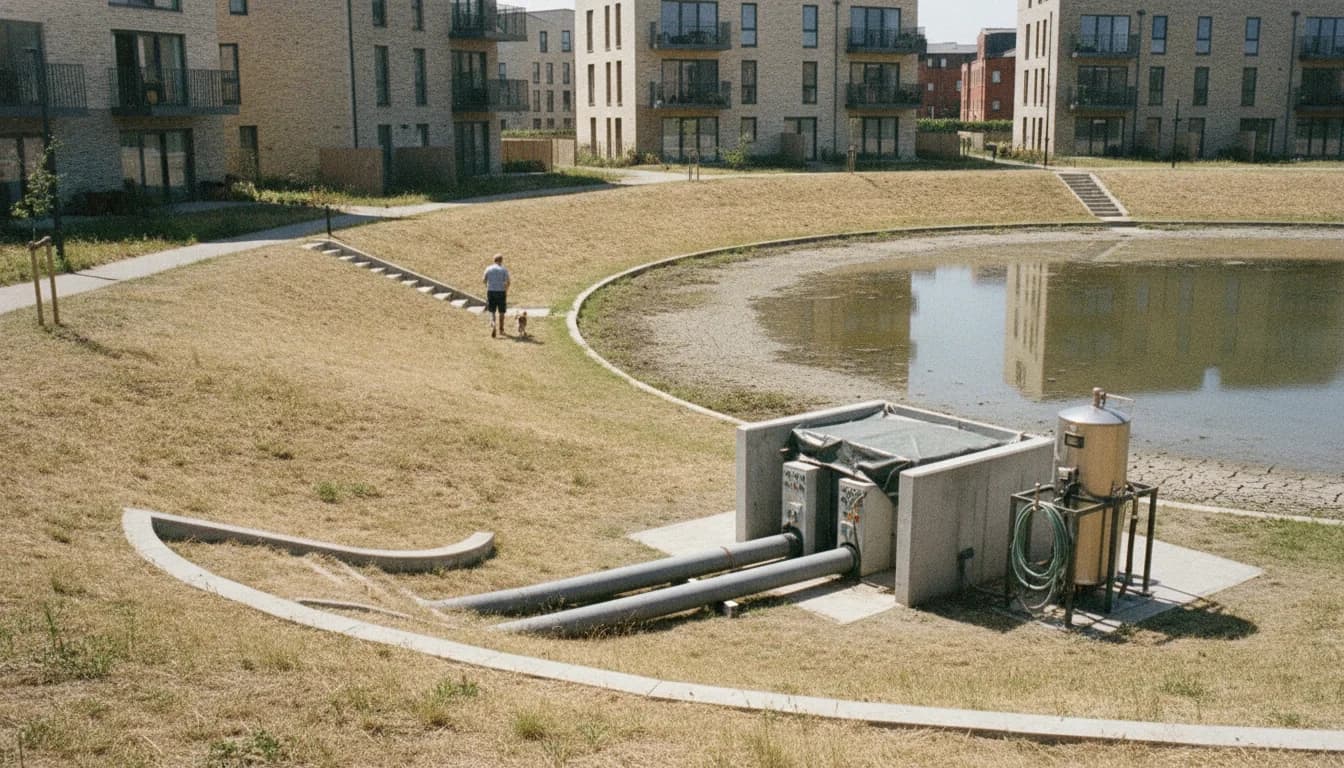
A breakthrough in Cambridge’s approach to urban water management has stalled at the regulatory gate. Cambridge Water’s on-site water reuse initiative at the Eddington development—lauded as a flagship Cambridge water reuse system—has been switched off as of August 19, 2026, a move that could have saved about 25 litres per person per day for 8,000 residents. The fact was reported by The Guardian on August 19, 2026, and the regulator’s intervention underscores a pivotal tension between innovation and current Water Industry Act interpretations. This development is a watershed moment for large-scale water reuse in the UK, not just for Cambridge but for how non-potable systems may be treated under national policy. (theguardian.com)
The Eddington project sits at the heart of Cambridge’s broader water strategy, designed to reuse rainwater for non-potable uses such as toilet flushing and landscape irrigation within a mixed-use campus community that will eventually house thousands of residents and workers. The system’s idle status comes amid a drought period that has prompted hosepipe bans across the region and heightened attention on the country’s ability to deliver resilient water supplies through innovative technologies. The Guardian notes that even with the system ready for commissioning in 2021, it remains offline as policymakers and regulators debate how non-potable reuse should fit within current legal frameworks. (theguardian.com)
Cambridge Water’s own planning documents reinforce the significance of this project within the national landscape. The Cambridge Water Final Water Resources Management Plan 2024 explicitly calls the Eddington rainwater harvesting concept “the largest water recycling system project in the UK,” underscoring the scale and ambition of the Cambridge water reuse system as a model for future developments. The plan also outlines how the scheme integrates with a conventional drinking water supply while pursuing substantial demand reductions and new infrastructure investments. The public document further situates Eddington as a central reference point for how Cambridge aims to push water efficiency and reuse into mainstream development practice. (cambridge-water.co.uk)
For readers seeking a broader regulatory and policy frame, the March 2024 government update on Greater Cambridge emphasizes that the region’s long-term supply plan hinges on major infrastructure (notably the Grafham transfer and the Fens Reservoir) coming online in the mid-2030s, with provisions to support tighter water efficiency standards and the use of water reuse where appropriate. The update acknowledges that legislative changes would help enable non-potable water systems to be integrated and managed alongside public supply networks. This context helps explain why the Eddington system’s current status matters beyond a single development project. (gov.uk)
Opening (2–3 paragraphs)
- The central news for Cambridge water reuse system stakeholders is that, as of August 19, 2026, Cambridge Water’s Eddington on-site rainwater reuse facility has been switched off by the Drinking Water Inspectorate, blocking its use for non-drinking household purposes. The Guardian’s reporting notes that the system could have yielded meaningful daily savings for thousands of residents, illustrating the potential benefits that are currently on pause. This regulatory block highlights a broader national debate about whether and how rainwater harvesting and greywater reuse should be permitted within domestic buildings at scale. (theguardian.com)
- In parallel, Cambridge Water’s public planning documentation situates the Eddington installation as a centerpiece of a broader, forward-looking strategy to shrink mains water demand. The Final Water Resources Management Plan 2024 identifies Eddington as a leading example of on-site water reuse in a major new development, a benchmark for others considering dual-pipe or non-potable water schemes in housing, offices, and academic campuses. This framing helps readers understand why the current regulatory decision matters for future development, investment, and city planning in Cambridge and beyond. (cambridge-water.co.uk)
Section 1: What Happened
The Eddington rainwater reuse initiative
A flagship project in a mixed-use Cambridge neighborhood
The Eddington development in Cambridge was designed to host thousands of residents and a sizable non-residential component, including student accommodation and research space, with the aim of cutting water demand through an integrated non-potable supply. Cambridge Water’s system was engineered to recover rainwater and feed it into a lagoon and distribution network for toilet flushing and other non-potable uses. The concept embodies an on-site water reuse approach that Cambridge Water and its partners envisioned as a scalable model for new districts both in the UK and internationally. The Guardian’s reporting confirms that 8,000 residents were planned for Eddington, and that the system’s design anticipated saving about 25 litres of water per person per day—figures that illustrate the system’s potential impact. However, the scheme has not been switched on due to regulatory constraints. (theguardian.com)
Readiness since 2021 and commissioning uncertainties
The Eddington rainwater harvesting system was reported to be ready for commissioning in 2021, but its operation has been blocked by regulatory interpretation of the Water Industry Act 1991 and related regulations. The Guardian describes the DWI’s stance that using greywater or rainwater for domestic uses in a manner that bypasses traditional potable-water pathways may not be permitted under current rules, pending a regulatory update. This situation places Cambridge Water’s flagship system at a critical juncture: the technology is deployed and tested, but the legal framework has not yet aligned with the envisioned model for large-scale on-site reuse. (theguardian.com)
Contextualizing the decision within national policy
The regulatory decision reverberates beyond Eddington. The Guardian highlights a broader policy debate on whether non-potable reuse—rainwater harvesting and greywater systems—should be integrated into standard housing developments through public water utilities or through private arrangements, with government action needed to remove regulatory barriers. The March 2024 GOV.UK update reinforces that the government is considering measures to enable safer, more widely deployed water reuse within the public supply framework, including potential adjustments to the planning and regulatory landscape. The policy context matters because it shapes timetables, risk profiles, and the financial dynamics of future Cambridge Water projects. (gov.uk)
A comparative lens: Clay Farm as a nearby reference point
The Clay Farm development in Cambridge serves as a real-world reference point for on-site water reuse implementations in similar urban contexts. The Enabling Water Smart Communities (EWSC) case study describes Clay Farm’s onsite rainwater harvesting and treatment to deliver non-potable water to toilets in a Cambridge housing development. While Clay Farm demonstrates the technical feasibility of such systems, it also underscores the regulatory complexity that Cambridge and others face when scaling up reuse schemes. The Clay Farm example shows a path that could be replicated if policy and law permit, but it also highlights the challenges related to water quality, cross-surface water management, and lifecycle costs. This context is essential for readers evaluating the Cambridge water reuse system within the wider market landscape. (ewsc.org.uk)
Timeline snapshot (illustrative, sourced context)
- 2021: The Eddington system is reported as ready for commissioning. (theguardian.com)
- 2024: The government publishes the “Addressing water scarcity in Greater Cambridge” update, signaling ongoing policy work to enable water reuse schemes and outlining supply options for the mid-2030s. (gov.uk)
- 2026 (Aug 19): The DWI blocks activation of the Eddington system; The Guardian reports this as a regulatory hurdle that could delay adoption of on-site rainwater reuse as a standard practice. (theguardian.com)
- 2035–37: Government guidance and regional planning documents indicate that major reservoir and transfer projects (e.g., Fens Reservoir, Grafham transfer) are expected to bring online additional capacity, shaping the long-term feasibility of Cambridge water reuse system concepts at scale. (gov.uk)
- 2024: Cambridge Water’s WRMP24 frames the Eddington project as the largest water recycling system in the UK and situates water reuse as a core element of future growth management. (cambridge-water.co.uk)
Section 2: Why It Matters
Impacts on residents, developers, and the utility landscape
Water security in a dry region and the role of reuse
Cambridge and the surrounding North East Cambridgeshire region sit in one of the driest parts of the UK, with regulatory and environmental constraints that push the region toward adaptive water management. Government guidance and regional planning emphasize that improving water efficiency and enabling reuse could reduce reliance on groundwater abstractions, support growth, and protect chalk streams from over-extraction. The Fens Reservoir and Grafham transfer—projected to come online in the mid-2030s—are central to this strategy, enabling a more resilient water supply stack that can partner with on-site reuse pilots like Eddington when regulatory frameworks permit. This broad policy backdrop matters to readers who want to understand how Cambridge water reuse system initiatives fit into long-horizon resilience planning. (gov.uk)
Regulatory architecture and its market implications
The regulatory environment for water reuse is at a formative moment. The DWI’s interpretation of current rules and the potential need for legislative updates shape the speed and feasibility of scaling non-potable reuse in UK housing and commercial developments. The DWI’s framework and the government’s ongoing review influence planning decisions, project financing, and the willingness of developers and utilities to invest in reclaim-and-reuse systems. While Clay Farm demonstrates a working model at a smaller scale, the Cambridge water reuse system at Eddington illustrates the stakes of regulatory alignment for flagship projects. Analysts and industry observers should watch for proposed legislative changes, regulatory guidance, and any amendments to the Water Industry Act or related regulations that could unlock broader deployment of rainwater harvesting and greywater reuse in residential developments. (theguardian.com)
Economic and market context: costs, incentives, and transformation potential
Cambridge Water’s own planning documents show a substantial programme around water efficiency, demand management, and major infrastructure investments. The Final WRMP 2024 notes the programme’s scale, including a multi-year cost envelope in the hundreds of millions of pounds, and outlines the strategic use of smart metering and leakage reduction to reduce non-household and household demand. The plan’s financial framing (for example, cost figures in the WRMP) provides a baseline for evaluating the economic viability of large-scale reuse projects under different regulatory and market scenarios. These documents also point to how water credits schemes and government funding could influence the pace and distribution of reuse technologies citywide. (cambridge-water.co.uk)
Broader industry context: the UK’s move toward water reuse
The Cambridge example is part of a nationwide conversation about integrating water reuse into mainstream infrastructure. Government updates, industry studies, and regulatory discussions indicate a shift toward embracing rainwater harvesting and greywater reuse as components of water security, particularly in water-stressed regions. While Cambridge’s Eddington project is not yet online, it remains a reference point for policy discussions, technology deployments, and stakeholder collaboration between universities, water utilities, regulators, and developers. industry observers and policymakers are closely watching how legal frameworks evolve and how pilots like Eddington inform future standards for non-potable water supply in dense urban settings. (gov.uk)
Section 3: What’s Next
Upcoming steps, milestones, and watch points
Regulatory trajectory and potential policy changes
The central question shaping Cambridge water reuse system prospects is whether policy and law will adapt to permit non-potable, on-site water reuse at the scales envisioned for Eddington and similar developments. The March 2024 government update and ongoing policy discourse signal that changes—whether through legislative amendments or regulatory clarification—could unlock a broader roll-out of rainwater harvesting and greywater reuse within public and private housing developments. Observers should monitor any updates to the Water Industry Act, the Water Supply (Water Quality) Regulations, and related guidance from the Drinking Water Inspectorate as central indicators of the path forward. (gov.uk)
Infrastructure and planning milestones to watch
- Fens Reservoir and Grafham transfer: The GOV.UK and regional planning materials show these reservoirs and transfers are central to Cambridge Water’s long-term resilience. The mid-2030s online dates for these facilities shape the resource balance and the competitiveness of reuse options within the Cambridge WRZ. The 2035–37 window for Fens Reservoir, in particular, aligns with broader climate and growth projections and provides a critical backdrop for evaluating the future viability of large-scale on-site reuse at Eddington. (gov.uk)
- WRMP updates and regulatory guidance: Cambridge Water’s ongoing WRMP updates will continue to shape how reuse is integrated into supply planning, including targets for demand management, leakage reduction, and possible non-potable supply options. The WRMP 2024 documents offer a baseline for assessing progress and for modeling the potential impact of enabling policies on Cambridge Water’s portfolio. (cambridge-water.co.uk)
- Pilot-to-scale pathways: The Clay Farm example demonstrates a scalable blueprint for rainwater harvesting and non-potable distribution within Cambridge’s development landscape. Stakeholders will be watching whether and how lessons from Clay Farm can be codified into planning policies, building regulations, and utility operating standards so that Eddington-like schemes can be replicated with greater regulatory certainty. (ewsc.org.uk)
What readers should watch for next
- Regulatory updates and potential law changes: Any movement in the DWI’s stance, new ministerial statements, or guidance on rainwater harvesting and greywater reuse could directly influence the accessibility and timing of Cambridge water reuse system projects, including Eddington. The national dialogue on water reuse is ongoing, and Cambridge’s experience may inform broader policy direction. (theguardian.com)
- Public and developer engagement: Community consultation and planning approvals around reuse-enabled developments will continue to shape both the feasibility and public acceptance of on-site water reuse, especially at scale in major growth areas like Greater Cambridge. The North West Cambridge development and Eddington’s planning history illustrate how regulatory and community dynamics interact with engineering design. (democracy.cambridge.gov.uk)
Closing
The Cambridge water reuse system narrative illustrates a broader truth about water resilience in fast-growing, climate-stressed urban regions: technology alone is not enough; policy, regulation, and public understanding must align to realize the full potential of reuse. Cambridge Water and its partners have charted a path that demonstrates both the technical feasibility and the economic and regulatory challenges of bringing rainwater and greywater reuse to scale. As the government and regulators deliberate, stakeholders in Cambridge—and readers across the UK interested in water sustainability—will watch closely how policy evolves, how trials inform standards, and how imported lessons from places like Clay Farm translate into national practice. Until the regulatory framework catches up with the engineering, the Cambridge water reuse system remains a powerful case study in the promise and the hurdles of urban water reuse.
In the months ahead, Cambridge Water and its partners will likely publish updates that clarify the regulatory posture, reflect any statutory changes, and, potentially, outline a revised path to commissioning. For readers seeking to stay informed, following official Cambridge Water communications, government updates on water scarcity measures, and credible industry coverage will provide the most reliable signals about when and how Cambridge water reuse system innovations might reemerge in the city’s evolving water strategy.
Sources and further reading
- The Guardian, August 19, 2026: Calls for urgent law change as UK’s largest water reuse system cannot be switched on. This report provides the core, on-the-ground status of the Eddington system and the regulatory decision blocking activation. (theguardian.com)
- Cambridge Water Final Water Resources Management Plan 2024: The plan states that the Eddington rainwater harvesting system is “the largest water recycling system project in the UK,” establishing the project’s prominence and strategic role in Cambridge’s water strategy. (cambridge-water.co.uk)
- GOV.UK: Addressing water scarcity in Greater Cambridge: update on government measures (Published March 6, 2024): Provides the policy backdrop and the proposed 2035–37 window for major infrastructure to come online, informing the long-term feasibility of reuse initiatives. (gov.uk)
- Fens Reservoir and Cambridge Water context: The GOV.UK broader update outlines regional supply strategies, including the Fens Reservoir’s 2035–37 timeline; Cambridge Water’s materials and the Fens Reservoir page offer additional context for understanding the long horizon. (gov.uk)
- Clay Farm water reuse case study (EWSC): A nearby Cambridge example of onsite water reuse, illustrating realistic implementation details, challenges, and potential performance metrics for similar schemes. (ewsc.org.uk)