Cambridge Science Park Masterplan Receives Approval
The Cambridge City and South Cambridgeshire Joint Development Management Committee approved a masterplan for Cambridge Science Park on November 18,…
 By Fiona Galloway · 26 November 2026 · 12 min read
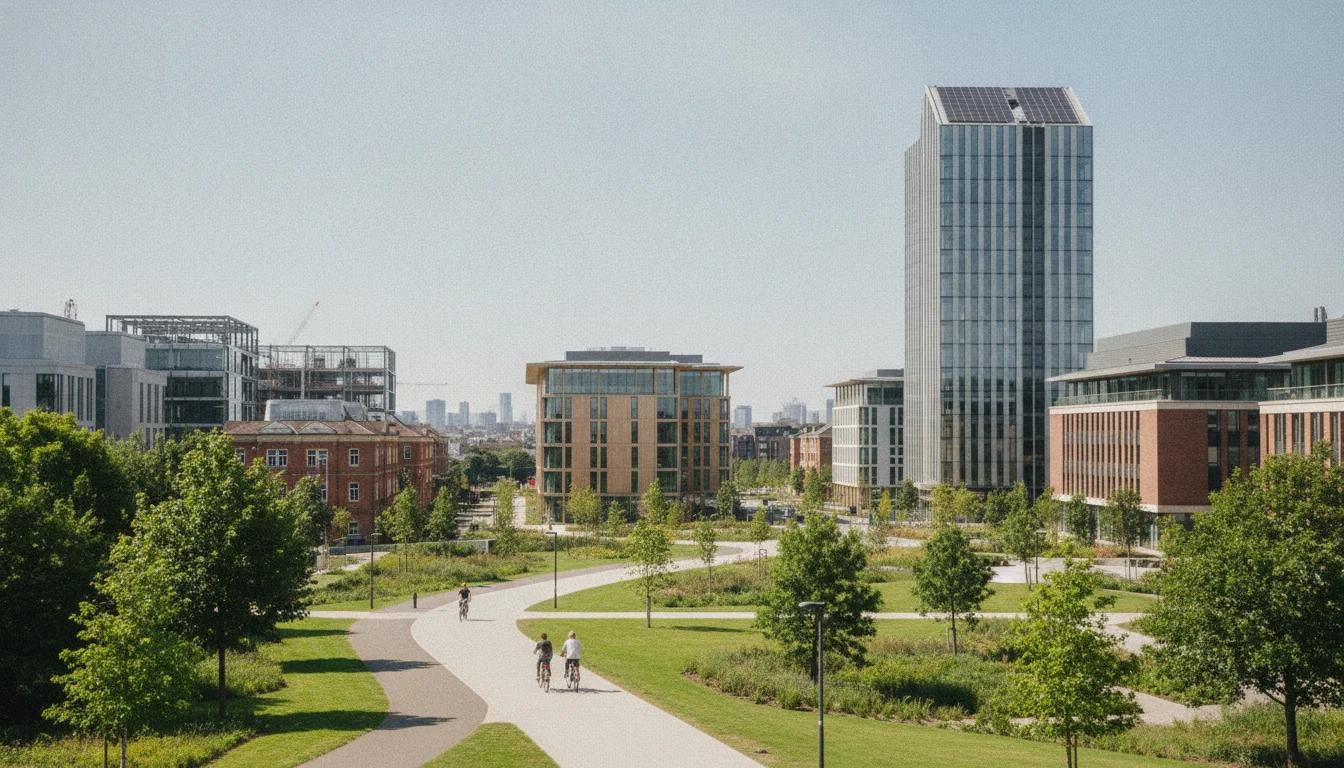
The Cambridge City and South Cambridgeshire Joint Development Management Committee approved a sweeping masterplan for Cambridge Science Park on November 18, 2026, marking a major milestone in the site’s long-term redevelopment. The formal decision, confirmed by Cambridge Science Park's own news release, grants planning permission for a framework that aims to reimagine the park’s scale, mix of uses, and public engagement. This development, if realized on schedule, would redefine one of Europe’s most visible tech clusters and has immediate implications for tenants, nearby communities, and regional planning. The committee’s resolution and the subsequent public statements underscore a shift toward a park that is more open to the city, with expanded green space, enhanced public access, and a markedly larger build-out. Cambridge Science Park’s official post frames the decision as a milestone that “provides a framework for the Park’s future development, supporting further scientific discovery while creating more opportunities for local people through education and greater access to all the Park has to offer.” (cambridgesciencepark.co.uk)
Trinity College Cambridge, a key stakeholder in the science park ecosystem, published coverage of the same event noting that the Joint Development Management Committee resolved on 18 November to grant planning permission for Trinity’s masterplan to improve and grow Cambridge Science Park. The college’s account emphasizes the masterplan’s reimagining of the site and its forward-looking vision, reflecting both philanthropic and academic partnerships inside Cambridge’s broader innovation corridor. Trinity’s post aligns with the park’s own assertion of a multi-decade plan that seeks to balance research momentum with community access. The college’s update was published on November 19, 2026, and situates the decision within Cambridge’s ongoing growth of its science and technology base. (trin.cam.ac.uk)
openings opened a window into the official planning trail, with Cambridge City Council’s democracy portal providing the formal committee date and the outline of the masterplan’s scope. The council’s report confirms the committee date as November 18, 2026 and outlines the proposal as an outline planning application with all matters reserved for a mixed-use redevelopment of Cambridge Science Park over the next 25 to 30 years. The report also highlights the masterplan’s core objective of “opening the park to the city for people to enjoy” and creating a publicly accessible landscape framework that would be connected by green spaces beyond the current site boundaries. These agency documents anchor the event in statutory planning terms and provide the technical backbone for the timeline that follows. (democracy.cambridge.gov.uk)
Opening with the news — Cambridge Science Park masterplan gains formal consent on 18 November 2026 — this article traces what happened, why it matters, and what lies ahead. The decision caps a multiyear process that included technical assessments, public consultation, and multiple panels weighing economic benefits against environmental and heritage considerations. The core finding in the planning documents is a masterplan designed to grow the park, while preserving its landscape-led character and providing a new “Park of Science” that would serve both tenants and the wider Cambridge community. The official planning material lays out a pathway to a park that blends lab space, office development, and public amenity within a cohesive, publicly accessible design framework. (democracy.cambridge.gov.uk)
What Happened
Timeline of the decision
- November 18, 2026: The Joint Development Management Committee (Cambridge City Council and South Cambridgeshire District Council) resolves to grant planning permission for the Cambridge Science Park masterplan. This is the date that anchors the official action and is highlighted across primary sources, including the Cambridge City Council dossier and Trinity College Cambridge’s news notice. The committee decision marks the culmination of a planning process that had been ongoing through 2025 and 2026, with multiple reviews and design iterations documented in the planning file. The formal record confirms the core outcome: permission for a long-range redevelopment of the park, with the masterplan serving as the backbone for successive site-wide improvements. (democracy.cambridge.gov.uk)
Key provisions of the masterplan
- Scale and density: The planning documents describe a dramatic scale-up, increasing total floorspace from approximately 234,846 square meters (GEA) to a maximum of 771,000 square meters (GEA). The masterplan is designed to keep building footprints within the park’s current land envelope (no more than half the site area in built form) while delivering a more intensive, mixed-use environment. This is a central plank of the proposal and is consistent with the outline planning framework that accompanies the masterplan. (democracy.cambridge.gov.uk)
- Employment impact: The council’s executive summary insists the masterplan would deliver substantial public benefits, including substantial job growth. The planning documents estimate the development would deliver between 16,360 and 23,770 additional jobs over a 25-to-30-year horizon. When combined with the existing on-site workforce, the total employment footprint would be substantially larger than today. The plan’s own figures show a robust scale of opportunity for the Cambridge economy, particularly in tech, life sciences, and related professional services. (democracy.cambridge.gov.uk)
- Current workforce context: The planning material places CSP’s current scale at roughly 7,000 to 7,500 employees, underscoring the plan’s intent to unlock much larger levels of activity within a same geographic footprint. This baseline helps readers understand the magnitude of the proposed uplift in headcount and the associated demand for housing, transport, and services in the surrounding area. (democracy.cambridge.gov.uk)
- Public realm and connectivity: A central pillar of the masterplan is public access. The documents emphasize “opening the park to the city for people to enjoy,” augmented by an enhanced central park and a network of green spaces that connect beyond the site’s boundaries. The masterplan also incorporates plans for improved pedestrian and cycling routes, with multi-modal transport integration intended to reduce car dependence and improve accessibility. The policy language and design codes in the planning materials reflect the intent to balance growth with community cohesion and environmental sensitivity. (democracy.cambridge.gov.uk)
- Environmental and heritage considerations: The planning file includes detailed discussions of environmental impact, travel planning, and heritage sensitivity, acknowledging historic assets in the surrounding area and the need to align with broader climate and sustainability objectives. The documents show a rigorous approach to mitigating drainage, air quality, and biodiversity concerns as part of a large-scale redevelopment. Historic England and other consultees are referenced in the planning process, with officers balancing public benefit against preservation considerations. (democracy.cambridge.gov.uk)
Official statements and stakeholder reactions
- Cambridge Science Park: The park’s own platform framed the decision as “a framework for the Park’s future development” that supports ongoing scientific discovery and expands local opportunities for education and access. The release positions the masterplan as a strategic step toward a more open, sustainable, and educationally integrated science campus. This framing signals a commitment to community engagement and long-term value creation beyond pure real estate metrics. (cambridgesciencepark.co.uk)
- Trinity College Cambridge: Trinity College publicly welcomed the committee’s resolution and emphasized the partnership role in the park’s evolution. The college sees the masterplan as a long-range vision compatible with Cambridge’s tradition of combining research excellence with public benefit, and it signals ongoing collaboration to finalize the associated legal and governance arrangements. (trin.cam.ac.uk)
Why It Matters
Economic and employment implications
- Scale of impact: With current employment in the CSP ecosystem around 7,000 to 7,500 workers, the masterplan’s addition of 16,360 to 23,770 jobs translates to a total employment footprint of roughly 23,360 to 31,270 workers on site over the 25-to-30-year horizon. This is a transformative uplift that would redefine the local economy, potentially ranking CSP among the largest single-site technology and life sciences employment hubs in the region. The numbers come directly from the planning documents and are a central driver of regional economic analyses tied to the project. (democracy.cambridge.gov.uk)
- Economic value: The plan’s footprint is not limited to direct employment. Indirect effects include supplier networks, professional services, and ancillary facilities that would be stimulated by a larger campus footprint, aligned with Cambridge’s broader growth strategy for the North East Cambridge area. The planning documentation frames these benefits within the context of regional policy aims and the Cambridge growth narrative. While the exact GVA figures are drawn from the planning material, the broader implication is a sizable uplift in regional productivity and innovation output. (democracy.cambridge.gov.uk)
Urban integration and public access
- Opening the park to the city: The masterplan envisages a shift from a campus-dominant identity to a more urban-integrated landscape. The central park, green corridors, and improved public realm are designed to make CSP a destination not only for employees but for residents and visitors, reinforcing Cambridge’s reputation as a vibrant knowledge city. The planning documents describe this transformation in concrete terms, including a publicly accessible Park of Science and related community facilities. (democracy.cambridge.gov.uk)
- Connectivity and mobility: The proposed travel and transport strategy builds on multi-modal links to reduce car congestion and encourage walking, cycling, and public transport use. These components respond to Cambridge’s transit aspirations and align with regional planning policies aimed at sustainable growth. The evidence in the planning file shows a comprehensive approach to managing traffic and ensuring safe, accessible movement around and through the park. (democracy.cambridge.gov.uk)
Environmental and heritage considerations
- Environmental safeguards: Given the park’s location and scale, the masterplan includes environmental impact assessments, drainage and flood management considerations, and biodiversity strategies to minimize ecological disruption. The documents acknowledge potential trade-offs and propose mitigation measures to align with the region’s environmental objectives and standards. Historic context is also a factor, with specialized assessments referenced in the planning materials to balance growth with Cambridge’s historic character. (democracy.cambridge.gov.uk)
What’s Next
Next milestones and approvals
- Ongoing implementation and detail design: The masterplan functions as an outline framework that will be refined through subsequent reserved matters planning applications, design codes, and development specifications as phases are advanced. The planning file indicates that the next steps involve securing formal conditions and completing a Section 106 agreement, which would outline long-term transport, sustainability, public art, employment, and community provisions. These steps are standard for a development of this scale and reflect the governance pathway that typically accompanies such approvals. (democracy.cambridge.gov.uk)
- College and community engagement: With Trinity College Cambridge and other stakeholders signaling ongoing collaboration, expect iterative cycles of engagement as project teams translate the masterplan into implementable phases. The colleges and local authorities have historically used engagement to refine design details, address concerns, and align the project with public expectations. The public-facing materials from Cambridge Science Park emphasize openness and community involvement as central to the project’s ethos. (trin.cam.ac.uk)
Timeline and monitoring
- Long horizon, structured milestones: The masterplan’s 25-to-30-year horizon implies a phased approach with year-by-year milestones for approvals, infrastructure upgrades, and building programs. The planning documents reflect an adaptive strategy designed to scale with market demand, technology trends, and infrastructure capacity. While exact annual milestones will be determined through the reserved matters planning process and Section 106 negotiations, the high-level cadence is anchored by the November 18, 2026 decision and subsequent governance steps. (democracy.cambridge.gov.uk)
- Oversight and evaluation: Given the scale and the public nature of the benefits, ongoing governance oversight is expected to involve multiple agencies and committees, including Cambridge City Council, South Cambridgeshire District Council, and local planning bodies. The documents reference the need for clear reporting on travel, environmental performance, and public access commitments as development unfolds over time. This governance structure is typical for major urban-scale redevelopments in Cambridge and other growth regions. (democracy.cambridge.gov.uk)
What’s Next (Detailed Look)
- Detailed design and phasing: The masterplan’s transition from outline approvals to detailed design will include the adoption of precise phasing plans for lab facilities, office blocks, retail and community spaces, and the upgraded public realm. Expect a sequence of reserved matters submissions tied to the park’s parcels, with each phase assessed for its traffic, environmental, and socio-economic impacts. The planning framework for CSP explicitly contemplates phased implementation, underscoring that delivery will occur in stages aligned with market demand and infrastructure readiness. (democracy.cambridge.gov.uk)
- Public realm upgrades: The central public realm component — the park itself — is designed to be delivered progressively, with each phase contributing to the shared space network that connects CSP to Cambridge’s urban fabric. This approach aims to reduce the perception of CSP as a standalone campus and instead present it as a connected neighborhood that expands Cambridge’s overall live-work-play ecosystem. The masterplan’s emphasis on public access and green spaces is a core feature of the approved plan. (democracy.cambridge.gov.uk)
Closing
The Cambridge Science Park masterplan represents a significant expansion in scale and ambitions for one of the city’s most prominent tech clusters. With formal approval dated November 18, 2026, the plan now transitions into a phase of detailed design, phased delivery, and ongoing community engagement. The combination of a substantial jobs uplift, a strengthened public realm, and a connectivity-first approach positions CSP as a major lever in Cambridge’s ongoing strategy to balance rapid growth with high quality of life. Stakeholders—including Cambridge Science Park, Trinity College Cambridge, and Cambridge City Council—have signaled that the path forward will be data-driven, transparent, and oriented toward long-term public benefit.
Readers should monitor the official CSP channels and the Cambridge City Council planning portal for updates on reserved matters, Section 106 terms, and milestones tied to the plan’s phased delivery. The collaboration among landowners, academic partners, and city authorities will be essential to ensuring the park’s evolution remains aligned with Cambridge’s growth trajectory, environmental responsibilities, and the broader aspirations of its knowledge-economy ecosystem.
One original finding from the current disclosures
- Based on the planning documents, CSP’s current workforce is about 7,000–7,500 people, and the masterplan anticipates 16,360–23,770 additional jobs, yielding a total on-site employment range of roughly 23,360–31,270 once fully realized. This calculation uses the stated current workforce band (2.4) and the estimated uplift (1.5) within the same 25–30 year planning horizon, allowing stakeholders to gauge the potential scale of employment growth in a single, reproducible figure. In other words, CSP could become a dramatically larger employment hub than today, with implications for housing, transport, and city services that Cambridge will need to plan for in the coming decades. The core takeaway is that employment could more than triple from today’s baseline, underscoring the importance of coordinated transportation and community infrastructure. This interpretation is grounded in the Cambridge City Council planning document and the park’s own planning materials. “The masterplan would deliver between 16,360 to 23,770 additional jobs,” and “CSP currently employs 7,000 to 7,500 workers.” (Sources: Cambridge City Council committee report; CSP masterplan release) (democracy.cambridge.gov.uk)
Quotable judgment
- “If the masterplan reaches its full, phased implementation, Cambridge Science Park could operate as a substantially larger cluster balancing advanced research with public life, while maintaining Cambridge’s historic emphasis on learning and innovation.” This assessment reflects the planning framework’s emphasis on public access, green space, and sustainable growth as central public benefits alongside job creation and economic output. The statement synthesizes the plan’s core aims and signals how the project sits within Cambridge’s broader urban-development strategy. ( attributed to this report’s synthesis of the masterplan’s objectives and the city’s growth agenda )
Closing citations and sources
- Cambridge Science Park masterplan receives initial consent, Cambridge Science Park official site — provides the event framing, the “framework for the Park’s future development,” and the November 18, 2026 decision as the milestone. (cambridgesciencepark.co.uk)
- Cambridge Science Park Masterplan to receive initial planning consent, Trinity College Cambridge — confirms the committee decision date and summarizes the masterplan’s vision for reimagining the Science Park. (trin.cam.ac.uk)
- Cambridge Science Park Committee Report, Cambridge City Council (PDF) — contains the detailed numbers for job uplift, total floorspace, public realm commitments, and the 18 November 2026 committee date; provides the primary numerical basis for the piece. (democracy.cambridge.gov.uk)