Cambridge Living Labs for Urban Climate Action Initiative
Neutral, data-driven update on Cambridge Living Labs for Urban Climate Action and their role turning city data into climate solutions.
 By Fiona Galloway · 26 July 2026 · 13 min read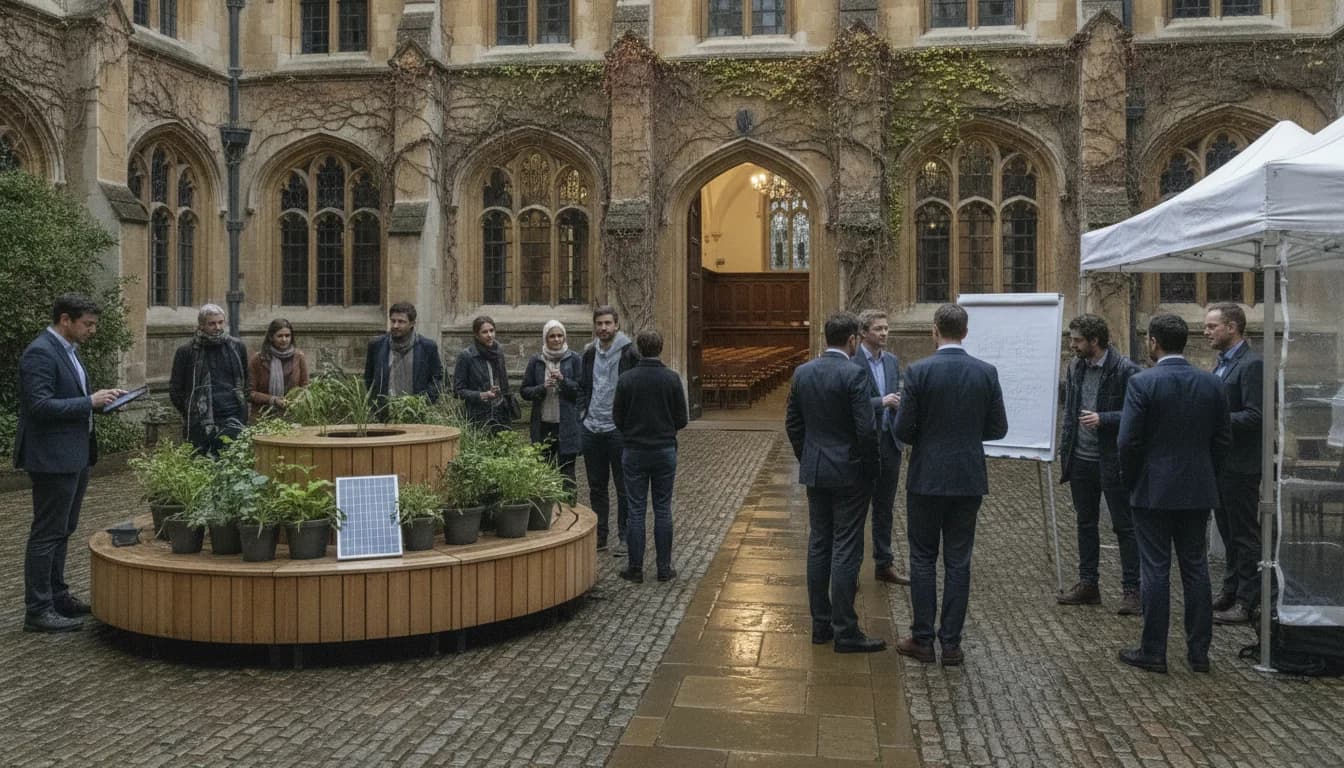
In Cambridge, a wave of practical experimentation is advancing climate resilience through what editors are calling Cambridge Living Labs for Urban Climate Action. On July 20, 2026, the Cambridge Institute for Sustainability Leadership (CISL) announced a substantial expansion of its Living Lab network across the city. The announcement positions Cambridge as a living laboratory where innovators, educators, policymakers, and industry partners co-create, test, and prove new approaches to reduce energy use, cut water waste, and build climate resilience into everyday urban life. The centerpiece is the Entopia Building, CISL’s ultra-sustainable home in central Cambridge, which hosts the Living Lab ecosystem and functions as a real-world test bed for sustainable solutions in the built environment. This development matters because it translates cutting-edge research into scalable, market-ready practices within Cambridge’s urban fabric, with potential spillovers to similar cities nationwide. The expansion aligns with a broader national push to institutionalize living-lab approaches as engines of practical climate action, linking research with procurement, policy, and market adoption. (cisl.cam.ac.uk)
The expansion follows a year of activity that began with the Living Lab concept’s emergence as a practical model for testing sustainability innovations in real settings. The Entopia Building, which houses CISL’s Canopy and the Living Lab, was highlighted by CISL as a core hub for collaboration among startups, researchers, and public-sector partners. The Living Lab initiative centers on turning demonstration projects into credible, shareable evidence that can lower barriers to adoption and scale innovations across the built environment. As the network grows, Cambridge regulators, business leaders, and educators are watching closely to see whether the city can demonstrate faster, evidence-based transitions to net-zero practices. This is exactly the kind of real-world, data-driven testing Cambridge Review has highlighted as essential for urban climate action. (cisl.cam.ac.uk)
Opening’s emphasis on Cambridge Living Labs for Urban Climate Action reflects a broader Cambridge ecosystem in which living-lab thinking has become an organizing principle for sustainability across campuses, city hall, and private partners. Cambridge’s living-lab discussions have frequently centered on turning research into practice within the city’s research estates and civic infrastructure. These conversations frame the current expansion as not merely a pilot program but as a scalable template for urban climate action—one that could influence policy design, asset management, and the feasibility of large-scale sustainability investments in Cambridge and beyond. The Cambridge environment platforms emphasize that the living-lab idea involves test beds, data-driven assessment, and cross-sector collaboration, which are the same threads now intensifying under the Cambridge Living Labs for Urban Climate Action banner. (environment.admin.cam.ac.uk)
Section 1: What Happened
Expansion Milestone Across Cambridge Test Beds
Cambridge’s Living Lab expansion marks a formal growth spurt in a network designed to test, demonstrate, and prove new approaches to sustainability in real-world settings. The lead narrative is that the expansion was launched last year with founding support from The Crown Estate, and the current 2026 expansion adds new members and new sites to the portfolio. The Entopia Building, CISL’s hub for sustainability leadership and living-lab activity, is highlighted as a central node where startups and established organizations co-locate to trial innovations in a realistic urban context. The expansion’s framing emphasizes that Cambridge is moving toward a city-scale living-lab model—one that integrates research, industry, and civic governance to accelerate the adoption of climate-smart solutions in the built environment. The national synchronization piece is the collaboration with Connected Places Catapult to develop frameworks and data architectures that support an “innovation passport” approach to validate and transfer tested solutions to other places. This combination of city-scale testing and national-standardization is a defining feature of this announcement. (cisl.cam.ac.uk)
Founding Partners, New Members, and Site Growth
The announcement underscores the Living Lab’s ongoing collaboration among public, private, and academic partners. Public and civic partners now include Cambridge City Council, NHS Estates, and Hills Road Sixth Form College, while private-sector participation includes AVEVA, a Cambridge-headquartered engineering software company, which joined as an innovation partner and test-bed provider. The network’s expansion is framed as building on the work of its founding partner The Crown Estate, which supported the Living Lab in its early phase. The expansion is described as adding new members and sites, with a pipeline of innovation partnerships and pilots that reflect a growing ecosystem designed to test and scale climate-solutions in real-world settings. The practical implications include more opportunities to explore circular-economy approaches, reuse of building materials, and energy optimization across Cambridge’s built environment. The announcement explicitly notes Hills Road Sixth Form College and NHS Estates as part of the growing network, signaling a broad, cross-institutional platform for testing and validation. (cisl.cam.ac.uk)
Real-World Projects, Pilots, and Funding Signals
Among the concrete pilots cited in the expansion is a collaboration with the Water Efficiency Cambridgeshire Fund, which supports testing water-saving technologies across partner sites. The fund’s involvement signals a focus on regional resilience and the scalable testing of water-management innovations in the built environment—precisely the kind of climate-adaptation emphasis Cambridge has long pursued. In addition to water pilots, the Living Lab network is reported to be driving projects with Decent Energy and Hills Road Sixth Form College to embed software that identifies energy-saving opportunities and optimizes renewable energy use. The expansion’s public narrative highlights the Cambridge Business Park regeneration and the embedding of circular economy principles into large-scale development as a key area of focus. The scale of collaboration is shown by the inclusion of NHS Estates and Hills Road Sixth Form College, illustrating cross-sector commitments to evaluate, validate, and adopt climate-smart technologies in campus and public-sector settings. (cisl.cam.ac.uk)
National Alignment and the Innovation Passport
A central strategic element of the announcement is the national alignment with Connected Places Catapult to develop an innovation-passport framework. This framework is designed to provide structured, credible evidence of value and performance, reducing the risk and duplication often associated with testing new technologies in multiple contexts. The idea is to create a standardized path—from test bed to market adoption—that can be leveraged by small and medium-sized enterprises (SMEs) and other innovators seeking to scale climate technologies. The announcement notes that the Catapult will provide data-architecture support and a broader governance context to ensure that Cambridge’s Living Lab activities can inform and accelerate replication across places and sectors. This national linkage suggests that Cambridge’s local Living Lab expansion could become a model for other cities seeking to operationalize urban climate action through living-lab ecosystems. (cisl.cam.ac.uk)
Leadership Voices and Market Perspective
The article features statements from CISL leadership and Cambridge-affiliated executives that illuminate the strategic intent behind the expansion. James Cole, CISL’s Chief Innovation Officer, describes the Living Lab as a mechanism to “provide the real-world test beds and partnerships needed to accelerate adoption,” emphasizing the instrumental role of collaborations among researchers, industry partners, and public-sector bodies. John Aston, a pro-vice-chancellor at the University of Cambridge, emphasizes the need to translate research into practical solutions by bringing researchers, businesses, innovators, and public-sector partners together in real-world settings. These perspectives underscore a core theme of the Cambridge Living Labs for Urban Climate Action approach: the integration of knowledge creation, practical deployment, and market adoption as a continuous cycle. The article also frames the Living Lab as a path to scale, with Catapult support intended to reduce the friction associated with transferring proven solutions into broader markets. (cisl.cam.ac.uk)
Section 2: Why It Matters
The Climate-Action Value Proposition for Cambridge Living Labs
The expansion of Cambridge’s Living Lab network has direct implications for climate resilience and urban sustainability. By concentrating experimentation within the Entopia Building and across partner sites, Cambridge can accelerate testing of energy efficiency measures, water-management solutions, and materials reuse practices in real-world urban environments. This is critical because it moves climate innovations from laboratory or pilot stages into real operating contexts where performance data, occupant behavior, and regulatory constraints interact in complex ways. The Living Lab model provides a structured setting to observe, measure, and refine innovations under authentic conditions, improving the credibility of results for policymakers, funders, and market actors. The explicit link to a national-scale framework—innovation passports and shared data architectures—signifies a potential path to standardize evidence across jurisdictions, boosting investor confidence and reducing market friction for climate technologies. This is precisely the kind of evidence-based approach that Cambridge Review advocates when evaluating technology-market trends in urban climate action. (cisl.cam.ac.uk)
Impact on Cambridge’s Built Environment and Public Sector
Cambridge’s living-lab expansion has the potential to influence multiple stakeholders in the city. For asset owners and operators, the network offers a structured, credible mechanism to pilot solutions at a manageable scale before broader procurement. For the public sector, the collaboration demonstrates a clear pathway from research into practice, with the potential to inform policy, procurement standards, and maintenance strategies that align with carbon-reduction and resilience objectives. NHS Estates and Cambridge City Council’s participation signals strong alignment with public-sector ambitions to improve building performance, reduce energy waste, and promote sustainability across public facilities. The presence of Hills Road Sixth Form College indicates a link to educational leadership in climate action—bridging campus-scale pilots with student engagement and workforce development. Taken together, these dynamics point toward a more integrated ecosystem where lessons learned in one venue (for example, school facilities or NHS estates) can inform decisions in another, with the ultimate goal of achieving measurable reductions in energy use and water waste while boosting local resilience. (cisl.cam.ac.uk)
Market and Policy Implications
From a market perspective, Cambridge’s Living Lab network supports a pipeline of tested, credible solutions that can attract private investment and public funding. The collaboration with Connected Places Catapult to establish an innovation passport framework is particularly important; it creates a replicable standard for validating the value of innovations in lived environments. If adopted widely, these frameworks could unlock adoption across other cities and regions by providing consistent evidence of performance, reliability, and cost-benefit outcomes. The presence of AVEVA as an innovation partner and test-bed provider highlights the role of digital-twin and analytics capabilities in the next generation of climate-smart building solutions. In this sense, Cambridge is not only piloting technologies; it is modeling a market-architecture approach that could shape urban climate-action investments nationwide. The expansion thus has both city-level and national significance for how climate innovations move from demonstration to deployment. (cisl.cam.ac.uk)
Real-World Evidence and The Promise of the Local Circular Economy
The expansion’s emphasis on circular-economy principles—evident in the exploration of a local materials reuse hub—speaks to a broader shift in urban climate action: the need to reimagine waste streams as resource streams within the city’s development life cycle. By exploring a networked hub for materials reuse, Cambridge could reduce construction waste, lower embodied carbon in major projects, and stimulate local job creation in reuse and remanufacturing pathways. The Living Lab’s focus on water resilience pilots also aligns with Cambridge’s climate-adaptation priorities, given the city’s vulnerability to flood and drought risks in the context of a changing climate. The cross-sector collaboration—spanning education, health, local government, and industry—reflects a holistic approach to climate action that Cambridge Review regards as essential for credible, scalable outcomes. (cisl.cam.ac.uk)
The Cambridge Ecosystem in a National Context
The Living Lab network’s national alignment—through Connected Places Catapult and the broader UK government strategy—transforms Cambridge’s local experiments into potential exportable models. The vision of “test beds and innovation passports” aims to de-risk adoption by providing evidence of performance, value, and transferability. If successful, Cambridge could serve as a pilot city for a national standard that accelerates the diffusion of climate-smart technologies across multiple sectors, including built environment, energy, and water management. This is consistent with Cambridge’s longer-standing emphasis on turning academic insights into practical applications, leveraging the city’s dense research ecosystem to drive real-world improvements. The net effect would be a more resilient city with demonstrable climate-action outcomes, while contributing to a national playbook for living labs in climate adaptation and sustainable development. (cisl.cam.ac.uk)
Section 3: What’s Next
Next Pilots, Sites, and Public-Private Collaboration
Looking ahead, the Living Lab expansion points to a continued pipeline of pilots across Cambridge partner sites. The Water Efficiency Cambridgeshire Fund is already funding new tests in collaboration with Churchill College, NHS Estates, and Hills Road Sixth Form College to pilot water-saving technologies. The network’s expansion will likely bring additional pilots in energy optimization, demand-response strategies, and embodied-carbon reduction through circular-economy pilots. Cambridge Review will watch for announcements about new sites and partners—particularly around large-scale regeneration projects at Cambridge Business Park and other municipal infrastructure upgrades. The expansion’s emphasis on real-world testing—where researchers, asset owners, and policy makers co-create solutions—suggests that the next phase will be defined by closer alignment of procurement cycles, regulatory guidance, and market-ready demonstrations. Such alignment would reduce the risk for early adopters and create a clearer pathway from proof-of-concept to scale. (cisl.cam.ac.uk)
Data, Standards, and the Innovation Passport
A core element of the “What’s Next” trajectory is the development of data architectures and standards to support the innovation passport concept. The Catapult’s involvement indicates a commitment to creating structured, credible evidence that can travel beyond Cambridge to other places, sectors, and clients. This has the potential to accelerate adoption by enabling parties to compare, contract, and deploy proven solutions with greater confidence. Cambridge’s Living Lab ecosystem is positioned to contribute practical case studies, performance metrics, and validated business models that could inform national guidelines and best practices for urban climate-action deployments. The practical upshot for readers is a potential ecosystem-wide improvement in how cities evaluate, fund, and scale climate solutions—moving beyond isolated pilots to coordinated deployment. (cisl.cam.ac.uk)
What to Watch For: Pilots, Partnerships, and Policy Signals
In the near term, readers should watch for updates about new pilots and additional partner sign-ons, including the expansion of materials-reuse initiatives, further water-resilience pilots, and energy-optimization projects across Cambridge facilities. Policy signals stemming from Cambridge’s living-lab approach may begin to inform procurement guidance for public-sector clients and private developers alike, especially if the innovation passport framework demonstrates clear value in risk reduction and speed to market. The interplay between university research, industry practice, and municipal governance is likely to generate new knowledge-sharing platforms, open-data initiatives, and joint funding opportunities. Cambridge Review will monitor and report on milestones, including concrete demonstration projects, scale-ready business models, and replication-ready frameworks that could be adopted by other cities pursuing Cambridge Living Labs for Urban Climate Action-style initiatives. (cisl.cam.ac.uk)
Next Steps for Stakeholders
For participants and observers, the immediate next steps are to engage with the expanding Living Lab network and to participate in the knowledge-transfer cycles that the expansion enables. Asset owners, technology providers, researchers, and public-sector partners can anticipate invitations to join new test beds, pilot programs, and workshops designed to accelerate the maturation of climate-smart solutions. The Entopia Living Lab, with its Canopy community and the larger Living Lab ecosystem, will likely host further demonstrations, case studies, and practitioner-focused engagements that help translate theory into practice. Stakeholders should plan to review upcoming workshops and pilot announcements to identify opportunities to contribute to Cambridge’s climate-action outcomes. The broader national thread—innovation passports and shared data platforms—may also begin to surface in policy discussions and industry forums, signaling an era of more formalized evidence-sharing and cross-city collaboration. (cisl.cam.ac.uk)
Closing
Cambridge’s Living Lab expansion signals more than a provincial project. It signals a city-wide commitment to testing, validating, and scaling climate innovations within the urban environment. The collaboration among universities, public agencies, and private partners underscores a holistic approach to urban climate action—one that pairs rigorous research with real-world implementation and market readiness. For readers of Cambridge Review, the News section’s lens on this development highlights how Cambridge Living Labs for Urban Climate Action can translate city data into tangible climate solutions, bridging the gap between theory and day-to-day urban life. As the pilot programs mature and replication-ready models emerge, Cambridge could become a leading example of how living labs can drive measurable improvements in energy efficiency, water resilience, and circular economy outcomes in cities around the world. To stay updated, follow CISL’s communications and Cambridge Review coverage of the Living Lab expansion, and watch for new test beds, partner engagements, and published performance data that illuminate how Cambridge’s urban climate-action experiments translate into scalable, real-world impact. (cisl.cam.ac.uk)
The City of Cambridge is deploying a living-lab approach that foregrounds data, evidence, and collaboration—an approach that could redefine how cities implement climate action. As Cambridge Living Labs for Urban Climate Action proliferate across campuses, clinics, and civic facilities, the city’s climate strategy may move from isolated pilot projects to a connected ecosystem of test beds and shared learnings that can be replicated elsewhere. Cambridge Review will continue to report on how these living-lab initiatives advance climate resilience, unlock new market opportunities, and reshape the city’s approach to sustainable development. The story is still unfolding, but the trajectory is clear: Cambridge is turning its research excellence into practical, scalable urban climate solutions that can inspire cities far beyond its borders. (cisl.cam.ac.uk)